
Recent years have seen a slow growth in queer Japanese cinema no longer solely occupying the smallest pockets of the indie movie scene in the country, but existing as major releases starring big-name actors and moving the needle on how the public understands and responds to LGBTQ+ stories and issues. This can only be a good thing. Which is why I find it difficult to be too harsh when discussing This is I and its flaws, because it is created with good intent and with a lot to love.
The film is a biopic exploring the true story of Ai Haruna (portrayed here by Haruki Mochizuki), a TV personality and idol who also happens to be one of the most well-known openly-transgender female celebrities in Japan. Beginning during her childhood as a bullied kid unable to understand even herself and in love with 1980s music icons like Seiko Matsuda, things begin to slowly change one day when she finds herself in Osaka’s Dotonburi district.
There, a woman walks past that catches her eye. Following them into a gay bar, learns that this woman is named Aki (Ataru Nakamura), the Mama of a bar where, alongside other trans staff, she dances and sings and talks to the patrons who come to visit. In that moment, Ai admits to Aki the person she wants to become: an idol, just like her beloved Seiko Matsuda.
What follows is a two hour musical biopic exploring Ai’s life from her childhood to the beloved icon she is today. The soundtrack for the film is punctuated by an eclectic mix of classic 1980s idol pop from the likes of Seiko, Akina Nakamori and other artists that defined the era. On this journey she meets a doctor named Koji Wada (Takumi Saito) one night at the bar, who conducts plastic surgery for a variety of clients. Himself feeling directionless and disillusioned with the profession and what it means to save someone’s life, their shared journey sees Koji become one of the leading early Japanese voices on not just plastic surgery for trans people but gender reassignment surgery conducted on Ai and other trans people.
It’s a move that puts him in hot water due to the legality of these cases just as he feels like he’s making a difference to people’s lives. The story is about his struggles as a doctor in this field at a contentious time where trans people were not respected, as much as it is about Ai.
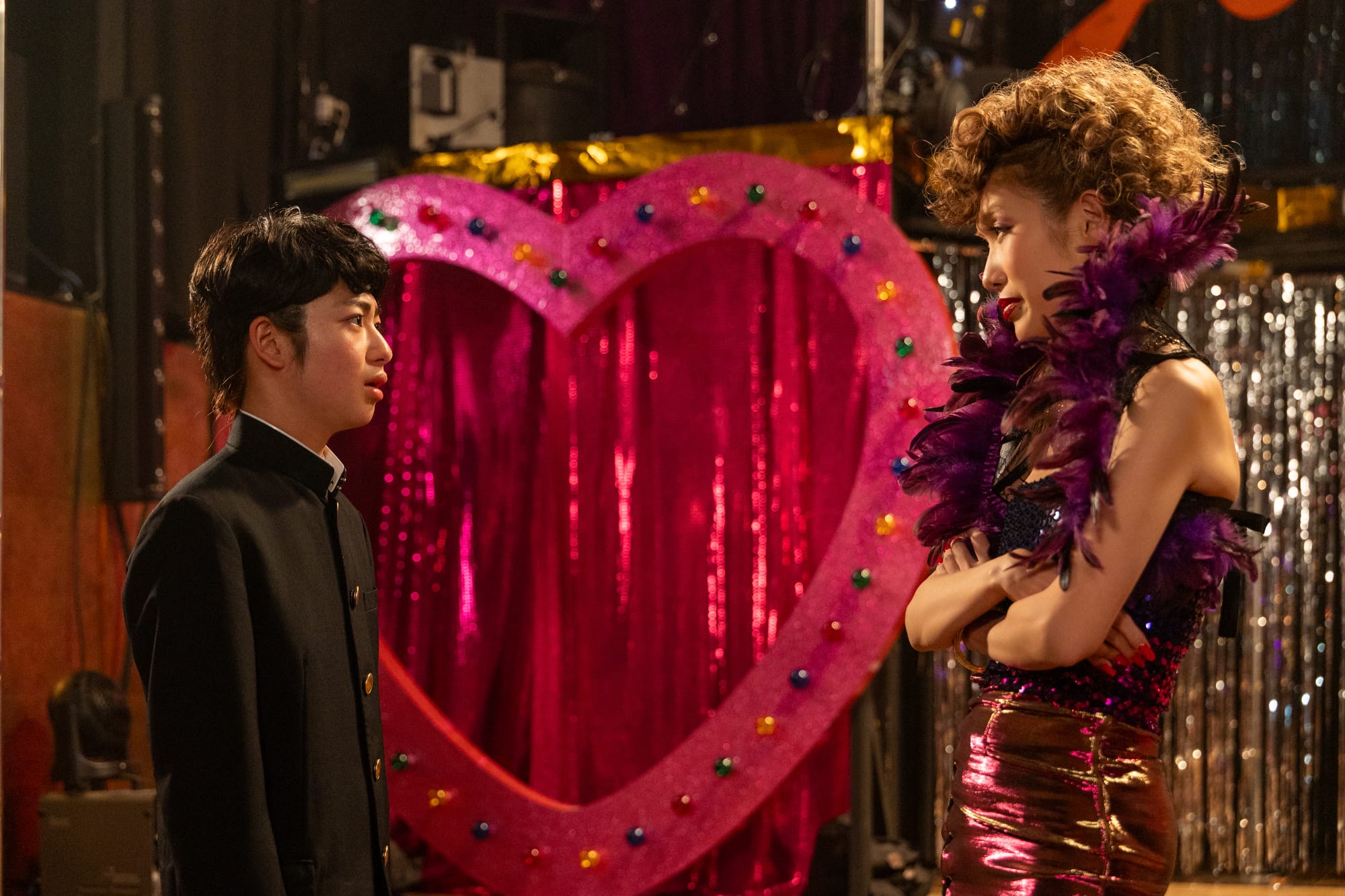
Which leaves the film in an interesting place upon its global release on Netflix. The movie is another major studio-backed project centering trans experiences, released just months after the critical success of Blue Boy Trial. That film was notably also for featuring an entirely-trans lead cast and director. It’s not a direction this film has chosen to replicate, though trans actors including Blue Boy Trial’s Ataru Nakamura make appearances in the supporting cast.
Realistically, This is I could not be more different in its approach to portraying the 20th century transgender experience in Japan. Both take place at a time where the shared language and understanding of trans lived experiences were less understood compared to more sexualized terminology like ladyboy and newhalf. This is a time where such people were all-but relegated to sex work and night life as they were mostly ostracized from other work. Such hardship inevitably tinges these stories with a sense of perseverance and tragedy. It causes a challenge when bringing these stories to screen, a desire to avoid exploiting tragedy while needing to show hardship to reflect the truth of what it meant to be trans at this time.

This is I minimizes this hardship almost entirely. Beyond a few vocal voices of bigotry portrayed as lone actors of hate, Ai’s experience is one of unfaltering optimism and single-minded desire to become like the female idols she admires. When she sings it’s like the world washes away to what it could be, the thrill of going out in a dress for the first time becoming a large and brash musical number filled with joy, especially with songs like Misato Watanabe’s “My Revolution” coming in to signal the journey towards acceptance through joy.
While you don’t want to tinge the movie with pain - you have enough problematic or distressing stories that portray trauma for a general audience at the expense of a minority community - you can’t ignore it. Doing so minimizes the importance of the story. Yet it’s hard not to feel this movie is actively avoiding touching upon the hurdles and challenges Ai and the LGBTQ+ community were forced to overcome at this time for a more simplistic, feel-good experience. We see a single poor interaction because of trans identity, a lone policeman looking for a way to intervene in trans surgery, a solitary producer trying to make fun of Ai as she tries to become an idol, but not the systemic issues they were forced to overcome to reach the heights they would eventually achieve.
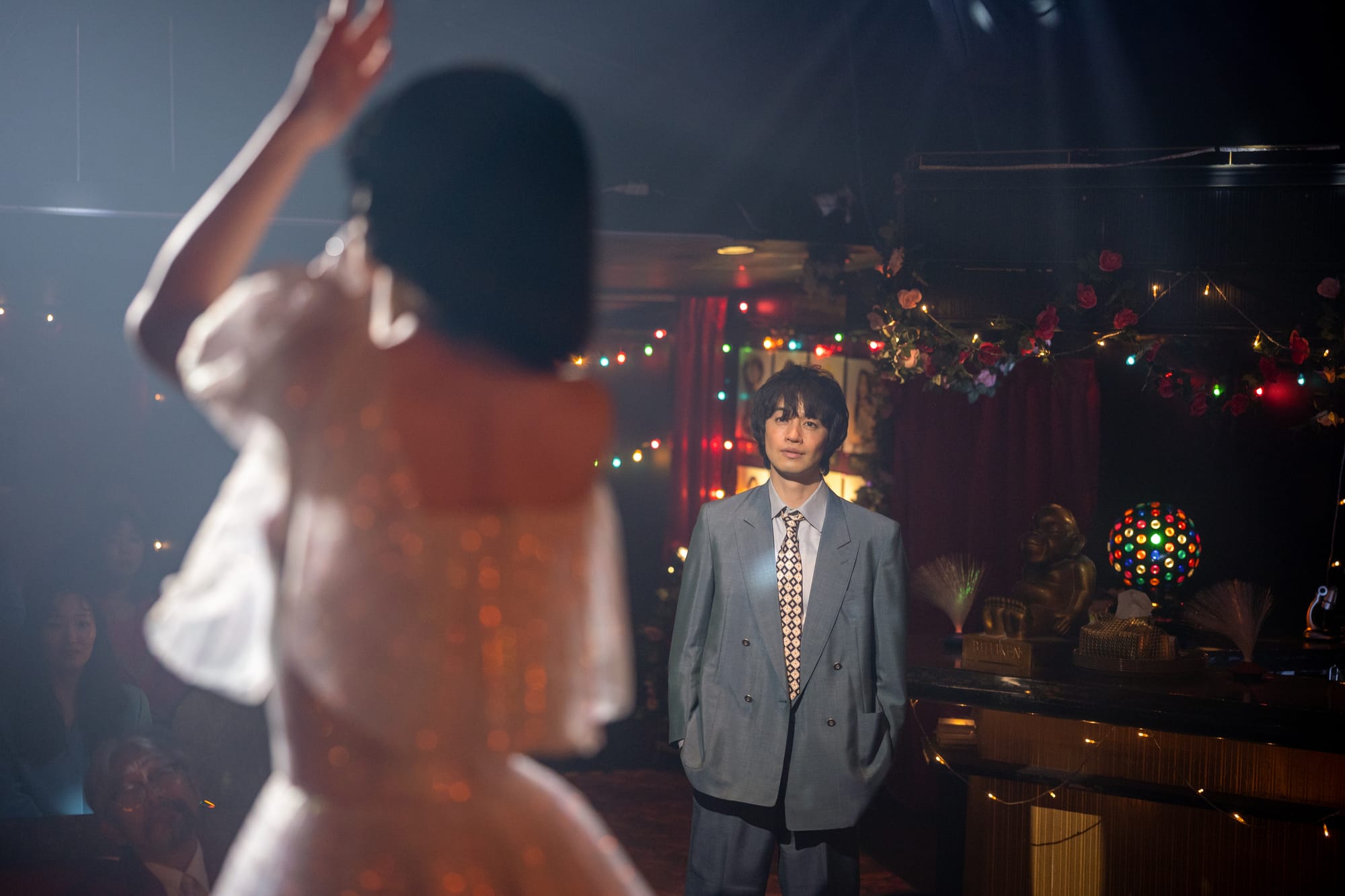
Ignoring any form of pain to create a more feel-good experience leaves the film feeling shallow. Worse, it makes it seem like everything was and is fine, when there’s still so much further to go to overcome inequality and discrimination. A powerful queer story, whether talking about classic stories or modern productions, both tell an engaging story and reflect the reality in a way that leaves the audience thinking about what’s being shown and perhaps even working to change it, inspired by the story.
This is I feels passive to the point you could make this an entirely fictitious story and remove trans issues from the story with relatively minimal impact to the structure of what is otherwise a tale of overcoming the odds to achieve a dream. For a biopic, it's impersonal. Ironically, this film about a pioneering trans idol is at its best when Takumi Saito’s character, Dr. Wada, is dealing with the internal conflict of becoming a doctor and doing these surgeries. This is where the realities of the profession and its inadequacies, as well as the challenges faced by trans people to be accepted, are directly addressed in a way only this story could explore.
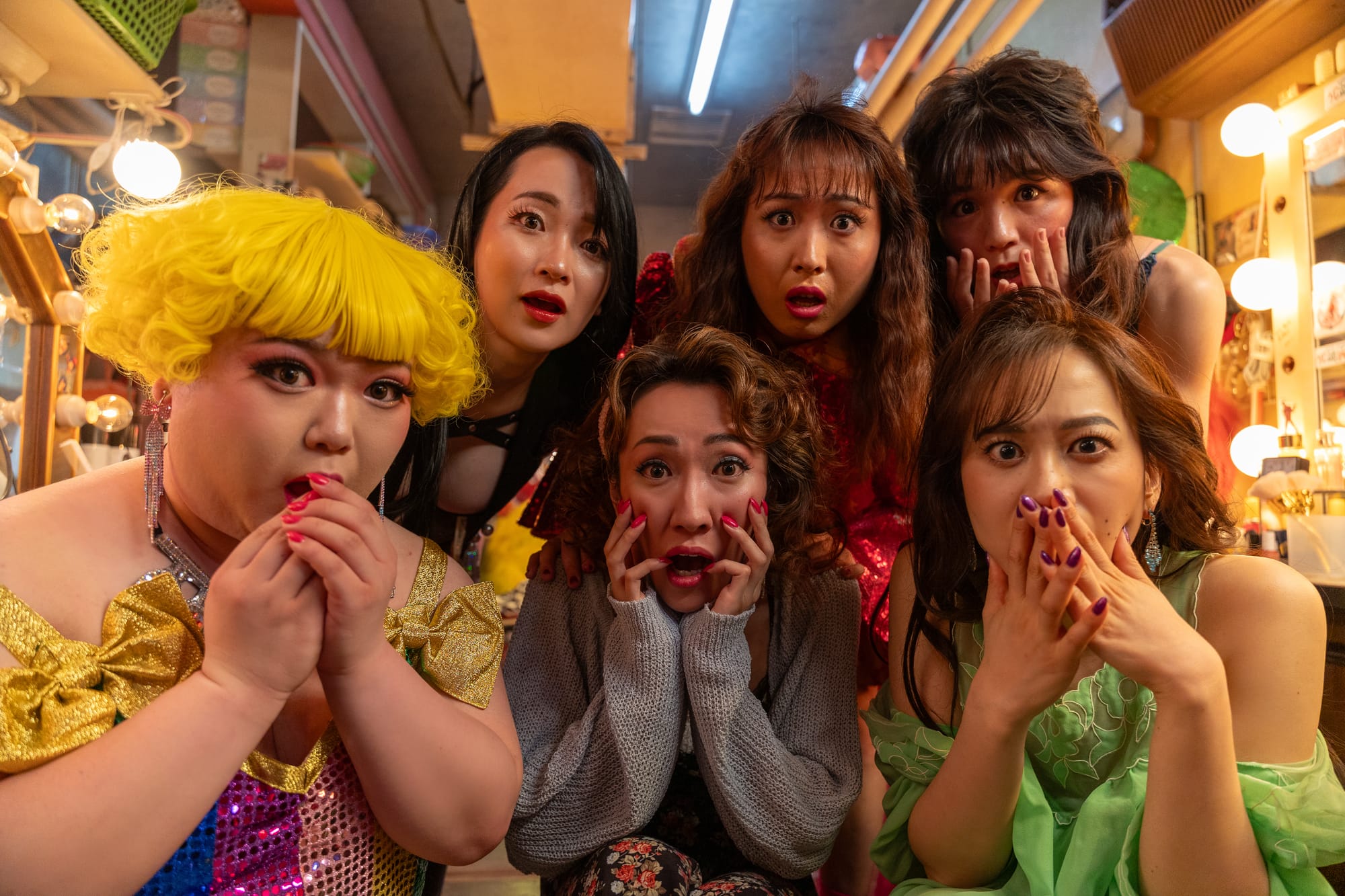
Despite all this, I find it difficult to fully criticize this film. For all I wish it did more, there is still value in a shallow, positive story about trans joy that does, albeit only briefly, touch upon other hurdles to life as a transgender woman in 20th century Japan. This is, after all, a story actively promoted in its advertising and unapologetic in celebrating the life and achievements of its trans subject. When that remains a rarity, even outside Japan, that means something. More personally, as a lover of idol music of the 1980s and musicals, I'm so glad that this sound could bring this story to life.
Most of all, I’d rather a shallow, fun musical to a story that exploited suffering.
This is I is ultimately well-intentioned. Even if it feels like a film created from a modern perspective that ignores and is often unable to reconcile the true challenges of the history it explores, making it unable to present a moral for its audiences in the present, I'm glad this film exists. Even if its approach holds it back from being more than a distraction.