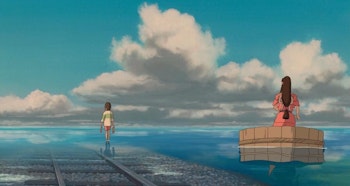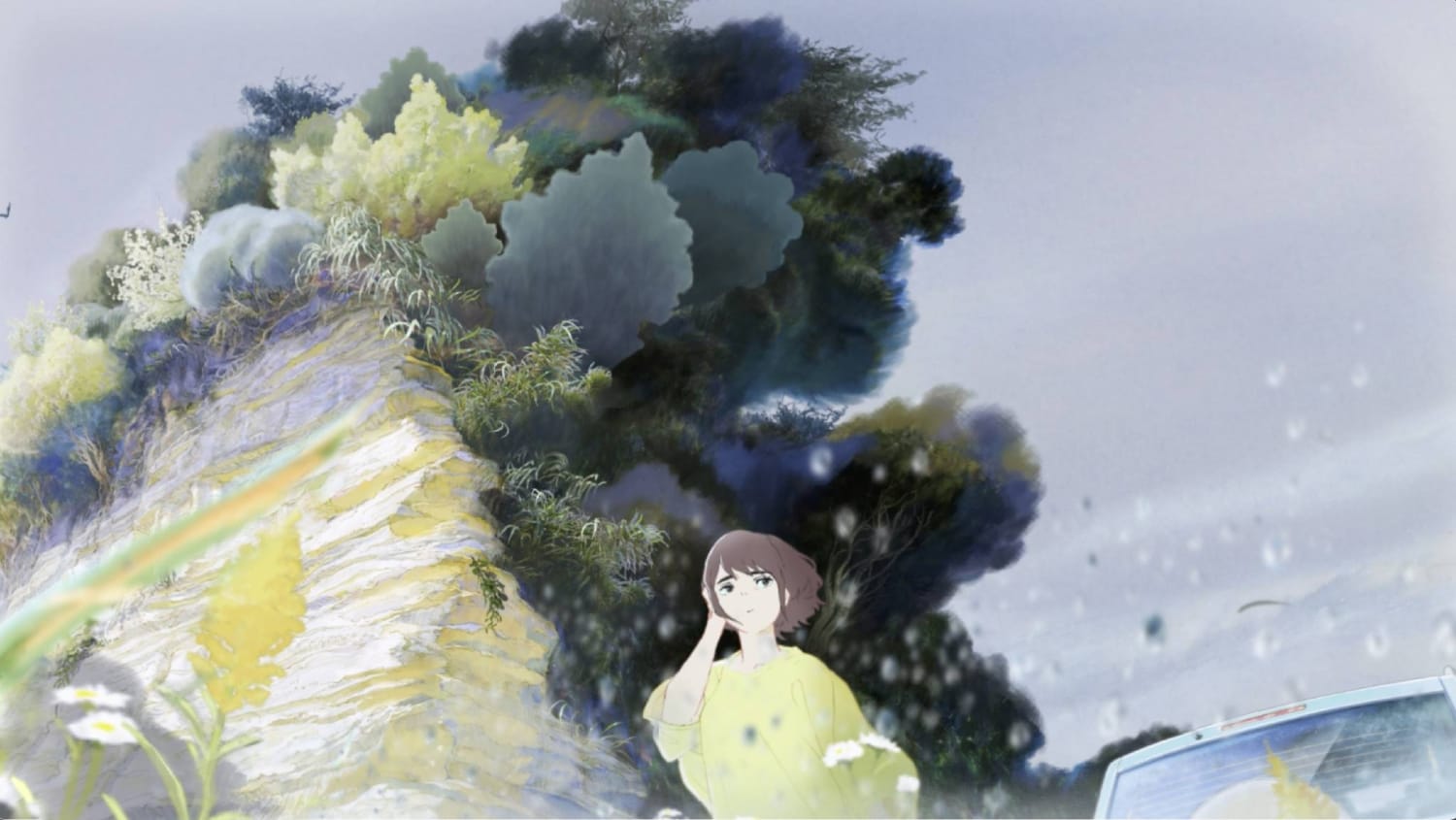
The fact the visuals of A New Dawn (Hana Rokushô Ga Akeru Hi Ni / 花緑青が明ける日に) are so striking should come as no surprise. The film’s director, Yoshitoshi Shinomiya, is first and foremost a painter. He graduated from Tokyo University of the Arts not for animation, but for Japanese Art, and his work here is both vibrant and strikingly complex in its use of colors and space. His artwork using acrylics, mixing mediums while centering on a painterly, mythological visual would inform his work when he would make the jump into animation to give his work an otherworldly quality.
Most notably he was in charge of the striking dream sequence in Makoto Shinkai’s Your Name, but he was also involved in The Garden of Words three years prior, and has expanded his work as a background artist and animator while designing posters for the last three Pokémon films and working on an array of commercial and short film projects. All of his work considers how the past shapes the present, and how it can be preserved into the future. It’s what informs his paintings, and it also informs his animated work. It also sits at the heart to unlocking the core of this striking debut feature.
Once upon a time, the Obinata Fireworks Shop, and the old man who used to run it, were known for their fireworks and firework celebrations. Those days are long gone. He stopped making fireworks long ago, and facing increasing pressure to sell the land to make way for a solar panel installation project, disappears one day without a trace. At this point, the only people who would hang around the store beyond the hassling developers were the man’s son, Keitaro, alongside his friends Kaoru, now a light mapping projectionist, and Sentaro. Then, even they leave, only Keitaro locking himself away to try and create the firework his father always wished to make. Four years later, with a chance the place could be seized and knocked down for unpaid debts, the trio reunite to see if anything can be done for this place of memories.
The film is a somewhat-unusual blend of administrative drama, coming-of-age tale and experimental fantasy that succeeds as a audiovisual metaphor for life more than offering a deep narrative in its own right. It’s important to note that this is a story that strictly adheres to the through line that has guided director Shinomiya’s entire career, the idea of building upon the past and seeking to preserve and move with it to make its jump to the future. It defines A New Dawn, seeping deeply into even its production process and the experimental methods used to bring this brisk 75-minute story to fruition.
Admittedly, we are somewhat thrown into affairs without warning in the film's opening scenes. The three talk about the dream firework Keitaro wishes to create (a shuhari), the term for this firework birthed in this abandoned factory used like a code word with as much clarity for an uninitiated audience as that would suggest until we are fully acquainted. Beyond an opening scene witnessing some of the harassing to the old man from the perspective of the trio as children, anything that seeks to explain this truth only becomes clear via flashbacks.
It's an unusual approach, but it feels deliberate when we consider this to be a film about the emotional impact of what it means to create with friends to memorialize the past and future, which shines because the narrative is given a back street to pure emotion.
A New Dawn’s flashbacks all harken back to the old man’s disappearance and the dying ideas he left behind, and a whirlwind day where the group reunite and frantically work to blend the past (the fireworks) with the present (the lights projection work of Kaoru) to create an all-new fantastical fireworks show that can mark the man’s disappearing work as an independent fireworks maker. It’s a battle against time with the threat of eviction turning their efforts into a race to craft everything and put off the demolition just long enough to get the show going (while getting eyes on the show thanks to social media). Rather than dwelling on building up their relationships as family and friends, we sense their closeness through their subtle notes of their friendship as though no time has passed, and get wrapped up in the rush of trying to build the firework.
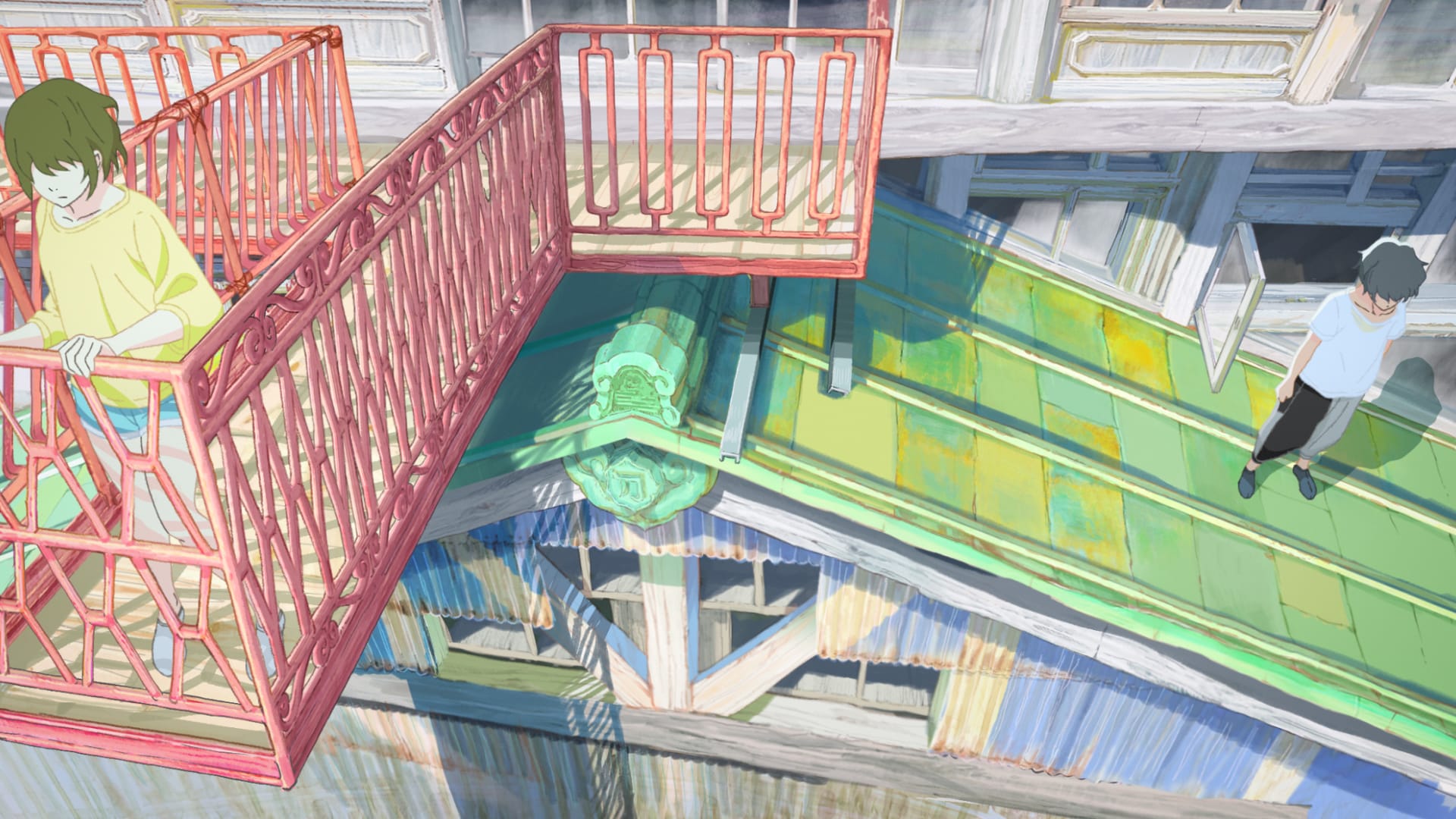
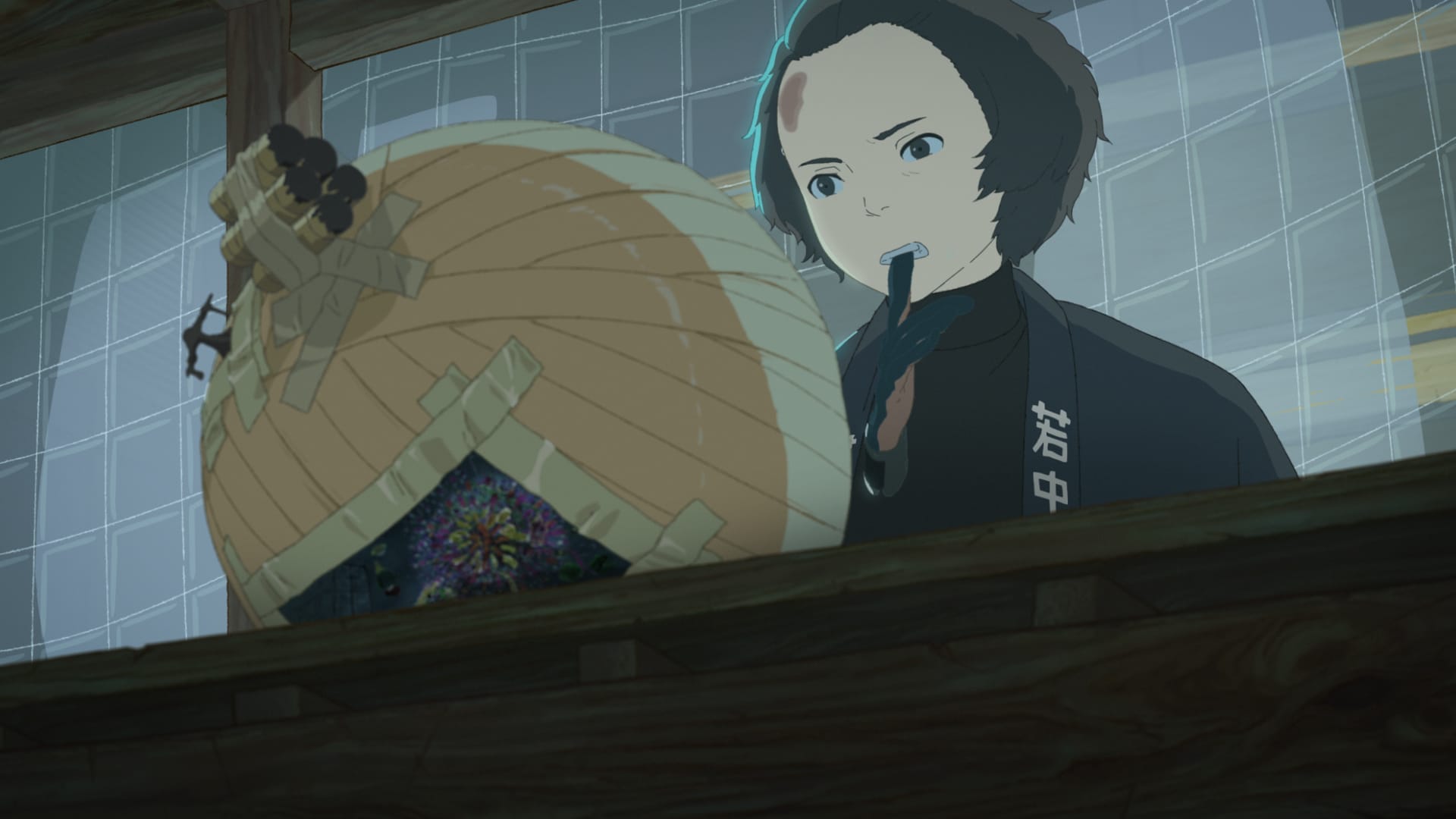
This is aided by its impressive visual direction. The film is basked in a saturated pastel color palette that on its own already stands apart from its immediate comparisons, before discussing the way it blends animation styles for the purpose of emphasizing emotional resonance and intent most of all. In one sequence diving into a pool of water, the creators painstakingly printed each frame of the sequence and, replicating techniques used during the days of cel animation, photographed each frame with a bowl of water in between to create a dreamlike submersion. In another, a drunken stupor is portrayed by a world devolving into claymation (produced in France by a studio supported by the film’s French co-production partner MIYU).
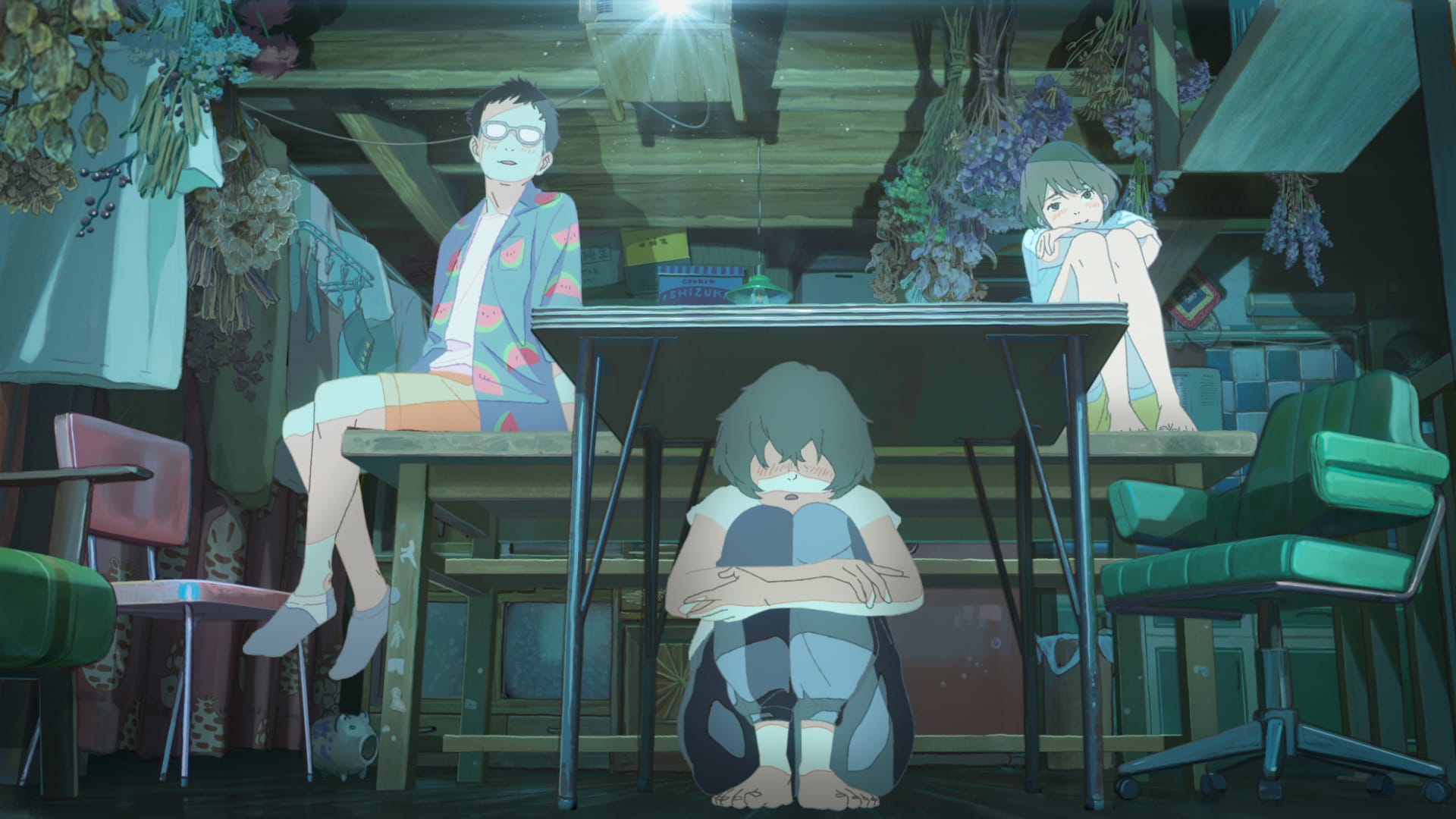
The purpose of these visuals, the characters, the music, is to embody an idea of memories preserved, represented by the striking glow of the firework. By the time we reach the fireworks event the film has teased for over an hour, it's a wonder to experience even if there are weeds to this story not fully processed by the time this crescendo explodes on screen. It works for how it renders the projections and firework itself, utilizing all these ideas and artistic styles the film has thrown to push the envelope in a way few others would even attempt.
That's what I love most with A New Dawn. It’s a showcase of the potential that comes with cross-cultural collaboration and an embrace of new, original ideas and creations coming from the hearts of a new cohort of anime directors. In an industry whose biggest success stories and projects are increasingly reliant on tried-and-trusted adaptations and fanbases, where even strong stories can feel stifled by a creative approach that does ‘enough’ without pushing the envelope, original anime productions such as this are increasingly rare on the big screen. Those that do exist often embrace hybrid production formats, taking on outside funders from global admirers of anime's potential (like MIYU here) to push the medium forward.
For that, and for what this project is able to achieve that pushes the boundaries of digital animation and the medium, it deserves both plaudits and your time. That doesn’t mean I solely recommend A New Dawn because it tries something new. This film is recommended because, while attempting to break new ground, the film successfully appeals less to the logical core of the brain and more to the emotional beating of the heart to remind an audience what is possible by building on our shared knowledge and creating something new.
It’s a message the creatives behind the film and the characters within it equally embody, and it’s what allows its final moments to resonate and move despite its shorter runtime and occasional scripting stumbles.
Japanese Movie Spotlight is a monthly column highlighting new Japanese cinema releases. You can check out the full archive of the column over on Letterboxd.