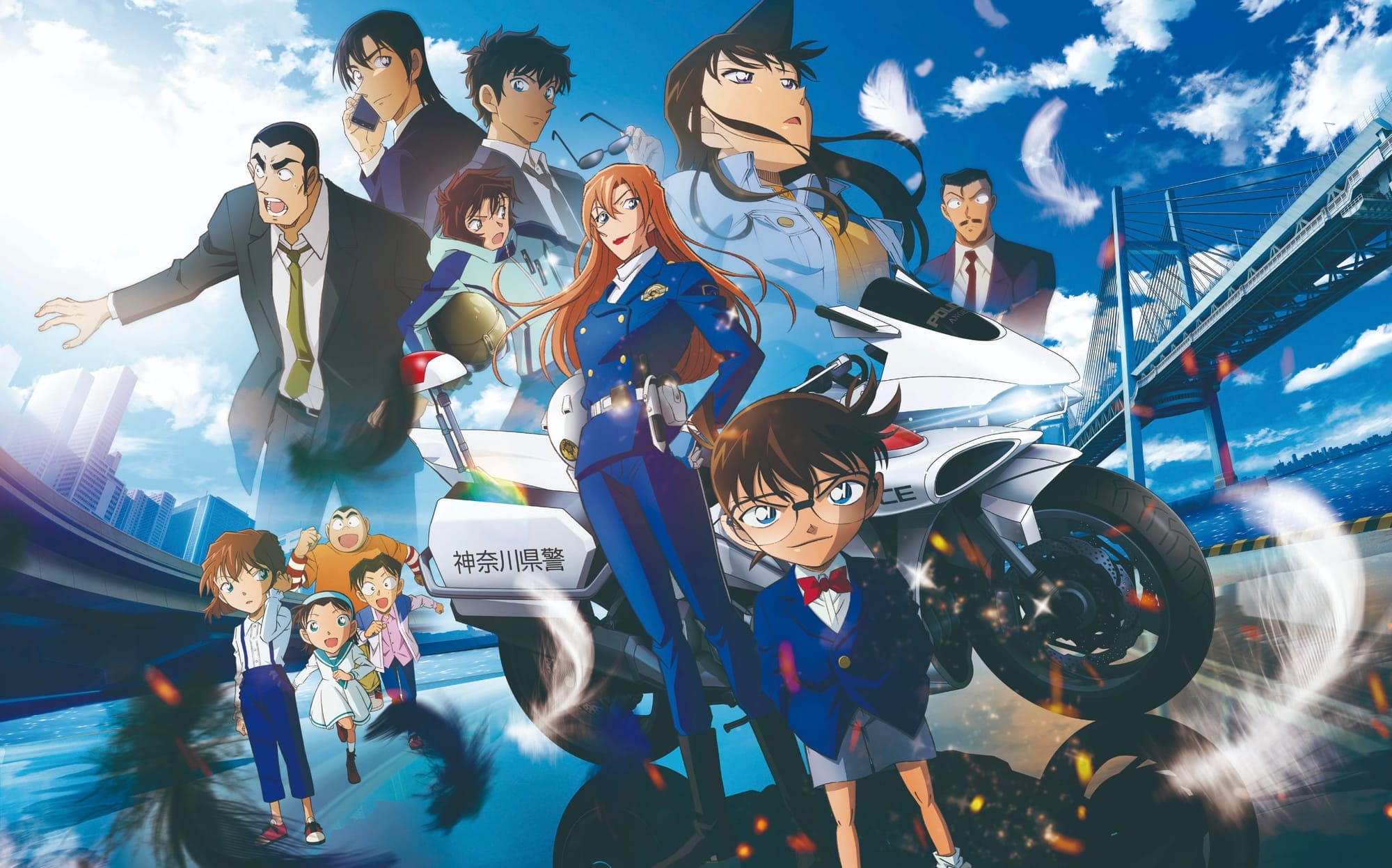
Another year, another Detective Conan movie to top the Japanese box office. You don’t need a review to tell you that Detective Conan: Fallen Angel of the Highway, the 29th mainline movie in the franchise that also marks the anime series’ overall 30th anniversary, is going to be a hit. The real question, is whether it’s any good.
Last year, it was the unprecedented success of Kokuho, not Detective Conan, that earned the title of the highest-grossing Japanese film of 2025, but that’s an anomaly in the grand scheme of things. By this point the franchise is a cinematic institution that has firmly entrenched itself in the lifeblood of Japanese theaters to the point that its creator has admitted the films will continue even after the manga at some point, eventually, ends. Which makes sense. There’s so many characters and stories to tell, and the mystery format opens the door for there always being something new to solve for Shinichi Kudou, whether pint-sized or fully-grown. It’s just where to point the camera next in such a vast world.
It’s what makes the subject of this film such a fascinating twist on a familiar formula. For all the series has its long-drawn favorites, Chihaya Hagiwara is a relative newcomer to the world of Conan. She was only fully introduced in 2021 in chapter 1073 of the original manga and has rarely featured in the anime before becoming the star of her own movie. That being said, she quickly became a beloved character thanks to her spunky personality as a more aggressive female officer with a bike to ride and an axe to grind, albeit with a kinder side also, which plays a core part of the story here.
A mysterious black bike has been racing around the streets of Yokohama, with Chihaya placed in charge of trying to apprehend it and its rider. Indeed, the bike has earned the name of Lucifer for its antics, showing just how much of a nuisance it’s been while contrasting a white bike being shown at the Kanagawa Motorcycle Festival in the city. Conan, Ran Mouri, Sonoko Suzuki, Kogoro Mouri and Masumi Sera happen to also be attending that festival and inevitably get wrapped up in the events surrounding this.
At the heart of this is the debut of a new self-driving system for motorbikes and a new bike being used by the Japanese police that debuts at the show, helpfully titled Angel. This tech is being pioneered by an engineer named Kazuaki Omae, though it appears that both he, this tech, and this mysterious black bike, have links to underground racing, tech conspiracy and the tragic death of Chihaya’s brother, Kenji.
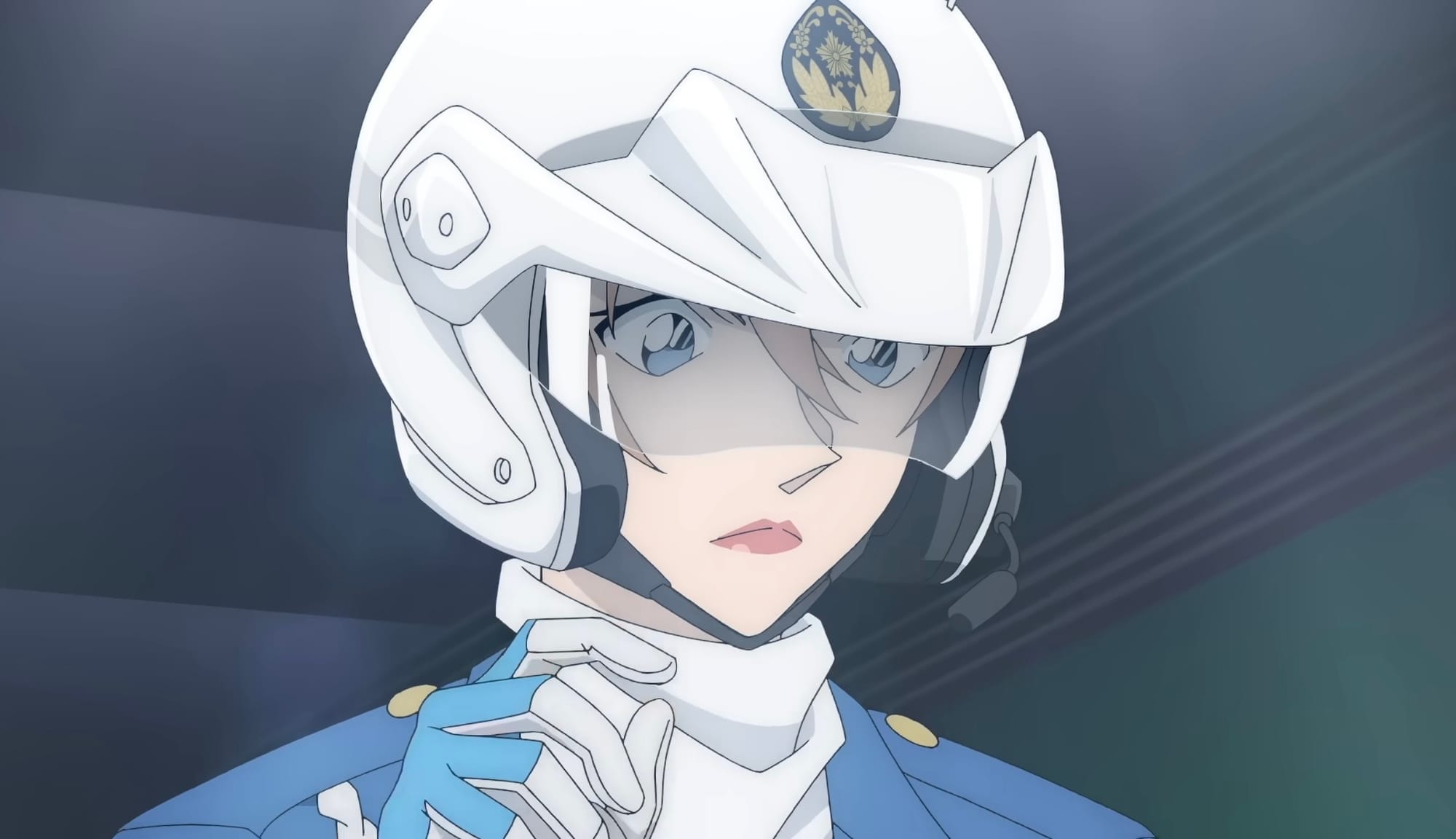
There’s sense to what the story is attempting to do in both breaking more varied ground for the movie franchise while looking back on the legacy of the franchise as we head towards the 30th anniversary. Kenji, while not an everpresent, is a beloved character who even plays one of the leading roles in a spin-off for the series, while the story condenses the cast significantly to center primarily the main characters in Conan, Ran, and others, with Chihaya providing a fresh face.
Where this movie falls to being one of the weaker films in the franchise’s recent history, and certainly weaker than last year’s entry, is in how predictable the story turns out to be. Admittedly, once you have 29 films behind you, even ignoring a TV series and manga with decades-long uninterrupted broadcast and presence, it can be difficult to create truly original storylines for a mystery even if new technology is introduced. This is a movie with the amusing aside that, in one action sequence, Conan is found by his friends through the tracker on a pair of wireless headphones, amidst a broader franchise that is otherwise timeless by necessity. Indeed, this is one of the most tech-centered stories to date with how the self-driving technology of cars and motorbikes comes into the forefront in questions of safety for drivers and failsafes present within them are at the heart of the drama of the events that play out.
It’s all just a bit too predictable. Detective Conan, for all it can stretch the limits of reality in fun and playful ways, is still bound by logic. It’s not a supernatural show, even if its main character is a teenager regressed to the size of a boy using drugs. Which means, inevitably, when Conan’s friends see what appears to be a Dullahan (a headless rider in black) on a rural road, there has to be an explanation. Once the self-driving technology is introduced at the car show moments later, any question of what could have been behind that bike is immediately understood. What makes this feel like even more of an oversight is that, by linking the two points together so soon, it immediately places anyone and anything associated with it under a scrutiny or suspicion the film has no desire to upend or subvert.
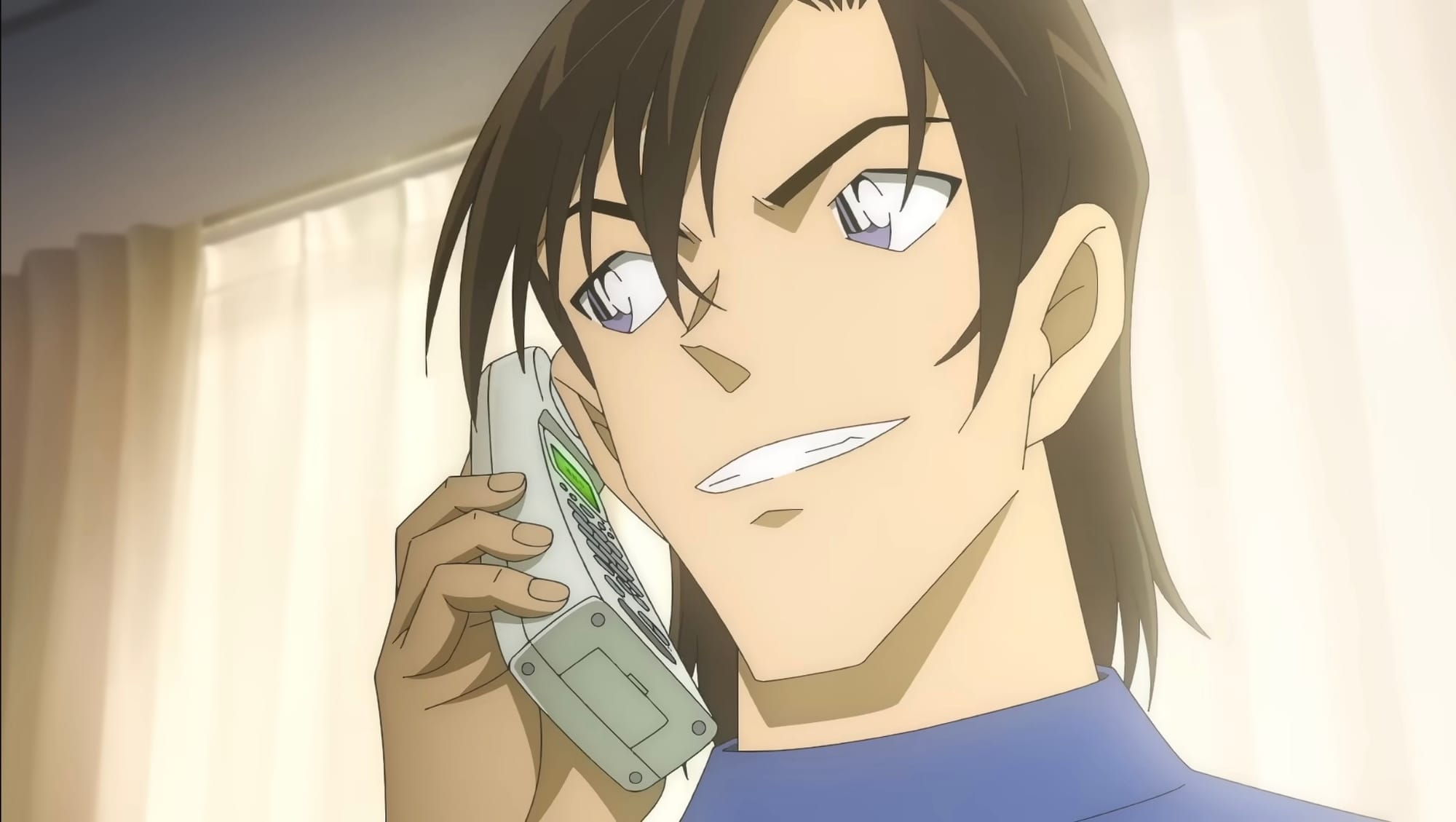
With this core so immediately obvious, every wrinkle to this mystery immediately falls into place, robbing this story of tension, even in the way it flashes back and paints a window onto a historical character and Chihaya’s character.
A character who, admittedly, is this film’s shining aspect. By being such a new but explicitly canon character a part of the main story as opposed to a film-only character, she has space to become a character with genuine depth. The film is at its best when the mystery is almost entirely discarded to instead focus on fleshing out Chihaya’s relationship to her brother and who she is as a person. Without time to explore this in the series so far, the film is space to actually do this and integrate this new backstory into the franchise broadly without having to the film’s events bear the undue weight of needing to be reintegrated into the manga at a later point. As a side character who’s still liked enough and will remain relevant, it’s a way to make the film feel consequential and interesting where the story itself fails.
With the mystery painfully apparent, we’re merely left to wait until the truth is revealed and we reach a climax, but even this falls short. It’s intense with high-paced chase sequences and ample explosions as you’d expect from a movie about motorbikes and a rebellious police rider, but it feels empty. Mostly because the story backing it has not made you attached to the many explosions, and also as a result of the series’ already-terse relationship to realism almost entirely breaking by the time it comes to an end.
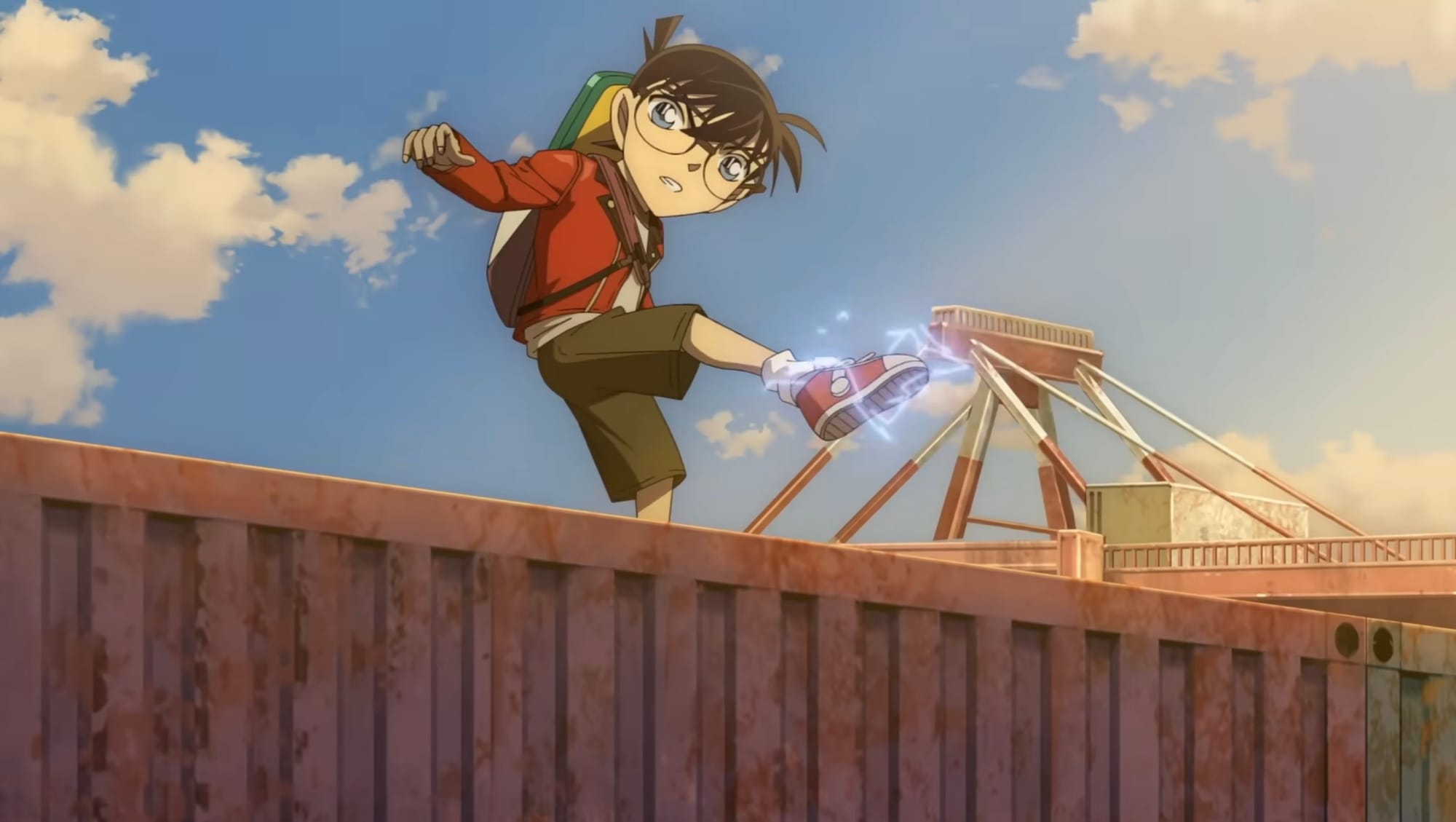
There are ideas here, which is why it’s frustrating to see that a film attempting to bring more weight and center new characters falls so short. I can appreciate them doing something new - the film is going to be a box office smash regardless, so why not use that fact to do something that isn’t the easiest possible solution? The result is that Detective Conan: Fallen Angel of the Highway is one of the weakest films in the franchise in years, and a need for the likely-behemoth tentpole 30th film to improve upon massively.