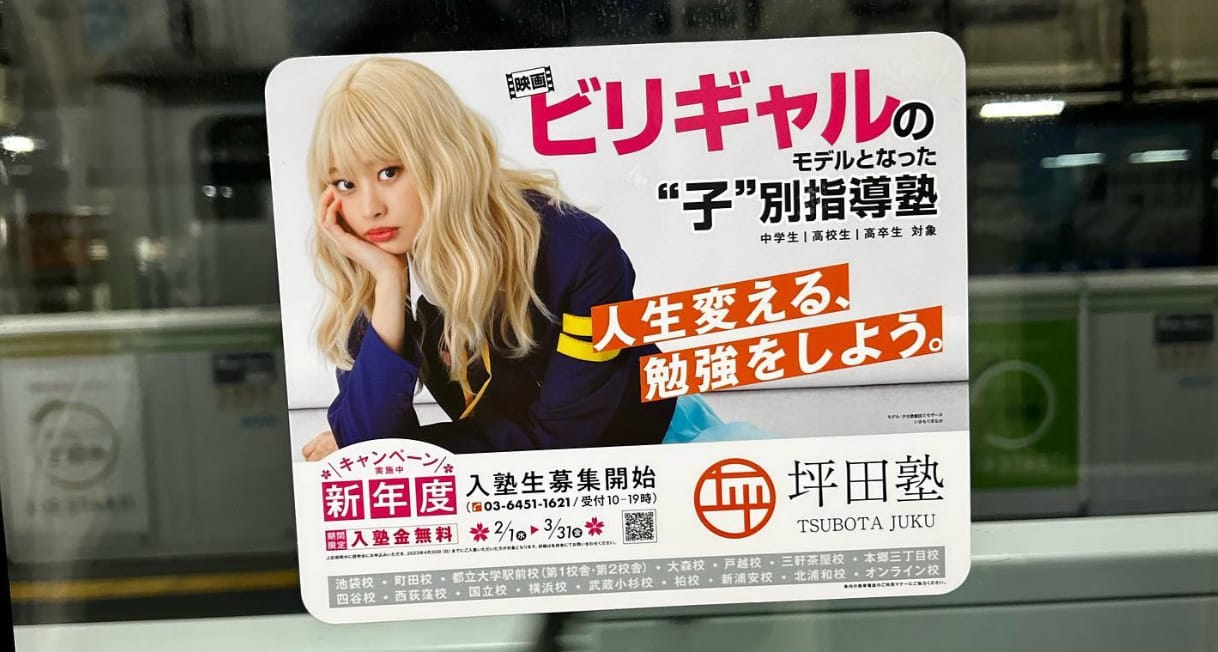
If you’ve ever regularly ridden a train in Tokyo, chances are you’ve seen an advertisement featuring a high school girl with dyed blonde hair (shown below). Since dyeing your hair is against most schools’ rules in Japan, I always wondered why a blonde high school girl was being used to advertise a “juku” (cram school) that students attend after their regular classes.
One day, after discussing the advertisement with someone, I learned that it was connected to a movie, which explains the “Biri Gyaru” tagline. I became curious, especially given I have experience working in education in Japan so I decided to check it out.
Flying Colors (ビリギャル / Biri Gyaru) is an inspirational Japanese film based on the real-life story of Sayaka Kobayashi. As the title suggests, Sayaka was a “biri gyaru,” literally meaning a “bottom-ranking gal.” Her academic ability is equivalent to that of a fourth-grade elementary school student, and she is constantly getting into trouble. As a result, her teachers warn her that she may not even graduate, let alone progress to the university affiliated with her high school.
At her mother’s suggestion, Sayaka enrolls in a juku to prepare for entrance into a different university. It is here that she meets Tsubota-sensei, a teacher who initially seems bewildered by her flashy appearance and “yankee” attitude. Meanwhile, Sayaka is equally surprised when he encourages her to aim for one of the top universities in Japan, Keio University.
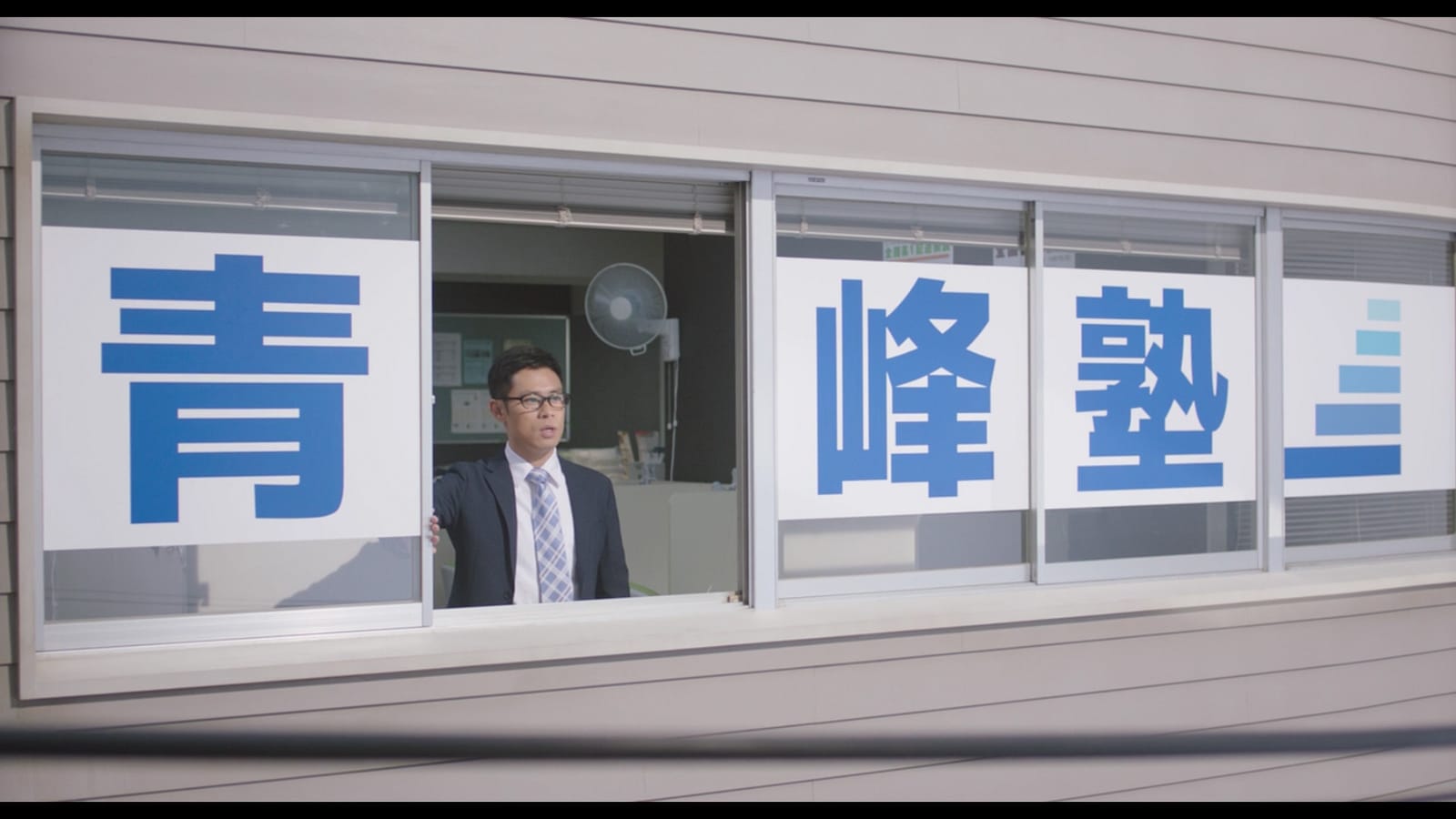
When she shares this goal with her friends and family, she is ridiculed. She has been labeled a hopeless “gyaru,” part of a Japanese subculture known for its bold, rebellious fashion of the 1980s and 1990s. While this may seem harmless, in Japan the term often carries negative connotations , similar to calling someone a “bimbo,” implying a lack of academic ability. Nevertheless, Sayaka is determined to prove everyone wrong.

The two main “villains” of the story are Sayaka’s father who focuses solely on his son’s baseball career and her homeroom teacher. Both have given up on her, dismissing her as incapable of achieving something as ambitious as admission to Keio.
This leads to one of the film’s most important themes: its highly positive portrayal of cram schools. The only people who truly believe in Sayaka are her mother, who sends her to the juku, and Tsubota-sensei. The film’s message seems to be that with enough effort, anyone can achieve anything. However, this message is somewhat complicated by the realities of Japan’s juku system.
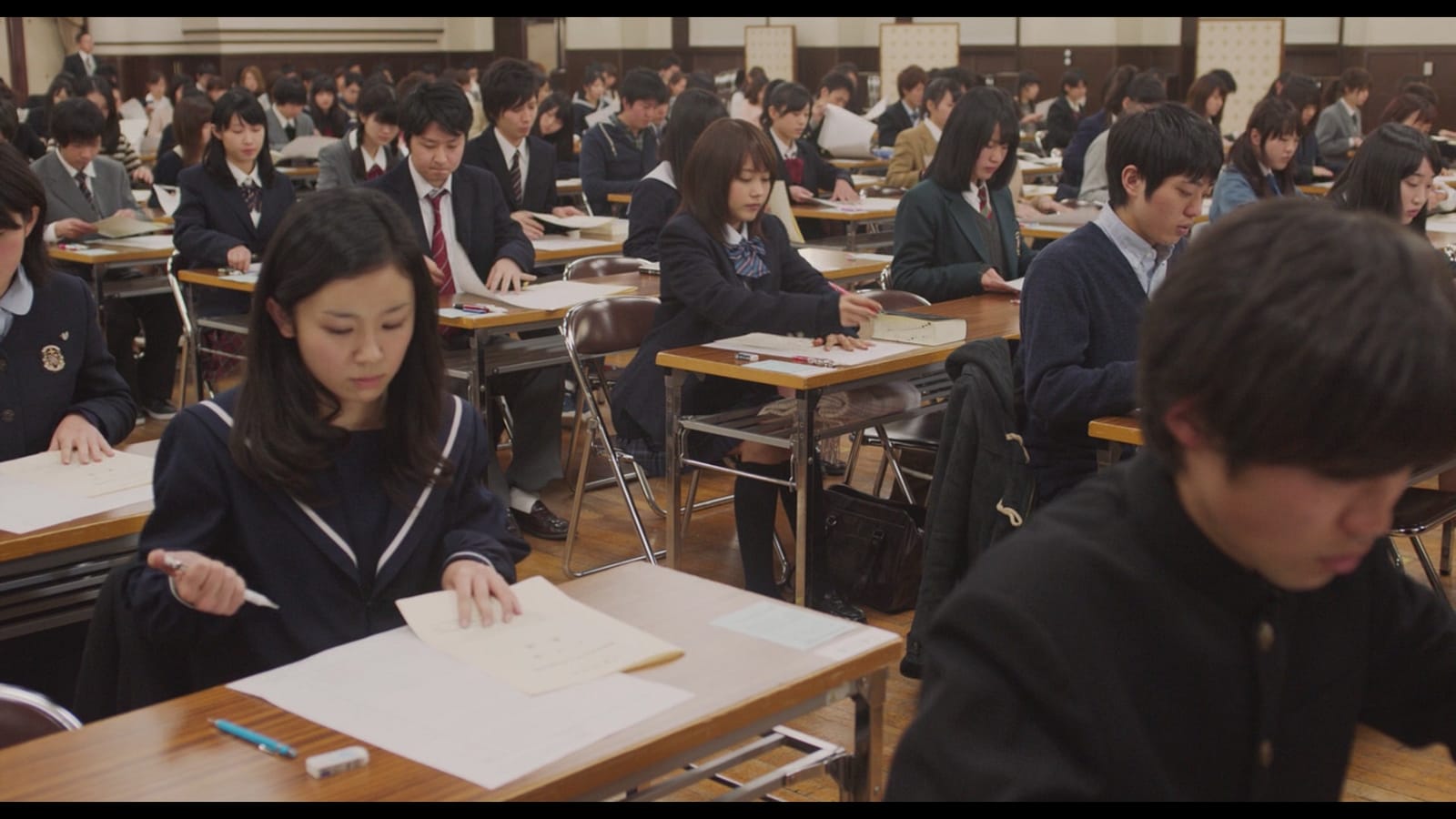
Japanese cram schools have a notorious reputation. Most students attend one at some point during high school to prepare for university entrance exams. After finishing regular classes around 3–4 PM and participating in club activities until 6 PM, students often begin juku lessons that can last until 9 or 10 PM or even later at more intensive schools. Many attend two to three times per week.
Beyond the time commitment, these schools are also expensive. Charging per hour and per subject, fees can exceed 60,000 yen per month. Considering the general cost of living in Japan, this represents a significant financial burden for many families.
As someone with experience in Japanese education, I appreciate the idea of supplementary institutions that can support students who fall through the cracks of the traditional system. However, I don’t believe this is their primary function. In a more cynical reading, the film’s message becomes: “Anyone can get into a top university, you just have to pay for it.”
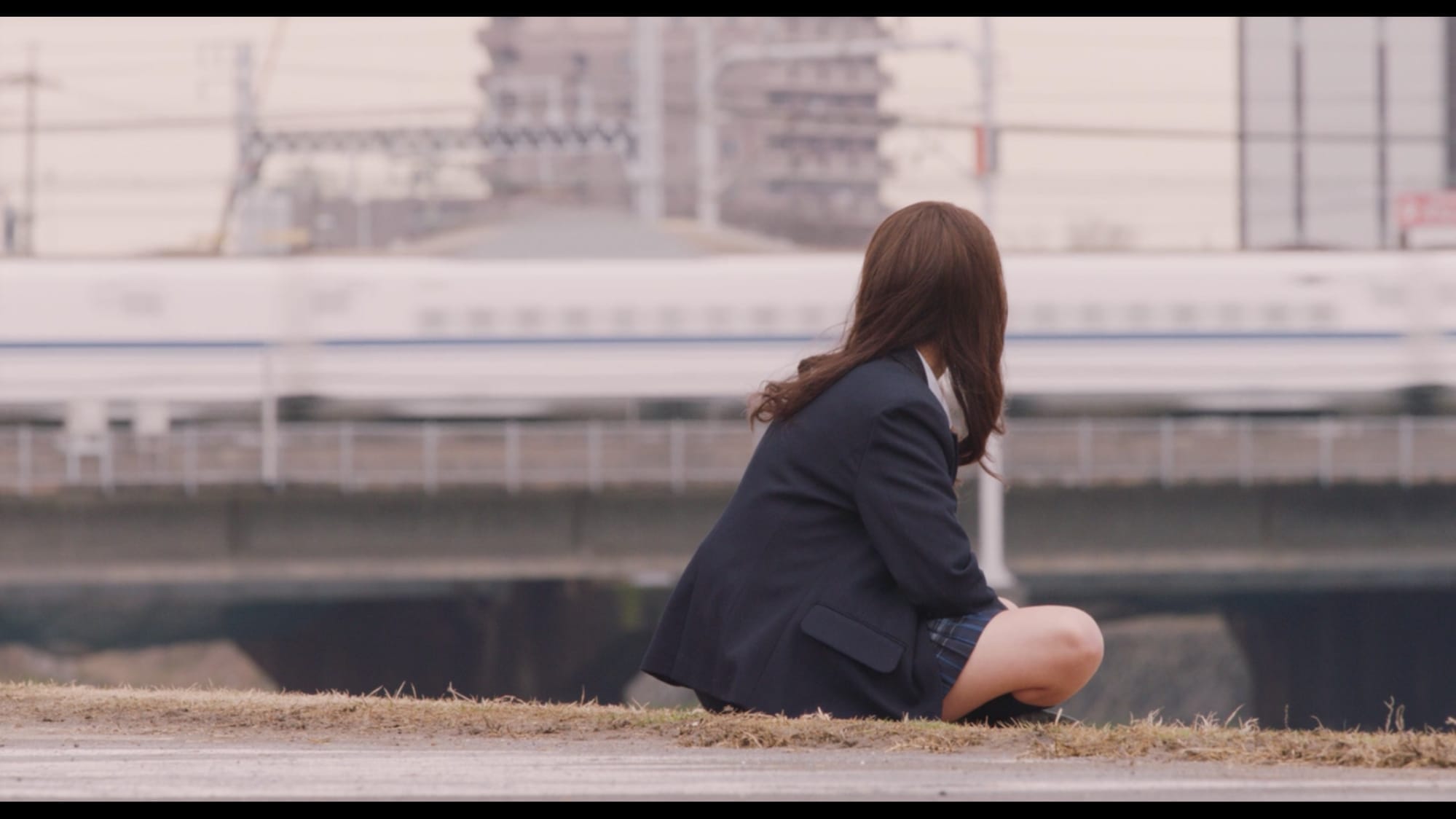
Ultimately, Flying Colors is an uplifting, feel-good film that explores themes many people can relate to. Public education systems, with all their flaws, often fail a significant number of students. In reality, Sayaka Kobayashi did prove her doubters wrong. After earning her master’s degree and studying abroad, she went on to become the CEO of her own company.
It may be optimistic, but I hope both the film and Sayaka’s story continue to inspire students in similar situations, demonstrating that, with determination, there truly can be a way.