A Scene at the Sea is Takeshi Kitano’s most serene and quaint film amidst a bombastic filmography. It’s practically silent, and it’s within that silence that a form of communication beyond words by those who can’t speak is formed. Communication is more tactile and yet less structured, centered on the emotion it brings more than what is spoken. Then, it’s over. And it’s beautiful.
By the time the film released in Japanese cinemas in 1991, audiences had come to broadly accept Kitano’s transformation from comedian to a cinematic creative who would come to define the new wave of directors that would find domestic and international prominence in Japan’s so-called lost decade. Having found an initial dramatic turn in Nagisa Oshima’s impressive multinational Merry Christmas Mr. Lawrence as a sergeant in charge of a remote prisoner of war camp, the man would go on to write, direct and often star in a range of films that would flex his creative power beyond the comedian he was still widely perceived to be in the early 1980s.
Still, some of these early films initially followed a more violent and yakuza-infused tone and setting that certainly stood apart from his past work, but felt very much in line with what audiences would perceive a man like Kitano to create. 1989’s directorial debut Violent Cop is great, but it fits this description, so to speak. The same can be said for Boiling Point. A Scene at the Sea is anything but that.
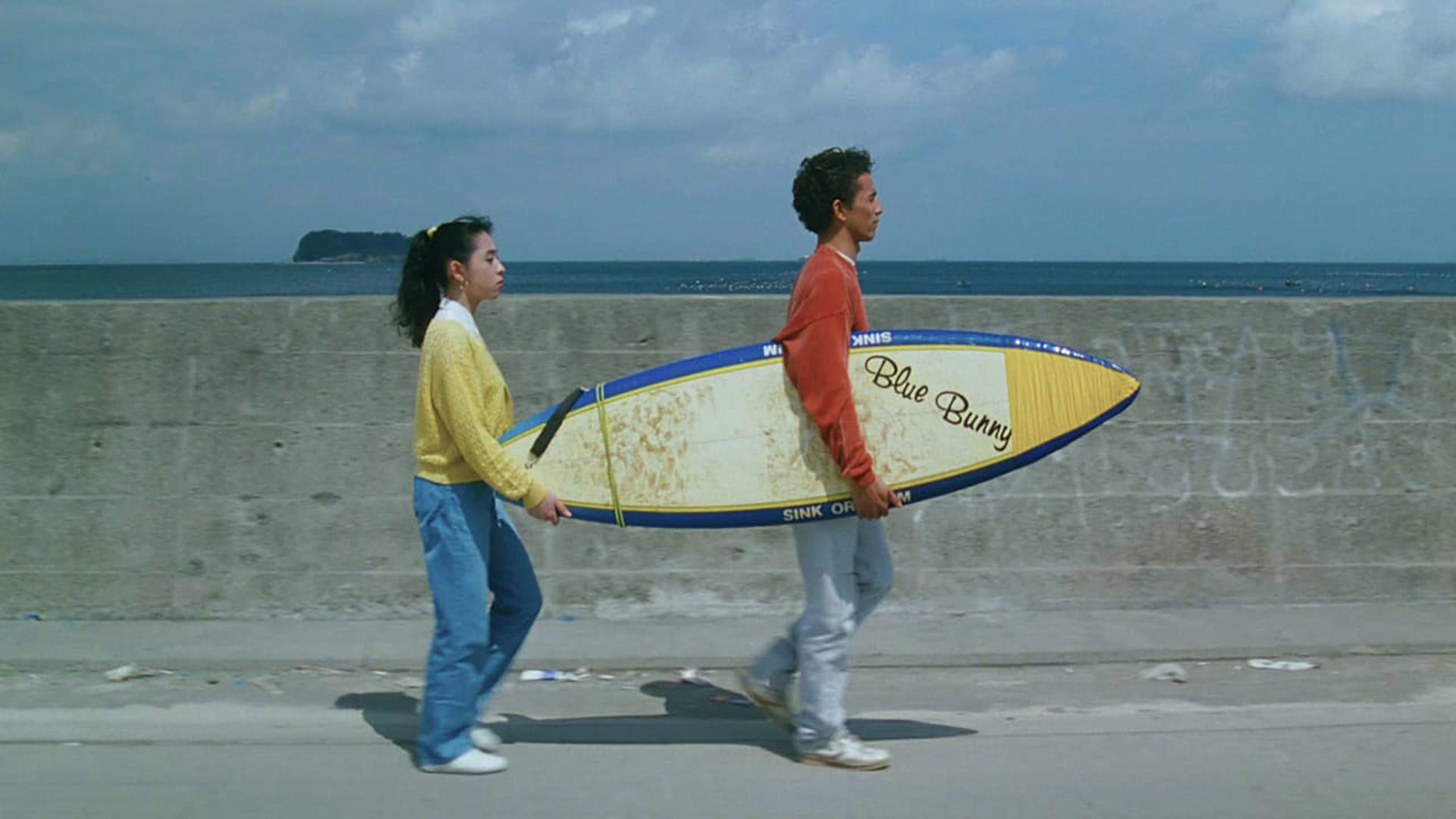
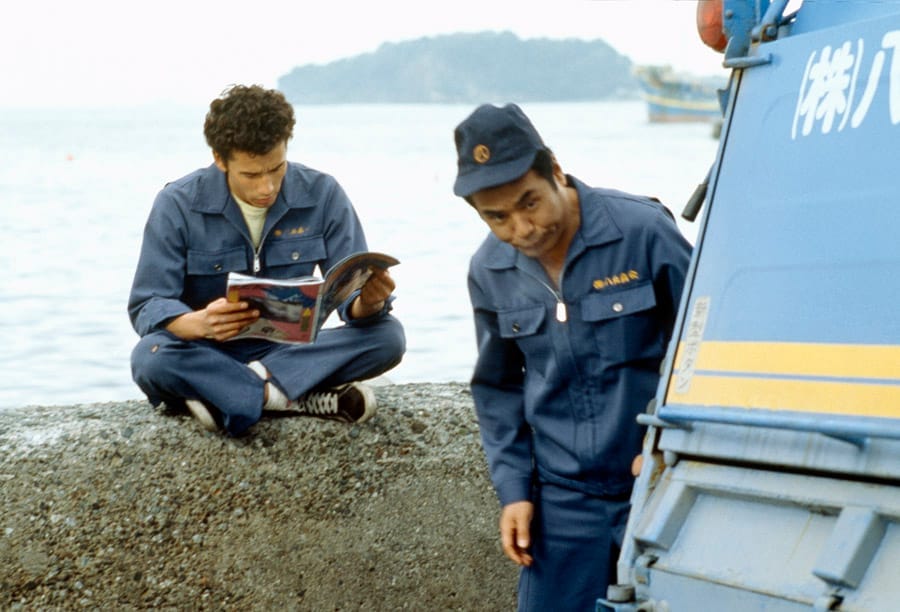
The story centers Shigeru, a young and deaf trash collector in a rural coastal town. One day, while working, he finds a broken surfboard, and decides to repair and use it to learn to surf, practicing silently day by day. He has one spectator: his also-deaf girlfriend Takako who watches in silent encouragement. Though the pair can communicate with sign language, even this is minimal, yet their love, respect and understanding of one another is clear. Similarly, while Shigeru was at first bullied for his lack of skill and silent demeanor, his relentless practice and improvement earns him the respect of the local surfers. Eventually, he even gets good enough to enter a local competition, becoming ever-more consumed in the act of surfing to the point of even skipping work to improve his skills.
It’s a daunting challenge for Kitano to take on as just his third film. Without dialogue from either of the film’s two main characters, any story, emotion and narrative development must be portrayed almost entirely silently through the environment around them. More specifically, how they and it evolve and change thanks to this incidental new hobby that becomes a rooting presence in the life of a man who feels loved, but also profoundly isolated.
In order to do so, Kitano employs an almost sketch-like dreaminess to the film’s tone and central relationship. With even the use of sign language present but minimized, we’re left with so much to assume and infer but little to concretely confirm to understand about either Shigeru or Takako, aside from their love. Indeed, it’s this romance that speaks in the crashing of the waves and the flowing musical cues of Joe Hisaishi, the famed composer for which this would mark Kitano’s first musical collaboration.
This romantic wistfulness comes against a rather subdued, grayed landscape that makes surfing feels like an oasis of excitement against a more quaint backdrop, by design. It’s mundane, in reality, a life that’s unspectacular, and yet still beautiful.
Yet as can be seen in other of the director’s works also, that beauty has a tinge of melancholy and sadness to go with it. Because there’s nothing spectacular, and even the darker moments feel like blips despite their emotional impact. The film evades any clear identifying structure or core idea beyond the silent melancholy of love in its good and bad, together and apart.
It’s hard to pick any singular aspect that instigates a conflict. You could argue the surfboard as it instigates the boy’s surfing journey, but that’s just a happenstance of work. His deafness is a fact of life not a new revelation, making the difficulties in communicating and participating in himself, his work, and his surfing, incidental in the grand scheme of things. When he’s ripped off by the surf shop owner at first before the man comes to admire his dedication, it’s not treated as a major incident despite the discriminatory ideas that would motivate him to even think about attempting such an underhanded act. Even his love is not causing strife, as his partner’s smiles and joy simply to watch makes her more of a figment of what happiness can be embodied in a person.
It’s within this deflective approach to portraying this life that a deeper truth can be revealed, and may even explain why Kitano decided to create this vastly different narrative after works of comedy and yakuza in acting and directing prior. In the drama he captured and the absurdity he poked fun at, the core that made them relatable and made him a household name was that these works captured what life can be. It has good, it has bad, it has joy, it has strife and discrimination both known and unknown. It might even be plain. But it’s real, and that’s worth capturing.
The lives he captured prior may be more extreme and immediately eye-catching, but are they really more valid than the other? In each, whether subtle or in vast arcs and swatches, life changes, people change. Respect is earned and lost. It’s quaint, and patient, and careful. The film is no different than their siblings, despite the tone and characters being polar opposites. Kitano understands this, and that’s what ties this silent, almost empty story into something so resonant and real.
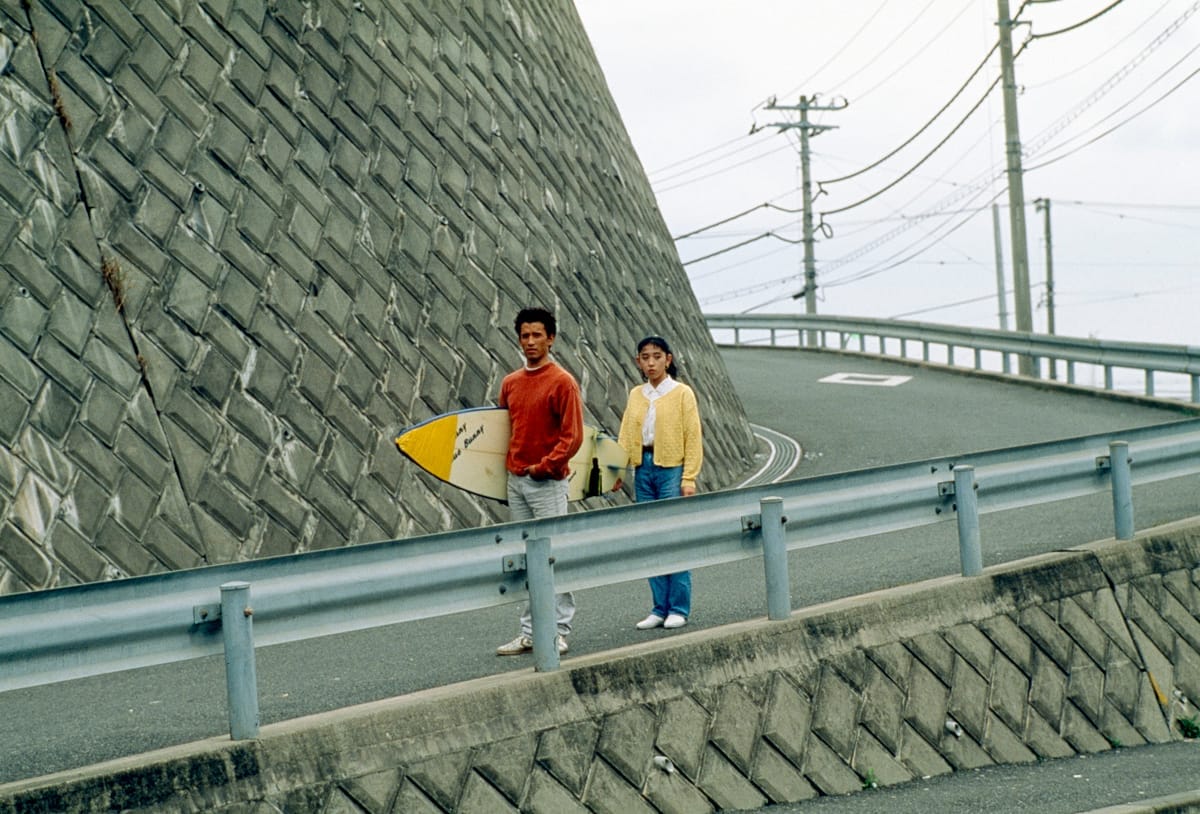
In an interview conducted about the film, Kitano comments on how we view the beauty of the world like cinema, a combination of sound and sight and everything in one. With the beach, there’s a rhythm to the sound of the waves that gives it beauty. For a deaf person, they don’t have that, and yet in some ways the beauty of the beach that can be perceived this way is still more beautiful than what can be seen elsewhere. In shooting the film in Chiba prefecture and near Tokyo as opposed to the objectively more beautiful beaches seen in the south of Japan, there’s a point to be made on how beauty can be found even in the familiar and less idyllic places, it just needs to be seen. It’s a sense of perspective that comes from truly reflecting on life.
The interview was notably conducted after a near-death accident on a motorbike, looking back on the film many years later.
It still stands as the best surmise of the intent of A Scene at the Sea. It’s Kitano at his most plain and silent and minimal, and yet because of it it’s more expressive and loud than any other. That’s just what life is, it’s a voice that roars regardless of how spectacular it is.
scrmbl's Classic Film Showcase shines a light on historical Japanese cinema. You can check out the full archive of the column over on Letterboxd.