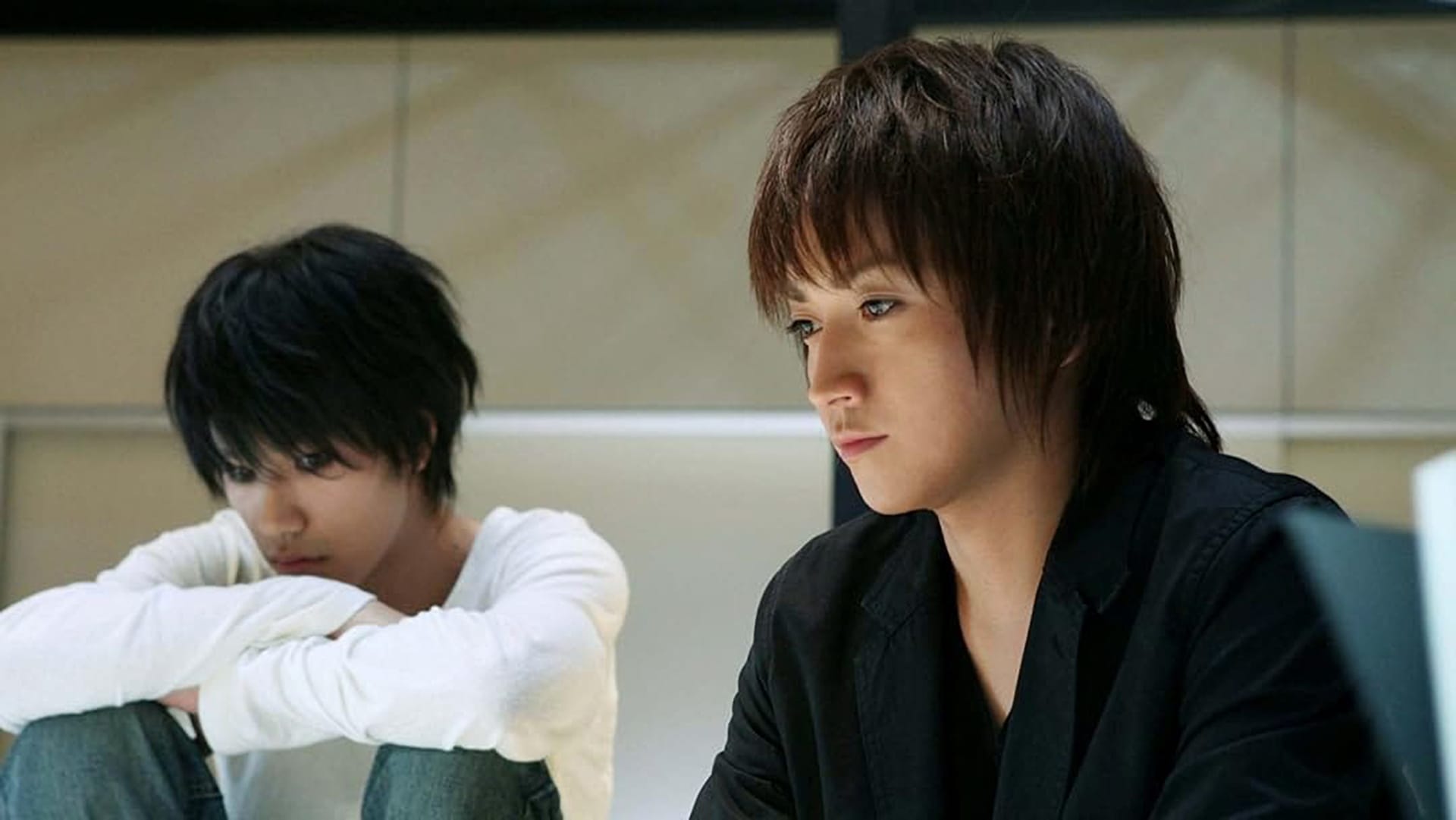
In an era where live action adaptations of anime are more prominent and popular than ever, I cast my mind back to what I feel remains a gold standard for these forms of adaptations when it comes to casting, the creative choices made, and in terms of quality. Released in 2006, Death Note and Death Note: The Last Name captured a moment but weren’t bound to it, and that’s the secret to its greatness and longevity.
With the shinigami bored of mindlessly killing, one, named Ryuk, drops a Death Note into the human world. This falls into the ownership of Light, who uses it to kill only criminals as a way of enacting justice where the police fall short. With many suddenly falling of unexplained heart attacks many proclaim it to be the work of god, giving the phenomenon the name Kira. Police see a perversion of justice, and just to understand it they investigate the truth. L, a famed international investigator, even comes on, narrowing down possible culprits till the pair are left in a game of wits, attempting to corner the other so their form of justice endures.
The duology chose not to adapt the Death Note manga faithfully page-by-page - despite the series completing its serialization the same year these films were released, both films were shot simultaneously prior to the story's conclusion, and each released before the more faithful anime adaptation released in 2007. Instead, these films that take the core concepts of a notebook where anyone whose name is written shall die, coupled with the characters people loved and key concepts, and took the story in its own direction. This meant the two films centered entirely on the battle of wits between Light and L, with characters like Near never being introduced.
Thus, it becomes necessary to shift the pacing and direction of the story very early on, not just to make each film tell its own complete story but to factor for this shifted focus. The first film is focused on Light finding the Death Note, getting used to its function, and then using it to his own means as he begins his fight against the one person who knows the truth and might be able to match his intellect, L. Only in the second film is Amane Misa introduced fully with the second Death Note having appeared only briefly in the first film, with the shift being a part of what leaves Light more vulnerable and eventually exposed.
Directing for the film is handled by Shunsuke Kaneko, to this point most notably known for his work producing the Heisei-era Gamera trilogy. To that end, there are two notable similarities between the two works. With Gamera, Kaneko took the character in his own, more morally-ambiguous and darker direction, telling an interconnected story that transformed a kaiju projecting children from the 1960s into a malevolent protector of humanity, misunderstood with the power to turn if humanity failed to protect the planet like it protected them. It stood stylistically apart from other kaiju films, yet its moral quandary is precisely why it was so compelling.
Death Note took a similar approach. In reconstructing the narrative, the only thing Kaneko had to adhere to were the originally-established rules of the Death Note. Otherwise, the director, while writing and producing the film, had relatively free reign to shape the film however he wanted. The result was to create a film contemplating justice and the media, taking the question pondered by the original story further within this new story. Light represents a form of justice defined by fear, while L represents a justice defined by rehabilitation and truth. It’s what allows Light’s message as a god to spread in the early internet as a prophet, while L relies on traditional media to attempt to make headwinds and establish himself through institution as just.
The film is not dismissive of either argument, even as it begins to show Light’s descent from a curious schoolkid with a moral justice to a person playing god until his humanity has disappeared. Some of the most interesting aspects of the film are where it diverges from the source material, particularly in the first film’s climax. One of the strongest additions to the live-action over the original was the introduction of Akino Shiori (Kashii Yuu), a girlfriend for Light with differing views on Kira. When the FBI are introduced to the original manga as part of L’s investigation, it’s handled independently by Light, while Shiori becomes an unwitting pawn in tricking the investigation.
After Light notices his stalker, he promises to go on a date when he confronts the FBI investigator during a bus hijack and tricks him into getting his name. This is how he eventually goes to getting the names of all the FBI investigators and killing them, leaving Naomi Misora, a former L confidant, as a widow in the process. Determined for revenge and certain thanks to her conversations with her fiance that Light must be Kira, he stages a trap for Light using his girlfriend as bait. To prove his innocence and get rid of suspicion in the process, a choice whether to sacrifice of the one thing he admits keeps him tethered to humanity must be made, a perfect closure to the first film that signals just how far Light has already fallen.
The second film takes aspects from later investigations, including the new shinigami, new Death Notes and an attempt by Light to utilize fandom of Kira for his own benefit, and wraps it into the main investigation until the final truth is revealed. Yet thanks to the early changes made in the first film, the final act is almost-entirely original. Often in such adaptations, this is risky. You could alienate core fans, and there’s no guarantee the new story approach will be welcomed by fans or newcomers. Yet this approach allows the vast depths of Death Note to be condensed into four hours without sacrificing its thematic ideas, adapting the idea, rather than the strict chain of events, to the medium in a way that only benefits its pacing.
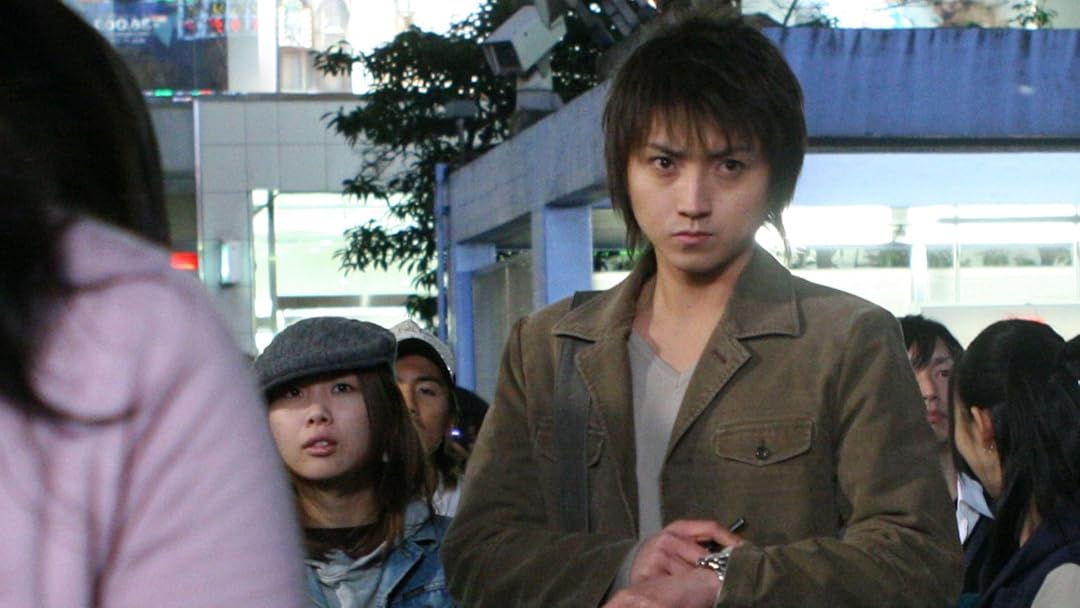
Admittedly there are other lightning-in-a-bottle aspects that would be difficult to replicate that aided this film's success. Near-perfect casting befitting every character allows for a lot of leeway when making changes to the source material. Tatsuya Fujiwara burst onto the Japanese movie scene in 2000 thanks to the phenomenon that was the original Battle Royale, giving him the chance to take his raw acting style and channel it into a similar typecast of ideologically-driven and singular teenager with a desire to fight a perceived injustice. Kenichi Matsuyama’s more unusual acting style made him a fit for the oddball but sincere character of L, with Erika Toda achieving idol-like status as a TV actor that made a simple transition into Misa Amane’s role.
The film maintained spectacle through impressive CG used to bring the shinigami Ryuk to life. Fully-CG characters were a rarity in Japanese film, and even if it looks a little more dated today is still impressive in how naturally he becomes a backdrop and shadow to the events of the film.
All these elements together make these films that are great not because they act as cosplay or re-enactments, but because they’re great cinema in their own right. When films like Sakamoto Days get lost in casting famous actors and recreating imagery they forget to create a compelling film, this works in reverse to create something truly timeless. That’s the magic of the Death Note live-action films. The films paved the way for other adaptations, such as the TV series, or the musical from Frank Wildhorn, to take core ideas and otherwise go their own direction and create for everyone, regardless of awareness to the original tale. It’s a challenge where few succeed, yet Death Note, even twenty years on, makes it look so simple.
scrmbl's Classic Film Showcase shines a light on historical Japanese cinema. You can check out the full archive of the column over on Letterboxd.