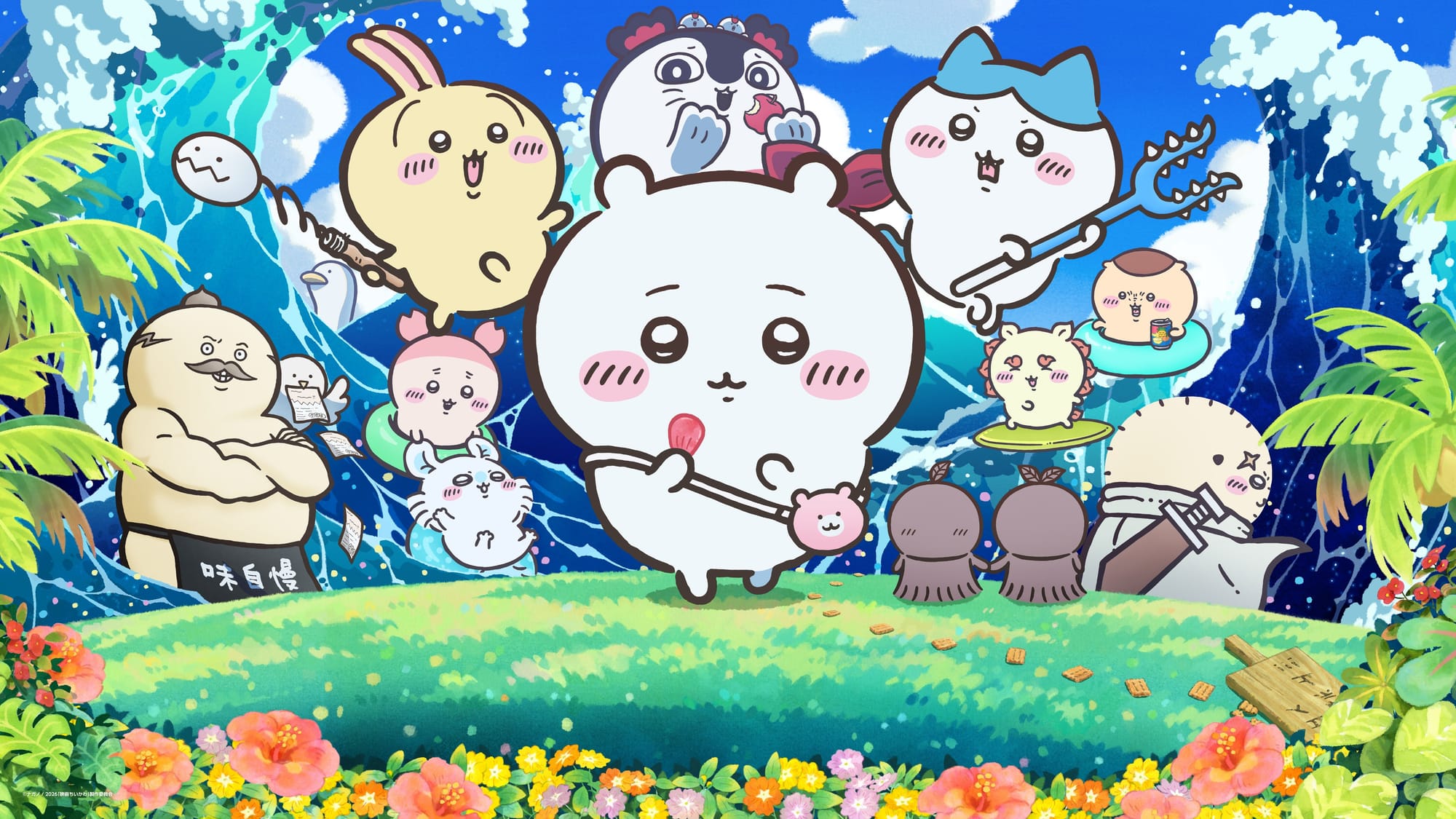
There are a few cute, gremlin-like creatures who have become inescapable in Japan in recent years. Chiikawa, Hachiware and Usagi on the surface appear like any other simplistic, cute mascots that are easy to transform into just about any plush toy, clear file or assorted merchandise you can find, indistinguishable from the many pint-sized deforme-style chibi characters to rise to prominence in Japan’s culture of kawaii. Yet where as these trends often rise and fall, Chiikawa has endured years as a monolith, only seemingly growing more popular as time has passed. That’s because, underneath their adorable surface, they’re a little, shall we say, unhinged. Like cosmic horror, wanton terror, and relatably-flawed, but still visually-appealing, gremlins.
That gap is their appeal, putting them everywhere from McDonalds Happy Meals to credit cards. They’re cute enough for kids, but when one of its characters is Kuri-manju, a creature with the personality of a middle-aged alcoholic salaryman, an adult with disillusionment with their work will find their own appeal. Starting as a manga and expanding to real-life bakeries, a themed Chiikawa Land and everything in between, it somehow appeals to everyone because there’s something a little broken about them, something more. Which is exactly what you get with their inevitable jump to cinemas in Chiikawa The Movie: The Secret of Mermaid Island, delivers upon.
Spoilers ahead for Chiikawa The Movie: The Secret of Mermaid Island
Whether to describe this as a family-friendly kids movie or a subversive horror depends on your view of the central themes of the story. It starts in almost-comedic fashion, as Chiikawa and their friends stumble upon a flyer promoting a festival on a secretive mermaid island. While the elder seems to have some suspicion, the promise of desserts is more than enough to make them go, where tasty food and relaxing summer vibes fill their days. That is, until a large mermaid and two of their children come to swipe them away when they linger too close to a cave whose warning sign has been knocked away, sending them on an adventure both to save themselves and their friends, but come to understanding the roots of the animosity between the islanders and mermaids.
Wrapped within the visuals of a friendly, inviting family adventure no different to Doraemon is something far more sinister, a fact that becomes apparent pretty early on upon the group reaching the island. While the islanders attempt to live normally, others seem to disappear and are later found dead at the hands of a siren suddenly angry with them at a perceived injustice many don't understand. Chiikawa and friends accidentally find themselves wrapped up in uncovering this secret, learning about the tragedy that birthed their animosity. As it turns out, one of the siren's children was eaten, lured away by snacks after reading that eating them could grant eternal life. What was once a truce became a violent conflict with victims on both sides, and an anger neither are willing to resolve.
Who is good and who is evil in this scenario? Many would assume the figure responsible for the murder of the child would be the guilty party, but what if there was a reason for them to commit this act? And should murder justify an eye for an eye, or in this case, many eyes?
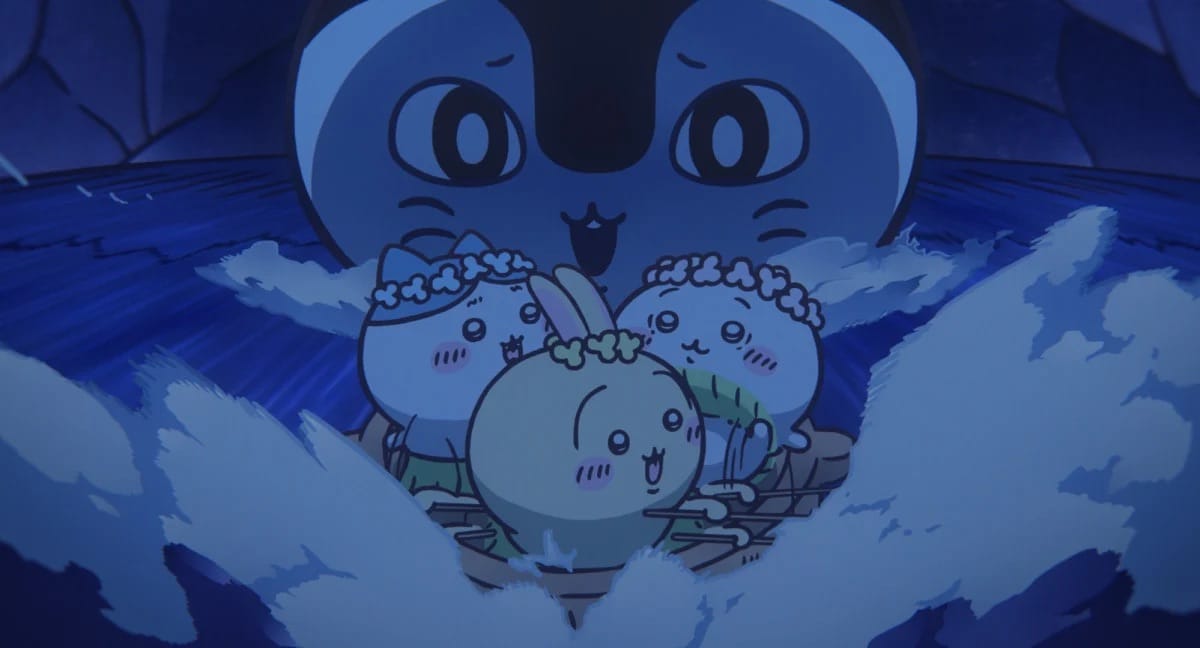
Surprisingly for something that still attracts such young audiences alongside its many adult admirers, the film can get surprisingly bleak as it explores these ideas. When the truth is revealed via flashback, it’s with a blood-curdling killing blow barely censored, complimented by audio so realistic to cause visceral flinching, as though the murder really happened. After a grand climactic conflict between the islanders and the siren for which Chiikawa and friends intervene more in the hope of preventing further victims than in an approval of the status quo, the post-war moment of reflection is approached with a level of maturity even few adult-oriented works would consider, lest the mood become too bleak.
It’s a complexity that makes the film unique, worthy of recognition and the many records the film has broken in its opening days of release. It won’t convert the unconverted, however, and there are other issues the film suffers from that bring down the experience.
Though the film is overall very well-animated by the team at CyGames Pictures, the script and story of the film are largely unchanged and unedited from the pacing and events portrayed in the original eight-month web manga publication on X (formerly Twitter). This becomes an issue as the process of consuming this story through single pages regularly serialized on social media is far different from the condensed nature of thrusting months of works into two hours of animation. You're likely to repeat things on the web for comedy or to remind audiences in ways that become redundant in film, yet they remain in this adaptation.
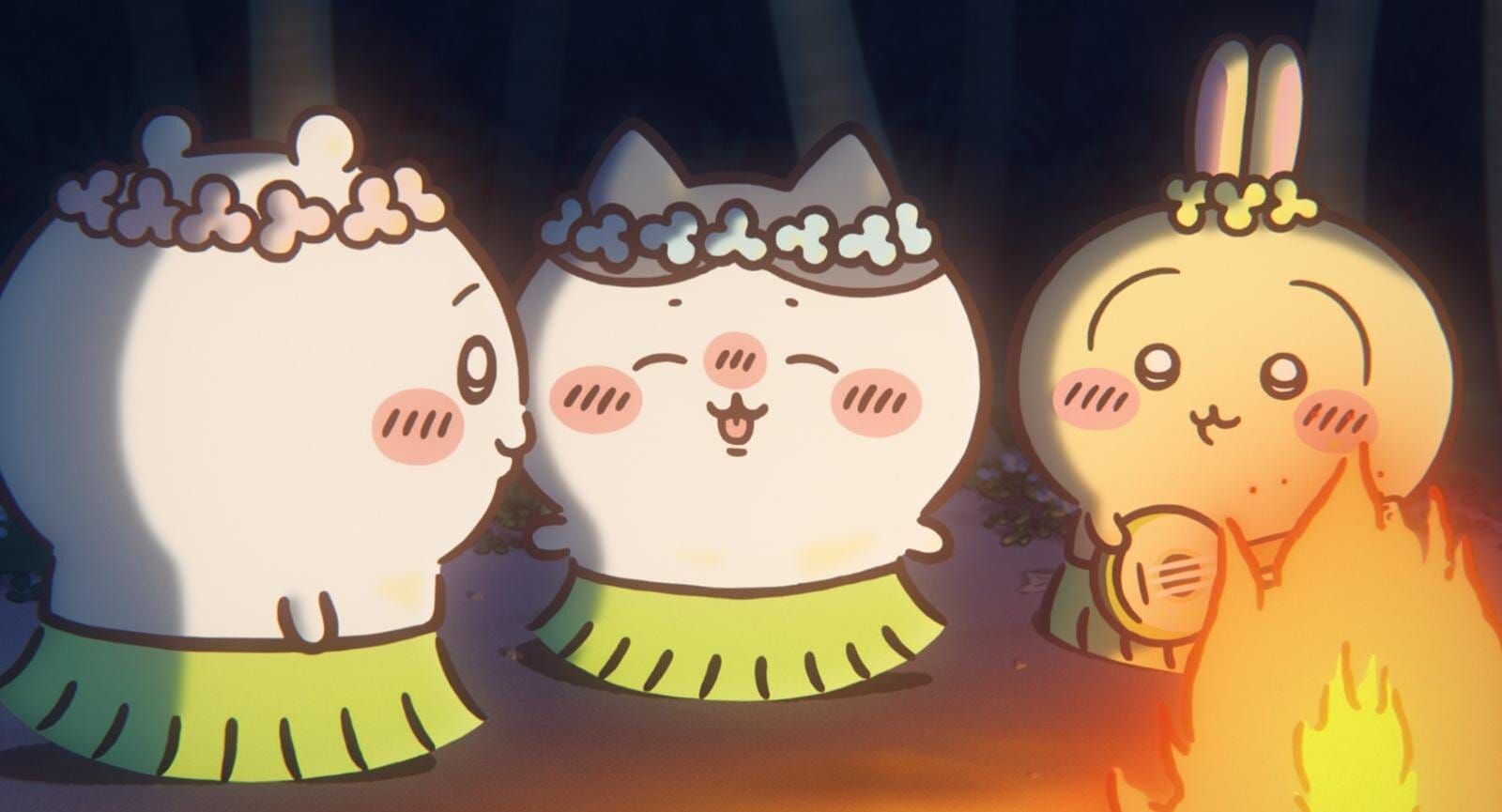
Often, this leads to scenes dragging out and the staggered pacing of the film crushing the emotional significance of certain scenes where further editing to adapt the story to this new form could better focus the story and allow its ideas to sing. Whereas moments of the main characters being captured by the mermaid can feel overly-long and arduous, their feelings constantly reiterated, the ending, designed to be vague and a moment of great conversation with the audiences leaving my cinema, felt rushed to the point the creative choice to approach the story in this morally-ambiguous manner felt merely incomplete.
Ultimately, I am not the target audience for this movie. While I can appreciate and even somewhat love the two-faced nature of the film and these characters, I’ve never been able to resonate with Chiikawa in the way millions of others have been able to as the creature has overtaken Japanese pop culture and spread its wings on a global scale. A fan will overlook all of these flaws, and the cute moments of Kuri-manju sipping his beer and Momonga causing chaos without consequence for others will supersede these dragged, repetitive moments of emptiness. Yet it leaves me as someone who, for all I can appreciate the genuinely bold story choices this film makes, is ultimately disappointed as these flaws present as insurmountable roadblocks to overcoming my ambivalence for these creatures.
Maybe that's ok. This is for fans, and it just so happens that there are a lot of them for Chiikawa. When you have such a big audience already, do you need to risk making a few edits to your material to convert the unconverted when your core audience is already more than large enough to fire the film into one of the top 10 highest-grossing domestic opening weekends ever? Yet I can’t help but feel an even greater movie exists, one that could have left me rushing to buy my first Chiikawa plushie. Instead, I stared at the many people holding their themed popcorn buckets with a resigned respect as I left the cinema, ultimately unmoved.