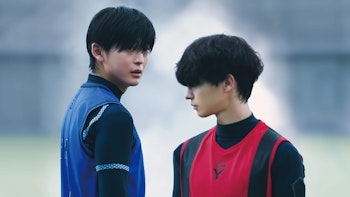
Takahiro Miki is fast becoming the directorial king of the emotional drama. He found a lot of success with Even If This Love Disappears from the World Tonight in 2022, elevating his status further with a deft human drama on love and loss through memory that stands as one of the strongest romantic dramas of the decade so far. Naturally, that would place The Last Song You Left Behind, the director’s latest film adapting another novel by the same mangaka as his 2022 hit, a highly-anticipated drama for the early months of 2026.
Admittedly, Takahiro has had a mixed track record in recent years, working on the less-than-stellar My Beloved Stranger and the fine-enough Netflix original film Drawing Closer that was engaging but played-out in its use of cliche for emotional gravitas. Each of these films place a weight on the life beyond the initial stages of falling in love that give the relationships meaning, and it should come as no surprise that The Last Song You Left Behind is similarly leaning into this well-proven trick to create an emotionally-moving love story. Yet it’s the ways this film steps beyond cliche in its storytelling and execution that elevates it to something that can easily match some of the director’s strongest work to date.
Ayane (Meru Nukumi) is a young girl who transfered into Haruto’s (Shunsuke Michieda) class, though mostly keeps to herself without making friends. She wants to connect more with others, but finds herself unable to, leaving her isolated. Just as she’s ready to quit, she hears Haruto’s teacher read out a poem by him that instantly moves her. While the teacher isn’t sure it works for the competition he wishes to submit it to, she thinks it would be great for a song she wrote.
It becomes her chance to speak to him about it. Humming a few notes of the song Haruto is immediately captivated by her voice, and with some convincing he agrees to allow this to be used for a song and to write more lyrics for her. It’s something that helps her in her dream to make music, as due to a severe case of dyslexia she struggles to read and write, but it allows the two to bond. Something only each could do together, a journey that would see her make music and the pair grow in and out and into love during school and beyond.
There’s certainly similarities between the premise of The Last Song You Left Behind and Even If This Love Disappears from the World Tonight that become most apparent in the fact that both share a lead actor in Shunsuke Michieda, and each of their two female protagonists share a form of developmental disability that instigates their relationships. Whereas the latter centers on a girl whose memories reset at the end of each day, leaving her isolated from most around her, this film centers a girl whose dyslexia kept secret from those in her class forms an insurmountable barrier that makes it hard for her to make friends.
Indeed, what makes their relationship in this story so immediately investing is the care in which the film gives the portrayal of Ayane’s dyslexia that emphasizes the often-overlooked ways such a disability can impede on a specifically-modern structure of daily life and the structure of friendships in an online world. As someone unable to read effectively, group chats that become a key source of organizing friend groups and hangouts become an accessibility problem that leaves her in the cold, while to ask for help is to admit a vulnerability that would be preferred to be kept inside.
Ayane’s immediate connection with Haruto springs from a lack of judgement and a shared interest and care in what the other is able to achieve that they admire. Each have their secret, but unveiling it leads to learning something about the other they can only be in awe with, an instant spark that fuels the seeds of realistic and exhilarating young love. What could feel like cliches in another story feels like the sparkles of young love and care in this one - creating a secret language only the other knows from shapes to overcome the written barriers of dyslexia and allow them to collaborate and work together. A secret that not only brings each closer to their dream, but closer to one another.
It liberates her from the thing that holds her back, transporting them to their own world powered by their shared musical language. Often, the key to making these emotional romance dramas so effective is the careful balance between creating a love story and a story about romance. In a love story, you are portraying precisely that, a story about two people falling in love, centered on that passion. It can be exciting to see those first steps of building a life and connection. A story of romance, however, is not just about falling in love but about life: how it enriches it, how it changes it, and how it lingers. While both can be effective in their own right, what allows this story to be so arresting is its dedication to being a story of romance.
The idea these two characters are in love and understand they love one another is no secret or surprise, nor does the film have any pretence of teasing whether they will fall in love. This is about the life that romance can build, told through the power of music. These songs form the underpinning of this entire story, each produced by Sheena Ringo producer and Tokyo Jihen bass player Seiji Kameda. Ayane’s music provides a soundtrack to the unspeakable ways that love reaches the soul, and these tunes when compined with the context of their use in the story and within Ayane’s character as someone growing in confidence and understanding herself through the support and encouragement their partnership provides is the glue that ties the film together.
In that sense I’m reminded of another recent film, Nemurubaka, as though that film explores friendship rather than the romantic underpinning inherent to a song like Haru no Uta, their shared understanding of how music can became an audible representation of that which can’t be spoken and how it shapes our soul and gives shape to the feelings we can’t understand is what makes the emotional peaks so arresting.
Because of course, this story does not end with their schoolyard crush. This decade-long journey of love is one where music becomes our way to connect to these characters, this story, and bridge the gap between audience and the screen for what it means to find yourself in another.
The Last Song You Left Behind follows a lineage of romantic dramas that understand love is more than the moment of a first kiss but a life in its entirety, and a growing list of music-driven dramas like 366 Days and She Taught Me Serendipity that use music and the unifying power of song to bring universality to the individual and personal idea of falling in love. And it works. It may not reach the heights of the director’s 2022 hit, but this is a story that will not just portray love but the idea of romance itself, reminding us that just by falling in love and allowing that love to become a part of yourself, you have won by experiencing the life such emotions can bring.
Even as you laugh or cry, you find solace and song in the fact it happened.