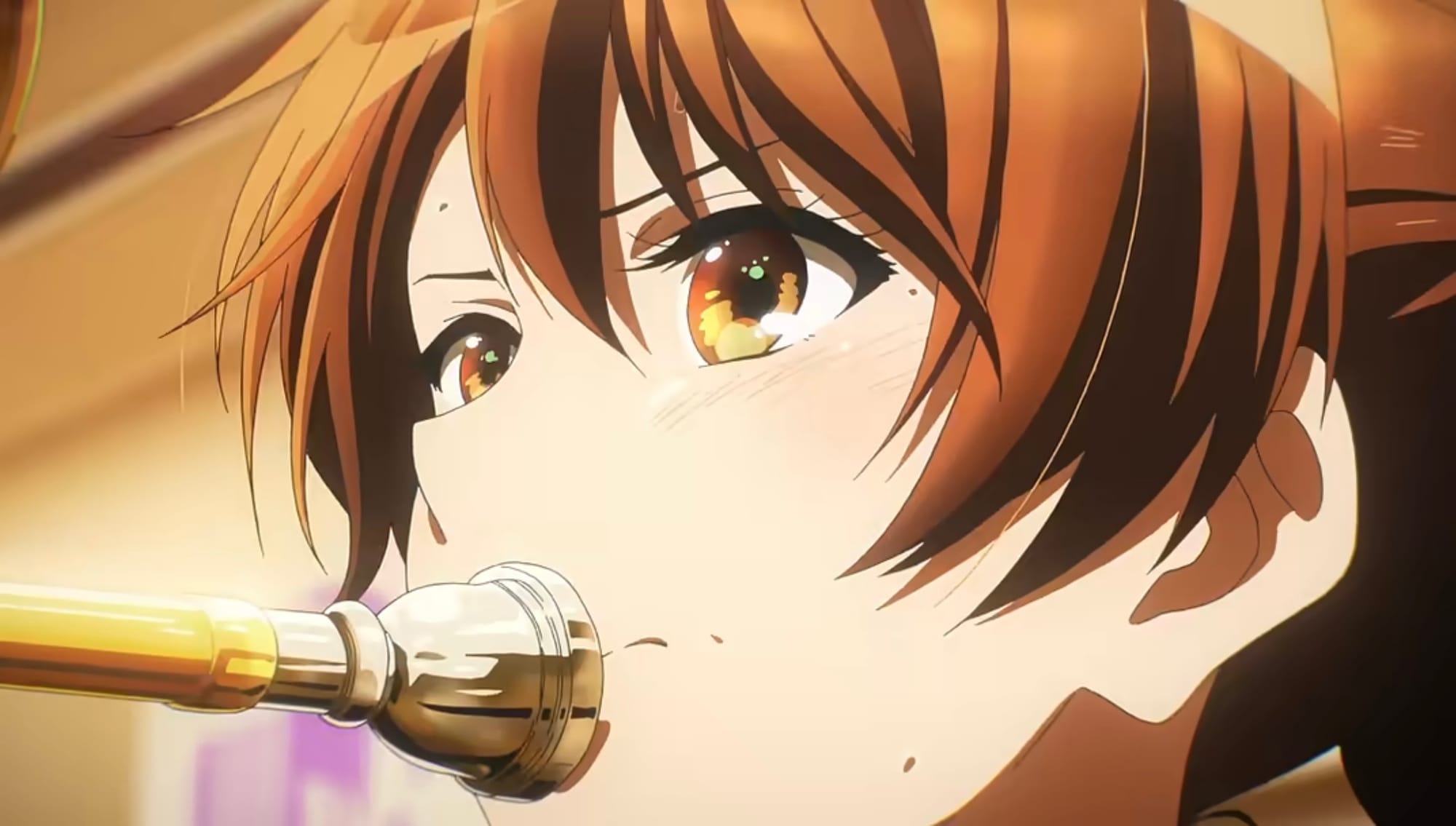
Kyoto Animation’s unique structure as a studio - training and almost entirely working with in-house animators and controlling the production process by publishing stories to adapt through their own publishing label or leading production committees to guarantee a greater say in their work - makes them one of the most clear studios to track their growth and progression over the last 20 years. Indeed, even as anime has expanded massively and the entire industry has grown bigger and more complex, the studio’s ideas have remained firm even as their own approach has evolved with time. If there was to be one work that crossed through almost every generation of the studio and remained a constant force in their work, however, it would be Sound! Euphonium.
Music, or at least sound as a storytelling device, remained core to a number of their early shows produced after decades as an outsourcing and support team, even beyond the band-centric K-On. After the initial boom years defined by otaku hits like The Melancholy of Haruhi Suzumiya whose characters still feel like mascots and representations of anime as a medium, the company’s work in the 2010s would see creators who came into their own at this time like Naoko Yamada lead projects like A Silent Voice.
It was at this time that Ayano Takeda’s Sound! Euphonium would make its way to TV, its direction led by these key voices. The show’s big band competitive challenge with compelling friendship dynamics and universal ideas about self-improvement and understanding the self through music also ensured the series appealed not just to those who related to the story as musicians (though it was certainly popular with this demographic), but audiences broadly. The struggles and desires to reach a goal, pushing beyond apathy to find something to care for. It became a canvas for animators to challenge themselves on animating the in
To be clear, while this movie can be enjoyed even by newcomers, it will almost certainly fail to emotionally resonate with those who make this their introduction to these characters, like skipping the first 100-or-so pages of a novel. This story picks up where the events of season two end, this first of two movies serving as a theatrical re-edit and recompiling of the third and final season with new and extended scenes. By this point, the Kitauji High School Concert Band Club has been firmly rebuilt under its new supervisor and the passion of its students, made it to nationals where it fell short of winning the event, with the goal of finally earning gold in the following year’s competition.
Kumiko Omae was a first year when the anime first began, playing the euphonium in this rebuilding school band. Multiple seasons and movies later, she is now a third-year promoted to the executive committee for the band, tasked with leading the new first year’s on integrating into the dynamics of this focused group and moving forwards with the hope of avenging the seniors who graduated unable to achieve national glory. For all the groundwork is established and the talent exists within the school to achieve this, the new dynamic is a challenge, especially for a group, including Kumiko’s friends like Reina Kousaka and Shuuichi Tsukamoto.
When first years aren’t used to the stricter dynamics of such a focused group competing at a high level, many question it. Then there’s the question of heirarchy, especially when a new transfer student named Mayu Kuroe from another powerhouse school comes to the school playing the same instrument as Kumiko, challenging her role. This is all as the characters look at a life beyond the band and high school generally, and what’s next.
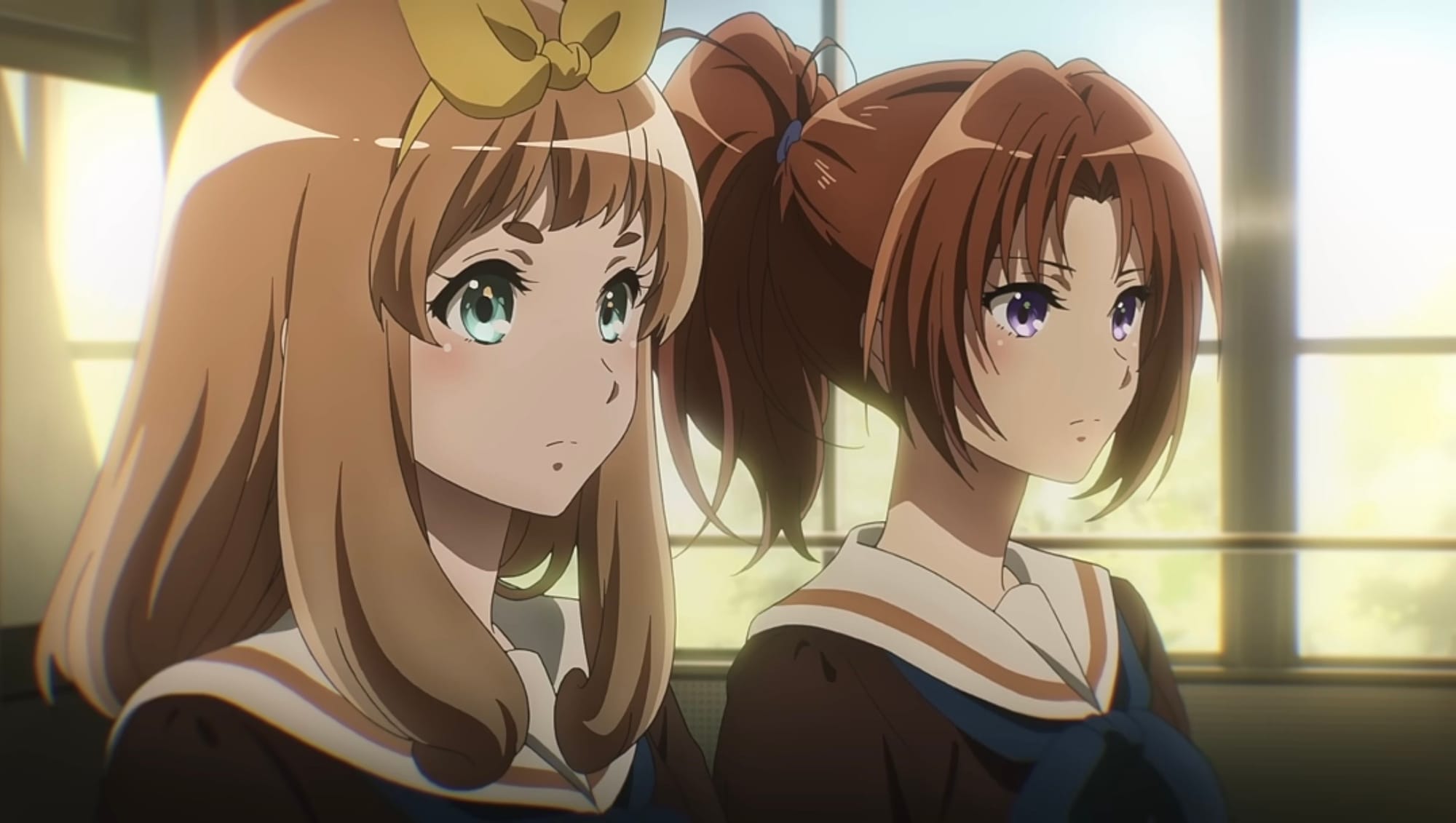
When I say that Sound! Euphonium represents Kyoto Animation’s growth and evolution as a studio, the story of the two mirror closely. The underlying talent of the studio were unleashed on this franchise when the studio chose to adapt it - Naoko Yamada directed multiple episodes and the critically-acclaimed side story Liz and the Blue Bird, and creatives like Taichi Ogawa, Futoshi Nishiya, and Taichi Ishidate - supported by veterans of the studio, giving the series a fresh feel and a desire to prove and grow like these characters. Many sequences of animation during performance sequences especially stand as some of the studio’s best work, its direction in its calmer moment striking in how it emphasizes the emotions and turbulance of growing up, and understanding feelings of love and friendship.
With these final two films covering the third year of Kumiko’s school life, you could enjoy this film as a simple start of a journey towards a music competition and navigating this with the end of high school and uncertainty for what comes after. Where this film excels, however, is in seeing how this sight at glory and years of competition have changed these characters we’ve come to love. While Kumiko has gone from a standoffish, uncertain person regarding her relationship with Reina and her role, this new responsibility gives her a place she can guide others even as she feels increasingly unsure where the music she has dedicated herself exists in her future.
It’s what gives this film a surprising, tantalizing sense of dread even as we see the group position for their new challenge. They take on new pieces with ease, overcome friction with newcomers, but because we’ve gone so far with these characters and recognize the new dynamics introduced with this year, especially when the focus on victory shifts solos towards auditions and Mayu’s talent challenges Kumiko. We fear the result, the potential discontent, especially with Miyu disarmingly non-confrontational despite her addition being a bump in the dynamic. Yet deft writing leaves us just as torn who we want to take on this solo, all while continuing to support her self-discovery and reflection on her high-school transformation.
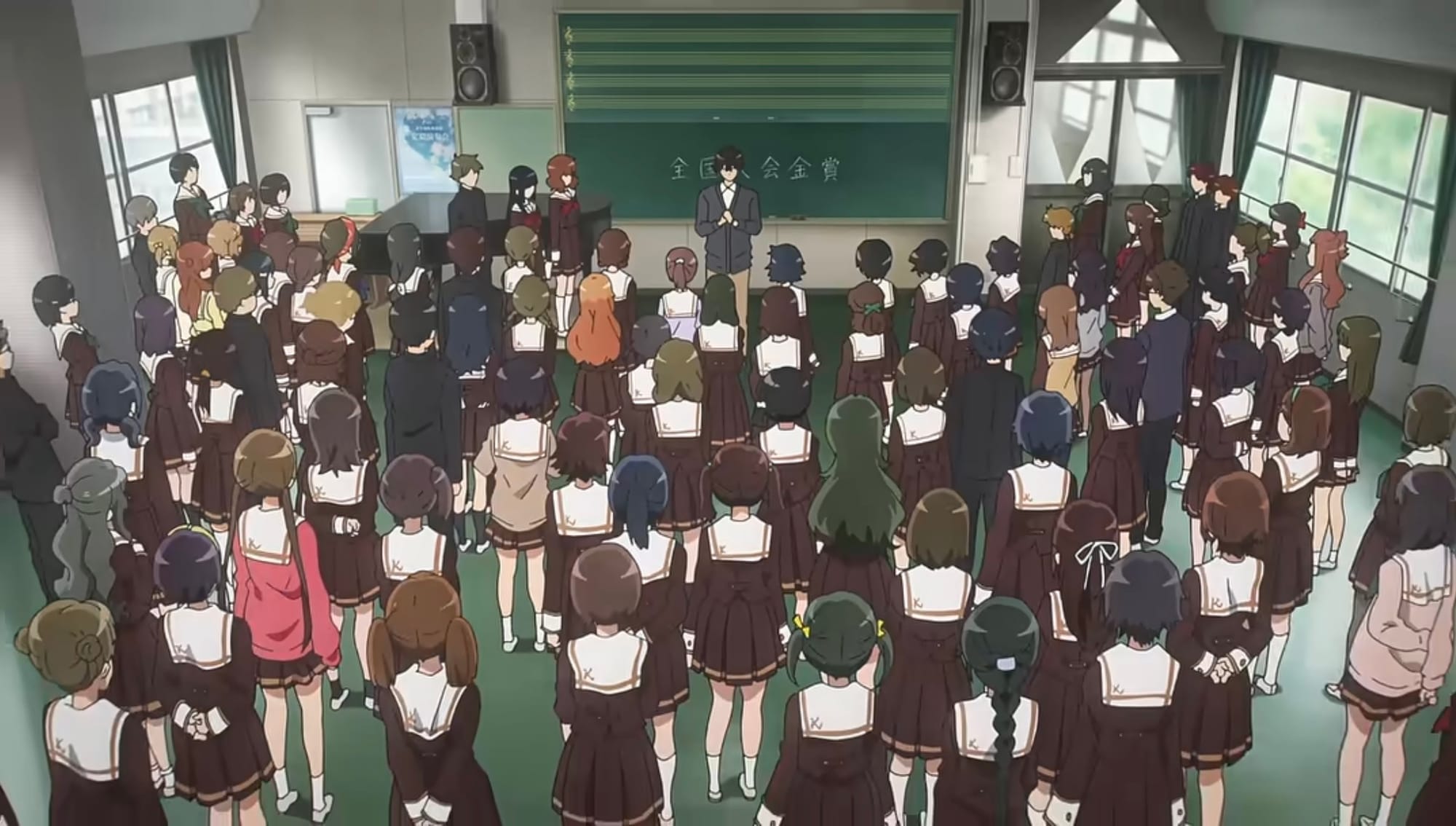
It’s a difficult balance, but one the movie achieves, even if every issue that a movie taking on just one half of a longer story inevitably suffers from. The story has a natural ending point, but it inevitably feels unfinished. Still, this being a Kyoto Animation project, it is a wonderfully-animated feature, especially since the studio’s approach to such recaps involve so much re-editing, new animations and reworking they almost exist as remakes.
Many of the changes are done in order to paint Kumiko’s responsibilities on the reflection of her relationship with Reina, a close friendship and the risk of losing it if their future diverges, and how she can find purpose when talent alone does not suffice, and the resulting rework of 10 of the 13 episodes of the final season of the anime elevates its pacing and improves upon the original. A rarity when most films in this vein feel more congested and weak as a result.
It helps the musical roots of the series soar on the increased canvas for the entire band to shine, and the immersive sound of the movie theater as full orchestral performances wash over you like the deft fingering of the instruments painstakingly animated with love.
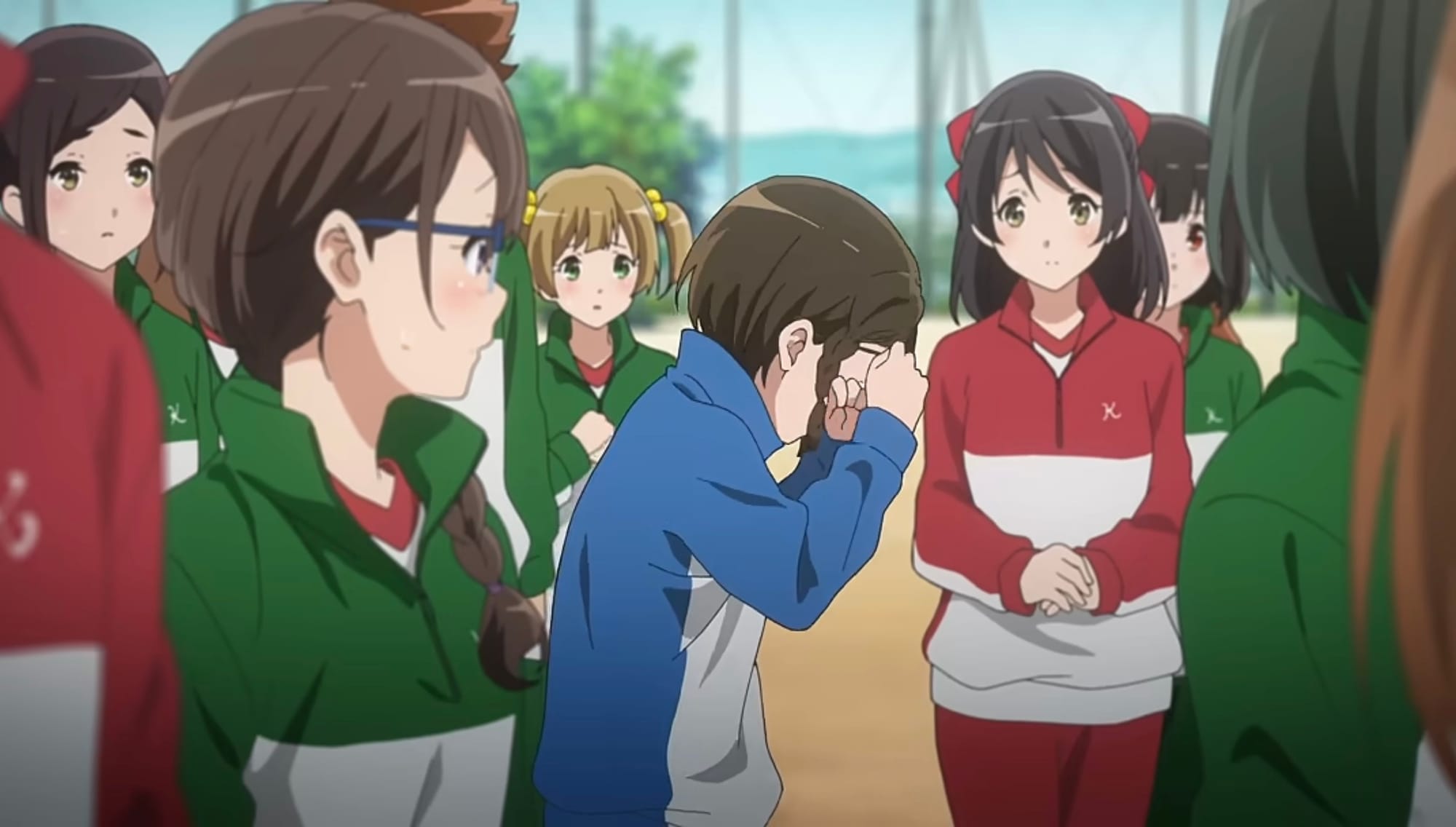
Kyoto Animation like to end every project on their own terms, and after 11 years with one of their most successful franchises, this movie feels like the beginning of their own goodbye and attempt to answer the question Kumiko is also facing in the context of their own studio. The series bridged the gap between past and present, and even then during its decade on the air the studio has undergone so much. Due to the 2019 arson attack at the studio some of the rising stars that defined the early years of this anime and the studio generally tragically lost their lives, and other creatives have since moved on. The team have rebuilt, like the band club, and are now seeking their own future.
The answers will come after part two has hit cinemas later this year. With a predominantly-larger portion of the series adapted in this film we can assume they will spend more time on all-new ideas giving these characters and this series a goodbye they feel it deserves on the biggest screen possible. Part 1 of Sound! Euphonium The Final Movie is great, but I’m sure its following conclusion will be worth the emotional farewell it will bring for everyone.