To mark 20 years of the Melancholy of Haruhi Suzumiya anime being released, The Disappearance of Haruhi Suzumiya, its feature film continuation, was brought back into cinemas nationwide. Suddenly, standees of Haruhi could be found in every cinema planning to show the film, as memory of the series rushed back to the public consciousness. It was like 2006 had never ended. Or perhaps, as much as the anime industry has evolved, it feels like this is a reminder and tribute to one character whose image and influence have never disappeared. The world has changed, but Haruhi Suzumiya is eternal.
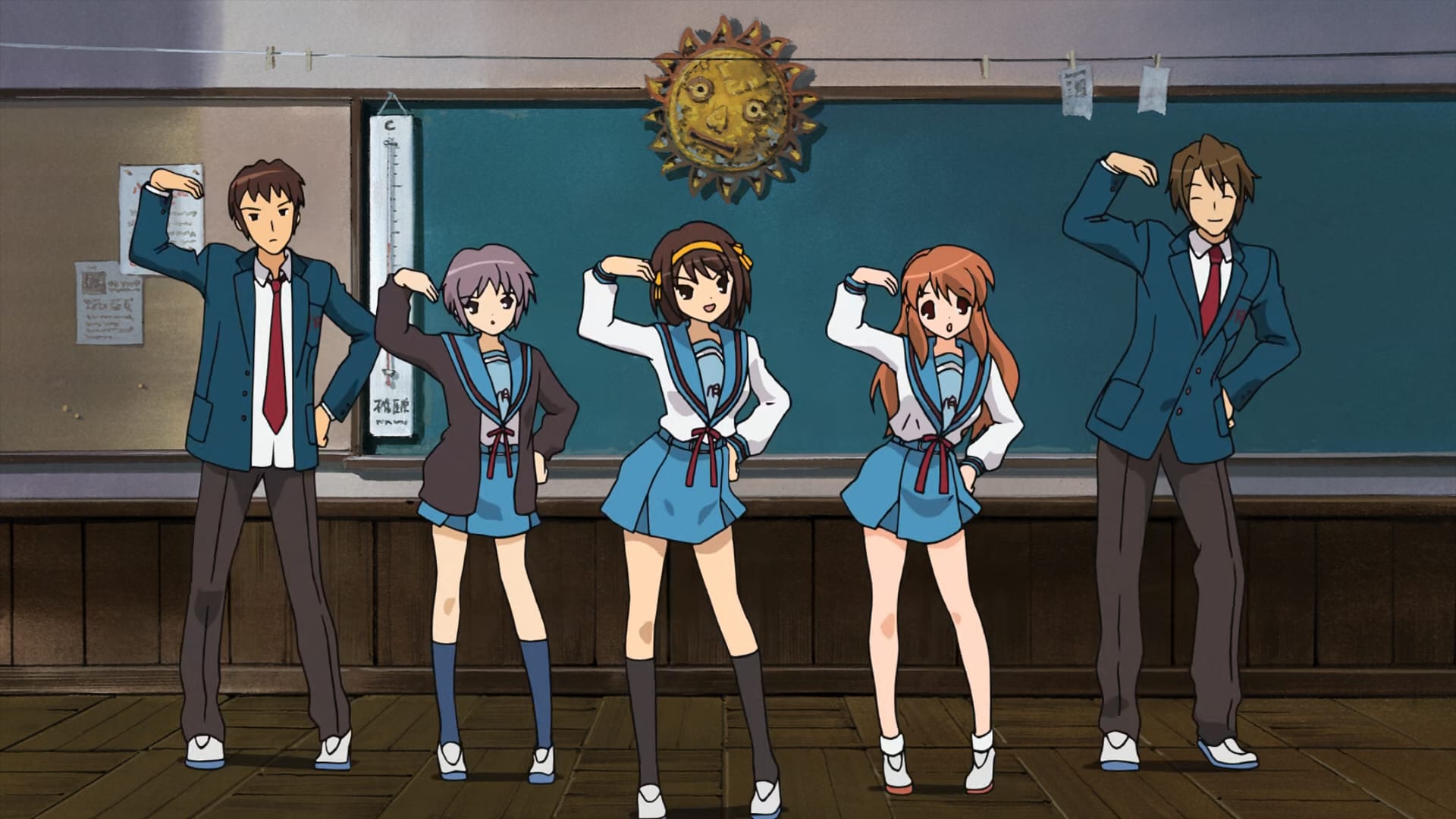
If you look back on anime culture both inside and outside Japan in the mid-2000s, no character defines the era more than them. This was the time where the series’ iconic ending theme, “Hare Hare Yukai,” was performed in flashdance mobs in the streets of Akihabara, and you could barely enter a space without seeing a school uniform so iconic many bring its image to mind when thinking of anime even now. Times have changed, sure, and the series is no longer as inescapable as it once was. Newer anime fans may not have watched a series that was once deemed required viewing. If they ever did, though, they’ll instantly recognize the cultural touchstones that spawned from its existence.
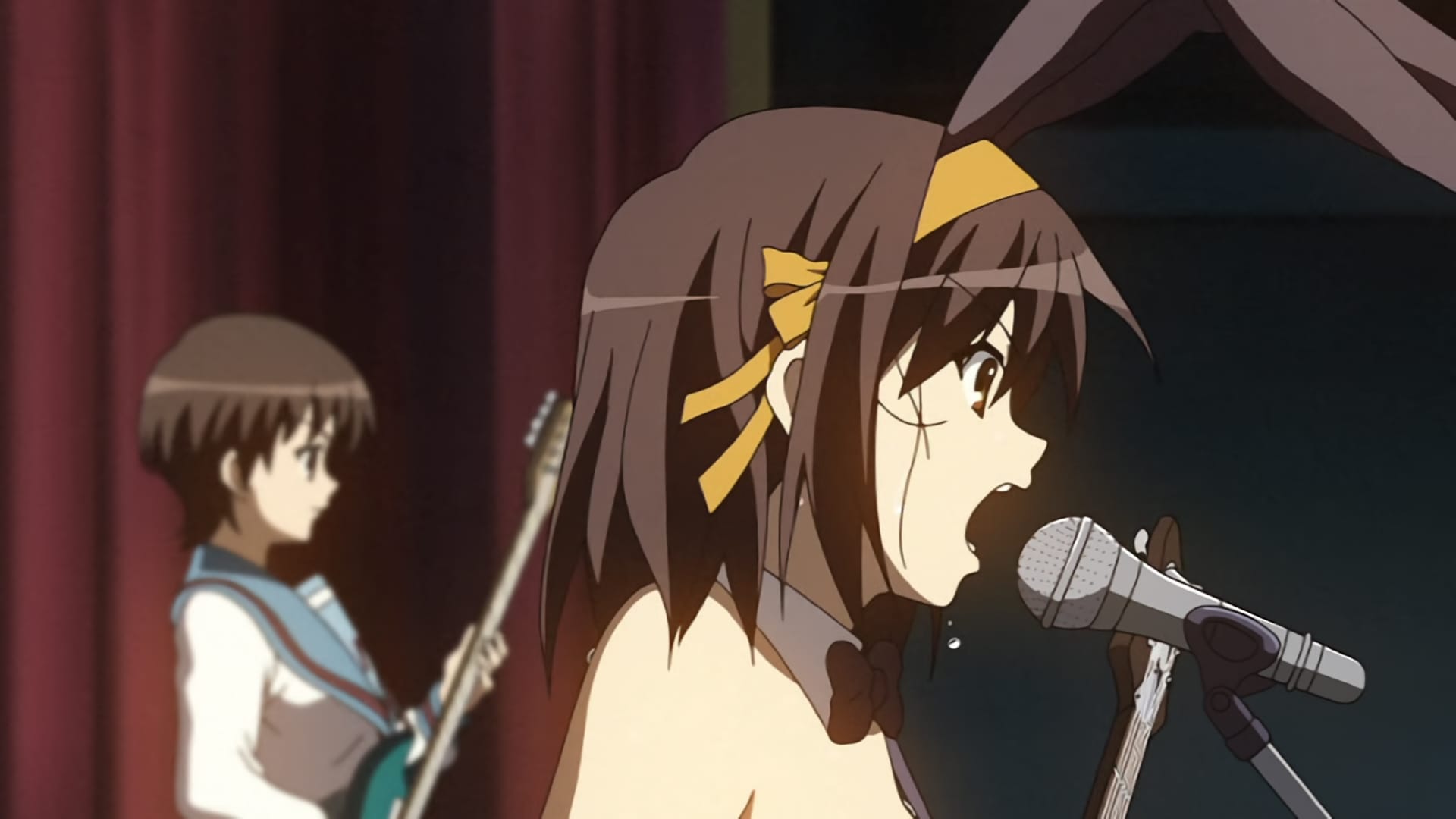
For those less familiar, the Melancholy of Haruhi Suzumiya anime was based on the light novel of the same name by Nagaru Tanigawa and illustrated by Noizi Ito, and had already earned itself a notable audience even prior to its first episode hitting screens in April 2006. Haruhi herself is an eccentric girl seeking excitement but often sat apart from the rest of her class as the oddball that doesn’t appear to show much interest in anything or anyone unappealing to her sensibilities. Kyon simply wants a normal school life when he gets roped into becoming an accidental friend of Haruhi, who determines the way to find an exciting school life is to create her own club to enable her extravagant activities.
Thus, the SOS Brigade (or the Spreading excitement all Over the world with Haruhi Suzumiya Brigade) was born, roping in the bookish and relatively silent Yuki Nagato, the timid but beautiful Mikuru Asahina, and Itsuki Koizumi. It would be too simple for such an eccentric girl and normal boy to be in a club, however: Kyon has found himself amidst the most extraordinary people he could find. Yuki is actually an alien hivemind, Mikuru is a time traveler, and even the seemingly more normal other guy in the group, Itsuki, is an esper. All are observing Haruhi’s powers as a seeming god who can transform a world around her desires and create and destroy the fabric of reality itself, an ability she herself doesn’t realize she possesses.
The acts of the SOS Brigade are a way to entertain Haruhi and prevent such dangerous events from happening, which often turns seemingly-ordinary events into more lucid extremes. A baseball match with magic powers, a school trip becomes a murder mystery. And it’s a thrill to watch.
It's a truly great anime, but what made it resonate was the way it spoke to the desires of a mid-2000s anime community still on the underbelly compared to the mainstream of today. The core of the series is one of Haruhi seeking the extraordinary in an ordinary world, which for a group still seen as relatively reclusive or shunned in certain social situations resonated as a desire to create new stories for themselves. Mostly, though, it’s the ubiquity and meta-referential construction of the series through its production and marketing, as well as how fans responded to it through the growing digital world these fans existed at the forefront, that solidified its place.
The 2000s were an era of transition for the anime industry. A move from cel animation to digital, the rise of the internet as a growing part of storytelling and marketing, as well as a place for fans to discuss these shows on places like 2ch. With Kyoto Animation, a team known for the attention to detail put into their work, particularly in their characters, were one of the major benefactors of this shift, their majority-in house team transitioning relatively smoothly to the new technology while maintaining the same care and quality of their older work. It gave new things for fans to discover and discuss in a series whose mere construction was one designed to generate conversation.
The broadcast order for Haruhi Suzumiya veered from the novels to be told non-chronologically, mixing key character details with random side stories and events from across the series that capture their dynamics but don’t correlate with the events of the previous episode. It turned what could have been a basic adaptation into a game of piecing together who these characters are and what could be next even for long-time fans. If they weren’t piecing together the series itself, it was the meta-references and homages to mystery genres and popular films, seen in cases such as how Linda Linda Linda served as a basis for the iconic “God Knows” performance.
Otaku spaces, combined with the coexistence of online and in-person spaces in Akihabara for fans to meet and share a mutual connection, ensured this series thrived. Compared to today, Akihabara was still a place defined by its subculture, rising from the electric town of the past to the bishojo and anime hub it would become through the niche visual novels, light novels and core anime that brought these groups together. Those invested in electronics in Akihabara were invested in the cutting edge, which for a long time was defined by the complex anime visuals rendered on older hardware by people who were dedicated to their hobbies and finding escape.

Coming to Akihabara before the growing tourist influx to the area meant finding people who also resonated in these same spheres. It meant cosplay, and it meant making conversation and friendships with the things people had in common as opposed to micro-communities fractured across varying spaces. Piecing together a popular anime was a big discussion, fueled only further by how online marketing through fake SOS Brigade websites and ARG-esque cryptic online codes made the series feel more real. With Nico Nico Douga ushering in an era of online video sharing, recreating the dance of “Hare Hare Yukai” online would flood the streets, and suddenly all of the intricacies of this well-crafted and popular series were everywhere.
With a smaller number of series produced and a culture defined by a physical space rather than an endless online world, it’s easy to see how the Melancholy of Haruhi Suzumiya would become inescapable. While tentpole series from Mobile Suit Gundam and Evangelion earned broad acclaim and shifted the medium in their era, Haruhi Suzumiya transformed anime fandom in the 2000s. In an online era it defined the methods of communications in dance videos, theory-crafting in online conversations and marketing, and through community spaces the appeal of an icon like a school uniform cosplay to stimulate conversation.
Real life imitates fiction. Haruhi Suzumiya did transform the world like a god, because it gave a community a beacon to congregate and belong. For all anime has become mainstream, it’s still defined by these values, and for as long as this is true Haruhi’s influence both visual and cultural will remain. Nowadays, watching Melancholy of Haruhi Suzumiya is entertaining, though perhaps not as groundbreaking to a newer fan who may not recognize just how this series paved the way for so many more to follow. Even if you're no longer blown away by its production, however, it's hard to deny its impact.