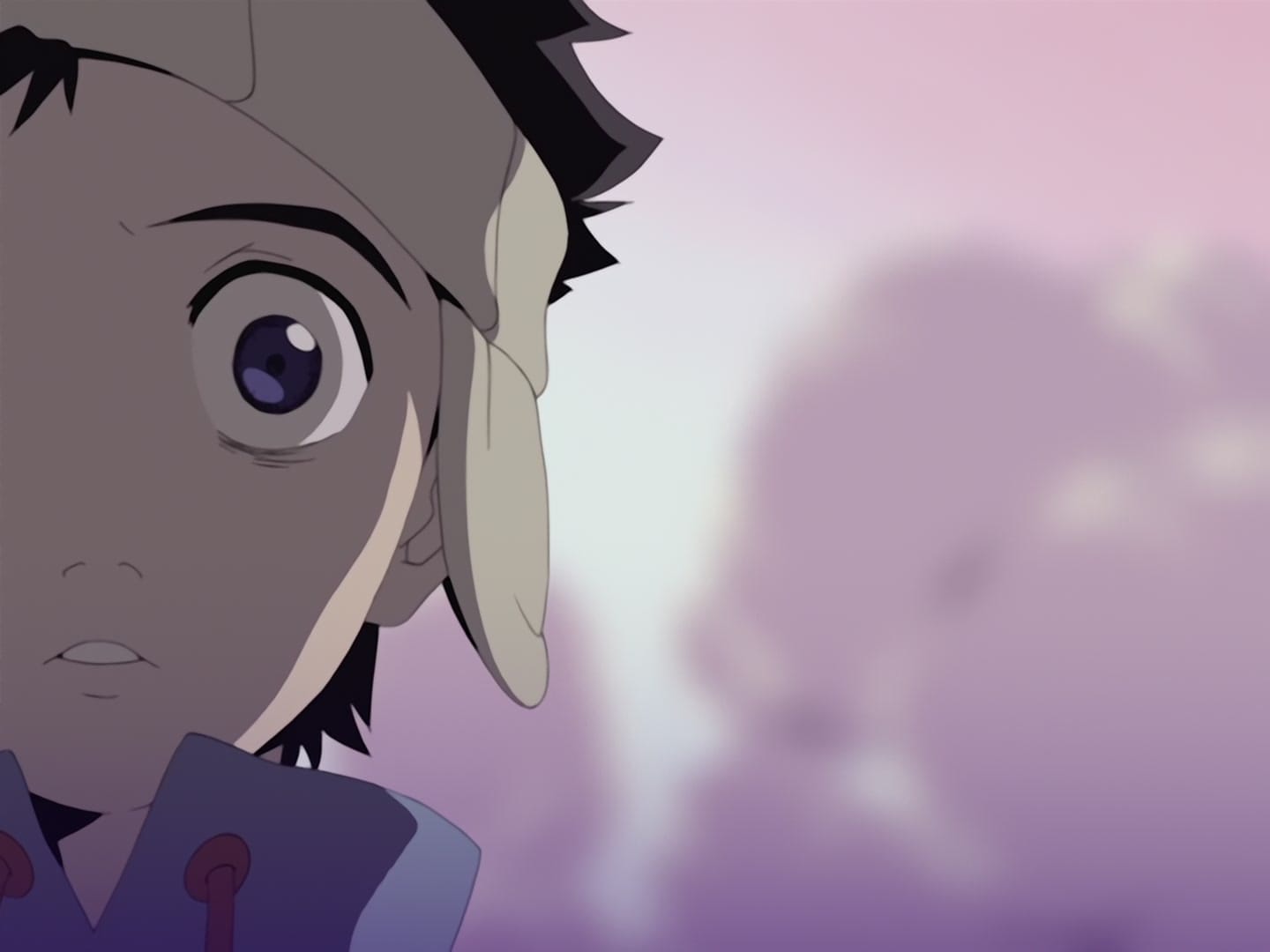
My first impression of FLCL was scarcity. Your only options if you wanted to watch the series back when I was in high school was to catch episodes on Adult Swim or purchase used copies of Broccoli USA’s DVD collection for something like $300. I found the English dub episodes on the internet and watched them in the light of my old PC in the basement. Then I bought a relatively cheap single DVD on Amazon that was almost certainly a bootleg.
That didn’t matter to me at the time. What did matter was watching the series over and over so that I could scrape out all its secrets. Because my second impression of FLCL was that while you were watching it, it felt HUGE. Like an alien spacecraft blasting my brain with giant robots, guitar rock, suburban loneliness, symbols, and references to films and TV I didn’t know. I couldn’t see its workings or its boundaries. All I could do was bear it.
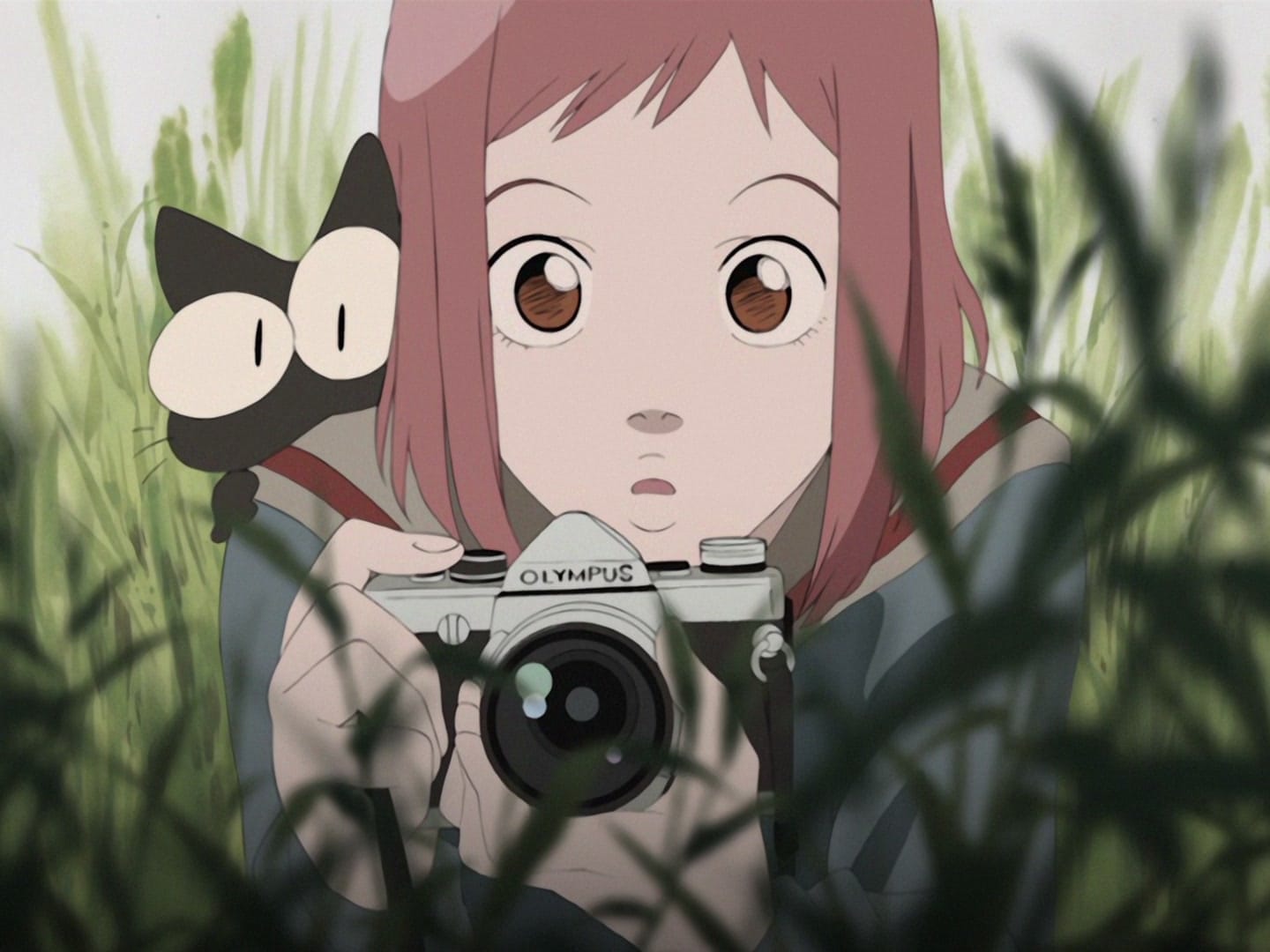
FLCL is short, just six episodes long. Half the length of a contemporary anime season. Even so, I spent multiple rewatches struggling to parse its mysteries. Why does the robot Canti wander the nearby river, picking up red shards? Why does class president Ninamori wear a T-shirt in one episode that reads “USSR”? Why does Haruka say “Daicon V!” when she fights a giant robot while wearing a bunny suit?
Back then I fixated on the convoluted science fiction terminology: Galactic Fraternity, Medical Mechanica, N.O. potential. Eventually I realized that none of these terms really mattered except for when they were funny. What did matter were the characters and their big feelings. Naota’s frustration that no adult in his life measures up to his memories of his big brother. His classmate Ninamori’s struggle to take what she wants without letting her peers uncover her secrets. Naota’s brother’s ex-girlfriend Mamimi, who lives off stale bread and wishes the world would end.
Naota’s days are long, tedious and punctuated by extreme violence. They are also finite. Even though Naota rejects adulthood at the end of the series, choosing to remain a child for the foreseeable future, his graduation from elementary to middle school marks the passage of time. One day the town of his memories, with its hazy orange skies, scattered junk, and inexplicably giant hand iron, will disappear.
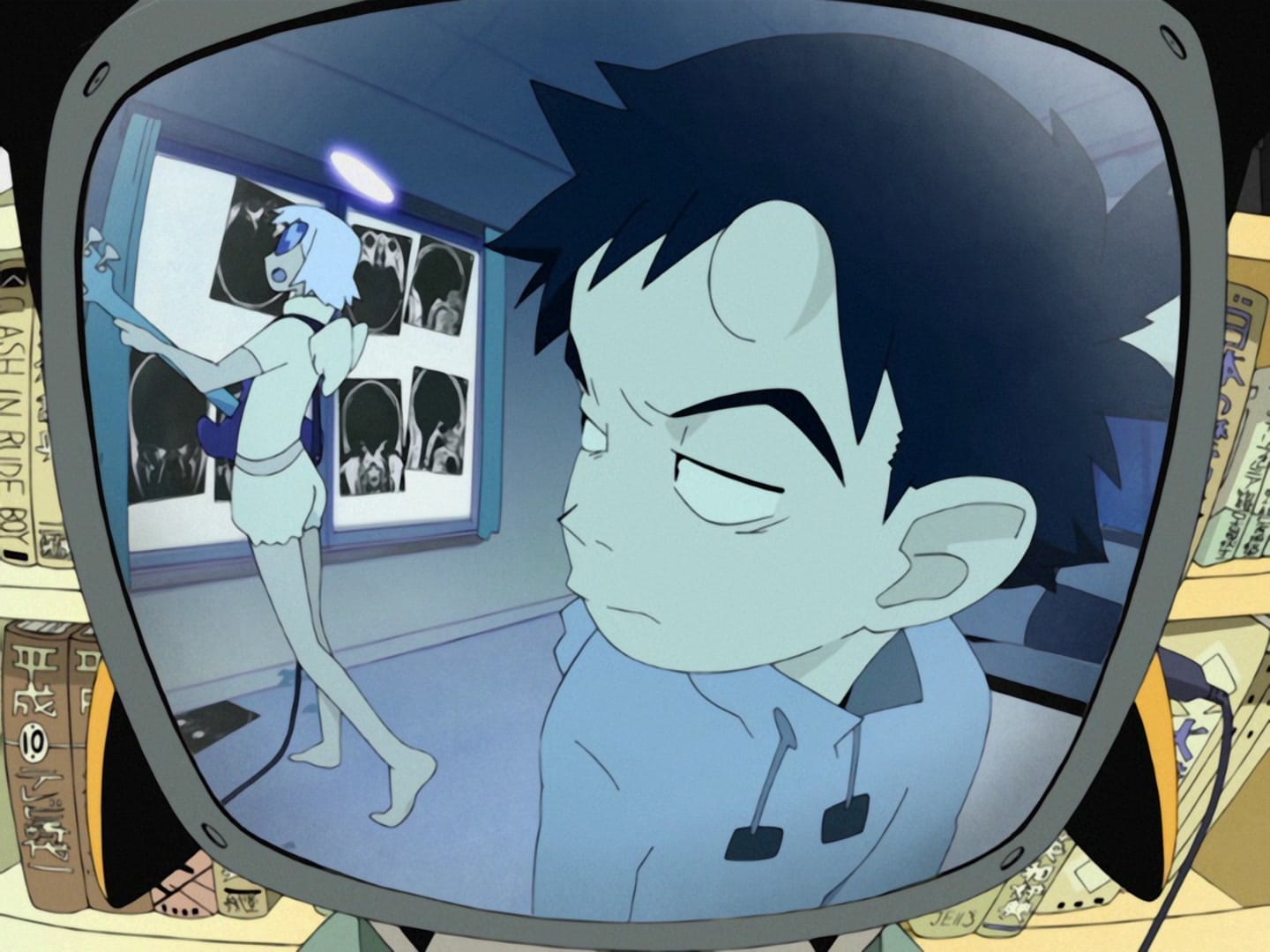
FLCL itself was made at a funny time in the history of the studio Gainax, which co-produced the series with Production I.G. Five years before, with the help of Tatsunoko Production, director Hideaki Anno and his crew changed everything with Neon Genesis Evangelion. Now Gainax was changing too. Its 1998 romance series Kare Kano was defined by up and coming talent within the studio—Shouji Saeki, Tadashi Hiramatsu, Hiroyuki Imaishi. FLCL offered these artists a chance to practice their skills within the boundaries of anime’s most indulgent format, the OVA.
In the book FLCLick Noise, unofficially translated by Ash Kantor, FLCL director Kazuya Tsurumaki broke down how the series was conceptualized. He “wanted to utilize that weapon that is Imaishi and play to his strengths…” At the same time, he praised Hiramatsu’s “‘subdued-yet-rom-com’ style,” as well as Hiromasa Ogura’s faded, nostalgic art direction. The latter two were closer to his own tastes than Imaishi, whose work was much more exaggerated and comedic than his own. But since Evangelion, “there was a significant change in the lineup of Gainax’s animation staff, and we lost that ability to execute realistic movements so easily.” Exaggeration could be practical, too.
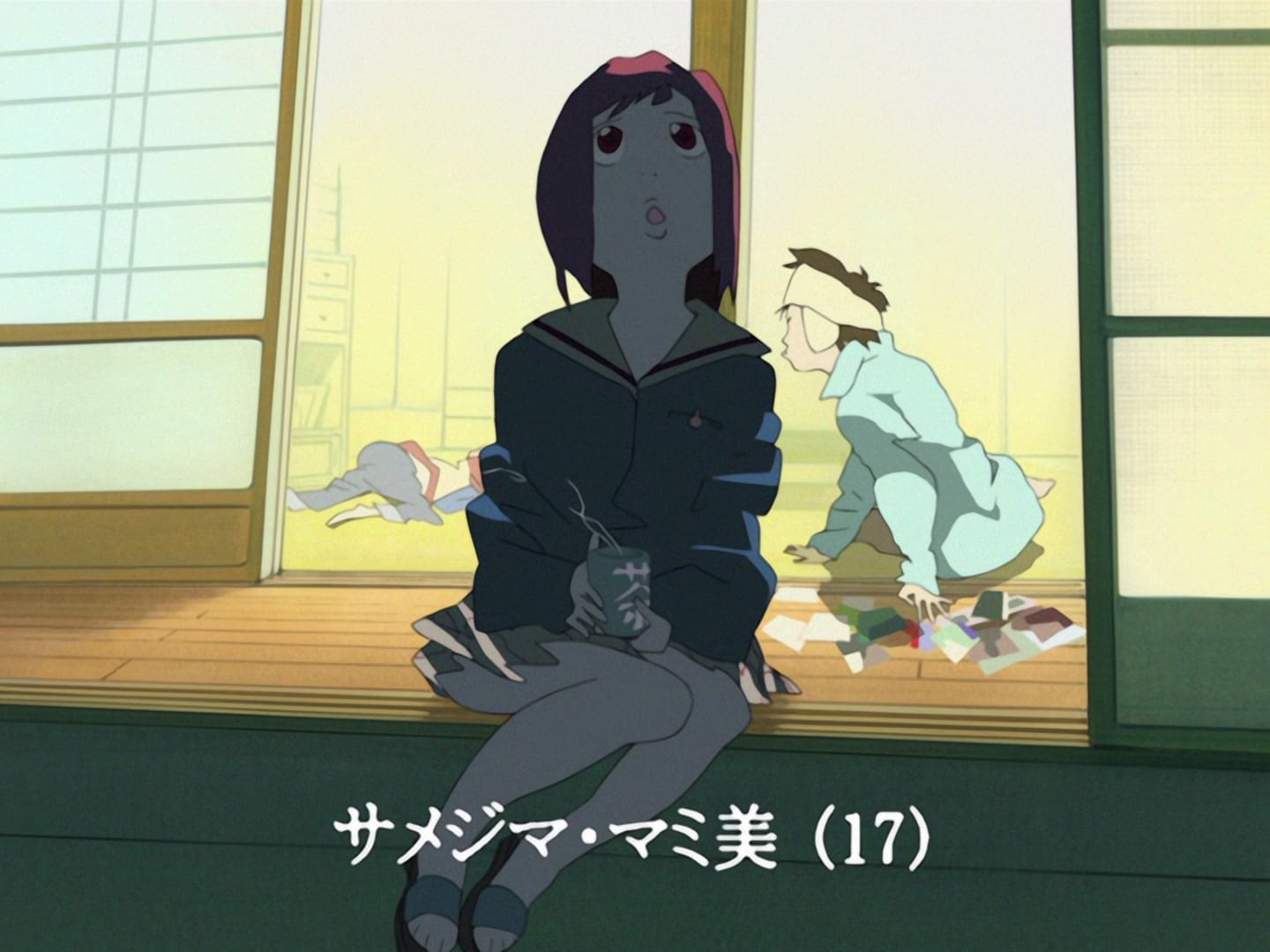
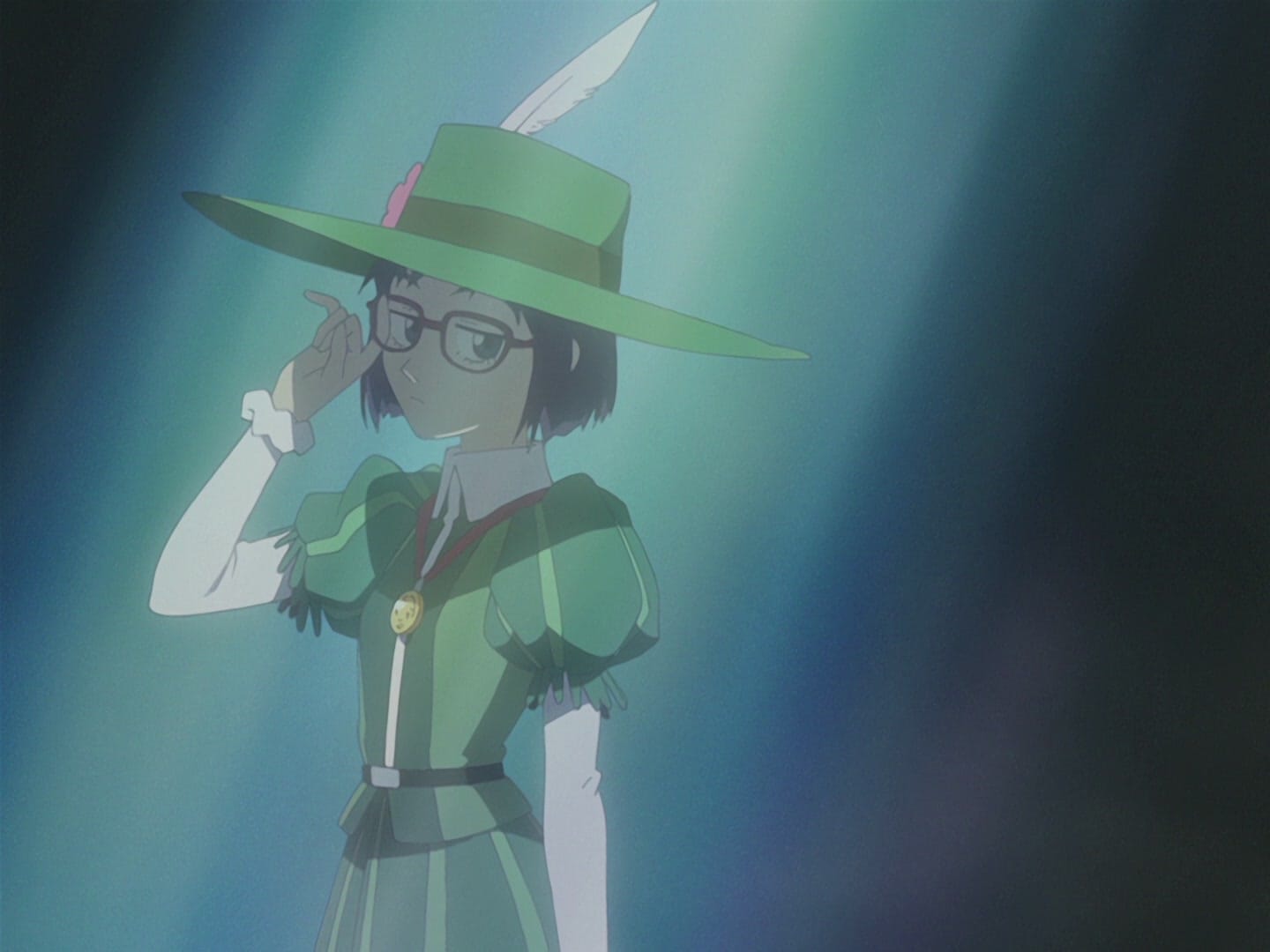
One of the funniest examples of FLCL’s stylistic variety comes with a cut in the second episode drawn by Shinya Ohira. Ohira is an animator with supreme technical skills and distinctive style. His work stands apart, which inevitably means corrections. But Hiroyuki Imaishi was in charge of that episode’s animation direction, and according to Tsurumaki, he “was too intimidated and couldn’t make corrections to the animation.” The character drawings look so different from the mean as a result that the staff resorted to using namecards so the viewers knew who was who.
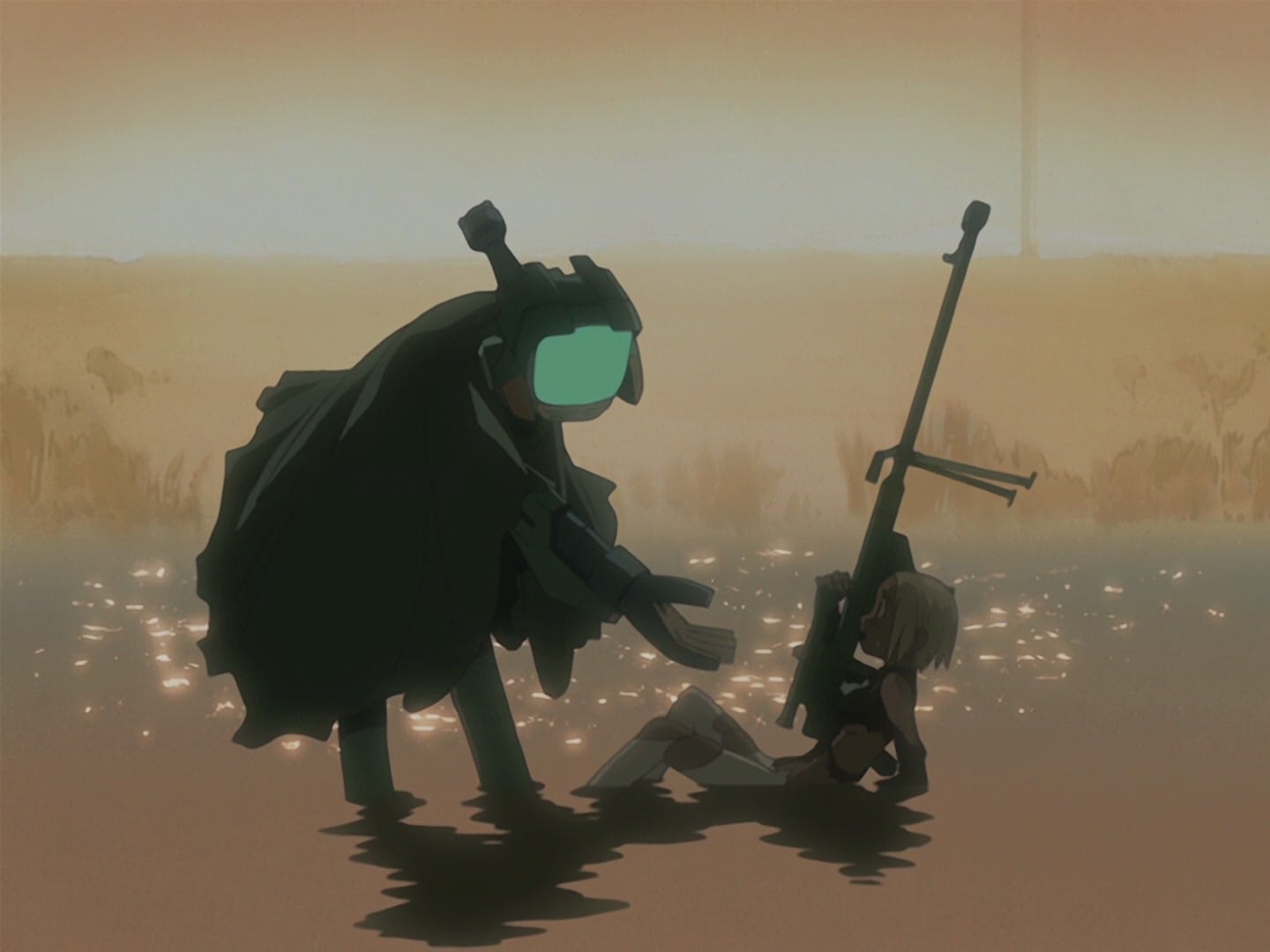
This sequence obliterates any illusion of consistency between cuts. Yet the series is constantly doing that, mixing exaggerated character drawings with 3D modelling with manga photography. Some of its best effects, like the fifth episode’s sparkling riverbed, were happy accidents. “It was still the early days of digital filming,” Tsurumaki said, “so we were in the trial and error stage, figuring out how to achieve this or that kind of effect and when to use them.” Everything was fair game no matter how extreme–even South Park parodies.
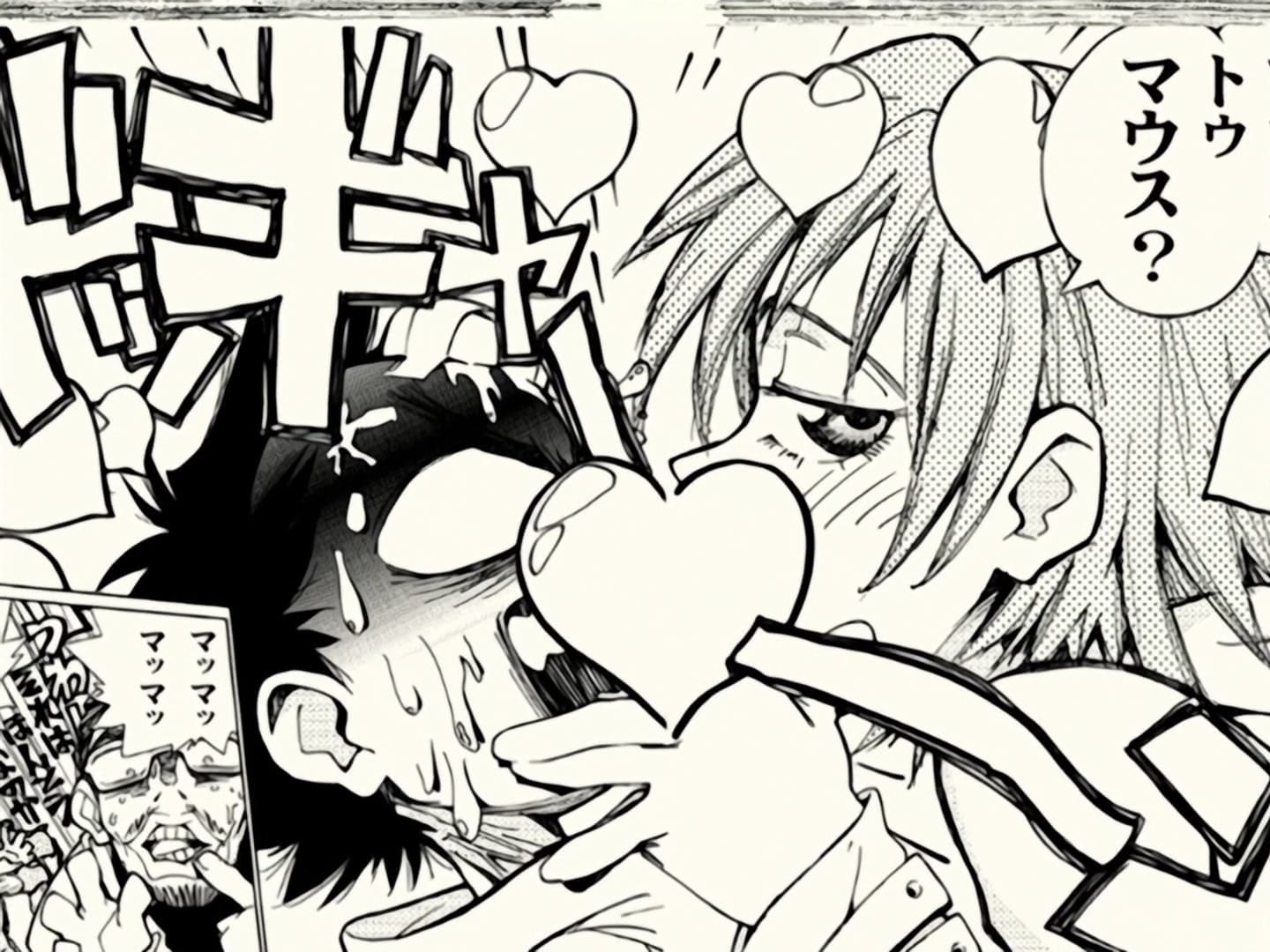
FLCL also combined multiple influences outside of animation. Tsurumaki references the theater troupe Otona Keikaku (whose founder Suzuki Matsuo voiced Naota’s father Kamon) as well as Young Magazine, which had published works depicting “the twisted and negative aspects of youth.” Character designer Yoshiyuki Sadamoto, on the other hand, references josei manga artists Moyoco Anno and Kyoko Okazaki. While these artists were themselves inspired by Young Magazine, their 90s work (like Okazaki’s River’s Edge) clearly influenced FLCL as well.
These references aren’t just a matter of trivia. They ground FLCL in a specific time, place and tradition. FLCL’s staff grew up reading 1980s seinen manga and 1990s josei manga. They loved music videos and classic anime series and then-cutting edge science fiction by James Tiptree Jr. Then, of course, there’s the pillows, the Japanese rock band who scored the series with songs from their late 90s albums.
Time passed. Gainax kept changing. The FLCL crew would reunite one more time in 2004 with the OVA Aim for the Top 2: Diebuster. But 2007 saw them fracture. Tsurumaki followed Hideaki Anno to his new studio khara, where he would spend fourteen years co-directing the Rebuild of Evangelion films. Hiroyuki Imaishi on the other hand led Gainax’s young staff to glory with the mecha throwback Tengen Toppa Gurren Lagann. He had become the studio’s heir apparent–until he left the studio with director Masahiko Otsuka in 2011 to form their own studio, Trigger.
These days khara and Trigger have distinct cultures and reputations. khara is secretive, prestigious, and mostly does shorter works. Trigger is zany, crowd-pleasing, and haphazardly managed. You could argue that they represent FLCL’s reflective and ridiculous sides, though that’s an oversimplification. What’s important is that they have their own specialties, whether that be khara’s embrace of 3DCG or Trigger’s continued emphasis on Kanada-style animation. Imaishi is no longer Tsurumaki’s weapon to use; he’s too busy making more Panty & Stocking.
That hasn’t stopped the animation industry from churning out more FLCL. After purchasing the rights to the series from Gainax in 2015, Production I.G. produced two sequels to the series together with Adult Swim. They hired original character designer Yoshiyuki Sadamoto as well as several talented young artists including Kei Suezawa and Kiyotaka Oshiyama. It didn’t work. Remove FLCL from its context and its staff, and all you have is convoluted science fiction terminology, give or take the pillows.
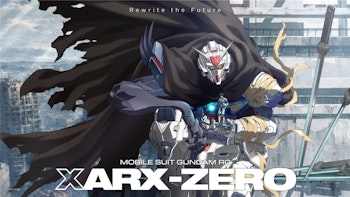
I don’t know if the original staff have it in them to recreate FLCL either. Kazuki Tsurumaki’s Mobile Suit Gundam GQuuuuuuX last year came close. It had beautiful art direction, scriptwriter Yoji Enokido’s metaphor-driven writing, and some of Young Magazine’s “twisted and negative aspects of youth” that Tsurumaki liked so much. Its climax even played out as a gender-swapped version of Naota’s battle with Haruka. But while GQuuuuuuX was just as indulgent as FLCL, it was not as formally radical. Neither am I the same person today who saw FLCL back when I was a kid.
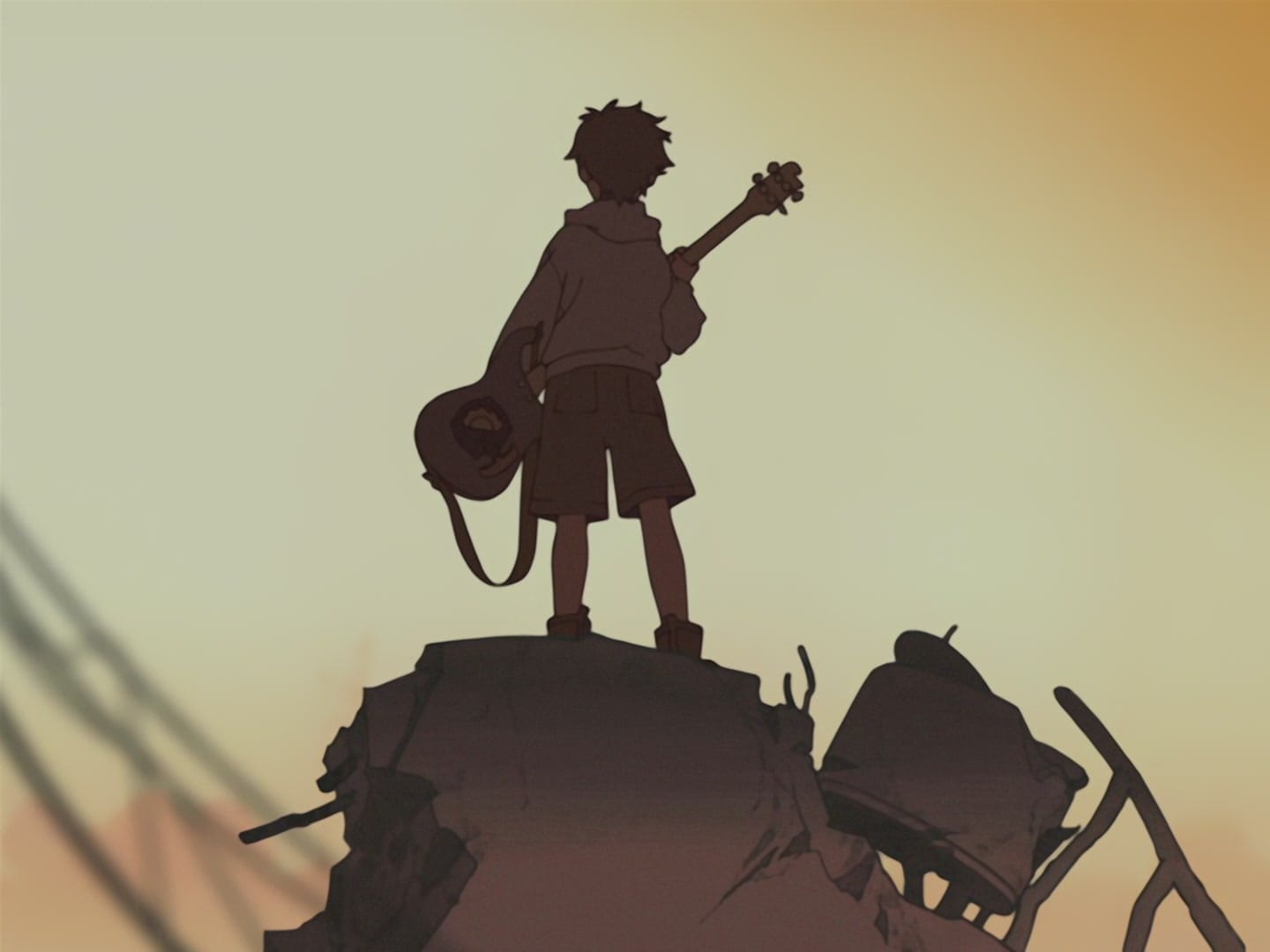
I used to think of FLCL as an alien spacecraft. Now I see it as something more like a garbage sculpture: a flawed, idiosyncratic work made at a specific time by specific people when they had the freedom to experiment. It’s profoundly dated, but that’s what I also find so meaningful about it. The series is a moment out of time, a faded childhood memory rooted in sensory nostalgia. One day it, too, will disappear, become scarce again. I’ll miss it when it does.