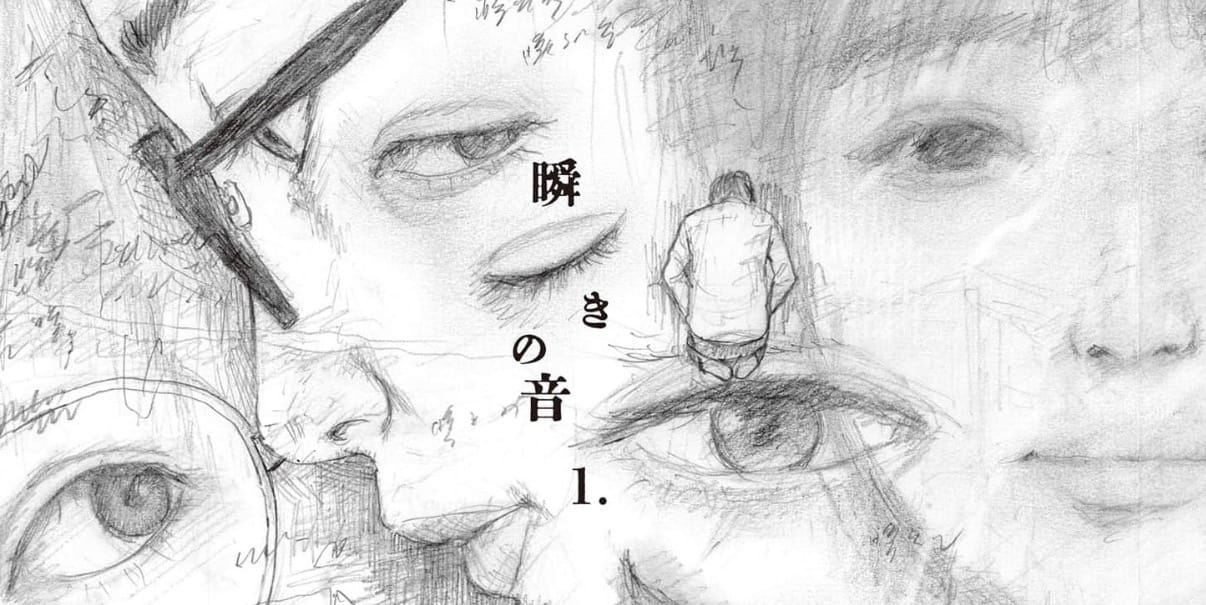
Shuzo Oshimi has always drawn on his life experiences and upbringing to craft some of manga’s most unforgettable stories. In the afterword to Blood on the Tracks, the Gunma-born artist even apologized for skirting too close to reality, admitting that “this was surely not a pleasant experience for the real people depicted in this story.” Nevertheless, this tendency has reached new heights in Sound of a Blink: Oshimi’s new semi-autobiographical series that depicts how he became a manga artist.
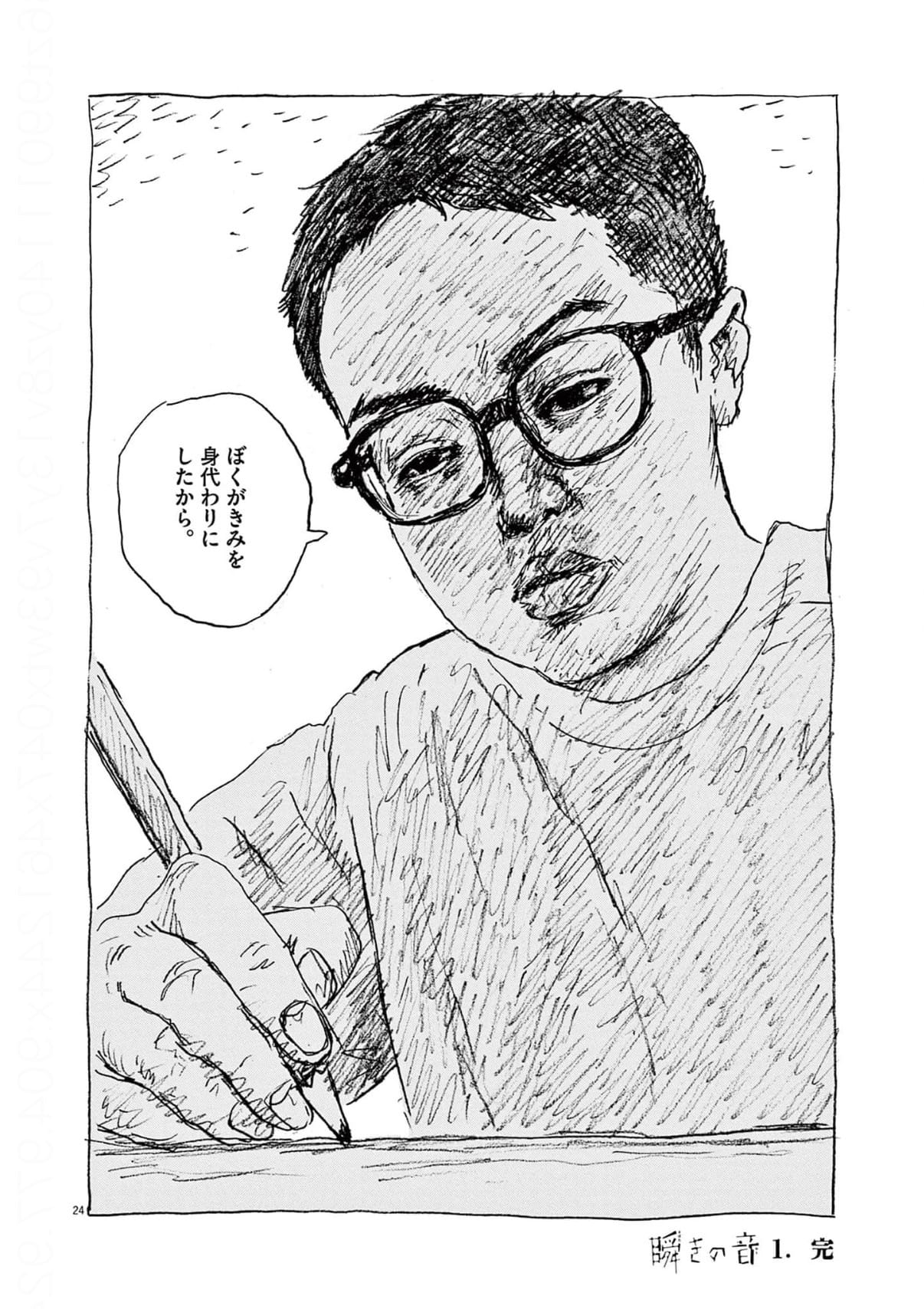
In typical Oshimi style, however, the concept is hardly that straightforward. Volume 1 certainly starts out in a somewhat orthodox fashion, depicting the author’s idyllic childhood in Kiryu and carefree days skipping university in Tokyo before his younger brother falls victim to a brain tumor, prompting a return home. Even so, the true gut punch comes on the final page: a depiction of the author himself in the modern day drawing the very pages currently in front of the reader and remarking that his brother’s youth was “taken” in return for his own.
Unlike many autobiographies, Oshimi does not present his life as a finished narrative intended to arouse any kind of emotion or provide some sort of meaning for the audience. Rather, the choice to make himself a character in the story positions Sound of a Blink as a piece of therapeutic fiction: one where the subject hopes to find the ultimate thesis of true events by stringing them together as a product for consumption. Volume 2 even begins with Oshimi asking both himself and the reader “Why am I drawing this? Do I want forgiveness for leaving you [his brother] behind?”
Indeed, forgiveness features as one of the key themes of the series thus far. On the one hand, Oshimi does feel guilt for leaving his brother behind, but another part of him knows that he may have never become a manga artist nor met his future partner and started a family without doing so. To make matters even more complicated, the narrative clearly suggests that his family played a large part in setting him down the path of the artist, whether it be through their enthusiastic reactions to his handdrawn manga or exposure to such figures as Sakutaro Hagiwara and Odilon Redon.
The real question is from whom Oshimi truly desires forgiveness. Is it his brother, for leaving him at home all alone? Is it his father, for quitting university in favor of the bohemian lifestyle of a mangaka? Is it his wife, for marrying her out of a feeling of self-preservation? Or is it really himself, for the reassurance that all of the sacrifices he made up until this point weren’t for nothing?
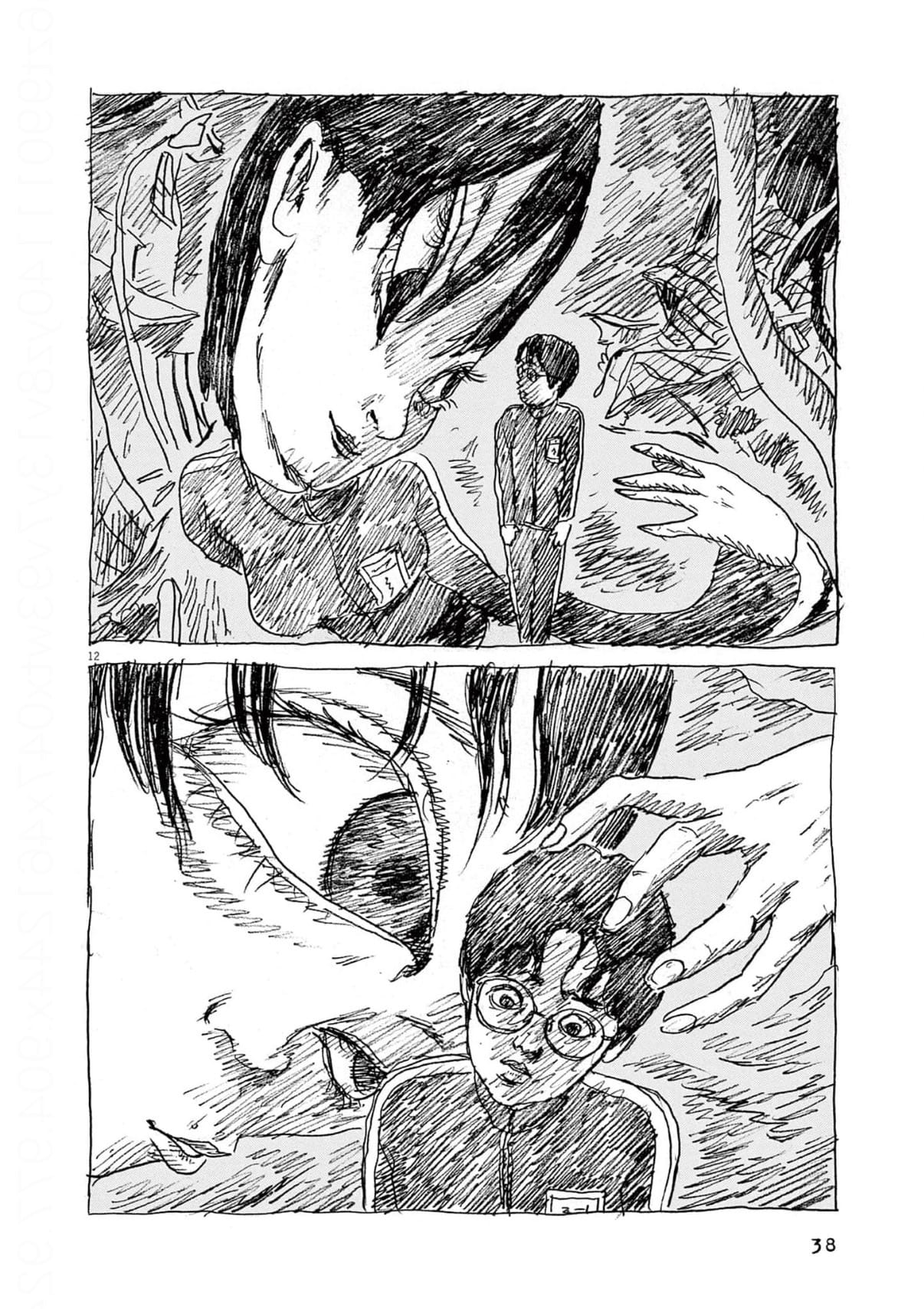
On a related note, women play a crucial yet complicated role in Sound of a Blink. Volume 2, in particular, mainly revolves around two relationships that have clearly left a long-lasting influence on Oshimi’s psyche: his wife, who he first met at university through mutual friends, and his girlfriend during middle school. Furthermore, both remain entirely unnamed, allowing them to act as vectors of meaning more than active participants in the story.
When it comes to writing about women, Oshimi’s track record has been spotty to say the least. Although characters such as Gosho and Seiko speak to his ability to ensure agency and provide insight into societal issues, the fact that most of his stories are told from the point of view of male characters who harbor repressed sexual feelings often reduce them to simple objects of desire. In this sense, Sound of a Blink isn’t much different: Oshimi’s wife is portrayed as a convenient way for the author to ignore his self-loathing, while his middle school girlfriend is presented as a malicious force that attempts to tear him away from his family.
If the point is to demonstrate how twisted the author’s self-insert character truly is through an equally distorted view of the opposite sex, then Oshimi has more or less succeeded. Much like Isao in Inside Mari, the protagonist’s relationship with women is merely the tip of the iceberg when it comes to how dishonest and cowardly he truly is, refusing to take responsibility for his own actions and even blaming others for his own shortcomings. The only difference here is that Oshimi is clearly associating this personality with his own, along with all the ugly details.
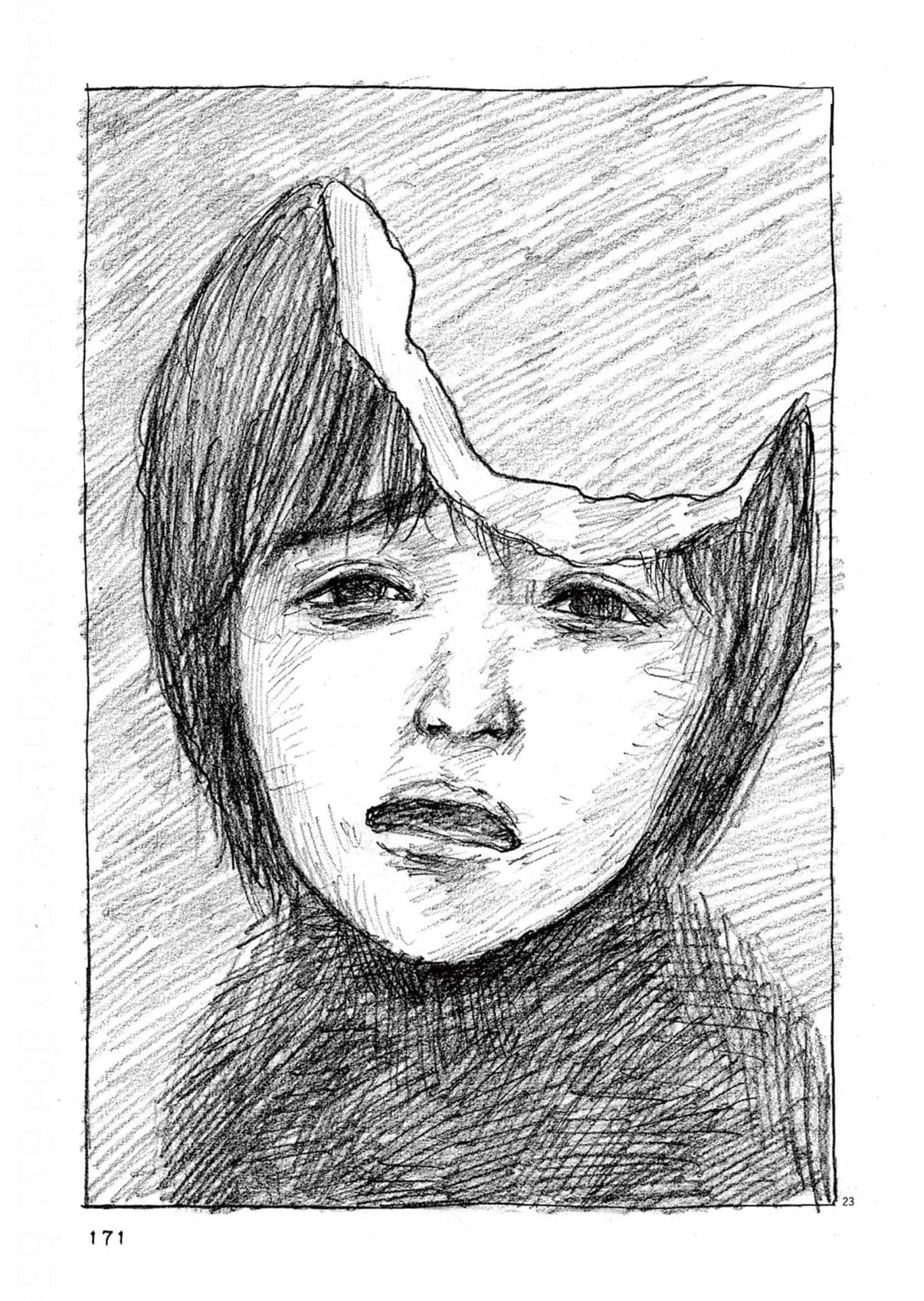
Dedicated readers of Oshimi’s oeuvre will almost definitely find the experience of reading Sound of a Blink to be an eye-opening one. Everything from the relationship with Aya that saved Takao in The Flowers of Evil to the speech apnea Shino suffers in Shino Can’t Say Her Own Name are things that the character of “Oshimi” goes through in the story, suggesting that pieces of the author’s upbringing can be found in even more of his stories than initially thought. By far the most surprising revelation, however, comes in the parallel between Seiichi and Oshimi dealing with a handicapped family member… just like Blood on the Tracks, tying the most gut-wrenching part of Oshimi’s most horrifying series to a brutal reality.
There is a reason why biography and fiction occupy distinct spaces within the world of literature. Within the added distance from reality offered by fiction, both reader and author alike can deal in allegory and the hypothetical without any regard for “facts,” but biography is the complete opposite. As an account of real events in the same vein as history and journalism, authors must ensure a certain degree of accuracy and avoid any major departures from the truth, even if some creative license is needed for entertainment.
Audiences, meanwhile, are dispositioned to take all events in works of biography as gospel. Even works only very loosely influenced by the real life circumstances of their creators have resulted in radical redefinitions of entire careers, such as Bakuman with Tsugumi Ohba and Takeshi Obata as well as Kakushigoto with Koji Kumeta. As a result, Sound of a Blink might just end up saddling the abstract, surreal works of Shuzo Oshimi with a somewhat mechanical narrative based on anecdotes instead of allegory and interpretation forevermore.
Is this really what Oshimi wants? By drawing back the curtain, he runs the risk of illuminating his entire body of work in an entirely different light, but perhaps this is the point. Perhaps it is only by sacrificing everything that Oshimi can truly come to terms with his past, his family, his trauma, and his own shortcomings.
Sound of a Blink is currently serialized in Shogakukan’s Big Comic Superior.