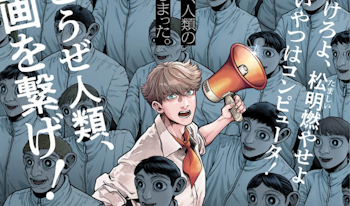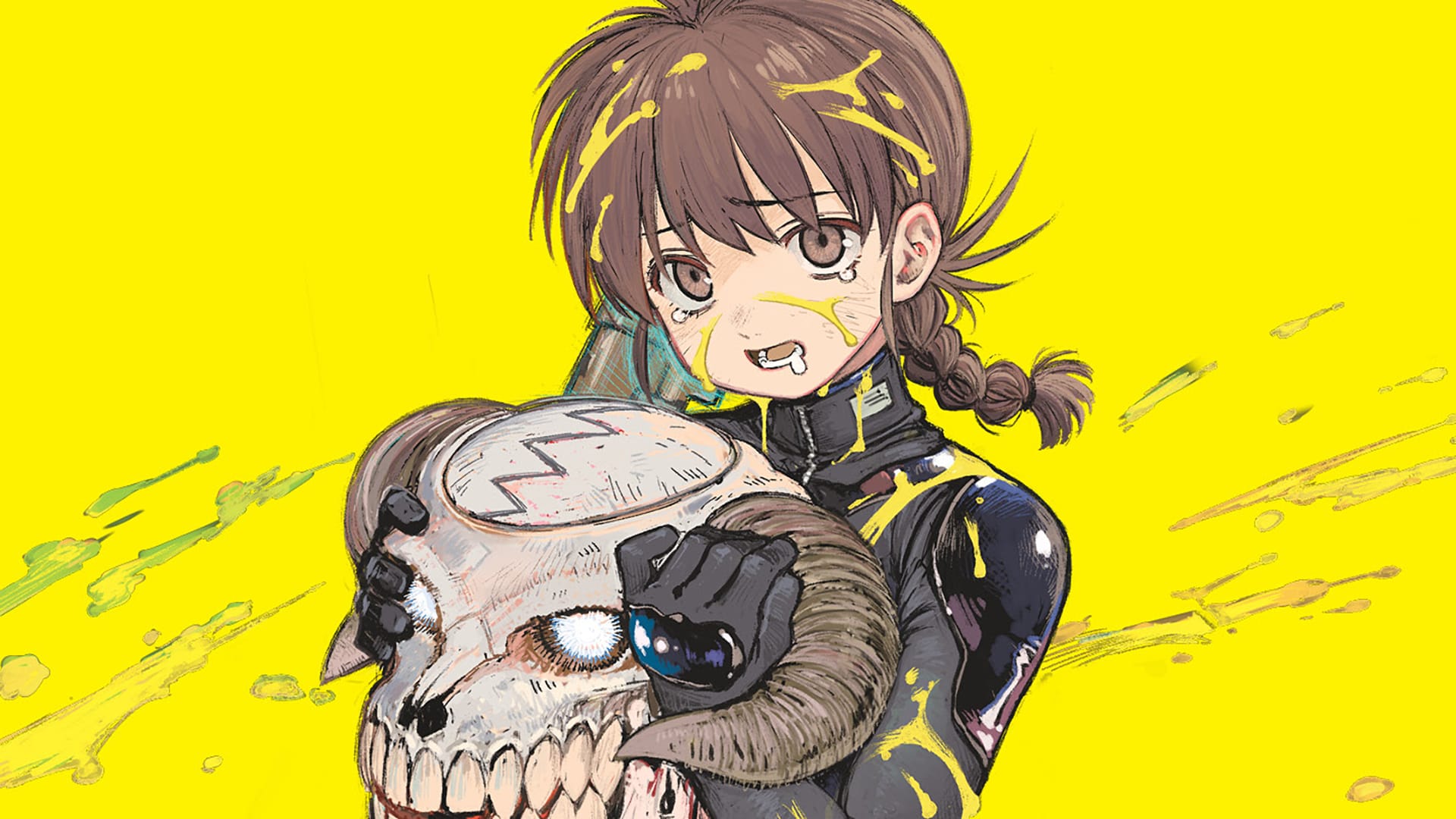
Earth is forever changed following an alien invasion. Humans may have been able to drive back the extraterrestrials after a lengthy conflict, but the fallout remains in the form of giant craters, radioactive wastelands and insect pests that lay waste to property. Rai Rai Rai initially follows a downtrodden 18 year old charged with the unenviable task of cleaning up that last problem: Sumire Ichigaya, who works for pennies at an extermination company while trying to support her family back home.
If any of that synopsis sounds familiar, you’re not alone. The idea of focusing on the dregs of society in a fantastical world is something that Kaiju No. 8 also promised in its first chapter, even if this quickly gave way to standard action fare. What’s more, the parallels don’t stop there: the protagonist can turn into a powerful monster just like Kafka, the vice-captain uses a sword for combat just like Hoshina, and each soldier wears a special outfit just like the Combat Suit.
Of course, making such a comparison is ironic as Kaiju No. 8 in and on itself was already entirely composed of several elements taken from other popular manga: the powers of Attack on Titan, the setting of World Trigger, and so on and so forth. The sheer level of unoriginality meant that my patience for the series ran out long before it finished serialization last year, so it might come as some surprise to hear me say that Rai Rai Rai is genuinely quite good. In many ways, what’s needed here is to look beyond the surface level similarities and past preconceptions to make out the true value that lies underneath.
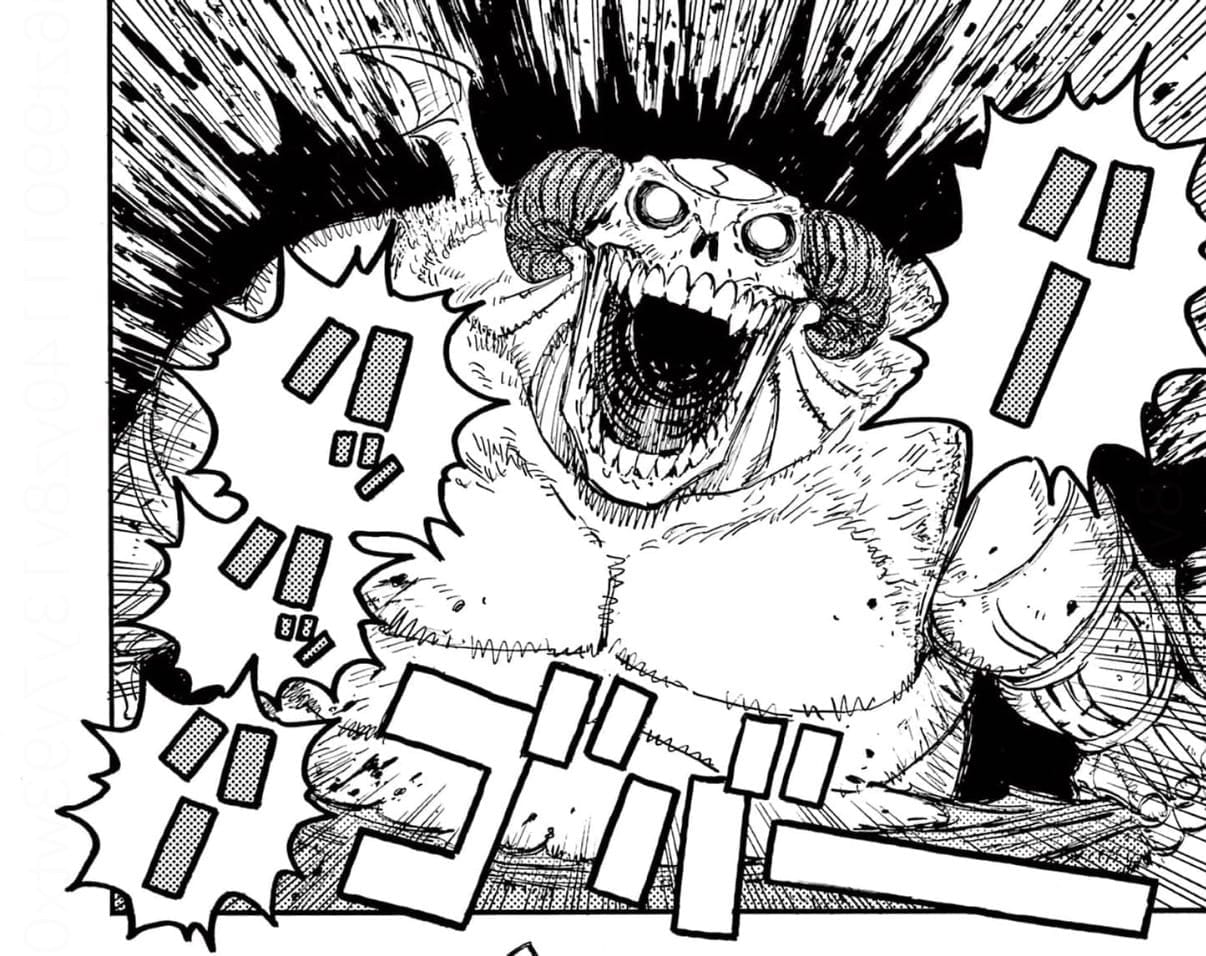
First of all, Rai Rai Rai is not a battle manga. Partly because of its lackluster power system, the action scenes are perhaps some of the worst parts of the story: Sumire is given access to a special alien power suit after being abducted by a UFO on her way to work, but her abilities essentially boil down to invulnerability and being able to shoot a giant laser out of her mouth. As mentioned, one of the other characters also uses a sword while all of the paramilitary force that the protagonist finds herself a part of wear some kind of protective suit, neither of which is explained very well.
Instead, what’s interesting is how Sumire reacts to all of the violence occurring around her. As more or less a normal girl, she’s obviously frightened by the idea of fighting and must summon up the courage to defend her friends in a rather typical implementation of the hero’s journey, but her innocence also comes into sharp conflict with the rough and ready attitudes of those around her. The sword-wielding vice-captain Hazuki, in particular, finds her philosophy forever altered by the alternative perspective that Sumire brings into her life.
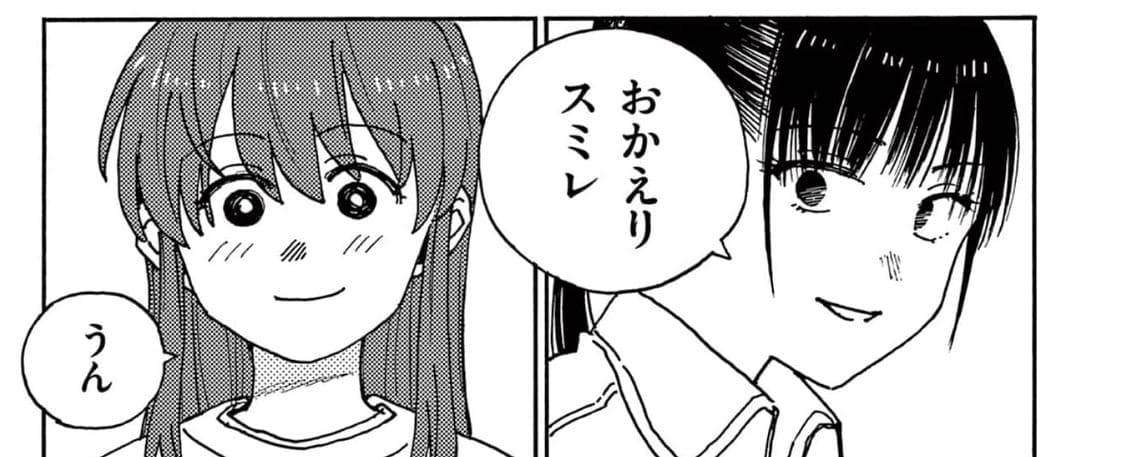
While the relationship between Sumire and Hazuki could be interpreted by some as yuri, the story makes it clear that they both provide each other with the comfort that is missing in their lives. For Hazuki, Sumire is something of a little sister that fills the void left by her family after they were murdered by an alien invader, while Hazuki’s support proves invaluable in allowing Sumire to acclimatise to her new surroundings. Add to this the fact that their squadron leader actually lives in the same apartment as them and the theme of found family definitely comes through strongly here.
Secondly, Rai Rai Rai is a manga about megacorporations. Following the end of the invasion, two companies emerged as the preeminent leaders in anti-alien technology: the Raiden Corporation, where Sumire finds herself employed alongside most of the main cast, as well as Red Rock, their rival. Both firms possess their own military forces and much powerful technology that is largely kept secret from one another, leading to intense mutual suspicion between the two CEOs, Densuke Isurugi and Mariko Gangi.
The choice to make the driving institutions of the story private instead of public is one that has drastic effects for the subtext of the series. Unlike the Defense Force in Kaiju No. 8, Raiden and Red Rock are not positioned as neutral bodies in society, making their animosity and occasional infallibility an essential part of the narrative. Judging by the amount of unsanctioned destruction they cause in the field, is it really appropriate that entities with such power and responsibility remain responsible to shareholders instead of citizens? Perhaps not.
Moreover, just how Raiden and Red Rock got their hands on such advanced weaponry forms a key part of the mystery driving the story forward. Halfway through volume two, a trip to ground zero of the alien invasion at what used to be Tokyo is interrupted by an employee of Red Rock who appears to have similar powers to Sumire, complete with a fearsome beam of destruction. In tandem with references to something known as the “Destroy Cannon”, it’s clear that both outfits know far more about the aliens than even the government does, sowing the seeds for future revelations.
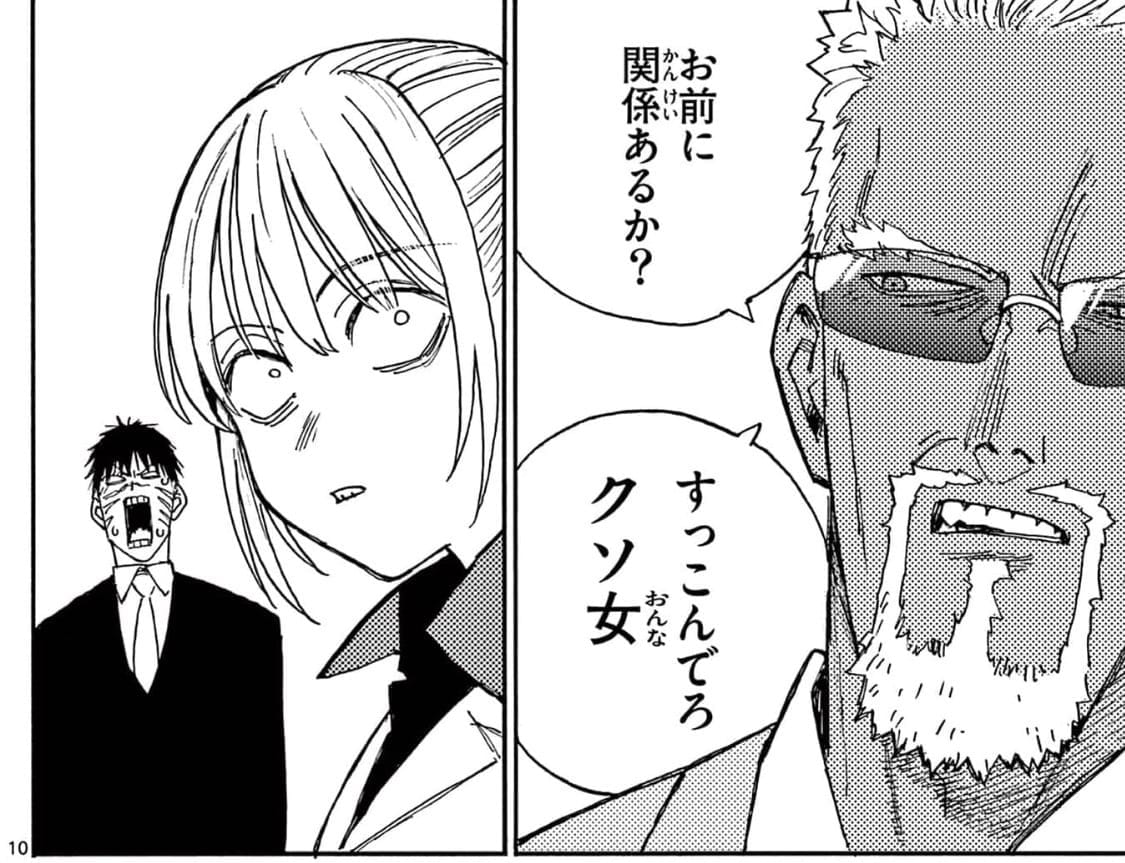
Aside from Kaiju No. 8, the other series that Rai Rai Rai could just as easily be compared to is Cosmos by Ryuhei Tamura. Both tackle the idea of extraterrestrials, both focus on theoretical workplaces in fantastical worlds, and both feature private institutions that seem to wield an awful lot of power and influence in society. That being said, this is most likely nothing more than a happy coincidence: Cosmos launched in April 2023 while Rai Rai Rai started four months later, hardly leaving enough time for anyone to copy any homework.
Regardless of any potential similarities to other established series, however, Rai Rai Rai more than stands on its own. Whether it's the wholesome relationships between the main characters or the political maneuvering between megacorporations, there’s definitely something here worth discovering for yourself. Just don’t go in with the wrong expectations: this isn’t an action series like Kaiju No. 8, even if all the signs point to otherwise.
Rai Rai Rai is currently serialized on Shogakukan’s Ura Sunday website. You can read the series in English via VIZ Media.