Kore-eda Hirokazu has been constant in his production of new films and TV shows ever since his nomination for best International Feature Film at the Oscars for Shoplifters. Many of these have been truly great additions to the storied filmography of one of Japan’s greatest directors. Sheep in the Box is not one of them.
Questions surrounding AI and its role in modern life have come to be the defining issue of our current decade, especially as tools like ChatGPT and Claude become greater influences in dictating work and the lives of ordinary people. What role they should have has yet to be answered, with the public still reticent to use it beyond heavily tech-centered industries like programming. Generative AI, the form spawning new conversations, art, and objects from the collected works of the past, is particularly disliked, seen as a tool robbing humans of the creativity that makes us people. Yet tech companies still think there are spaces in which we can find use for this.
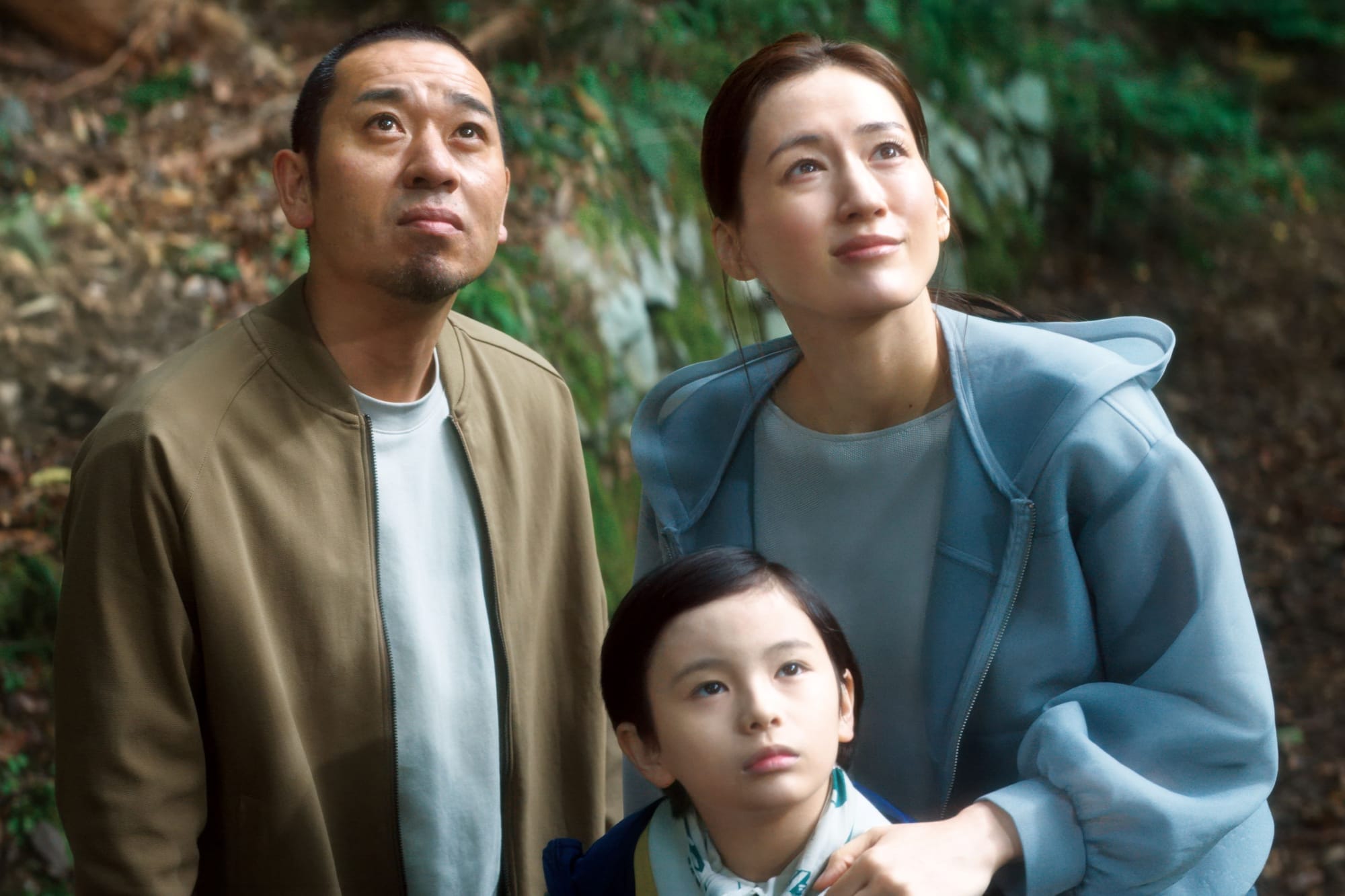
Sheep in the Box proposes a not-too-distant future where one use of AI is in the currently-festering “digital afterlife.” What if you could have a robot that looked and acted human, with a “brain” and personality built on the stored memories, photos and ideas of someone who had passed? What if you lost a child and simply wanted them back in your life? Otone and Kensuke Komoto (played by Haruka Ayase and Daigo Yamamoto respectively) are two parents who lost their child in an accident at the age of seven, and while their lives continue on as architects and welders respectfully, the loss is felt. When they’re advertised a chance to see a demonstration of these AI robots, Otone is curious but Kensuke is sceptical. They go anyhow, and eventually choose to adopt one.
The child is welcomed with loving arms by Otone, even as her husband remains uncertain. The robot can’t play with water or do certain things their lost child could, and even then, would you even want a replacement child? It can’t even be independent - this so-called child (Kuwaki Rimu) is tied by his programming via a GPS chip to always stay within 30m of his “owners.”
While the direction taken with AI is certainly new for Kore-eda, the story itself is not exactly unfamiliar to the director. Air Doll also brought life to inanimacy, making it a metaphor for lingering memory. Questions of parental grief and the parent-child relationship were explored in Like Father, Like Son and After Life, and even the aforementioned Shoplifters.
Ever since its premise was first revealed, however, I couldn’t help comparing it to another film: Steven Spielberg’s ambitious (and arguably most intellectually-stimulating and impressive films) 2001 blockbuster A.I: Artificial Intelligence. The similarities are apparent. A robot boy, programmed with love, is adopted by a family, except rather than their child being dead, they adopt the robot because the living child is in a coma from which they have stayed for years. When the boy does wake, to everyone’s surprise, it complicates the robot’s place in this new family, until the parents eventually abandon the child.
The young boy travels the world seeking answers, still desiring to be loved as he meets other robots and their role as tools for humans rather than objects of love. In the end, love is both life-affirming and destroying, because eventually it must end, as all life does.
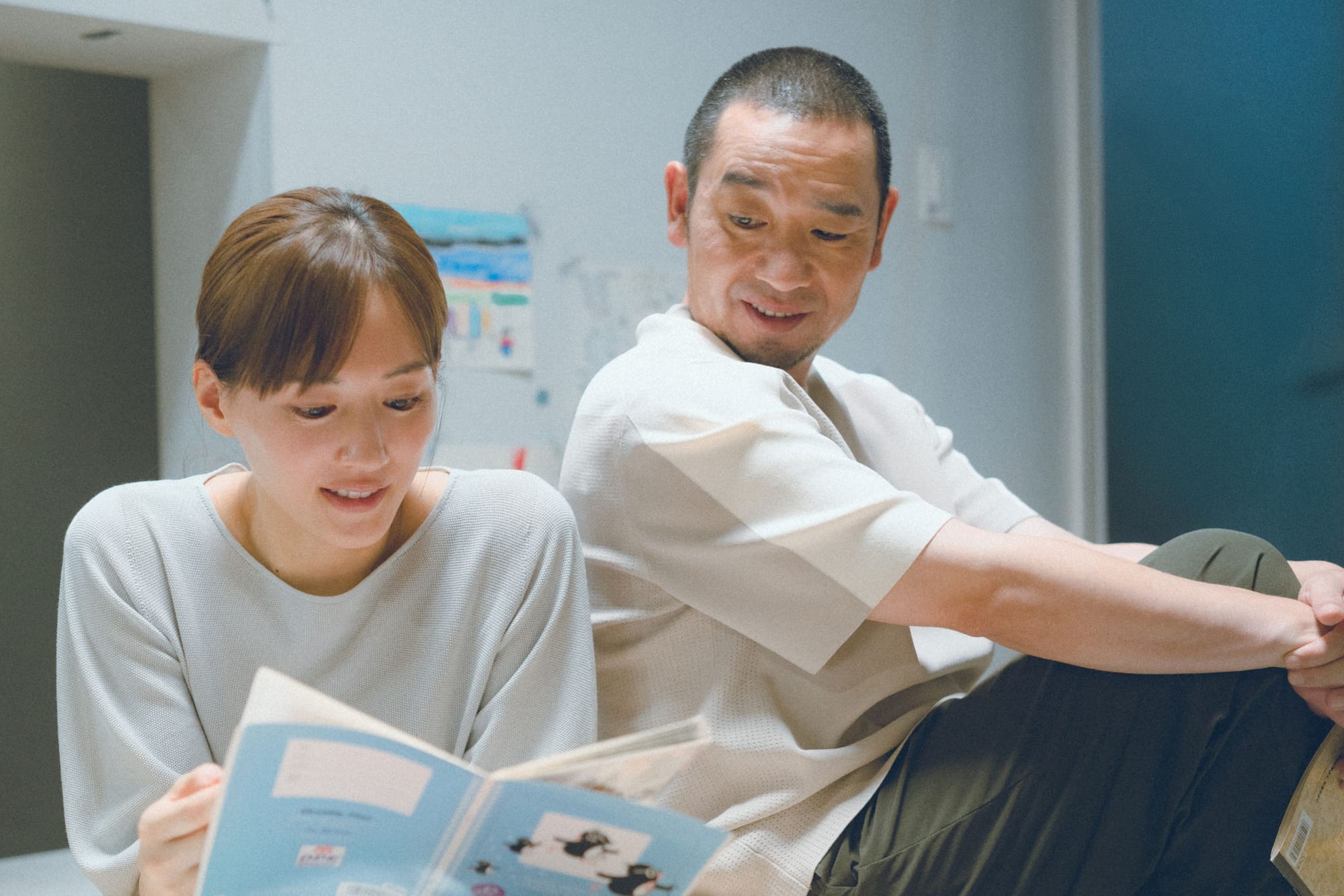
The choice by the Komoto’s to get the robot comes as a selfish way to throw away their need to confront grief, compartmentalizing it into a robot with the capacity to “feel” by virtue of AI programming simulating emotion. Getting a robot doesn’t conquer grief, however, it merely shields it from view inside of a metallic humanoid box. Grief is what makes us human, as much as these tech companies may seek to find a way to ‘solve’ this inconvenience. Don’t we create more harm throwing that responsibility onto another object? It’s a self-serving desire to escape that pain.
Looking at it this way, there are many fascinating ways for a film like Sheep in the Box to explore AI and grief, and I can consider few Japanese directors more suited to that task. Which is why it’s so surprising that the film falls short in almost every aspect. Rather, it’s one of the few times Kore-eda has tackled a topic for which he has nothing worthwhile to contribute to the ongoing conversation. Going one step further, I don’t think he understands AI, and thus doesn’t know how it augments grief, our relationship with robotics and technology, or how this could influence society and human desire.
The topic of AI in the film is introduced clearly as an analogue to our current generative AI concerns. One thing Kore-eda does understand is how unnecessary the obsession with AI solutions has been since the rise of this technology. The family have gone years since their child died, and have seemingly mostly moved on, when an unnecessary drone package advertising the REBirth AI service to create an AI child suddenly appears. The question to create such a digital AI grief robot was not one they ever considered, and yet now it consumes them. We don’t explore that stimulated desire, either.
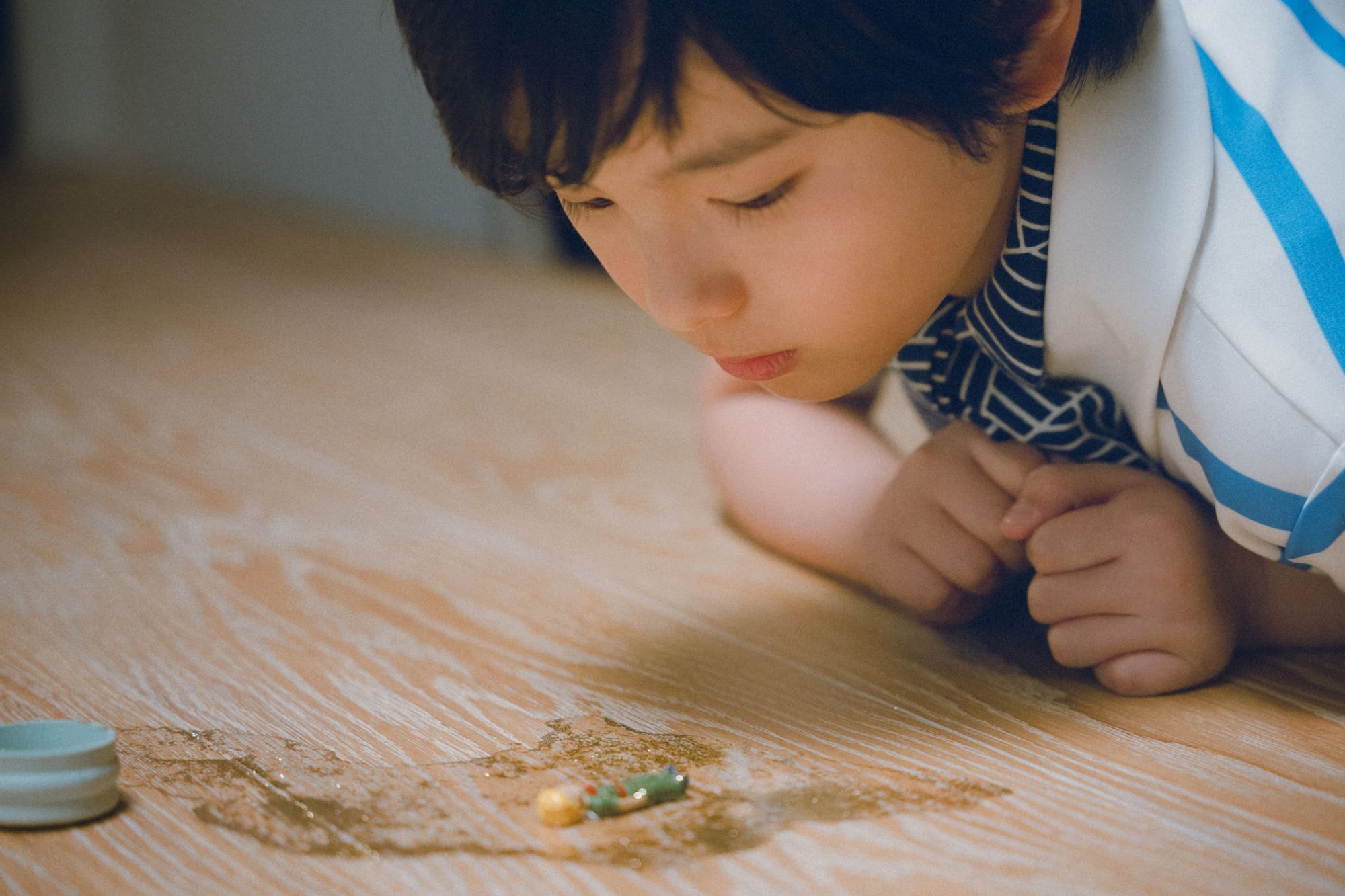
Discussions of AI are either surface-level or absent entirely. The concept of Kakeru as being human versus a “life-sized Tamagotchi” is brought up, but never interrogated. The idea this is a mimicry, not a clone, who thus will act differently, the way others will react to the hallucination of your self-constructed AI bubble, is similarly mentioned but never discussed. These questions open the door to conversations on technology and humanity that never come. Ironically, it distracts from a more simple tale of family grief by positing these unanswered ideas into the void, leaving the whole thing feeling like a shallow parody of the director’s prior body of work.
It’s predictable, not insightful, which makes its comparison to Spielberg particularly unflattering. Any chance to explore how humanity uses AI selfishly or question if there's any benefit to the selfish use of it by humans, is compartmentalized into a secondary plot centering a mysterious man who takes in discarded humanoid child robots and cares for them. He barely features in the film. Only two sequences of the film even feature the character and these other kids, often with parody-like stating-the-obvious sequences showcasing human selfishness for these robots - a scruffy robot ignored when the owners finally have a new baby, for example. Yet this suddenly consumes the final act to pay off little but vague symbolic ideas of love trumping the coldness of technology that feels unearned.
The entire film feels emotionally-stunted in a way that’s almost-unheard of for a director like Kore-eda, making Sheep in the Box like a first draft hastily put together to appear in tune with a topic he appears not to understand. Platitudes to humanity’s value over subservience to a machine for emotional or mental offloading is fine, yet it’s not one supported by a film that feels lost and empty from start to finish. It lacks a reason to exist, when its subject matter should make for his most pressing film in years.