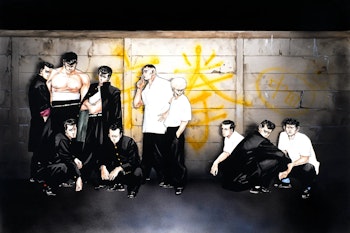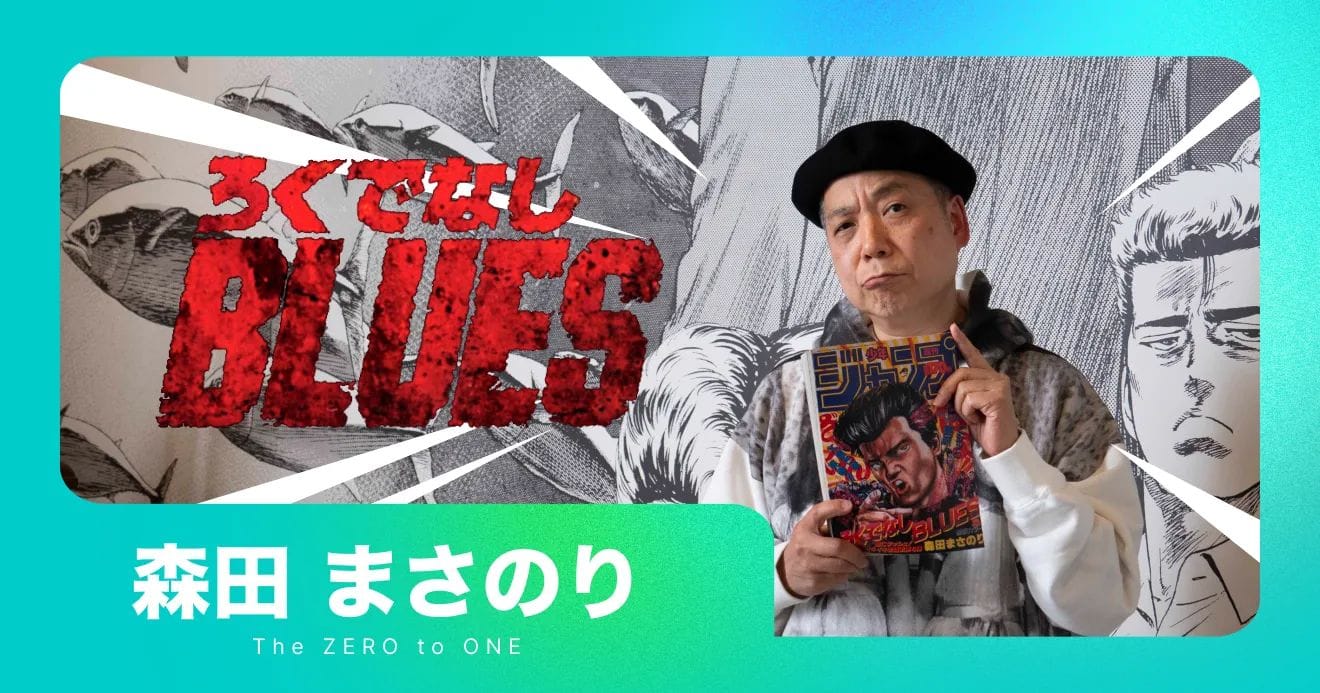
Within the subgenre of delinquents, nothing quite measures up to Rokudenashi Blues. Published in Weekly Shonen Jump from 1988 to 1997, the series currently has over 60 million copies in circulation, making it one of the best selling manga of all time. Original creator Masanori Morita recently sat down with Zebrack to discuss how the legendary story came to be as part of their Zero to One initiative.
First of all, Morita explained that he first started drawing manga in elementary school. Much to his classmates’ delight, he used to find blank pages in the newspaper and draw strange Kamen Rider-like creatures in them alongside his other passion, baseball. He even played an instrumental part in setting up a manga club at his school, bringing the proposal directly to the principal and producing several amateur works together with his friends.
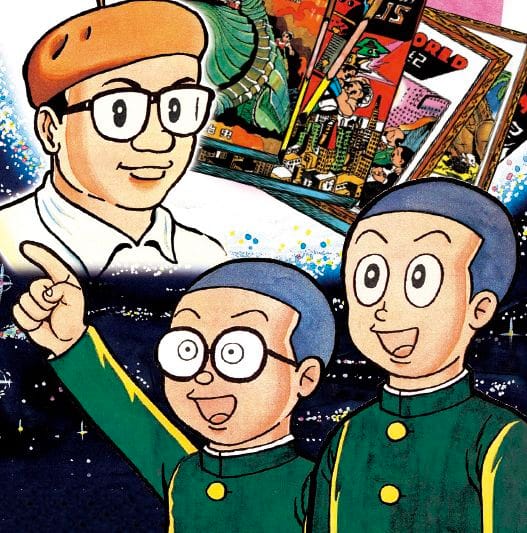
It was only after reading Manga Michi by Fujio A. Fujiko, however, that the possibility of becoming a manga artist ever seriously entered Morita’s mind. This semi-autobiographical series tells the story of how Doraemon came to be from the point of view of one of its creators, including guest appearances from several famous manga artists. In fact, one of the most famous parts of the story is when Michio Maga and Shigeru Saino, fictional stand-ins for Fujio A. Fujiko and Fujio F. Fujiko, go to visit Osamu Tezuka in a highly fictionalized meeting that sets them on the path to greatness.
Captivated by this story, Morita made his own visit to Tezuka Productions during the summer of ninth grade. While he wasn’t able to meet the God of Manga himself, several staff members were kind enough to take a look at his manuscripts. At the time, the actual business addresses of artists were apparently printed in manga magazines, so he was lucky enough to see the workplaces of Fujio Fujiko and Jiro Tsunoda (Karate Master) too.
Far from just meeting his heroes, Morita also used his time in Tokyo to visit several major publishers in the hopes of landing a serialization. While most disregarded his work as nothing more than child’s play, he received a very warm reception at Shueisha. One editor by the name of Ibaraki was the only person to take him seriously, eventually leading to his first one-shot being published in Fresh Jump one year later under the name IT’S LATE.
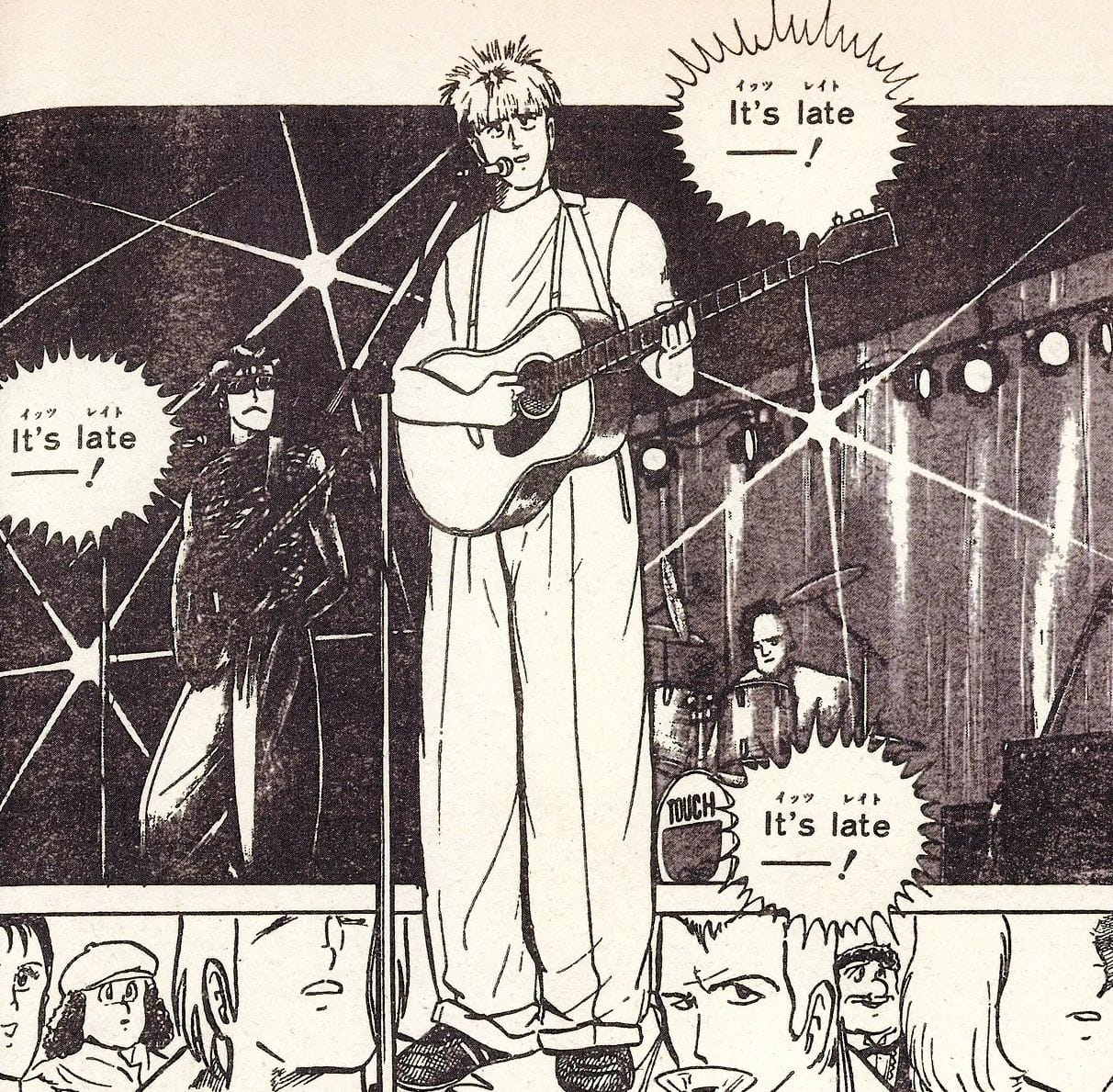
At this point, it’s worth explaining some of Morita’s background. Not only was he raised in Shiga Prefecture many miles away from the rest of the industry, he was also the oldest boy in a priest family. This meant that he was supposed to inherit a temple upon coming of age, but his dreams had already shifted from the spiritual to the artistic. Convincing his parents to allow him to move to Tokyo and shirk his responsibilities would therefore take some work, but Morita had an idea.
In order to chart out his future life path and ensure success in the big city, Morita devised a rather ambitious four year plan. This entailed working as an assistant for a famous manga artist in year one, writing multiple one-shots with the aim of getting a serialization in year two, starting a serialization in year three, and getting rich in year four. No one, not even Morita himself, knew if this was feasible or not, but the deal was that he would come home if things didn’t work out.
Surprisingly enough, that four year plan basically ended up becoming the exact structure of Morita’s early career. He started working as an assistant for Tetsuo Hara on Fist of the North Star in 1985, published multiple one-shots throughout 1986 and 1987, and eventually landed a serialization with Rokudenashi Blues in 1988. Fame and fortune came a little later than expected, but it’s still uncanny just how well everything worked out in the end.
That being said, drawing manga on a weekly schedule is no easy task. In the interview, Morita admits that it took him at least two or three volumes to get used to the pace, with six days of work needed every week just to keep on top of deadlines. As if to make matters worse, Morita’s editor was adamant that a series needed to stay popular for fifteen weeks in order to avoid cancellation: a much higher figure than oft-cited ten.
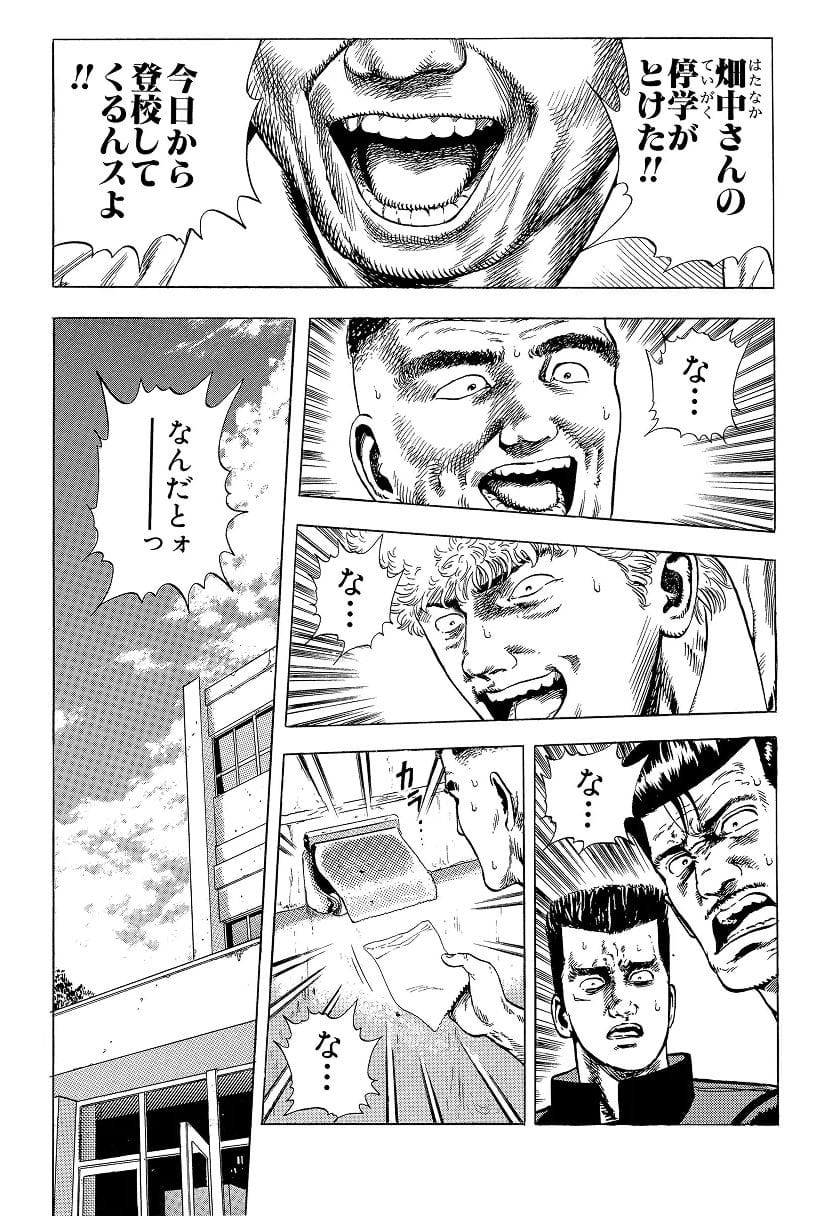
In order to ensure early success, most of the initial chapters of Rokudenashi Blues were self-contained stories. There was also a keen focus on comedy: Morita was actually told by his editor that he needed to put in “one gag for every two pages,” making the tone much lighter than initially planned. Nevertheless, the focus switched to action once the character of Onitzuka was introduced and the story shifted into the Four Heavenly Kings arc, during which rival schools duked it out in a brutal gang war.
Other delinquent series were actually doing similar storylines at the time, but Morita had no idea. He knew better than anyone that he was extremely easily influenced, having already transformed his art style under the tutelage of Hara, so he purposefully never read any other manga during active serialization. What’s more, he admits that he never had any particular link to the real delinquent counter-culture of the 1970s: he wasn’t a delinquent himself, he never had delinquent friends, and he actually didn’t like them very much.
All of this begs the question: why even draw a delinquent manga in the first place? Morita guesses that he got the idea from a magazine somewhere, but his life path definitely plays a big part. He says: “For a serialization, you have to draw on what you know, but I joined the manga industry just after I left high school. The only world I really know is school, so I decided to do a school story with some jokes. I also wanted to have an active protagonist, so I made him into a delinquent.”
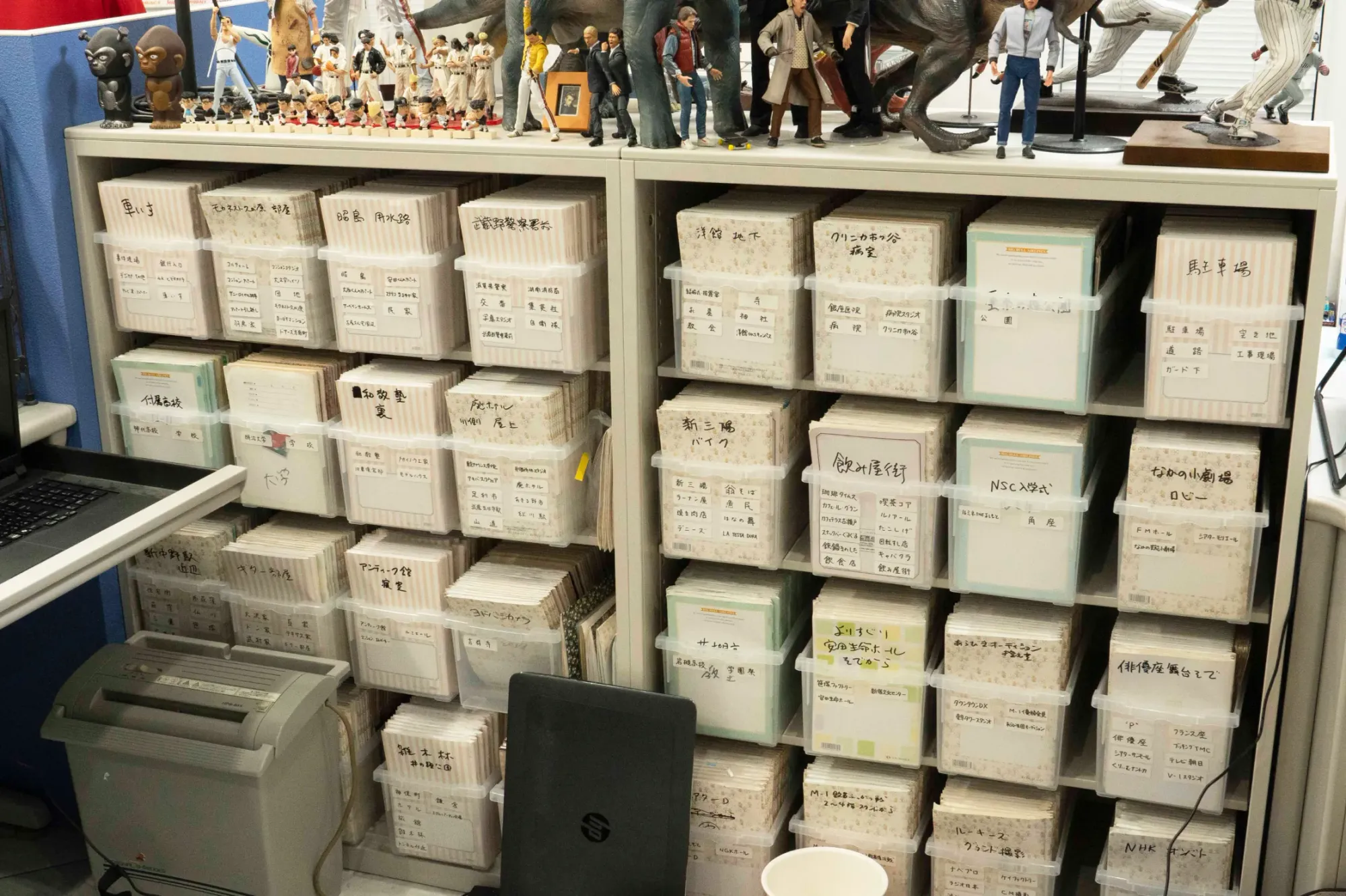
One of the other advantages of using a school setting was the relative ease with which it was possible to come up with reference material. For backgrounds, Morita and his team of assistants used to take photos at the local high school during class time when no one was around. They didn’t have permission, of course, so they eventually got caught and had to submit a formal application that was eventually accepted.
The fact that Rokudenashi Blues uses many locations from the real world contributed to the perceived realism of the story and allowed fans to lose themselves in the fiction. Another reason for its success was its readability: natural dialogue was always accompanied by naturalistic drawings that mimicked the way that the mouth and face would move in real life. Many manga at the time would pay little to no attention to the synergy between character art and dialogue, including Fist of the North Star, where Morita often saw dialogue coming out of closed lips during his time as an assistant.
Even so, Morita still cannot wrap his head around why Rokudenashi Blues was so successful. Alongside lamenting his lack of skill with art, he admits that the series was more of a “justification” for leaving his family and responsibilities behind. That’s why he’s slightly more positive towards his other works such as ROOKIES and Beshari Gurashi, describing them as the “opposite of a complex.”
In any case, few would doubt the raw power and cultural clout of Rokudenashi Blues. There’s plenty more to uncover about this hidden gem, but for now, you can find the full interview with Masanori Morita on Zebrack’s website.