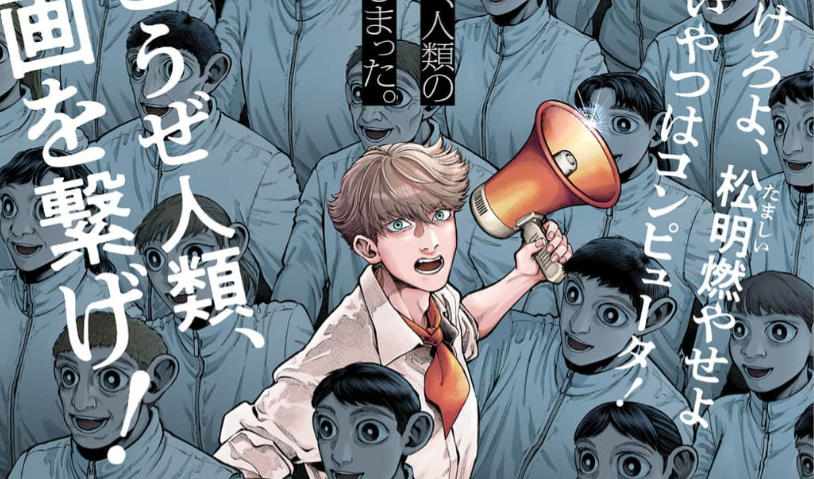
Considering the potential ramifications of generative AI, it was probably only a matter of time until someone put together a dystopia where humanity is ruled by ChatGPT. That’s probably the easiest way to describe MEGAPHONE PARADE by Umecchi, but such a flippant comparison doesn’t do the story any favors.
Set in the year 2598, this new series follows the story of a young man called Kai who runs an antique shop in a speculative future where AI inhabits humanoid bodies known as “subhumans.” Despite the name, these walking talking chatbots are very much at the top of the food chain, slowly but surely replacing regular humans in society with methods both overt and underhand. Just as humans are fired for not working as fast as the robots, they also meet mysterious ends after criticizing them publicly, including Kai’s father several years ago.
It’s not hard to guess where things go from here. Kai uses his antique shop to help those like his father being pursued by the subhumans get away to safety, but the framing of the narrative offers a tantalising promise of future developments. Not only does the very first page show Kai taking part in a revolution against the robots, the last page explicitly states that there is a six month countdown to these events. As to how Kai ends up getting involved in this movement or what it stands for, we’ll just have to wait and see.

For now, it’s worth highlighting how beautifully MEGAPHONE PARADE depicts the current idiosyncrasies of generative AI. Even though the technology would surely be unrecognizable after 500 years of innovation, the robots in the series talk exactly like ChatGPT right now, never saying a bad word and hardly batting an eyelid to strange changes in topics. The apparent moves by AI in this world to snuff out critics do cast some doubt on this apparently harmless persona, however. Perhaps that’s exactly what they want you to think.
Other anachronisms carried forward into the setting include the age-old image of the cashier getting replaced by a machine, as well as the enthusiastic tech bro in the form of Kai’s actual brother. Even so, these elements are arguably meant to reflect and explore our current anxieties about the effects of AI instead of creating a believable setting. Since we really have no idea how this technology will really affect society, nor what exactly the future holds, stories such as this are the perfect vehicle for imagination.
As an artist, Umecchi also has several series under the name Souta Umeuchi for Kadokawa and Shogakukan. Yongen no Elegy, in particular, garnered a lot of media attention back in 2015 because of the fact that the author had previously attended a music college. They have also produced a fair number of BL works in the past, which is not exactly surprising when you consider that the last part of MEGAPHONE PARADE has the very attractive main character casually delivering exposition in nothing but a bath towel.
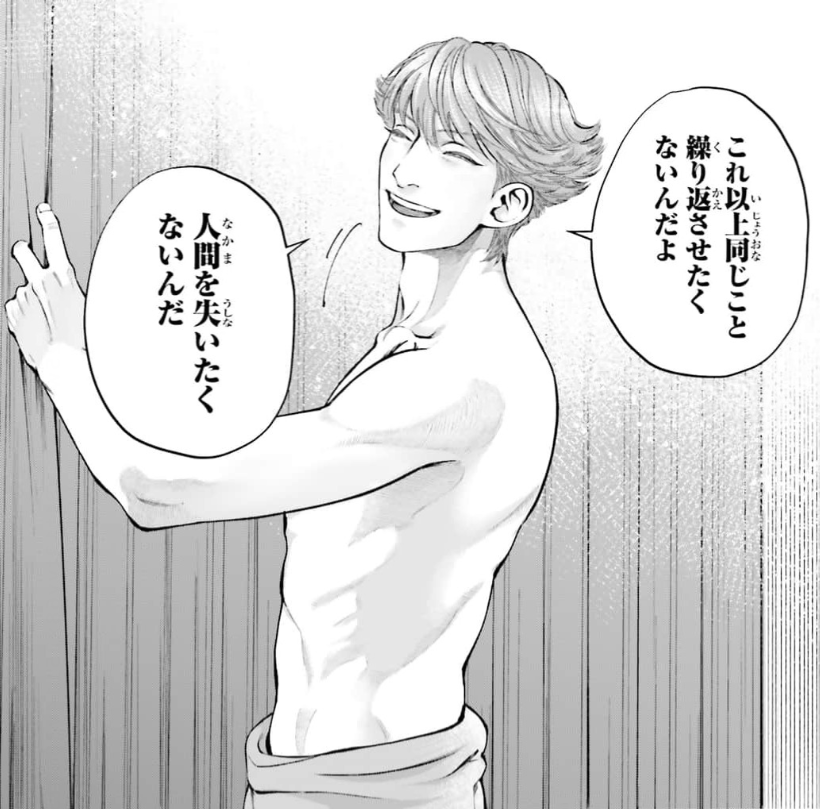
Call me Claude the way AI be eating up that shit.
| Title | MEGAPHONE PARADE |
|---|---|
| Author | Umecchi |
| Publisher | Kadokawa |
| Serialized in | Asuka |
| Genre | Science fiction |
| Demographic | Shojo |
| Who it's for | DuckDuckGo users and twinks (is that the same thing?) |
| Who it's not for | Tech bros, Musk, your dad who believes anything he sees on the Internet |
| Continue reading? | Yes |
Chapter One Club is a weekly column that aims to spotlight the latest in new series and one-shots from across a wide variety of different demographics and publications.