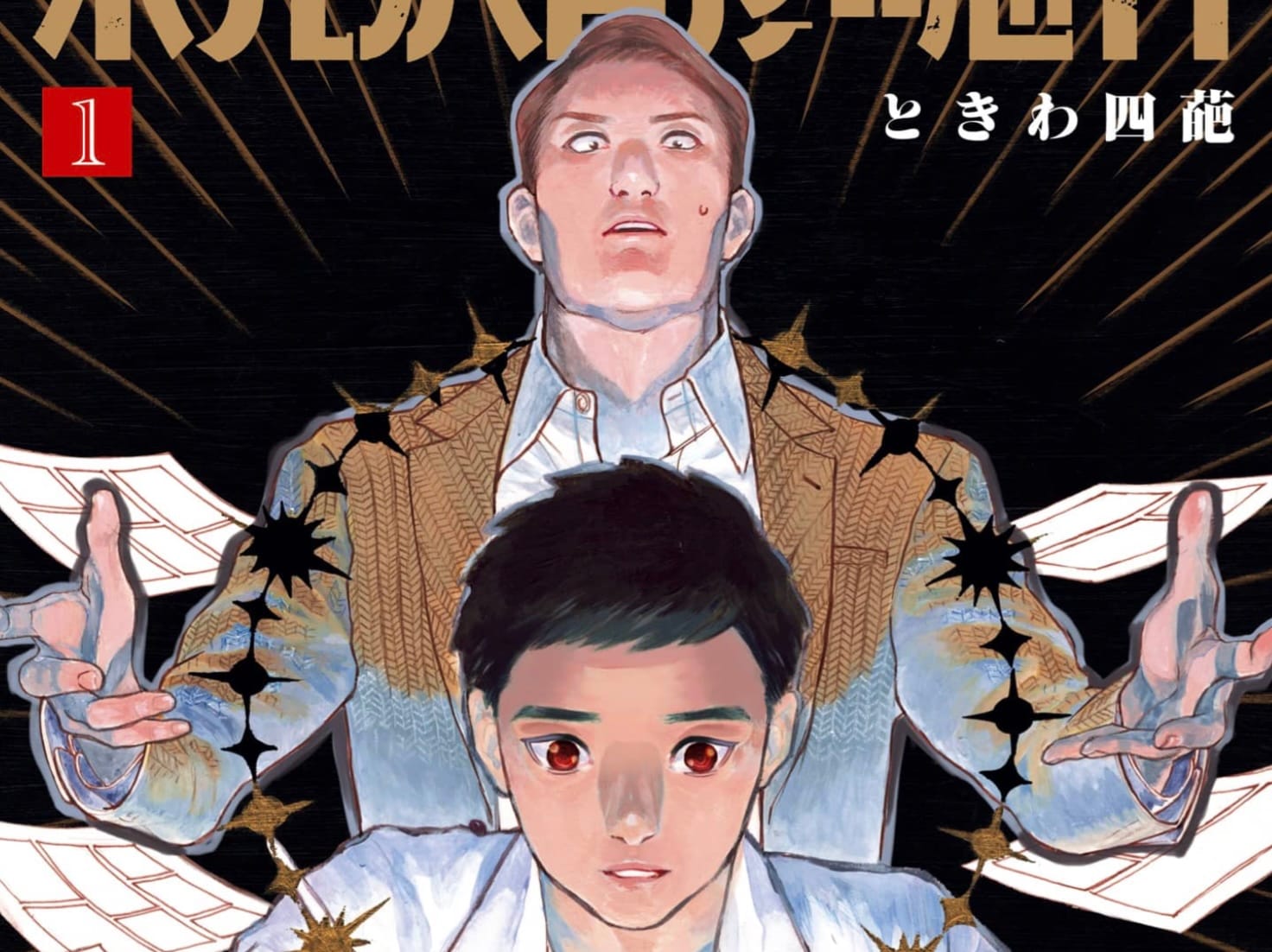
Plagiarism is something of a hot button topic for Japanese readers. Just six years ago, Time Paradox Ghostwriter by Kenji Ichima and Tsunehiro Date was abruptly cancelled in Weekly Shonen Jump for a premise surrounding a stolen manga from the future, so it came as a surprise to see a story like Kurumizawa’s Folly appear on the Jump Plus website so soon after. Nevertheless, Yohira Tokiwa’s series has so much more going for it, including a keen historical edge that speaks to the development of the industry.
The year is 1971. Kurumizawa Yoshihiko is the creator of Cyber Joe, a celebrated science fiction manga, but he hasn’t been able to get a new series off the ground since it ended. After suffering another rejection from his editor at Shonen Victory, he comes across a young man by the name of Kensaku Hata throwing away a manuscript with art just like his into the river… thus begins a tale of deception, madness, plagiarism, and love.
Once Kurumizawa decides to trick Hata into signing away his work by exploiting his illiteracy, the issue of plagiarism definitely takes center stage in Kurumizawa’s Folly, but that’s only really to set the plot up in the first place. Rather, the question of why Kurumizawa chooses to pass off Hata’s manga as his own is more important: unlike Teppei Sasaki in Time Paradox Ghostwriter, his motivations are somewhat unclear. Is it really just because he can’t get another hit off the ground, or is there some deeper reason?
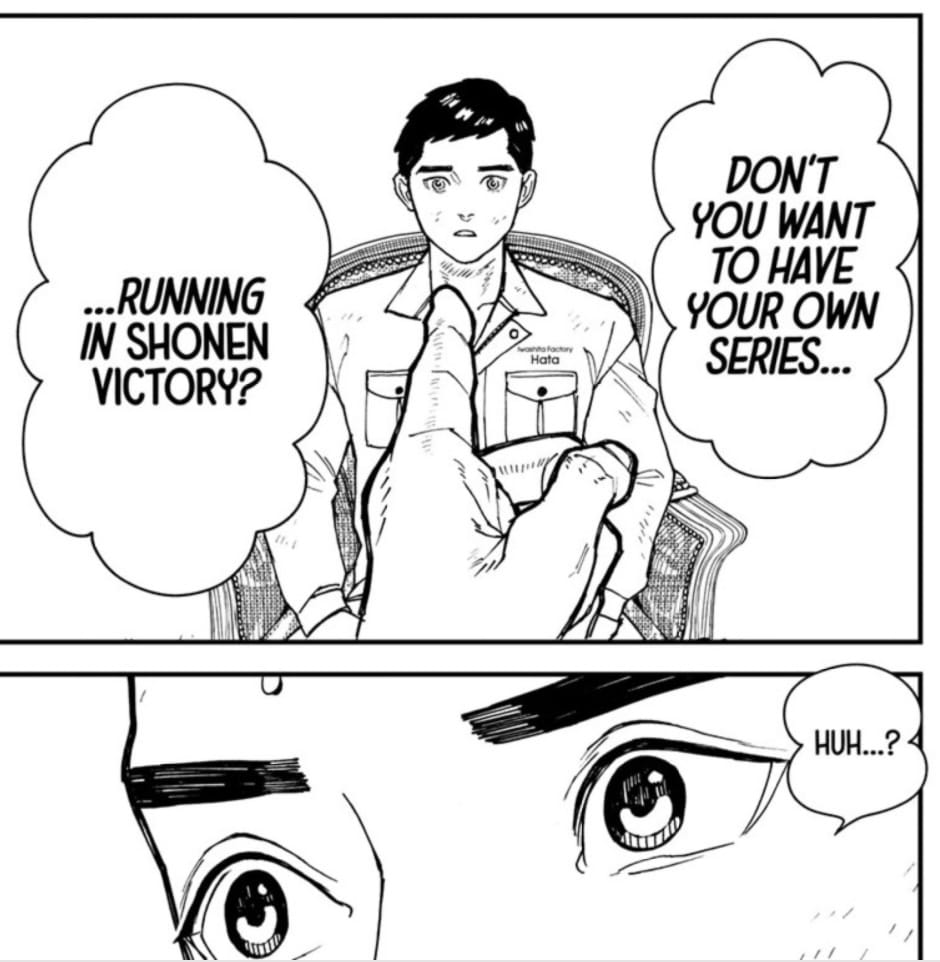
Similarly, Hata has skeletons of his own in his closet. At first glance, he’s a country bumpkin who never got the opportunity to prove himself due to a lack of education, but his obsession with drawing manga seems to speak to something deeper. Putting aside the fact that no one in Tokyo can vouch for the verity of his background, is the tendency to draw for days at a time without eating or sleeping really the sign of a healthy mind?
What ultimately makes Kurumizawa’s Folly stand apart from such works as Time Paradox Ghostwriter is the complexity of its setting. Not only are character motivations kept hidden from the reader, there is no clear ‘good’ or ‘bad’ inherent within the situation. Readers are free to hate Kurumizawa or appreciate his point of view, while rooting for Hata to realize the truth of his situation also comes with its own set of particular problems. As a result, Yohira Tokiwa’s series is effectively shielded from the kind of criticisms that ultimately brought down Time Paradox Ghostwriter after just 14 chapters.
Another important distinction is the specific time period of the story. While Time Paradox Ghostwriter takes place in the modern day and near future, Kurumizawa’s Folly is firmly a period piece that takes great care to recreate the details of its setting. By placing temporal distance between the reader and the story, perhaps it’s possible to create space to explore contentious issues such as plagiarism without casting aspersions on the modern industry. In any case, it’s entertaining.
For manga nerds, Yohira Tokiwa’s decision to use the 1970s as the backdrop for a story about a struggling artist is absolutely irresistible. As depicted in the series, the manga industry as a whole was undergoing a radical transformation away from child-friendly stories towards a more adult-oriented perspective heading into the new decade. In addition to the influence of gekiga, one factor driving this was the rising age of the manga-reading demographics: kids who read comics in the 1950s continued to read into adulthood, contrary to most predictions at the time.
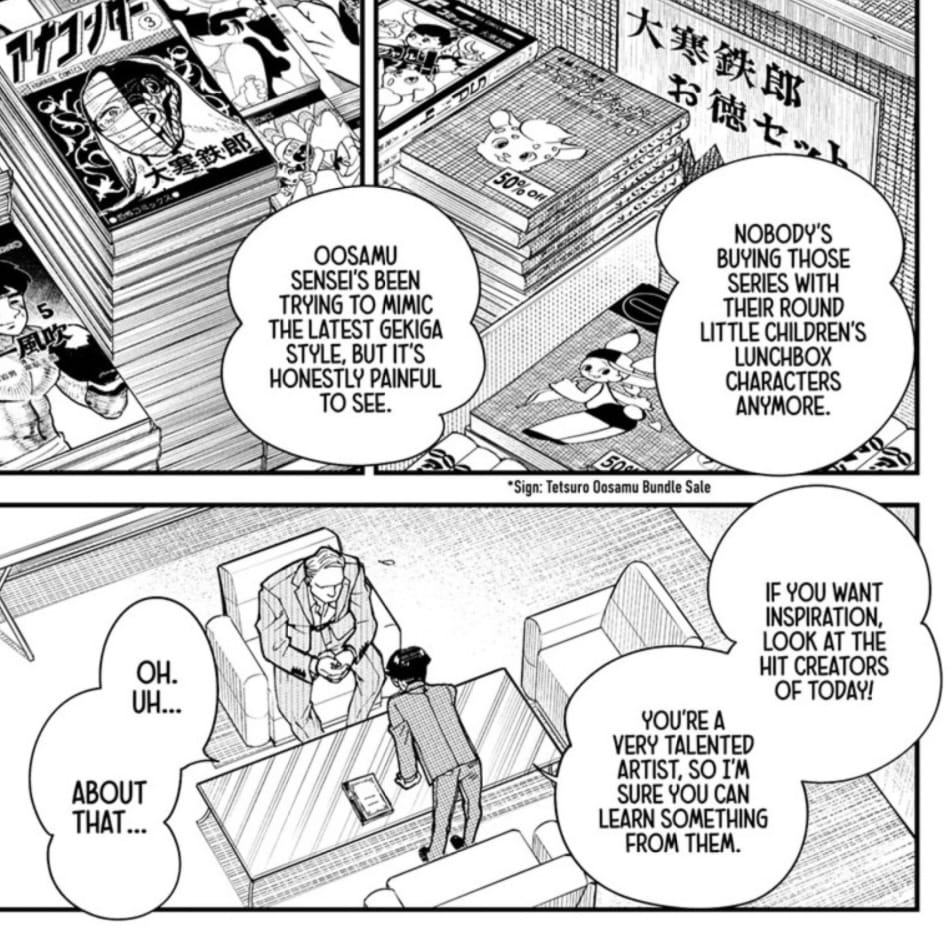
No one best embodies this struggle more than Osamu Tezuka, who struggled throughout the 1970s to redefine his legacy away from the childlike image of Astro Boy with such series as Black Jack, Ayako, and MW. His connection to Kurumizawa’s Folly is not accidental: Tetsuro Osamu from Paper Castle is mentioned in chapter 1 with permission from Tezuka Productions when Kurumizawa’s editor is complaining about the changing times. In fact, Kurumizawa could be seen as a stand-in for Tezuka, although his work bears more of a resemblance to that of Leiji Matsumoto or Yoshinobu Nishizaki.
Speaking of famous manga artists, Girl Meets Rock! author Kuwahali provided a comment for the first volume of Kurumizawa’s Folly. In it, he remarked that “This series really makes you remember that manga is so amazing that it can make people lose their way.”
In many ways, the intoxicating power of the medium is the main theme of the series. Just as Kurumizawa is willing to risk everything for another shot at glory, the only hope that Hata can cling on to is the idea of bringing his story to completion. Who can blame someone for sacrificing their soul if the reward is giving birth to a legacy that will last throughout the ages and touch countless readers around the world?
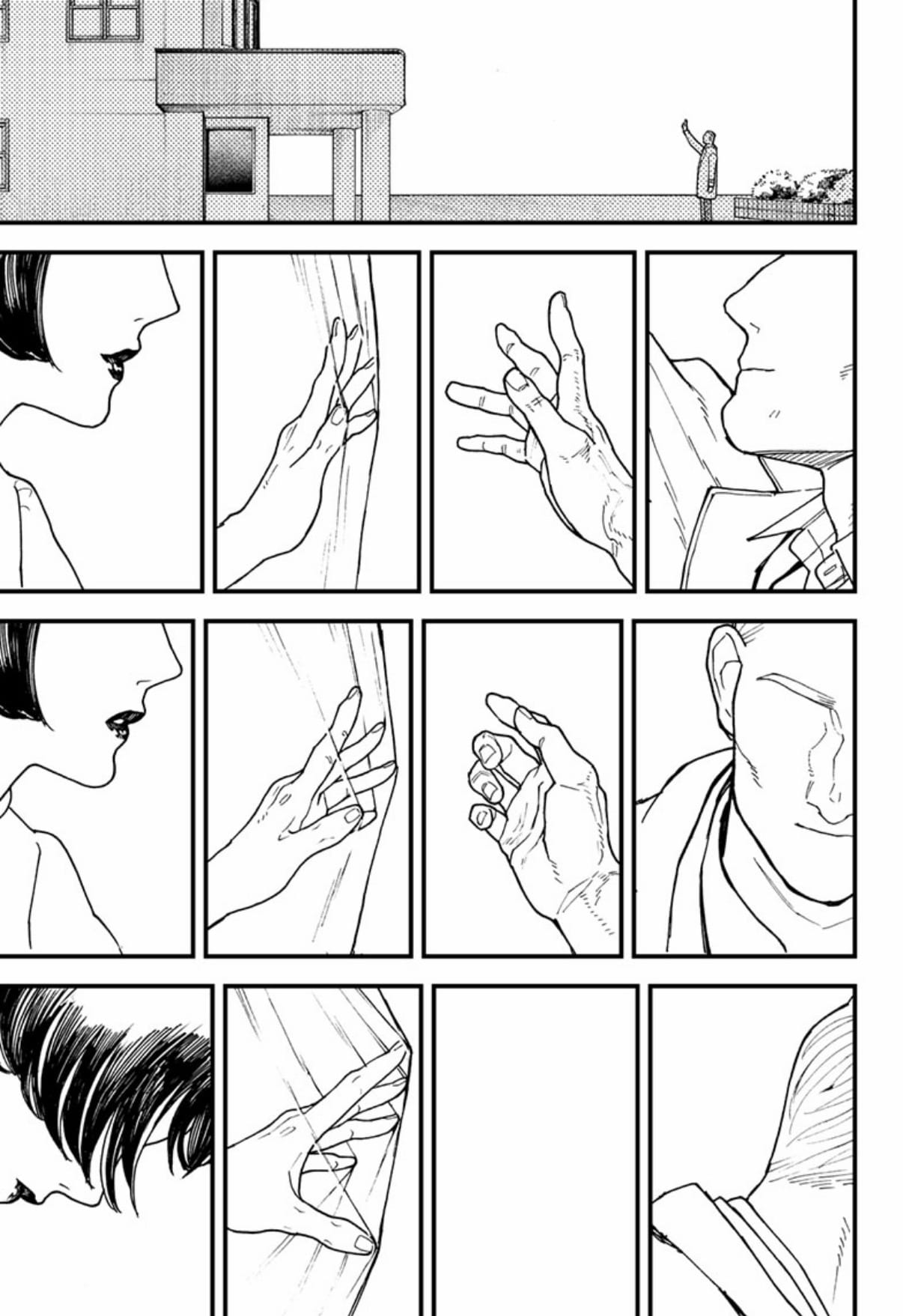
That being said, perhaps Kurumizawa’s real folly is failing to realize that all success is fleeting. One of the truths of the human experience is that the means often feel as important as the ends, no matter how much we try to philosophise our way out of that fact. Now that the series is coming to an end, the question of how Kurimizawa’s act of plagiarism will be punished or rewarded has come into the forefront.
Recent chapters have left me slightly frustrated with the length of the series, having always meant to be a shorter feature for Jump Plus. It feels like certain ideas and perspectives towards the central situation could have been given more time to develop, particularly as some run counter to the assumptions of most readers. Even so, this is a fantastic series and an impressive work from an author whose background lies in action comedy.
You can read Kurumizawa’s Folly in English for free via VIZ Media’s Shonen Jump.