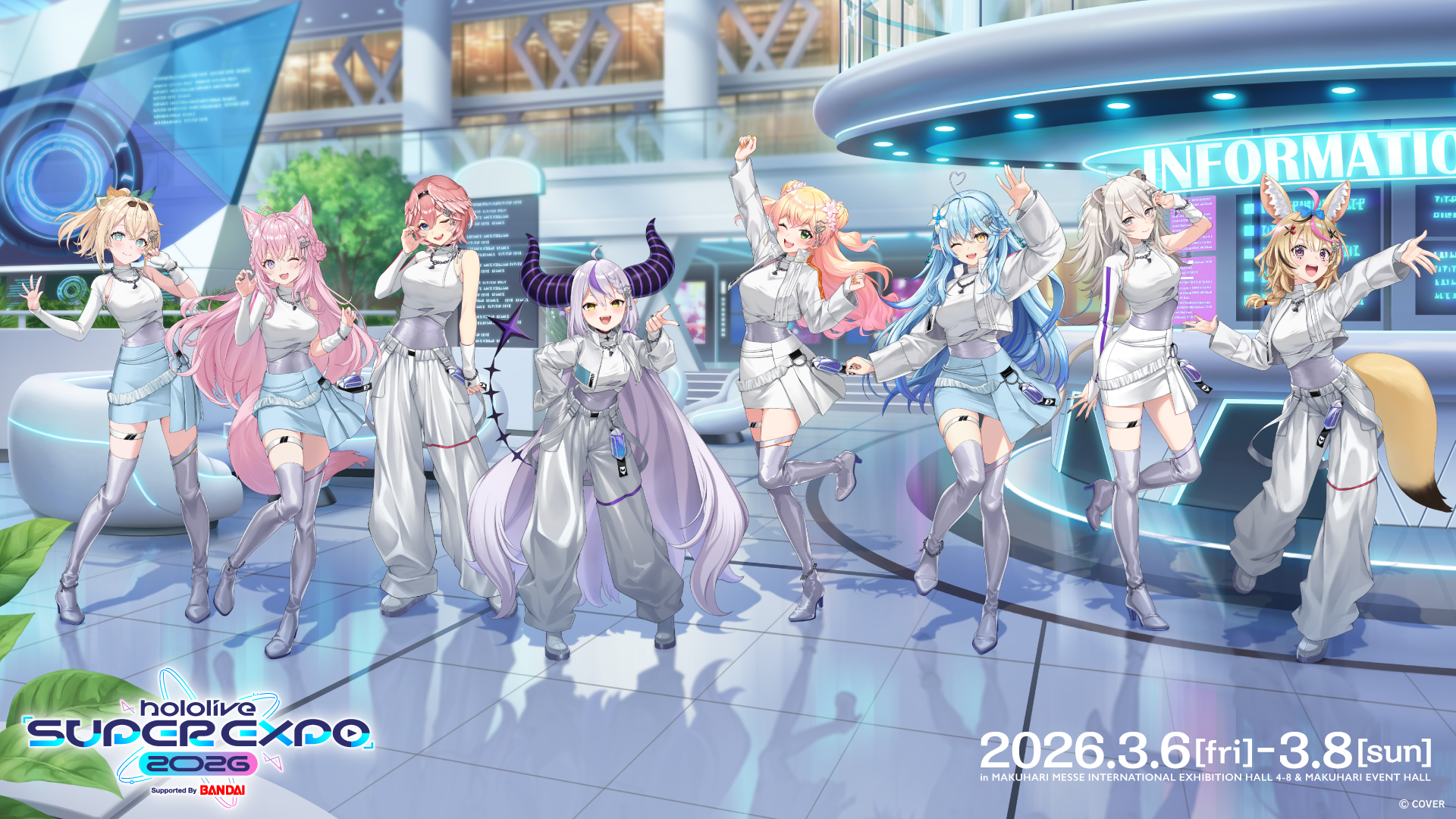
Ever since its inception four years ago, hololive SUPER EXPO has continued to change and evolve in response to overwhelming fan demand. Not only has the footprint of the event grown to occupy eight halls of the massive Makuhari Messe convention center, there are now a whopping four live concerts scheduled concurrently, but the festivities have always been confined to the weekend… until now. hololive SUPER EXPO 2026 marks the first time that Cover’s annual celebration has opened its doors on a Friday for a three day period, finally breaking the barrier of time itself.
There are very few events in the Japanese pop culture landscape that spill out beyond the weekend and into a weekday. Concerts and theater don’t often pay much attention to the work calendar, but most other event organizers simply aren’t willing to ask salarymen to take a day off or suggest that students skip school. Jump Festa, Anime Japan, and Tokyo Game Show all take place on Saturday and Sunday: even Comiket hasn’t returned to a four day schedule since 2020, making hololive SUPER EXPO 2026 a true rarity in the space.
Given that March 6 was not a public holiday, you might expect attendance to be on the lower side. Far from it: there were just as many excited faces in the entry line at 10AM, just as many devotees clambering to see a life-sized panel of their favorite talent, and just as many deafening voices that filled the hall for the very first live concert. In fact, the extremely pleasant weather arguably made the continuing enthusiasm for hololive even more visible than usual as many fan groups congregated outside, chatting among themselves and posing for commemorative photos.
ぷらすめいとでの集合写真撮影しました!!
— つるゆう💜🛸@ぷらめ隊リーダー (@tsuruhololive) March 8, 2026
覆面で集まってるのやばすぎるWWW
これがあなたの販売したグッズですよ…ラプ様…
総勢91名のぷらすめいとの皆様!
ご参加ありがとうございました!
#hololiveEXPOfes2026
#hololiveEXPOfes2026_DAY2
#ラプ様エゴサして
#ラプ様今いくぞ… pic.twitter.com/YuwNoWL6EK
Cover was also clearly expecting record attendance for hololive SUPER EXPO 2026 once again this year. Not only was the Makuhari Messe event hall commandeered for the very first time as a venue for the opening ceremony and various stage events, the number of booths was significantly reduced in the entrance area, presumably to reduce congestion and allow for more queuing. Even the corridors were put to good use this time to display event goods and additional cutouts of each talent, prompting some fans we interviewed to complain about the lack of space indoors to congregate.
With regards to the opening ceremony, the fact that hololive Dreams shared top billing with the annual appearance from Cover CEO Motoaki “Yagoo” Tanigo himself this year just goes to show how important it could be for the future of the company going forward. Announced during last year’s event and finally given a title back in December 2025, the microtransactions from this new mobile game might end up becoming a key source of revenue alongside YouTube superchats and merchandise, even if some have argued that such a project has come far too late. Of course, the fact that the development studio’s previous credits include Gakuen iDOLM@STER (one of the most popular games in Japan right now) should give some cause for optimism.
Even before hololive SUPER EXPO 2026, the footage shown in January’s informational livestream already pretty much outlined what sort of game hololive Dreams was going to be, but the opening ceremony as well as several stage shows throughout the event delved even deeper. In addition to the Project Sekai-style rhythm game element, it turns out that players can build out their own theme park complete with special minigames by completing quests for various talents and advancing the story. By far the most important information revealed, however, was the fact that pre-registration is open now.
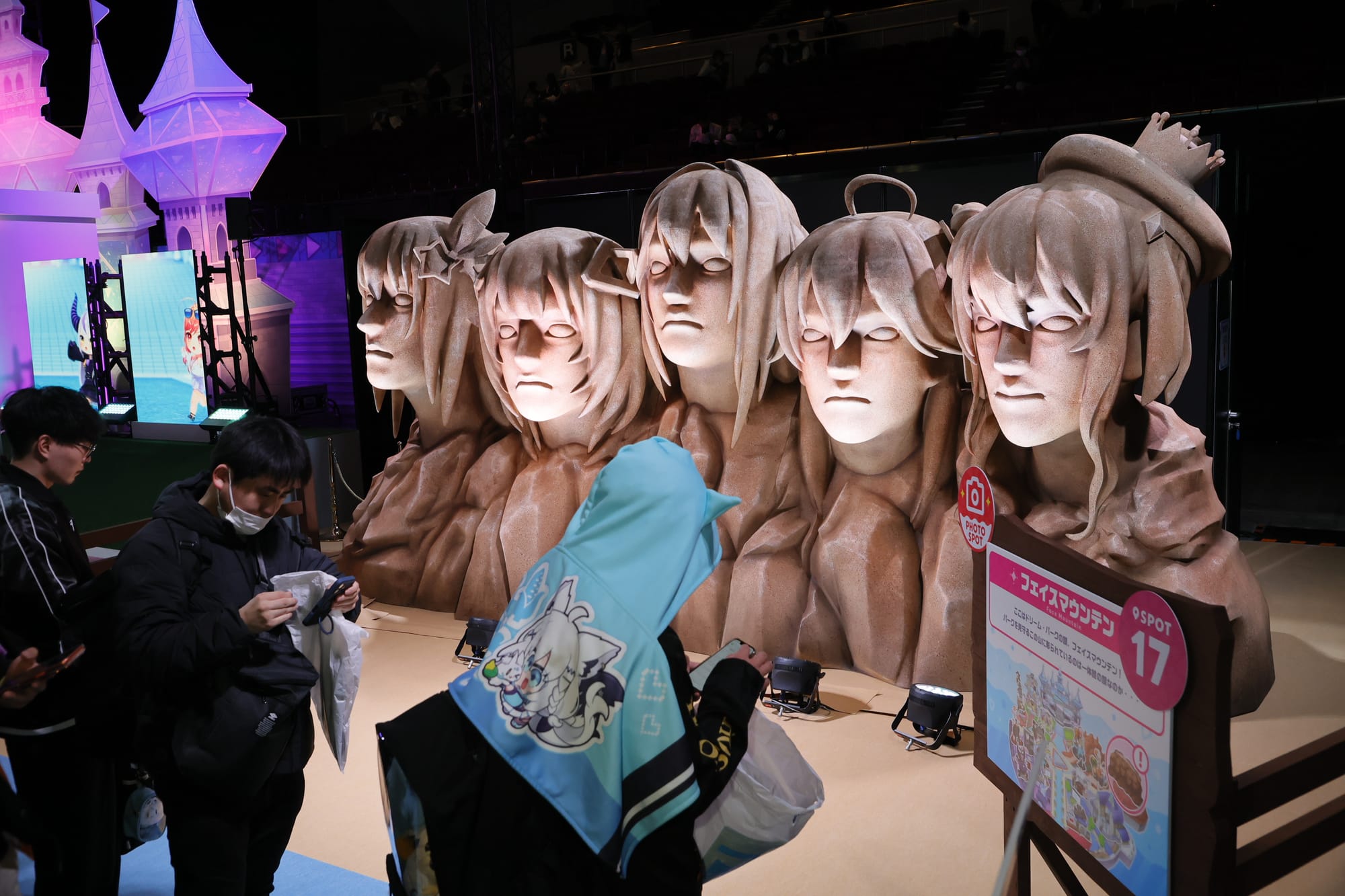
Whether or not hololive Dreams will succeed remains to be seen, but it was undoubtedly the focus of hololive SUPER EXPO 2026. Even if you didn’t tune in for the livestreams, you’d be hard pressed to miss the booth in the event hall with its massive recreation of the game’s hololive Mount Rushmore, as pictured above. All participants also had the chance to receive a pack of special promotional cards for the hololive OFFICIAL CARD GAME if they completed three very easy missions at the booth, hinting at potential synergy between the two titles.
That being said, the real draw for hololive SUPER EXPO has always been the opportunity to participate in the live concerts attached to but sold and marketed separately from the event. In this sense, 2026 was no different: there were no empty seats in sight, with even multiple rounds of lotteries leaving some unlucky fans out in the cold. No doubt Cover saw a significant increase in the number of applicants to the hololive Fanclub in preparation, as hololive 7th fes. is the first joint concert to be held since its foundation.
Almost every year, hololive’s annual live performance debuts some sort of new technology that pushes the envelope of virtual events in the name of immersion. Further to the use of two stages at either end of the hall, 2025 saw the debut of a rotating screen to create the illusion of movement during dance sequences, while this year employed two giant carts to bring talents through the crowd and closer to the fans. Unfortunately, the main topic of discussion to come out of both days was not something to do with this advanced technique, but something that lays bare the contradictions within the varied hololive fanbase.

Towards the end of hololive 7th fes. Stage 1, Yukihana Lamy and Hakui Koyori performed a cover of the legendary “Snow halation” from the original Love Live! series. As a reference to the music video, it is tradition to use a disposable ultra orange (UO) penlight as the song transitions to the final chorus, but footage from the night shows that hardly anyone in the audience did so. To be clear, ultra orange penlights were explicitly banned alongside any “Light sticks that are too bright and may disrupt any performances” in the concert rules, but this shouldn’t have stopped fans from at least changing their penlights to orange instead.
Reaction on social media was swift and savage, but the real question is why hololive fans were expected to understand this practice in the first place. While the virtual YouTuber agency does engage in many activities usually associated with idols and anisong such as concerts and karaoke, the hololive fandom actually brings together a very diverse demographic of users from across different areas of pop culture, including those who may never have had an interest in anything related to music before. The fact that outrage exists alongside complete ignorance is proof of this.
Considering how diverse the hololive fan community truly is, it’s something of a miracle that it has continued to grow and even thrive throughout the years. Undoubtedly, events such as hololive SUPER EXPO 2026 have played a big part in this, but the content has also proven compelling enough to bring together arenas that may have once been thought of as incompatible. As long as Cover Corp can continue to pull this off, hololive isn’t going anywhere.
Many thanks to Petrit Baillet from Anime Trending for providing information from their interview.
Discuss this article and more on the scrmbl Discord server