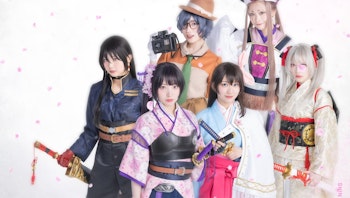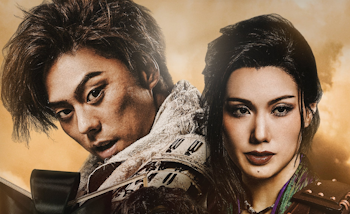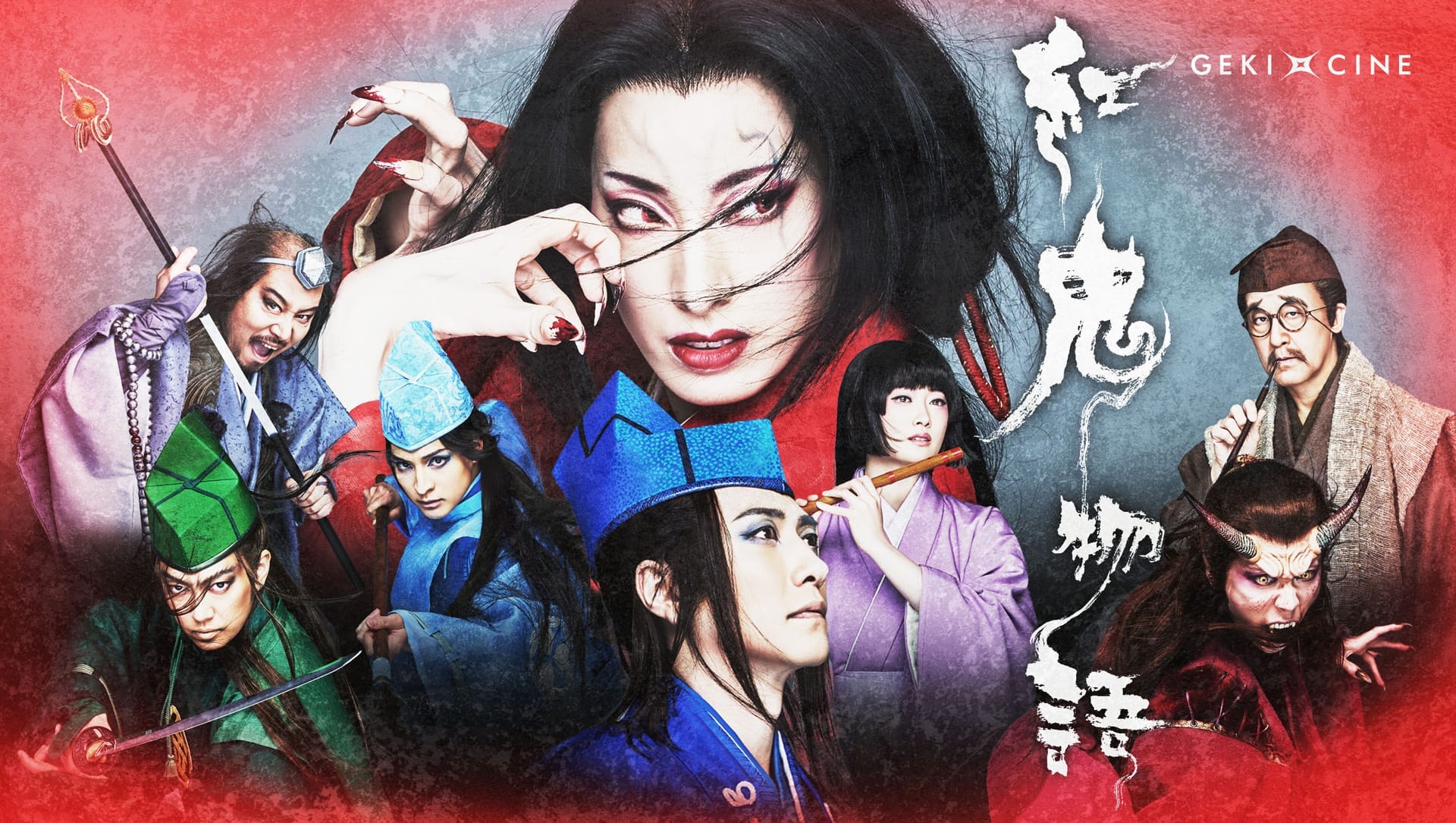
In the landscape of Japanese theater, Gekidan Shinkansen’s approach to storytelling, as well as the broad accessibility of their productions both past and present, make the long-running troupe a unique and fascinating oddity. They’re a group who’s storytelling crosses genres and styles blending historical fantasy and the tastes of the present, with a dedication to originality has been the defining quality of the troupe over the years. They command respect at home, but have made proactive efforts to bring in new audiences both home and abroad. In March, the troupe broadened this initiative with the latest release in their GEKI×CINE lineup, Aka Oni Monogatari.
The story is one of humanity and love transcending, told through the extravagant lens of historical fantasy, demons, comedy and song. It’s in line with the works of the troupe, and yet through casting that transcends the bounds of their past work and a universal story that stands at one of their best, it’s a great time to learn more about the troupe’s history and their work. And the GEKI×CINE initiative working to bring their theater to the masses.
What is Gekidan Shinkansen and GEKI×CINE?
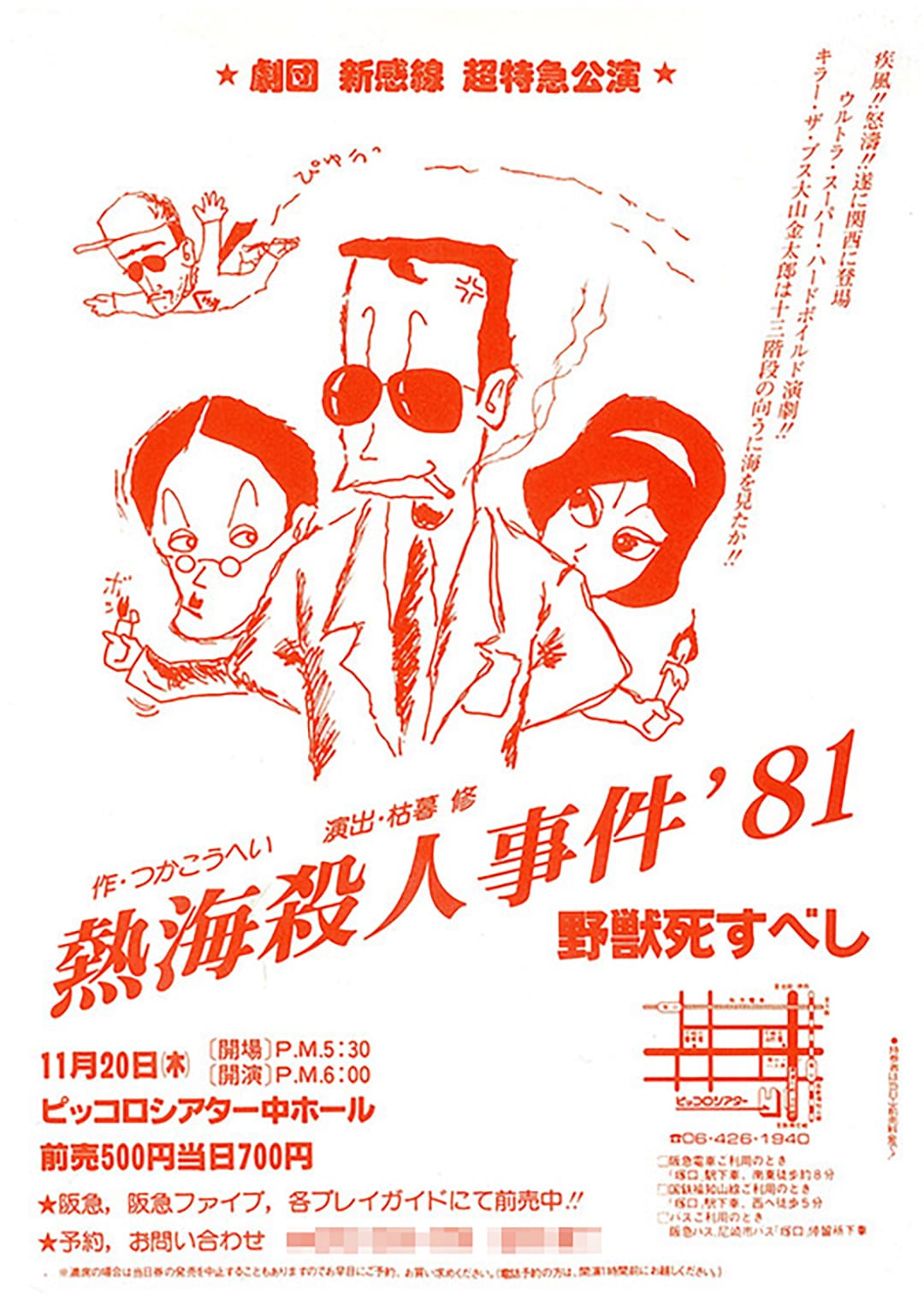
As we briefly touched upon during our broad introduction to the Japanese theatrical landscape, Gekidan Shinkansen began as a university theater troupe in Osaka in 1980, later going on to pioneer their own unique brand of theater for Japanese audiences blending comedy, music, and drama. This style originates from two distinct points of inspiration - this is a Kansai-based theater troupe from the city known as the home of manzai and Japanese comedy. But it also owes much to the classic work of post-war Japanese playwright Tsuka Kohei.
The first play performed by this troupe in 1980 was not an original show, but instead a production of Atami Satsujin Jiken, the 1973 play by the beloved stage director and writer. His works were also known for their offbeat tone compared to their contemporaries, often creating works that blended comedy and drama through the use of exaggerated musical cues and scene changes that emphasized the medium of theater for which these works were being performed. As the title suggests the story is based on a fictional murder case, following two policeman tasked with solving it. The joy of the performances comes in how the script and characters are aware this is a show being played live to an audience, allowing the fourth wall to be broken in knowing irony without sacrificing the show's thematic depth.
The troupe was initially created solely to perform their works, and it should come as no surprise that the first original works by Gekidan Shinkansen lean into this style while giving it its own unique twist. Their first original show in 1984 with The Space Defense Force Hidemaro, an interstellar story that also blended more serious dramatic moments with comedic self-aware flair that would later define the troupe even today.
This isn’t to say that all the shows performed by Gekidan Shinkansen throughout their history are designed solely as meta-breaking comedies whose only joy comes from poking holes at the fantasy of the stage, nor that there isn’t anything deeper for audiences to take away beyond an appreciation of elaborate costumes and a few laugh-out-loud moments. The Gekidan Shinkansen of today has a style which may call its roots back to the classic works of Tsuka Kohei, but it defines itself today through heavy metal and rock musical stylings and a blend of jidaigeki period settings, modern theatrical production styles, intricate costumes, while pushing the envelope on spectacle whenever possible.
With story topics almost entirely domestic in focus even when adapting international works like Shakespeare, the style of costuming, historical accuracy, and ideas align it to a more freeform version of kabuki not tied to the strict traditions of that lineage to innovate and create something new. This comes through most in the staging and costumes, often larger than life in order to bring gravitas and fill in the empty space to create epic sequences of conquest and loss.
It means that the troupe can take on Macbeth infused with heavy metal in one story, and bring Japanese demons and samurai together in the next, all while feeling like it belongs to the same troupe. The success of these shows brought new opportunities and allowed the group’s founder, Inoue Hidenori, to bring in guest actors while expanding a regular performance routine across Osaka, Tokyo, and on tour across Japan.
The GEKI×CINE project is built under the assumption that the worlds of the theater and the cinema share key attributes, but remain distinctly unique universes. Thus, it’s not enough to simply broadcast the work of one in the other, or vice versa, but adapt the release scheduling and production style to suit and appeal to audience expectations. In essence, they remain proshot recordings of the shows, with additional angles recorded by a dedicated team to provide close-ups of actors and a dynamism to the way each theatrical show is recorded that make them more digestible for a non-theater audience.
This ideology expands into how these shows are typically released and programmed to attune to standards for feature films, rather than a more typical fixed-camera recording. In the words of their own promotional materials, you don’t just see the actors perform, you see them sweat! Rather than advertising these screenings to diehard theater fans and limiting these releases to one-night engagements (as is common for other similar productions released in cinemas including live viewing experiences for Takarazuka Revue live shows), these are given multi-week nationwide rollouts, particularly in areas the troupe and other theater doesn't regularly tour. To adapt for cinema pacing, pauses between scene transitions are trimmed, introductory titles are added, and curtain calls align to the credits. To maintain the pacing of the show itself, the intermission remains.
As Gekidan Shinkansen’s programming grew more ambitious and the troupe grew in popularity nationwide, the company sought to court new audiences by bringing their work to cinemas. The first GEKI×CINE release from the company was in 2003 with Ashura: Blood Gets in Your Eyes, the latest re-staging of a show first performed by the troupe in 1987 that follows a demon named Bizan that wishes to bring the demon queen Ashura back to life in order to take over the world beginning with the city of Edo. Another oni, Makado, alongside demon slayers, opposes this plan. The show was a big hit at the time, but it was with the 2000 re-staging the show was able to break through into the mainstream consciousness, attracting a new generation to their work. The support for the show allowed it to be the testbed for the project, ahead of a full movie remake sharing many of the same actors that would later release in 2005.
The GEKI×CINE project was a success, and would remain a key downstream push for future Gekidan Shinkansen productions while keeping the troupe in the face of general audiences even when the excitement for Ashura inevitably waned. In 2004 the GEKI×CINE projected included Seven Souls in the Skull Castle in its lineup, also chosen because of its long-time popularity. The show is set in 1590 during the Taisho era of Japanese history after the demise of Oda Nobunaga, with Kanto the last region yet to be unified by Toyotomi Hideyoshi. Using this historical backing, the story tells of Tenma-Oh, a man in a mask that leads the Kanto Dokuro-to hidden inside the titular skull castle, infusing this historical battle with the company’s signature mythological flare.
This production was merely the latest staging of a show the troupe debuted initially in 1990 and had later restaged in 1997. In 2004 the company would go on to stage the show two further times with separate casts, editing both in the GEKI×CINE format. Future releases would include all-new productions, and would crucially become available on home video and even TV broadcast and streaming via platforms such as U-Next as a gateway to the world of Japanese theater for many. In recent years, this has even gone international: numerous shows are available internationally on Netflix, with some even reaching cinemas in Asia and North America.
Aka Oni Monogatari is an ode to humanity through demon sacrifice and love
The latest GEKI×CINE production adapts the latest original Gekidan Shinkansen stage production for the screen. Aka Oni Monogatari is interesting even before discussing its story as the production continues the group’s deepening ties to the Takarazuka Revue. The guest performer for this production is none other than former Takarazuka Revue Hanagumi Top Star Yuzuka Rei, and follows on from the recent inaugural collaboration between the two where Gekidan Shinkansen’s Ashura was brought to life by the long-running all-female theater troupe in summer 2025.
Aka Oni Monogatari begins when two retainers ward off the attack of demons seeking to steal and eat the local townspeople report the case to another in the village, a man named Aoi. Ten years earlier, Aoi lost his wife, Beniko, and daughter, Fuji, with the pair suddenly disappearing from near their home. The only clue to where they had gone was the remnants of demon footprints close by. While many assume the worst, Aoi hopes they are alive, which is true. In another village not too far away the pair have taken refuge and perform in a small theater in the area. Yet even as their search leads both together, the threat of these demons risks tearing them apart just as soon as they are together once again.
One key reason cited by the troupe for bringing Yuzuka Rei in to perform the lead role in this latest production was to bring an all-new presence to the Gekidan Shinkansen stage. As a female star who spent over 15 years dedicated to performing male roles within the troupe, Rei possessed an imposing, androgynous energy that could be taken from this experience for what would be her first production since her graduation from the Revue. Other guest appearances included Yutaka Kiyabu from Golden Bomber and former Nogizaka46 idol Hina Higuchi.
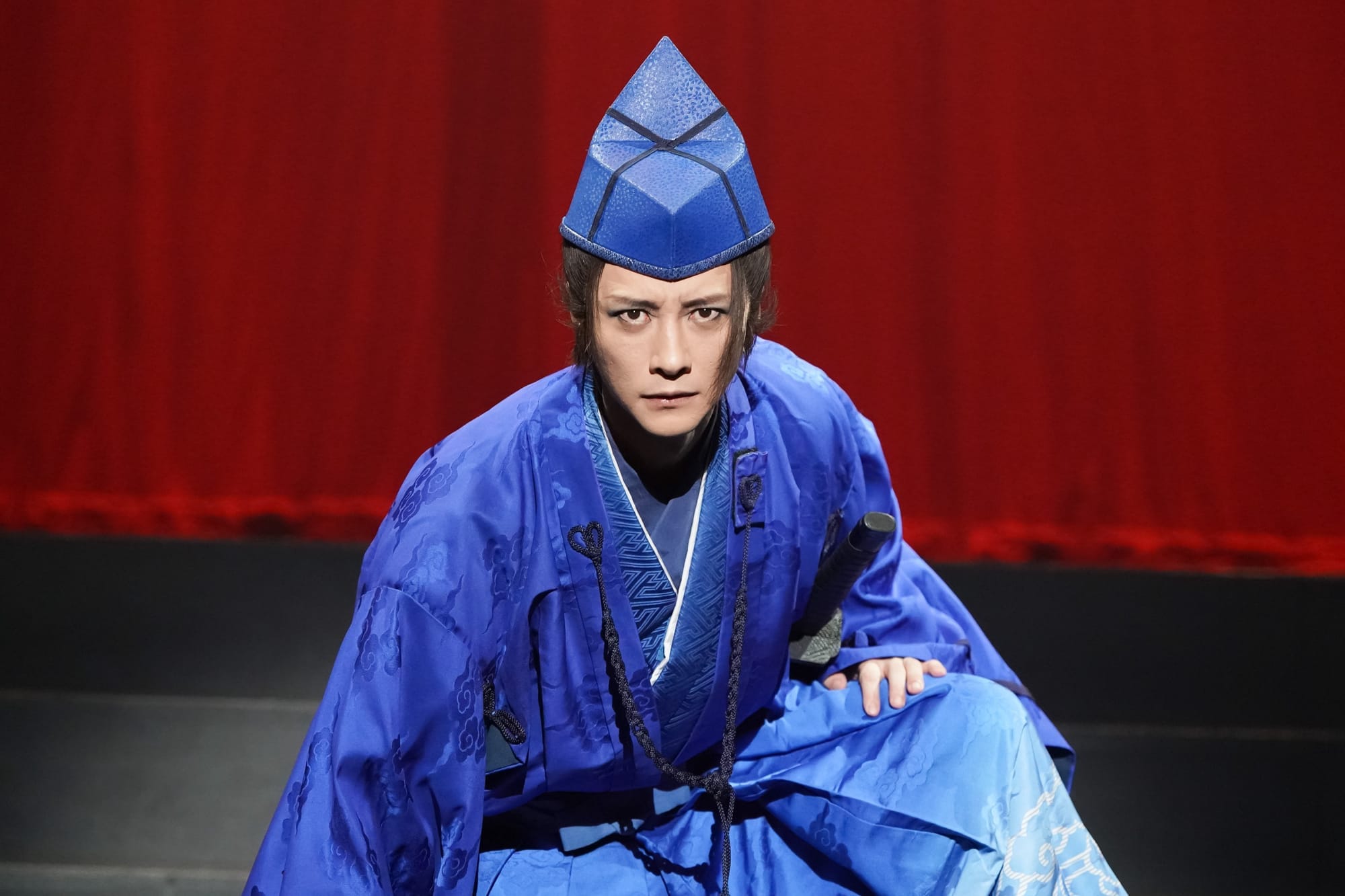
There’s a tragic inevitability to the events of this show, one that centers in on Rei’s performance as the Aka Oni. When we meet Beniko there’s a relative warmth from the people who brought them in, but a feeling that the truth about those events a decade prior were being hidden both from the desperately-searching husband and even her own child. Indeed, as the demons return and become more fervent, we learn that Beniko is far less human than first appears.
While demons are fated to hunt and feed on humans, Beniko is a woman born of both demon and human blood, torn between her desires for a normal life and that which comes from the bloodlust of her other side.
The story is told from the perspective of Beniko’s wavering control over her inner self and desire to be accepted and not be viewed as a demon, and the husband who searches for her. These scenes give the show the dramatic tonal shifts necessary to align it with the Gekidan Shinkansen style - while scenes of the demons are defined by intense makeup and costuming and a grandiose drama with soaring symphonic rock musical numbers, the search for Beniko at times plays out almost like a manzai comic act directly playing to the audience.
If anything, the tonal disparity typically present in the troupe’s productions are pushed to breaking point here, a conflict emphasized by a second act that, beyond its initial opening, almost entirely eschews this comedic edge for a bloody action-packed affair. The show can feel unbalanced even with the adjusted expectations of this group’s productions, yet that’s not to say that both sides of the show don’t at least succeed in their respective moments.
The slapstick absurdity that comes from taking advantage of the historical ambiguity of its setting and the mythological underpinnings of its story lead to almost-psychedelic humor that feels involved with the audience even when detached from the live experience in a GEKI×CINE recording environment. Meanwhile, powerful performances give necessary weight to the emotional pain-points of the story, while the musical numbers have weight in part thanks to the wealth of experience and deep, commanding voice and presence Rei brings to her role singing many of the key emotional roots exploring the show's central relationship.
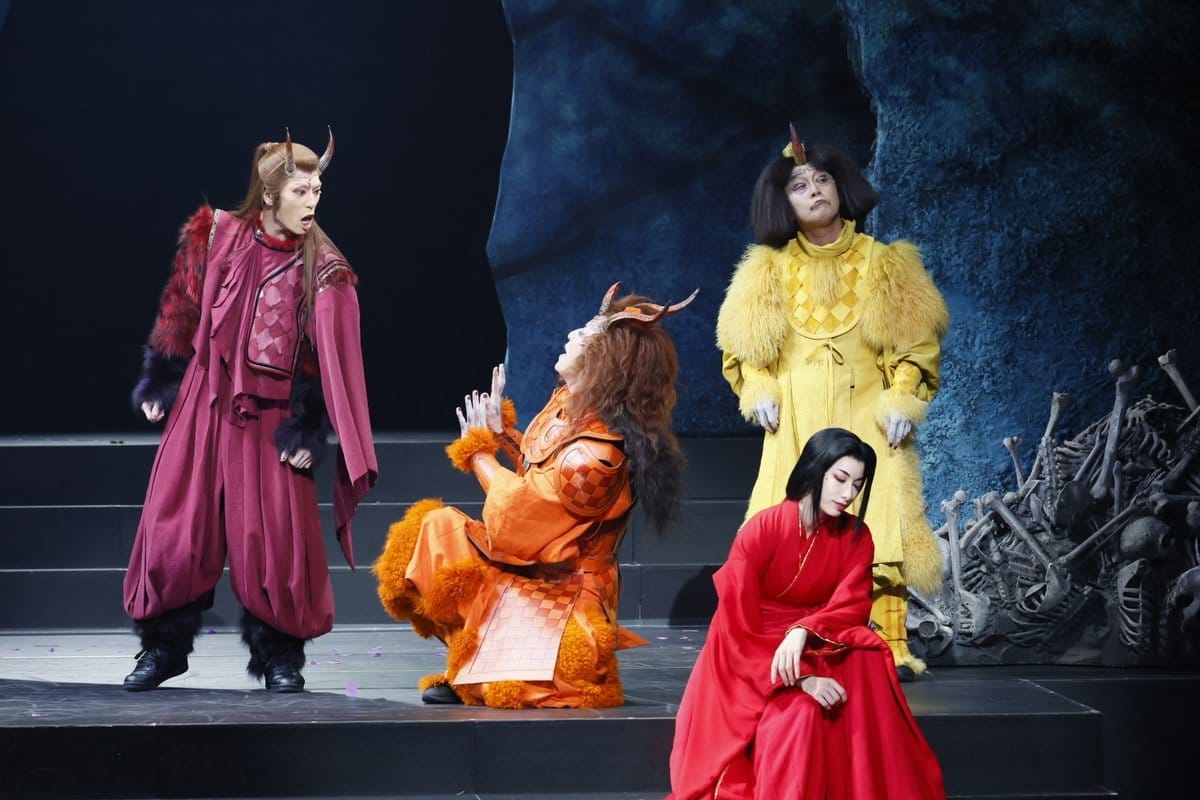
The format and attention to detail in recording the show is impressive here, with the intensity and power of each performance emphasized particularly towards the climax when it can be difficult to parse where acting ends and the rush of being enveloped in this intense story allows these actors to get lost inside their characters. Battles feel controlled and fiery with the stakes high, yet for all the show gives us a view more intimate than any seat in a normal theater the more intense production values are sure not to sacrifice the staginess and experience live theater brings to the table and makes the show feel like a unique work of art.
Brought together, Aka Oni Monogatari feels like a strong introduction to the world of Gekidan Shinkansen and an embodiment of what GEKI×CINE was created to achieve. The name recognition of the actors beyond the theater world, coupled with this production and nationwide release schedule that brings the art of theater to the audiences unable to visit central hubs like Tokyo and Osaka, make this an entry point to the power of theater not just in Japan, but on a global scale. While no international plans have currently been announced for this show, it seems inevitable considering the growing embrace of the troupe’s international fanbase that such a release will come, with this show standing amongst some of their best works in terms of providing an entry point into this unique part of the Japanese theater landscape.
Told with tragedy, comedy, and a bit of rock’n’roll.