This guest post is courtesy of our friends at Japanese pop-culture PR firm maru mgmt who share bi-weekly insights on the Japanese entertainment industry via their substack newsletter.
Srinjani Sen lined up outside of Tipstar Dome Chiba alongside a couple thousand other fans who were part of a small club.
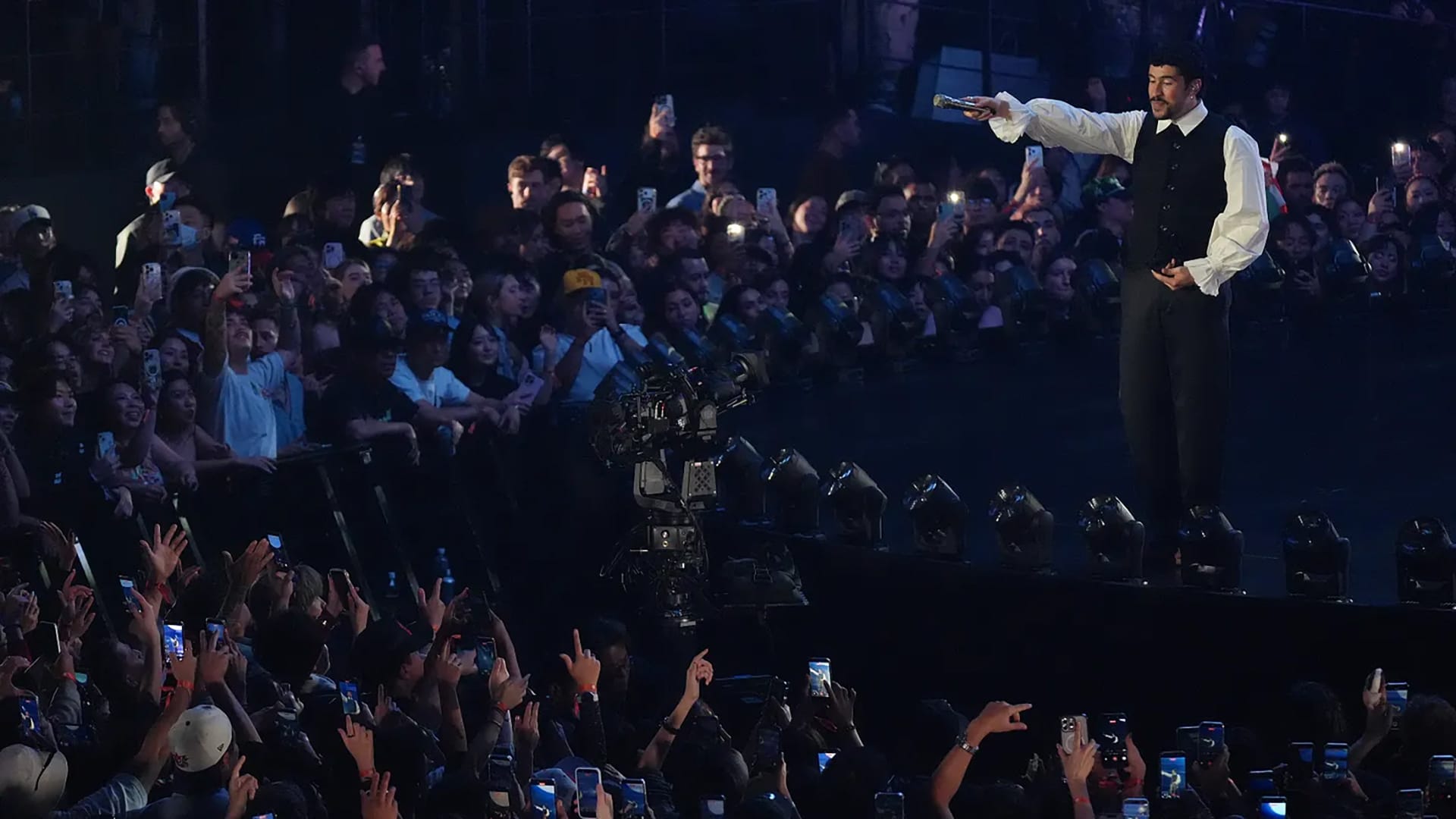
The Yokohama-based Sen traveled up to a cycling venue located in Chiba city to see the first Asia show from global superstar Bad Bunny put on by Spotify as part of its Billions Club series, which celebrates artists boasting multiple songs with over a billion streams on its platform. This wasn’t an open invitation though — Sen was one of about 2,300 “top listeners” in Japan, which granted her access to the Puerto Rican performer’s debut Japanese concert.
“I think I got that mail at the beginning of February. I was really excited,” she tells me over email following the show. “The process was very clear cut, although everything was very mysterious. The mail had a code number, which I had to enter on [ticketing service] e+’s application and they said that they would reveal the venue and time, only three or four days before the concert.”
It was fitting to see an artist boasting a fervent fanbase perform a for-the-real-ones show in Japan. For decades, Japan has fostered an entertainment ecosystem where fans passionately back performers. Yet it has grown into something going way beyond simple support. Diehards invest serious money into supporting their favorites, whether that’s a group or an individual member. That involves buying physical music, goods, and other items, while also attending shows and fan-meet events. In the digital age, it extends to streaming and posting too.
This type of fandom is so serious as to result in a coined term for it — oshikatsu, or vigorously supporting someone or something. And in 2026, it’s not a Japan-only phenomenon.
Entertainment globally is entering an oshikatsu economy.
From Idols To Everything
Corners of fandom in Japan have always had its intense practitioners, but the roots of modern oshikatsu in the country started in the 1980s thanks to a boom in idol pop. Performers such as Seiko Matsuda and Akina Nakamori inspired devotion from listeners, while the term oshi — one’s favorite — gained prominence with the emergence of the outfit Onyanko Club, a multi-member project serving as the basis for similar bubbly groups to come. With over a dozen members at a time in its fold, fans weren’t just supporting the unit as a whole, but individuals who they wanted to see shine brighter than the rest.
This practice became the norm, and stretched well beyond idol-dom into other genres and fields. Yet it was most associated with J-pop groups such as girl group Morning Musume or male projects such as SMAP or Arashi. Accelerating this was AKB48, a dozens-strong idol outfit formed in 2005 that billed themselves as “idols you could meet.” That translated into interactions on the street of homebase Akihabara, or nightly performances at their theater in the same area. The early years of AKB featured 48 members, meaning there was almost certainly someone for you to support.
And “support” in this case had tangible results, not just for the group but for your oshi. Fans pushed AKB48 to do well, but they also wanted individual favorites to excel, and they offered a chance for their oshi to rise up via its annual election. Dubbed a “festival of democracy,” members were ranked based on votes by the public…with ballots available in copies of a CD single, meaning the more of those you bought the more votes you had (leading to the yearly tradition of boxes of CDs abandoned in nature). Many in Japan derided this sales strategy…but it was the logical next step in 21st century fandom.
Soon enough, everything was AKB48.
In Japan, this practice carried on well beyond AKB. Idol groups of all types, including male projects, inspired similar behavior, while the rise of K-pop — an industry shaped in the ‘90s by the J-pop powerhouse Johnny & Associates — was fuelled by roughly the same phenomenon. The late 2010s is when the term oshikatsu became more prominent and practices associated with it became more commonplace. It accelerated during the COVID-19 pandemic, with a 2020 report from Cross Marketing finding that 40 percent of respondents in their 20s found a new idol in this period.
It’s gone well beyond just idols and music, though. Anyone and anything can become someone’s oshi. Athletes have long offered a personal journey similar to pop stars and have only become more central to oshikatsu in recent years (you could argue the entire nation of Japan’s top oshi is Shohei Ohtani). Yet that’s also extended to actors, comedians, internet personalities, virtual YouTubers, mascots, animals and beyond.
Politicians have picked up on this too. In the last year more candidates running for office have flirted with idol-like behavior, though the biggest development comes with the emergence of Sanakatsu, a new word introduced in late 2025 referring to the fandom that current Japanese Prime Minister Sanae Takaichi has stoked in younger people in the country following her election to the position. Young women in particular pay attention to the clothes she wears, bags she uses and especially the pen she uses. It’s a gateway into politics for many…but also just the chance to show support to someone.
Oshikatsu as a concept and business has become commonplace in Japan, to the point where you can attend an “oshikatsu expo” to see the latest developments in the intersection of fandom and commerce. To understand modern Japanese entertainment (possibly society at large), one needs to grasp the ins and outs of contemporary fandom, which has gone from niche to central to almost every part of culture in Japan today.
It’s not just happening in Japan, however,
The Oshikatsu Economy
K-pop powerhouse BTS’ comeback album Arirang stands as one of 2026’s most anticipated releases, in part because fans of the group have developed a strong sense of connection and wanting to support them in their careers.
To reflect that devotion, they can buy 16 different physical variants of Arirang including four different CD versions and 11 vinyl editions, including a handful only available through American retailer Target.
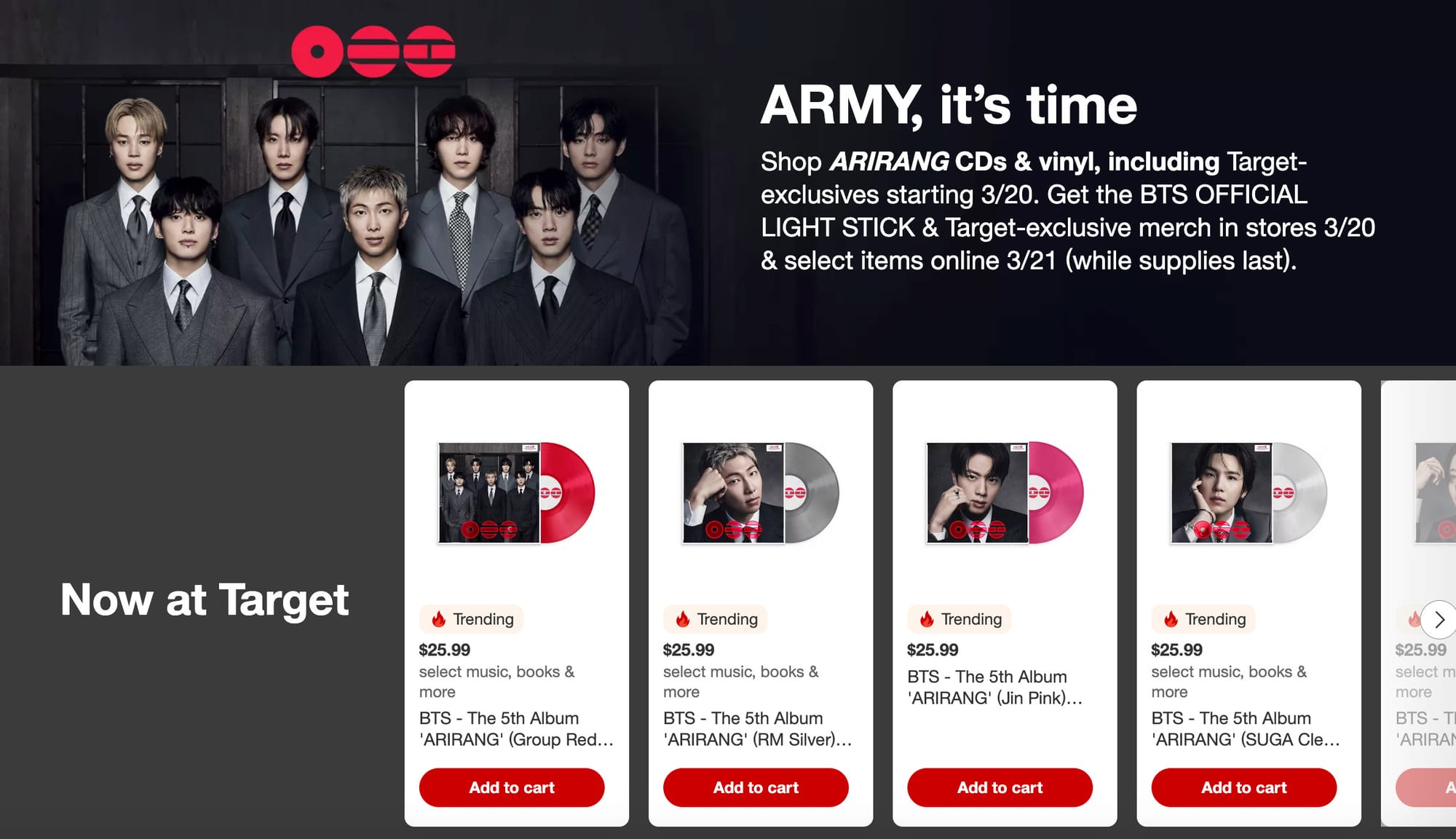
It’s just the latest example of a practice once dismissed as only happening in Japan with artists like AKB48 becoming the norm globally. World entertainment operates in an oshikatsu economy, powered by a type of fandom going well beyond simply liking something.
The key difference between this modern stanning and the fandom of the past is a sense of connection and need to support favorites, whether that’s financially or reputationally. That all stems from the internet. Thanks to social media it’s both easier to feel a link with a pop star or athlete than ever before…and to see what their reputation is minute to minute. AKB48 sold the idea of “idols you could meet” and then help achieve their dreams. That plays out at hyperspeed today.
Commercial manifestations of this have popped up over the last 15 years, with a rush of “deluxe edition” albums from Western acts like Lady Gaga feeling like a dip into AKB-like waters. Yet it has increased significantly lately, powered by K-pop (an industry inspired heavily by J-pop company practices) leaning into physical variants but also embraced by the likes of Taylor Swift (whose albums sometimes come with “exclusive” diaries…a different one in every version) and other big-name performers. Gimmicks have abounded, like DJ Khaled selling bundles of energy drinks along with album downloads.
This is all very J-pop, all very AKB48, but where it ramps up a level is online. Fans — from Swifties to the Beyhive to ARMY — understand the importance of big numbers digitally, resulting in streaming campaigns to boost numbers and efforts to make YouTube uploads appear like gigantic cultural happenings. Digital sales can also be factored into this despite not being a common choice for day-to-day listening anymore. Even controlling discourse on sites like X becomes a vital task.
Music industry data company Luminate has referred to these types as “Super Fans,” and the company’s reports in recent years have underlined how important these supporters are to the modern entertainment ecosystem. This thinking is becoming more common too. In a February essay titled “The Death of Spotify: Why Streaming is Minutes Away From Being Obsolete,” writer Joel Gouveia argues the reason the title is about to happen is in part because the tech giant doesn’t want artists to have a relationship with fans.
“The music industry has spent a decade obsessing over how to get a million people to listen to a song once,” Gouveia writes to close out this piece. “The next decade will be defined by artists figuring out how to get 1,000 people to care forever.”
That’s oshikatsu, and it’s already the norm. One recent industry player getting involved? Spotify, whose Bad Bunny show in Tokyo used this type of intense fandom as a promotional tool. By rewarding those who offered the most streamable support via its platform, it encourages fans to spend more time listening to their favorites. That they gave this a go in Japan feels appropriate, but expect it to be more common moving forward.
Sen — who got into Bad Bunny during COVID while trying to learn Spanish — loved the Chiba show. She says the intimate feeling made it feel special, and that shared energy resulted in it feeling like “a night club” as people danced with one another. It’s something she knows probably won’t happen again with the Puerto Rican act, but she loved the model.
“Usually concerts are so expensive and only a privilege,” Sen says. “People can actually see their favorite artists, but in this way, true fans can enjoy the shows.”
If you found this article interesting be sure to check out the other fascinating articles maru mgmt has at their official substack, and subscribe for more future Japanese entertainment industry insights.