Remembering someone in death and treating their final moments and beyond with dignity are some of the hardest challenges any human will ever face. The thought that there’s an end to something that feels so vast, knowing it’s impossible to say everything you want to a person you love and that eventually it could happen to you. Silence speaks so loud when it will never be broken, and finding that dignity and comfort in such hard times requires a careful hand.
Hodonaku, Owakare Desu is not the first movie to challenge the careful neutral role a funeral organizer who helps the deceased and their families. Most famously, it was 2008’s Departures that earned an Oscar win for Japan for its deft portrayal of a cellist who loses their job to become a nokanshi, a mortician dealing with the deceased when the idea of working with the departed often carries both an important role and social burden. This was a film where the job was explored in a manner that felt delicate but centered less on the families of the departed and more on the man who ends up in this profession coming to terms with this new life. It’s careful, but it has a particular perspective.
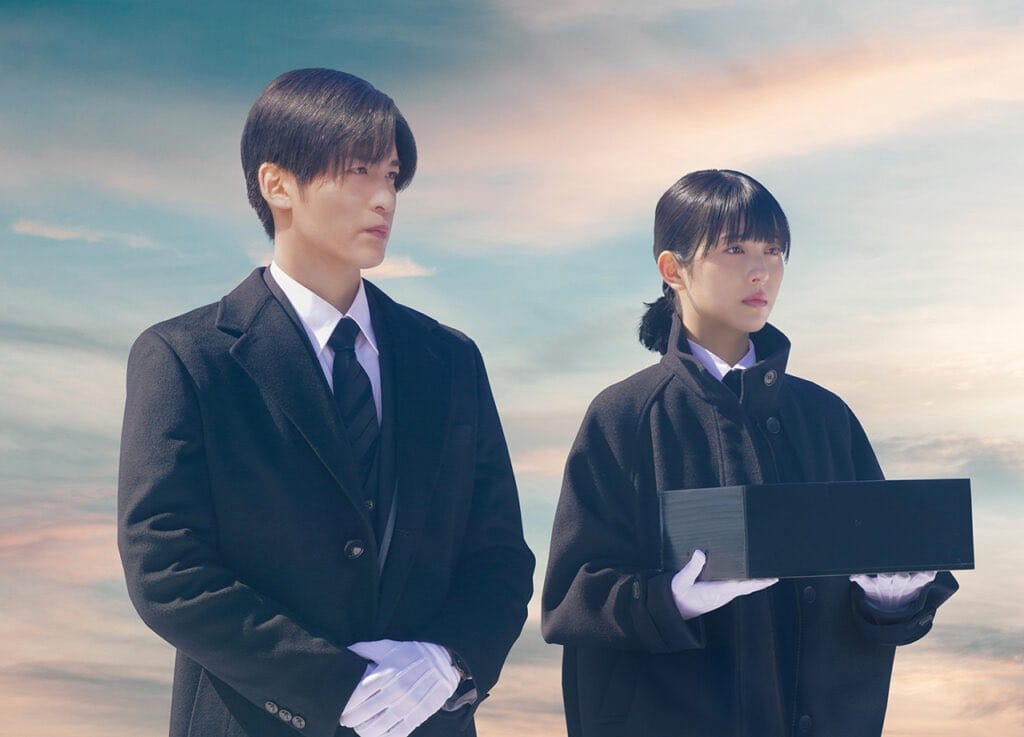
This film looks at the topic from a different angle, using a character who ends up in this work as a window into the families and the feelings that bubble when coming to terms with grief. Shimizu Misora (Minami Hamabe) is certainly a similar character to the protagonist of Departures, a woman without a job and struggling to find new work who then attends a funeral and ends up finding herself working for the funeral company Bando Kaikan under the supervision of the more experienced Reiji Urushibara (Ren Meguro). It’s here the films diverge notably.
Shimizu possesses the ability since childhood to see the recently-departed, allowing her to speak with those who have passed. Her first time meeting Reiji comes from this sort of event, where she sees a pregnant woman standing outside another funeral occurring in the same building as the one she has just attended but unable to enter. After the woman grabs her attention Shimizu notices a man struggling to know what to say or how to act seeing his partner in a casket, leaving the room before they can do anything. As the two women talk the pregnant woman hands Shimizu a bag for the man containing diapers and other items for the young baby left behind. Only when the man sees this is the man able to finally release the emotions and feelings he held back from expressing over her death.
The movie continues somewhat episodically, a remnant of its original novels that serve as the film's source material, with Shimizu joining the company and gaining experience as she attends to the various funerals she is asked to assist with. A supernatural twist on such a serious topic could easily fall flat considering the delicate nature of grief and death. It would be easy for such a story concept to trivialize death or abstract the story from the real loss present into something else, to its detriment. This isn’t the case.
That’s because of the ways these spirits manifest in the film, and their role in expanding on its grander thematic purpose. They don’t exist in this film to remove death from the equation or replace the devastating grief into some mystery or attempt to solve the lingering worries of the departed like a haunted specter. While they can vocalize thoughts on their life and death, actually dealing with the worries or concerns of the deceased is not the aim of the film, with their existence being wrote and produced in such a way that the question of whether they are even there or just a manifestation of empathy towards the deceased is a legitimate one. They’re here because the families and people closest to them are unable to come to terms with their death or feel they are unable to accept the fact they will no longer be together.
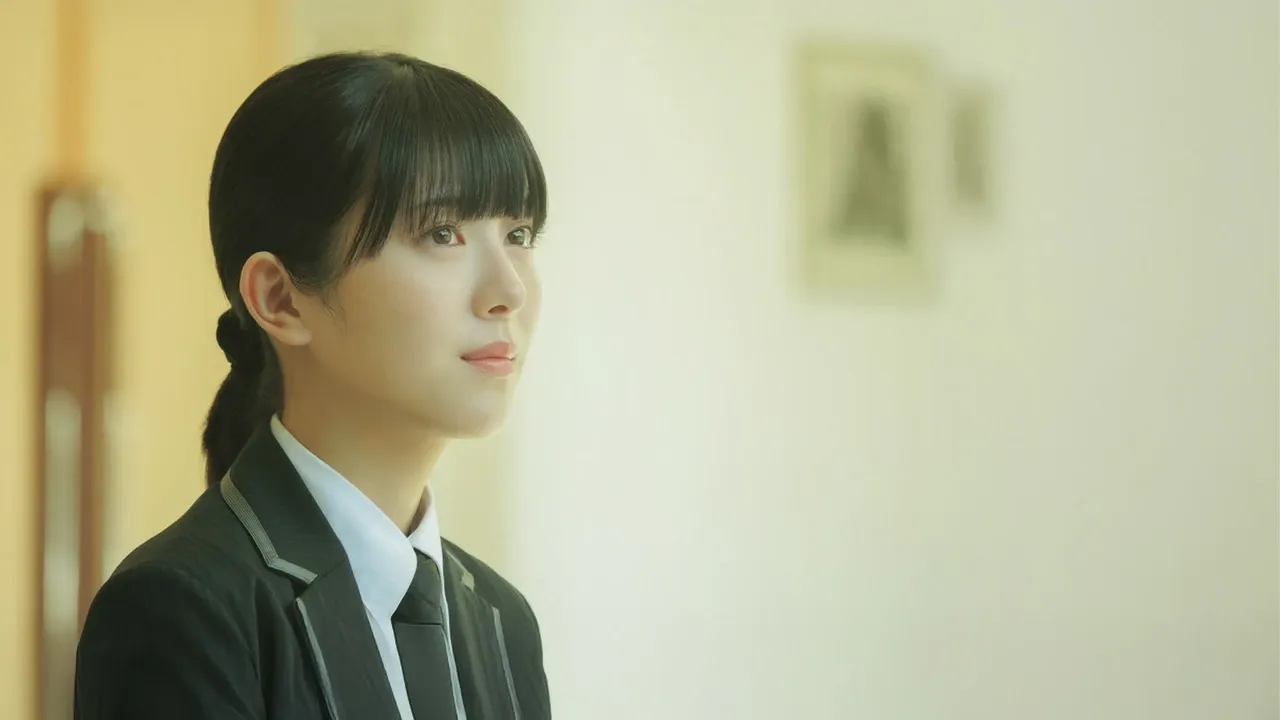
The first funeral Shimizu attends is that of a young girl, with parents who worry that the life she lived was never happy and over too briefly. Guilt that their existence was one of pain and not what a mother or father should give them rain through. The girl doesn’t even know fully that she’s gone, and is more worried that she can’t play with her parents. It’s in listening to all that they are able to find memories that show a sincere love for the fact that, even if it was over far too soon, they’re glad to have been here. Only then are they able to say farewell.
Each of these spiritual encounters mirror the process of a funeral as a place to reflect and find a way to accept the death and loss of a loved one. Seeing the departed in a casket, it’s a way to think about the fact that to love you need a farewell, no matter how much it hurts. There is a beauty to accepting it and remembering what happened beyond it, and that a guilt over death isn’t reflective.
These stories each get more personal and introspective but keep that heart. The result is an affirming work on why death is an important aspect of what it means to live, the need to speak about it and see the moment as a chance to reflect and find moments, as well as where ceremony holds a place in that. Hodonaku, Owakare Desu is far more focused on this compared to Departures while reflecting the cruelty and unfair nature of it. It isn’t denying the pain or selfishness that comes with death, it isn’t trying to dictate a feeling to it, but it is giving a safe space to think on that, respecting that even a farewell won’t make the pain go but can give shape to it.
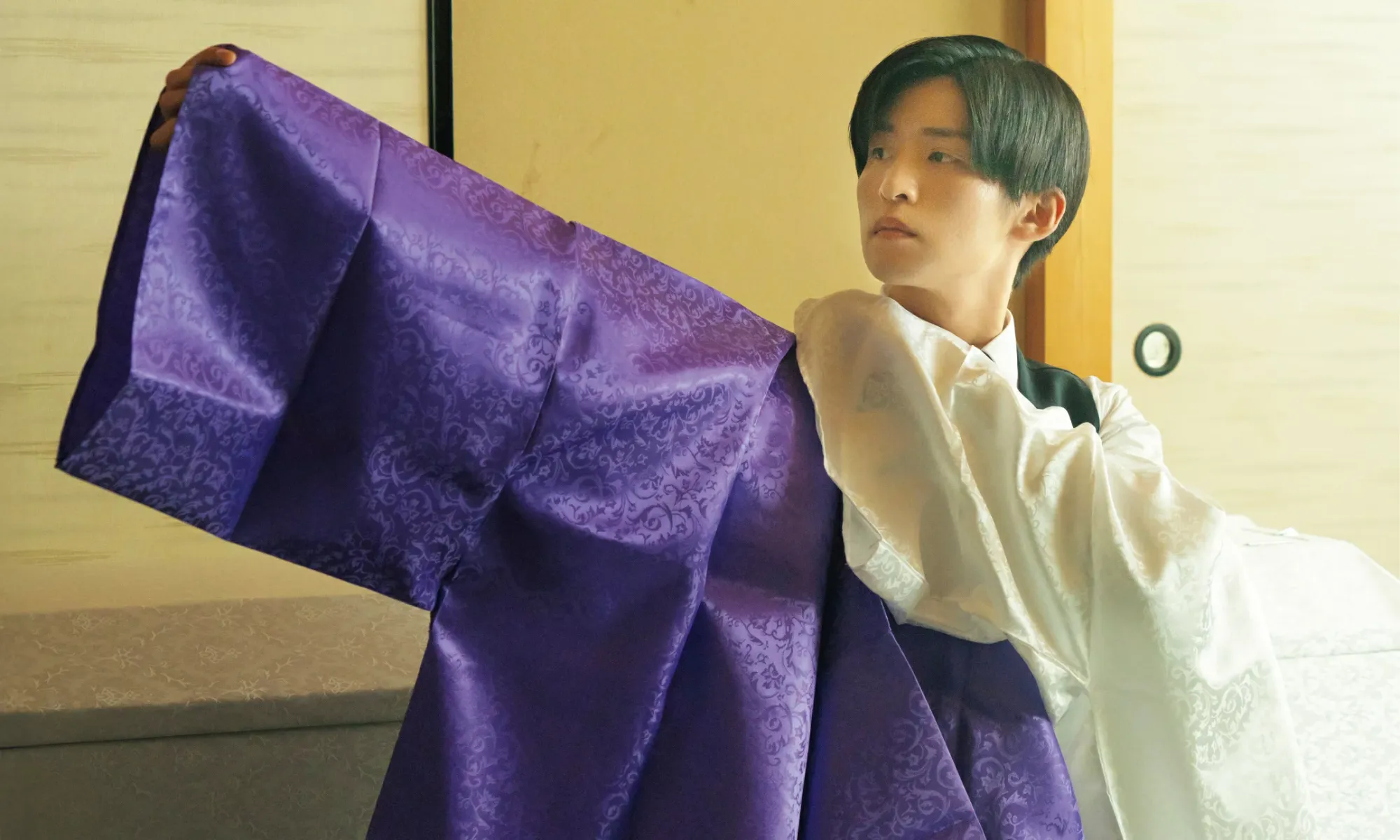
Which makes it a difficult viewing experience. Since this film isn’t afraid to be honest about the pain and realities of death, anyone who has been forced to confront it will see their own experiences reflected before them. Being reminded of this, it can be cathartic to know that you aren't alone in those painful feeling, buoyed by a sensitive portrayal defined by impressive acting that gives these performances a raw and imperfect touch that reflects the unpredictability and challenges of facing death in those you care for
As the film progressed, and the characters confront not just the deaths of strangers but the people closer to them, it even ponders how someone could be surrounded or witness death regularly, to an almost-dissociative degree, but be unable to confront it the moment it becomes more personal. Finally faced with it in such proximity, it's impossible not to be overwhelmed by it. It's no surprise the cinema was in near-universal tears, moved by the experience they had just witnessed. It's hard to imagine Hodonaku, Owakare Desu will be a film any will want to revisit, though that makes makes this film no less moving or powerful.
Japanese Movie Spotlight is a monthly column highlighting new Japanese cinema releases. You can check out the full archive of the column over on Letterboxd.