Time travel movies are difficult to write because of the teetering logical threads that must be adhered to in order to be successful. As soon as you introduce time travel into any story, you’re left with one core issue: if characters can go back in time, why don’t they just stop the situation they’re in before it ever happens? If events can be replayed, what’s the logic driving the danger for the characters? It’s difficult to balance that while keeping the core entertainment of the story in tact, but it can make for something truly special when done effectively. Not only does Beyond the Infinite Two Minutes achieve this, it's also a wonder to behold as a spectacle of filmmaking on a low budget.
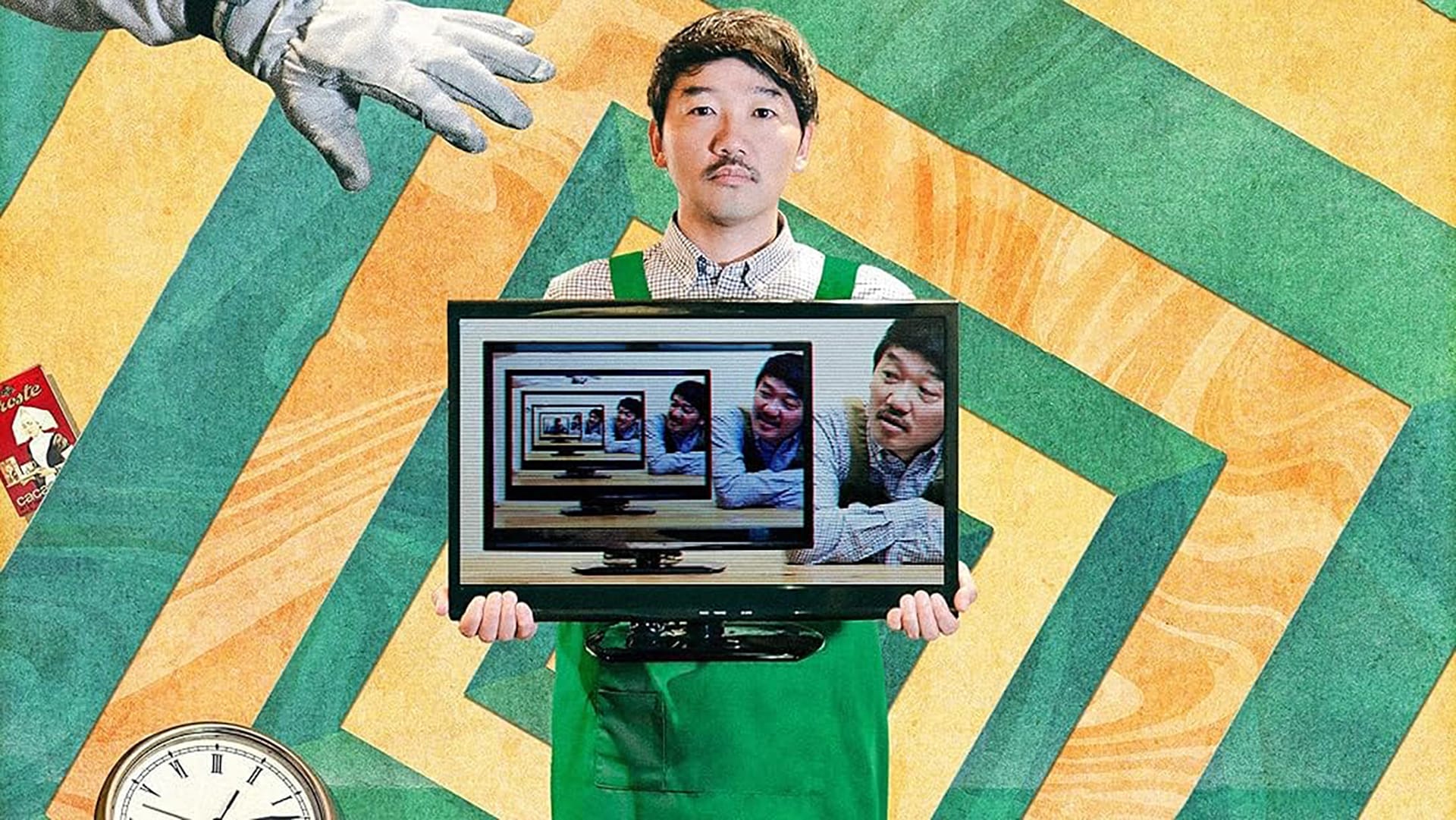
What if your TV could be a window into the future? It’s a flip on the idea that these machines can only show a window into the past, but turns out to be the unlikely reality when a cafe owner named Kato (Kazunari Tosa) discovers his TV is showing a window into his humble business a few moments into the future. This ‘Time TV’ is at first a novelty, used for parlor tricks, and once the shock wears away gets a mixed reaction from him and the rest of his staff. Kato is distrusting of a device dictating how he’s going to act, when he just wants to run his store and maybe gain the confidence to get closer with his neighbor.
Besides, what’s the benefit of a device that only shows you two minutes in the future, rather than something you could actually capitalize on? It’s only when they discover increasingly outlandish things occurring in the future from which they need to react to in order to save themselves, and also avoid a paradox.
The film is easily compared to One Cut of the Dead, whose slick one-cut tribute to B-movies and zombie films found an audience around the world while growing from a single theater to a global success inside Japan. Beyond the Infinite Two Minutes released just a year after Shuichiro Ueda’s film, replicating its one-take storytelling under the gaze of director Junta Yamaguchi with the Kyoto-based Europe Kikaku theater troupe. The film is also produced on an incredibly small budget, being shot simply on an iPhone in a single location with props and costumes primarily from the staff working on the film. It was a low-budget project produced during COVID-19 doldrums for theater and cinemas.
The result is such a clever and well-executed project it’s impossible not to audibly gasp at just how the team were able to produce such a compelling and engaging film. The monitor in particular is a seemingly-impossible prop to effectively integrate into a single-take production format. Shooting for 70 minutes without mistakes or cuts is difficult enough without also ensuring that any images that would appear on the monitor align with the events on screen.
Yet it does so in ways that feel less like spoilers and more an opportunity to ruin the surprise to explain their more intricate executions as the story progresses. As the stakes grow somewhat and the plans get more intricate, watching these extended sequences that take advantage of the information learned from this monitor and their advance knowledge to overcome the situation is so impressive that few films will make you appreciate the craft of filmmaking more. Even if it’s not something you would typically care for, taking just a mere moment as the film is being made to consider the logistical hoops that must have been rigorously planned in advance puts a smile and more than a few expletives in your mouth as it unfolds in front of you.
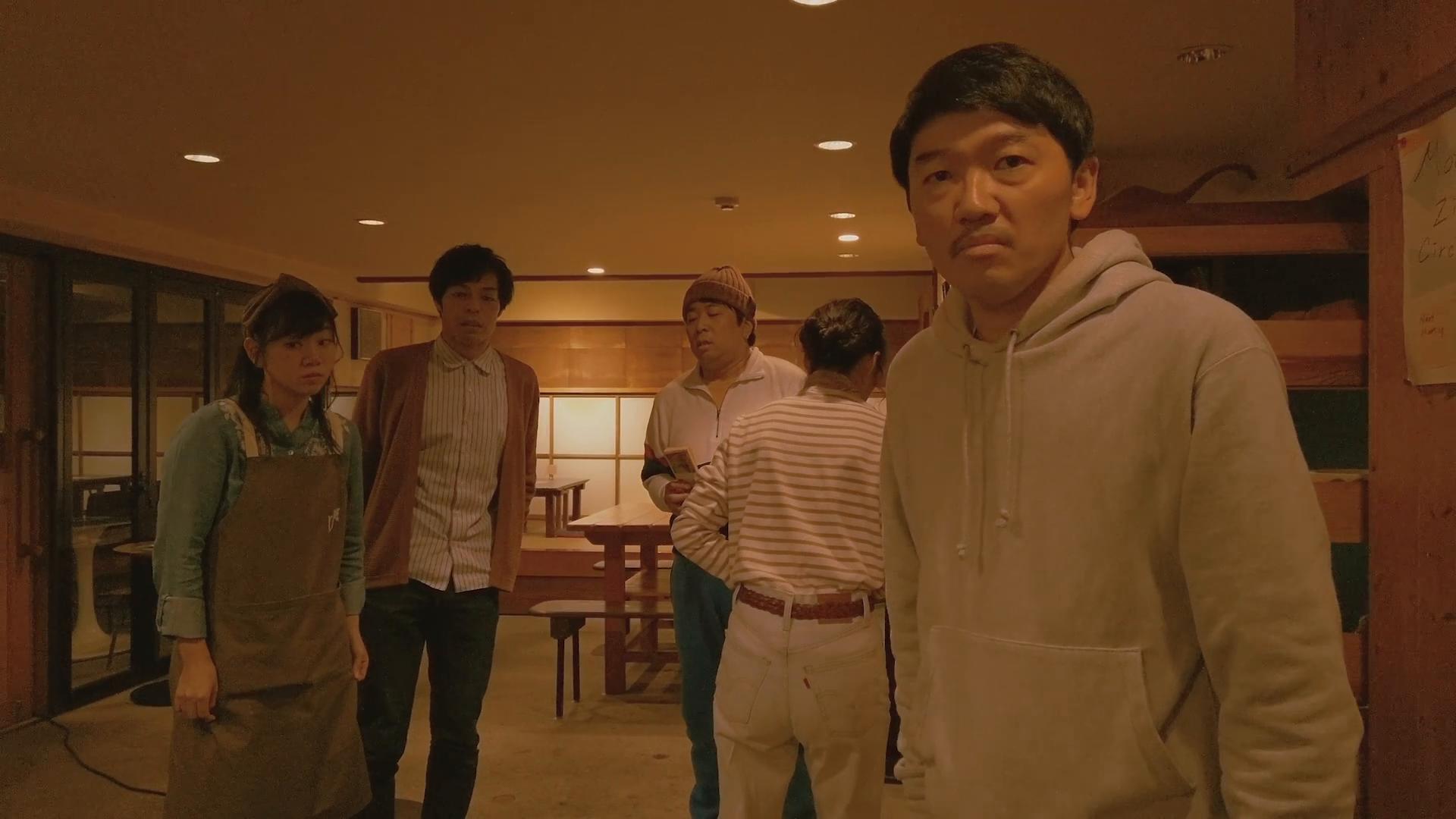
Yet it’s more than just a technical achievement: it’s also a genuinely funny and compelling story. It’s easy for time travel films or anything with a sci-fi bent to them to fall deep into self-aggrandizing seriousness and dialogue that’s difficult to parse, but this is a film which benefits heavily from its lower budget and scale giving it a relaxed and at-times deadpan tone. There’s an earned sense of closeness between the cast that feels genuine, likely aided by their real-world long working relationships, that allows their confusion and surprise at the situation they find themselves in to bounce off each other to fun responses, even when threats of external violence introduce genuine stakes.
But it’s the ambition of the film where it truly shines. Just when you get used to the story and concept of time loops, it makes it more complex as the characters attempt to extend just how long they can see into the future by having the monitor of the future face the past in a feedback loop to see further in time. It can be difficult to wrap your head around but always a wonder to behold, showcasing a team unwilling to sit on their hands with a fun idea as they push it to the limit. It’s helped by the fact that these characters start just as clueless on the concept as we do, forced to contort and understand just what’s happening in real time.
It even makes the technical craftsmanship, the film’s greatest strength, easier to appreciate for a lay person. Even someone who doesn’t watch a lot of films can come to terms with how the film is produced and is structured through the eyes of the characters learning how this Time TV works, and it’s a base level of knowledge that makes every exponential evolution on the idea feel like a crescendo that shocks and awes. No wonder it was able to attract new audiences through word of mouth as it makes the craft and joy of making and telling this story impossible not to appreciate.

It’s also smart to address those aforementioned potential risks and plot holes that can occur with the complexities of writing a time travel film. The fact these characters need to actively think about how they need to act in order to bring themselves to what the monitor expects in two minutes to avoid a time loop forces a sense of urgency even when they’re being silly at the start of the film.
No story is perfect, and you can make the argument that the constrained nature of the film also leads to repetition within even such a short runtime. But it’s a minor quibble when Beyond the Infinite Two Minutes is being produces in such an ambitious manner with clever set pieces and filmmaking that creates an audible reaction not dissimilar to watching a favorite sports team whenever you see whatever new crazy hijinks they attempt to keep the story going.
When you have something so ingenious, it’s hard not to applaud and revel in it rather than quibble over minor imperfections. This is a celebration of filmmaking and a wonder to watch, and one of the most inventive Japanese films of the past decade.
scrmbl's Classic Film Showcase shines a light on historical Japanese cinema. You can check out the full archive of the column over on Letterboxd.