Your typical high school coming of age story is relatable. Create a band for the final school festival. A first love. In the less-idyllic ones, the desire to take that next step and move on from a troubled childhood. It’s a story that resonates because we can see ourselves in the journey, whether in the present or when you were also that age.
Others are about growing weed on school property.
There’s an intensity to All Greens that instantly grabs the attention of the audience through a unique concept and cast alone. Stuck in a dead-end rural town in the middle of Ibaraki, you can instantly see that Hidemi Boku (Sara Minami) doesn’t belong. She doesn’t fit the mold of a rural, typical girl, dressed androgynous and hanging with older guys in the streets because of their shared love for rap and hip hop. It’s better than being stuck at home with an abusing father and all-too-lenient mother, too. One of these rappers, Sato (Daichi Kaneko), offers to collaborate on giving her a song and a chance to get out, only for the invite to his place to turn dark when he attempts to spike her drink and rape her. Only a mishap and her ability to stand for herself gets her away, alongside some special items safely stored in the guy’s safe.
One of these was a bag marijuana seeds, and when stumbling into a companionship with classmate Miruku Yaguchi, known to her friends as Milk (Natsuki Deguchi) and whom is secretly dealing with her own broken home and a mentally-unstable mother while losing her status as the popular girl alongside a finger in a welding machine accident, decide to form a pact to grow the seeds to get the money needed to escape this town. With them is aspiring mangaka Mako Iwakuma (Mizuki Yoshida), the trio forming a new “gardening club” at the school. The club is just a front to use the disused roof and decaying greenhouse as a place to grow weed, not that anyone bothers to check.
This is their chance to escape from their hopeless existence in a no-money, no-future town, and get that green by selling green. Provided they work out how to grow it and sell it without getting caught.
It’s hardly the most realistic setup for one of these dramas, though that desire for something more and an escape from a declining rural life in search of a future is something many will relate too. Unless you’re in manufacturing and the many factories that are based in these rural towns, there’s a reason why so many people are leaving these places at a time when the country is already facing a population decline that exacerbates the problem. This merely takes that to its absurdist extreme.
An absurdism the film embraces in its humor and energy throughout. It contrasts its more incisive looks at the emptiness of life within these places with jolts of one-off extreme gags that match the edgy source material of its original novel and the idea that schoolgirls would be selling something so illegal and frowned upon in Japanese society that even being near it could kill most celebrity careers. When they’re almost busted by a secret gay couple in the school using that same abandoned roof as a rendezvous for intimacy, that couple gets enlisted to help them sell, fearing how people might react buying direct from female minors.
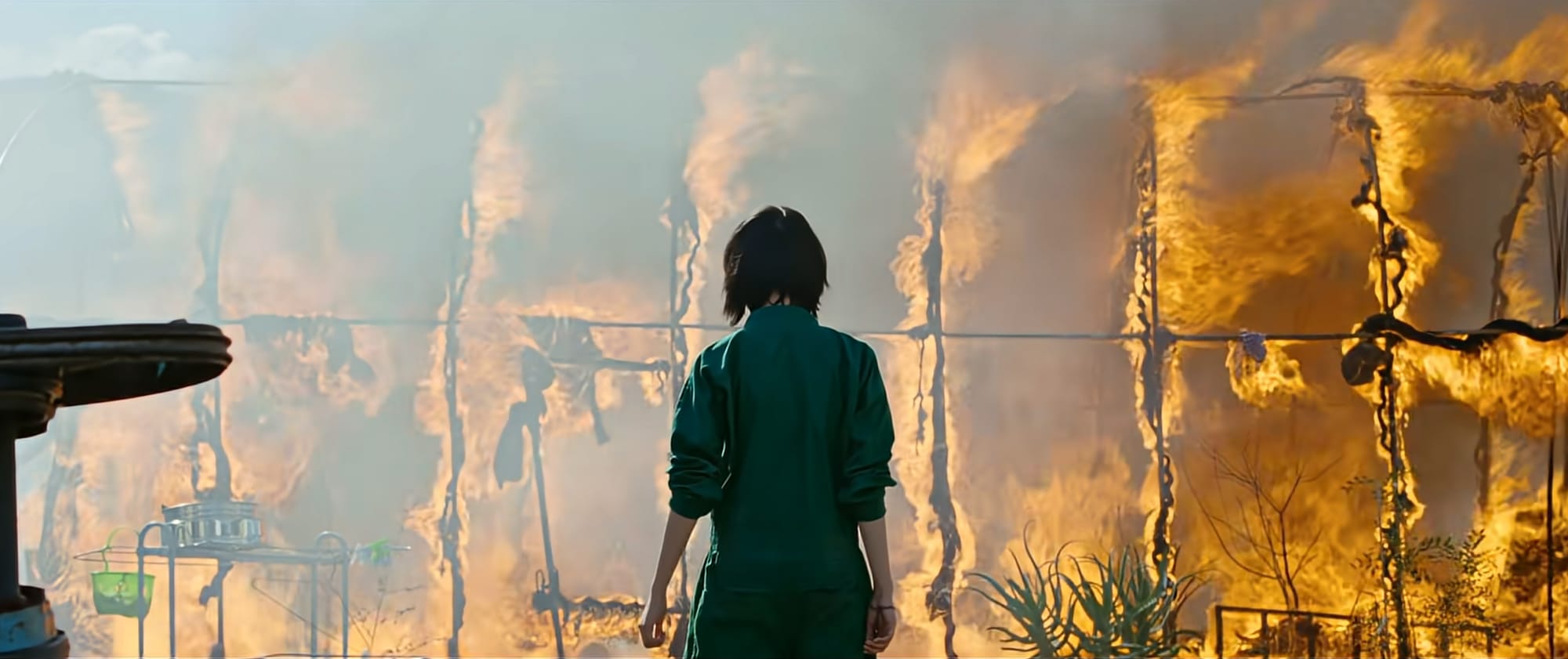
It’s also aided by some strong cinematography that blends frantic editing with an intimacy in how it frames these characters so close to emphasize just how trapped these young girls feel. We don’t see our main trio or anyone on screen actually smoking the weed on screen (most likely, though I can’t help but wonder if at one point the cigarettes Hidemi often smokes were planned to be something more potent), but the joy they feel comes less from the thrill of breaking the rules and more the desire to finally be free. The concept of the money they can get from just one batch lets them think about their dreams for the future, as mangaka or rappers or, in Milk’s case, a film director.
At least, I think so. See, for all the strengths I see in taking a unique concept and bringing it to screen, leaning into the absurdism through voiceover and editing, and foregoing a flat look for one of the more well-shot youth films in recent times, it all feels a little hollow as the scheme inevitably hits rough waters in the final act.
For all the tropes of the genre are present, there’s a lack of depth. From sheer camera work and energy alone it’s a fun time in the moment, but it’s hard not to feel disappointed the more time sat with the film after the credits have rolled. Mostly, I couldn’t help but realize how little I actually knew these girls who, at least in the language of the film, grew personally as much as their plants grew over the course of its runtime.
Take Hidemi as an example. In the opening minutes, we’re introduced to her home life and how rap is a chance to get that out, through some admittedly moving moment of raw expression. It’s here that we hear about how much feeling the rejection and violence have shaped her. Yet, beyond that, I feel I know so little. Without time given to exploring her home life and why small time life offers no future, it feels like cobbled-together stereotypes hitting the beats without being incisive enough. Which would be fine, except that this forms the backbone of how she came into having the drugs and why she wants to grow them, and this lack of depth a problem impacting all of our cast.
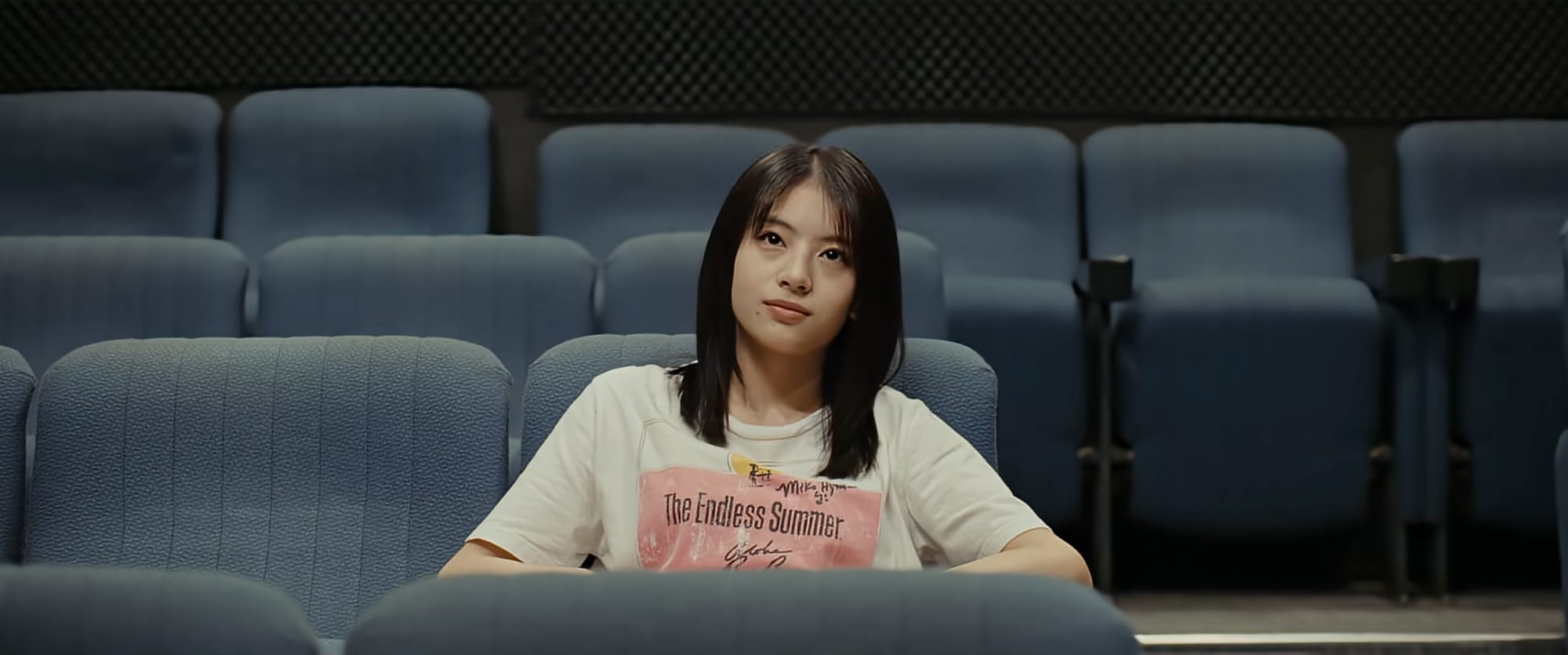
This has all the components you need for the story to work, but lacks the heart to make it something more, and it’s a real shame. It’s not a cast issue, who all deliver on their roles, but a script issue. As we see them inevitably run towards a future they crafted for themselves, in unsurprisingly hectic, explosive, chaotic and humorous ways, in the moment you feel the thrill and excitement of this act. It’s only once you leave and realize, for all it hit the initial crescendo, thinking back to this moment leaves you feeling so little.
All Greens is a story wrapped in the imagery of rebellion and tribulation and the hope for something more, without actually exploring it. Drugs reveal the seedy visage, but it remains little more than a smokescreen.