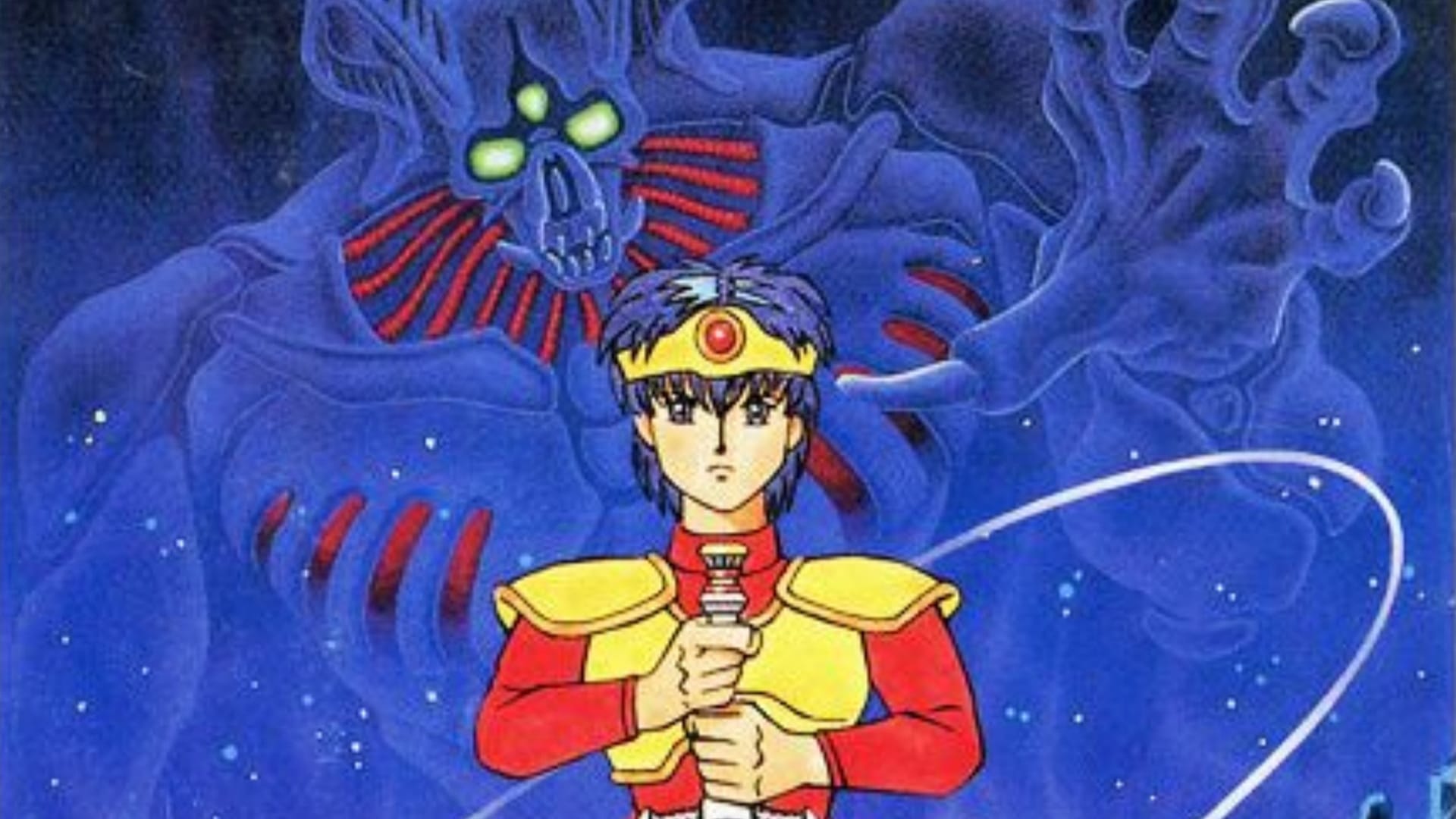
In the 1992 SNES action RPG Soul Blazer (Soul Blader in Japan), the player character takes on the role of a heavenly servant sent by the Master to liberate the world from the forces of darkness. They do so by exploring dungeons and clearing out monster dens. For every den they destroy, a living thing is restored to the world. Speaking with them earns the player new tools and abilities to navigate the dungeon. In this way the player revives the world piece by piece, revealing the true story behind how it was claimed by Deathtoll, the devil that waits in the World of Evil.
This was not developer Quintet’s first run at these ideas. In 1990, the studio released the game Actraiser, which similarly cast the player as a servant sent by God to battle Satan. (The English translation changed these names to “the Master” and “Tanzra” respectively.) In some respects, Actraiser is more complex and ambitious than Soul Blazer. Rather than a straightforward action RPG, the game combines sidescrolling action stages with a townbuilding simulator. The battle for civilization is depicted on the macro, rather than micro, scale.
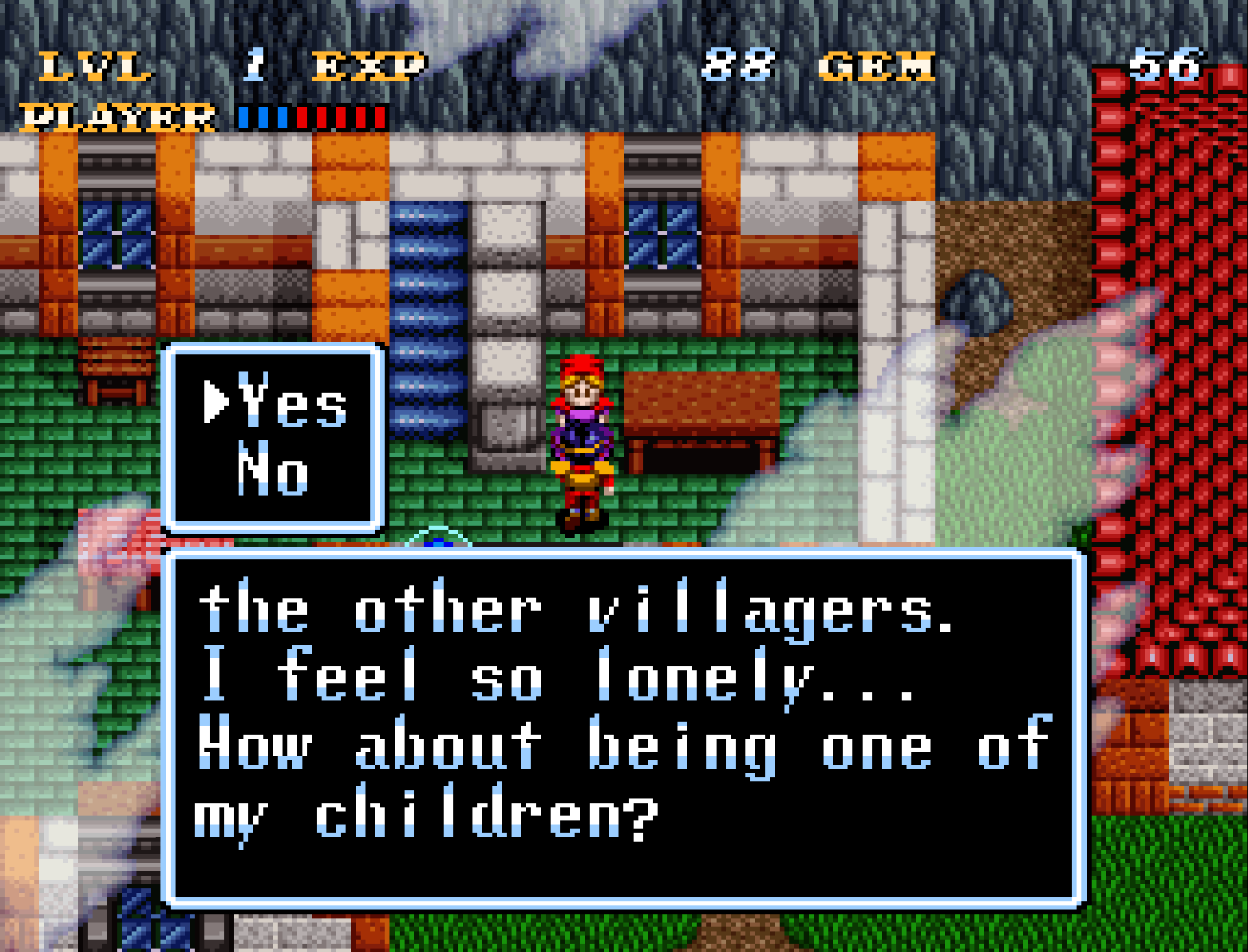
Aside from the mechanical differences, though, there is a significant thematic difference between Actraiser and Soul Blazer. Actraiser is chiefly concerned with humanity as representative of life on Earth. Our expansion and technological growth becomes the prime battleground between God and Satan. Soul Blazer though takes another approach. While humanity is certainly the most powerful actor in the world, non-humans are just as important.
The game has six worlds to explore, excepting the World of Evil. Just two of them, the first and the second-to-last, are populated by humans. Another two include human-like mythical creatures, water-breathing mermaids and short-lived gnomes. The last two, including the game’s second stage, have no humans at all. All the other characters are animals, plants and inanimate objects, which the player must revive and seek aid from in order to defeat Deathtoll.
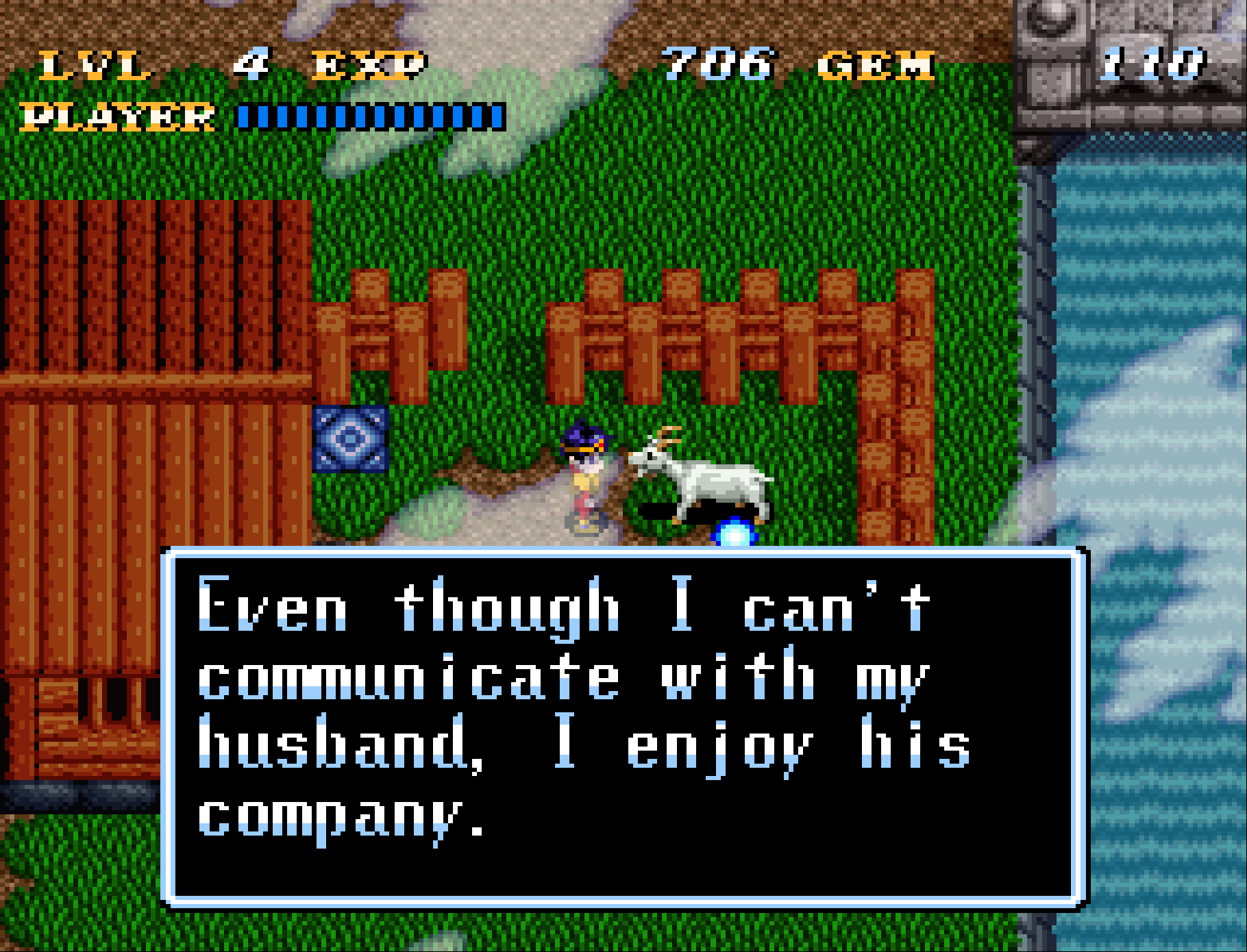
As a representative of the Master, the player character may speak with any revived creature or object. They learn in the process that non-humans all have their own preferences, just like humans. Goats seek food. Doors rarely speak, save for talkative great doors. The player cannot beat the game without taking these needs into account. Do animals and plants a favor, and they will do you a favor in return: for instance, naming you a citizen of the forest so a raft’s logs will deign to carry you, or letting you see invisible denizens inside of a model town.
Reincarnation exists in the world of Soul Blazer; a human might die and be revived as an animal, or vice-versa. As a result there’s a certain anthropomorphism baked into the game’s NPCs. A pair of dolphins marry in the ending sequence and you’re expected to take for granted that dolphins follow human societal norms. Other animals though I found to be very well characterized. There’s a great sequence in the GreenWood where a dog leads you around in search of interesting smells. The dog claims that something particularly interesting lies in a nearby bush; investigate the bush, and you learn that bush is the community outhouse. It’s a particularly doggy moment that exists independently from human civilization.
I was delighted every time that Soul Blazer challenged my own biases. For instance, I didn’t even think to speak with a stump until a bird said I could. I learned that stumps have a lot to say, even if they only do so quietly. Later the player encounters a community of snail-riding gnomes, which only live a few short years. While the gnomes are aware of their short life spans, they also believe their affliction makes life that much more meaningful for them. It’s an idea that’s been done before, but it’s used with purpose here to underline how humanity’s needs and fears do not map perfectly to the concerns of other species.
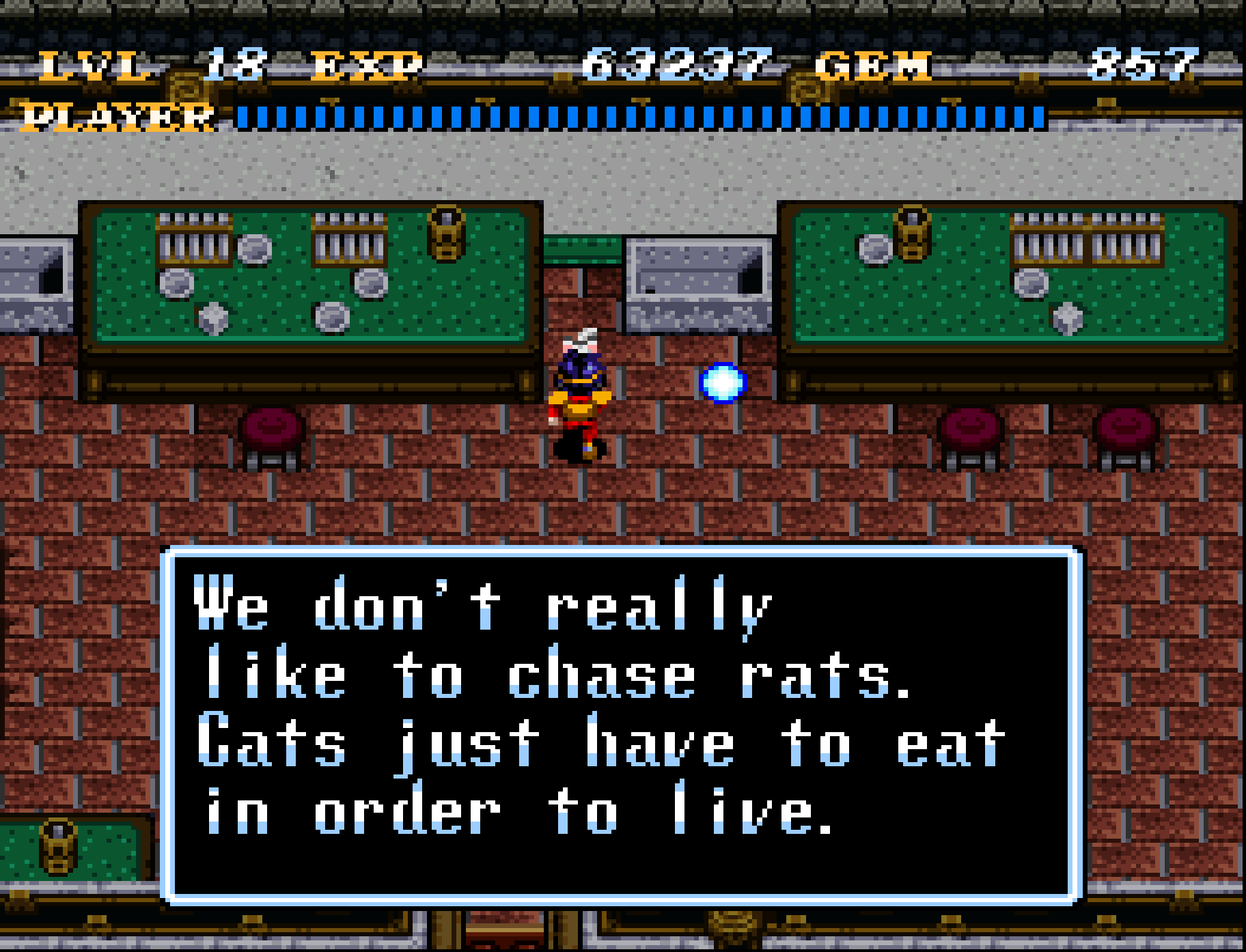
Respecting the needs of each creature also requires finding a compromise that satisfies all parties. For instance, the player revives two cats and a mouse in Dr. Leo’s laboratory. The mouse is guarding a hole hiding useful items, but is too afraid to move while the cats are in the room. If you can find catnip, though, the cats will happily follow you to the door, allowing the mouse to live in peace. “We don’t really like to chase rats,” they say. “Cats just have to eat in order to live.”
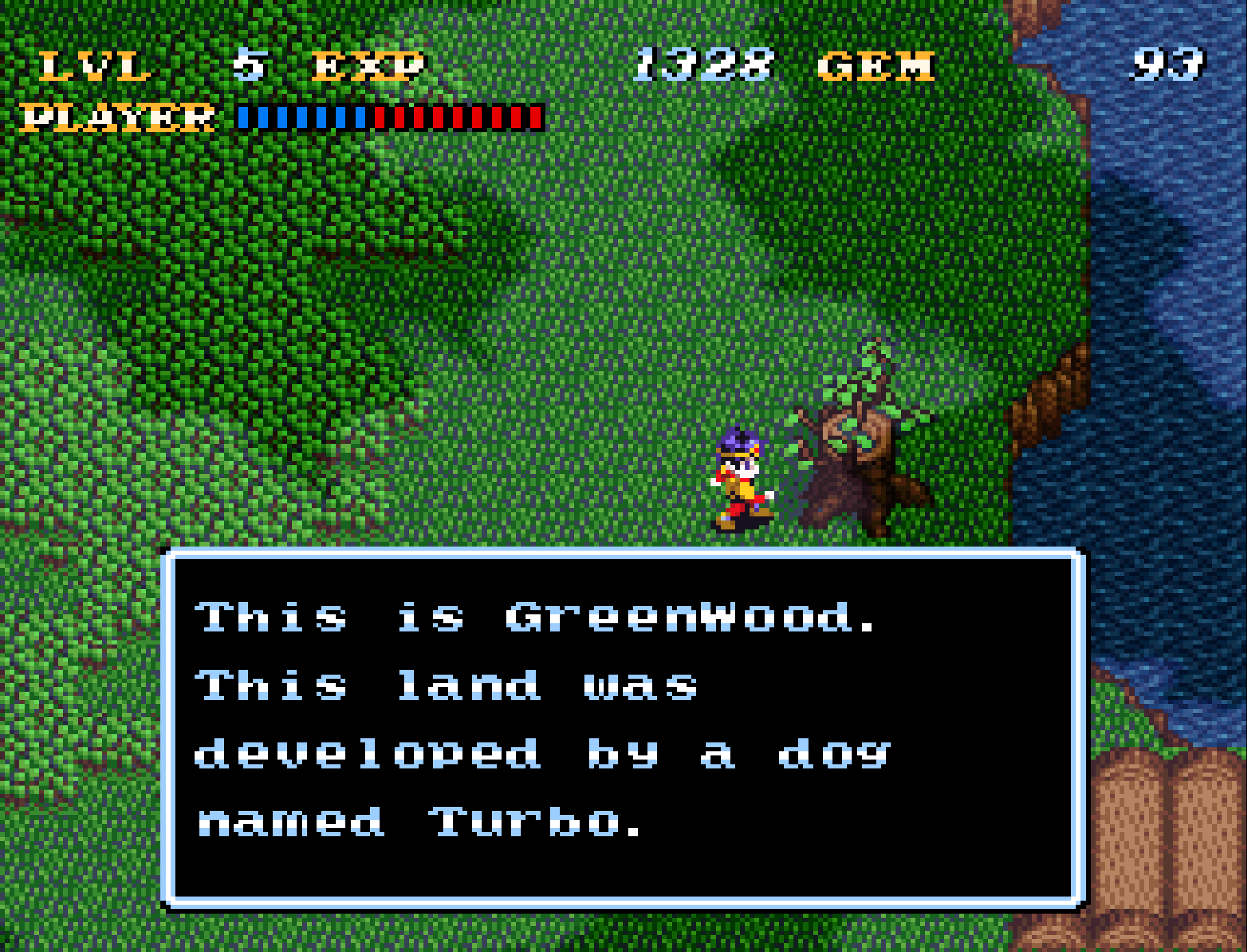
The movers and shakers behind Soul Blazer’s apocalypse are all human: Dr. Leo the scientist, King Magridd and his wife the Queen. Yet non-human creatures are present in the margins. The GreenWood is haunted by the spirit of Dr. Leo’s dog Turbo, whose good example lives on in the hearts of its animal and plant residents. The doll Marie, who resides in Dr. Leo’s laboratory, once belonged to Leo’s sickly daughter Lisa, who the player encounters early in the game in the town of Grass Valley. All were sacrificed by King Magridd, who according to the game’s story traded their souls for coins. Playing the game means affirming that they all have reason to exist, if only because that is the only way to win.
Soul Blazer is not perfect in its grand ideals. There’s a streak of misogyny running through the game, like when the Queen is revealed to be the real corrupting influence behind King Magridd’s actions. Other parts of the story can be hard to parse, either because the developers were on a deadline or because the English translation is just not very comprehensible. (There’s a recent “Relocalization” patch that cleans up the grammar, but isn’t a proper retranslation itself.)
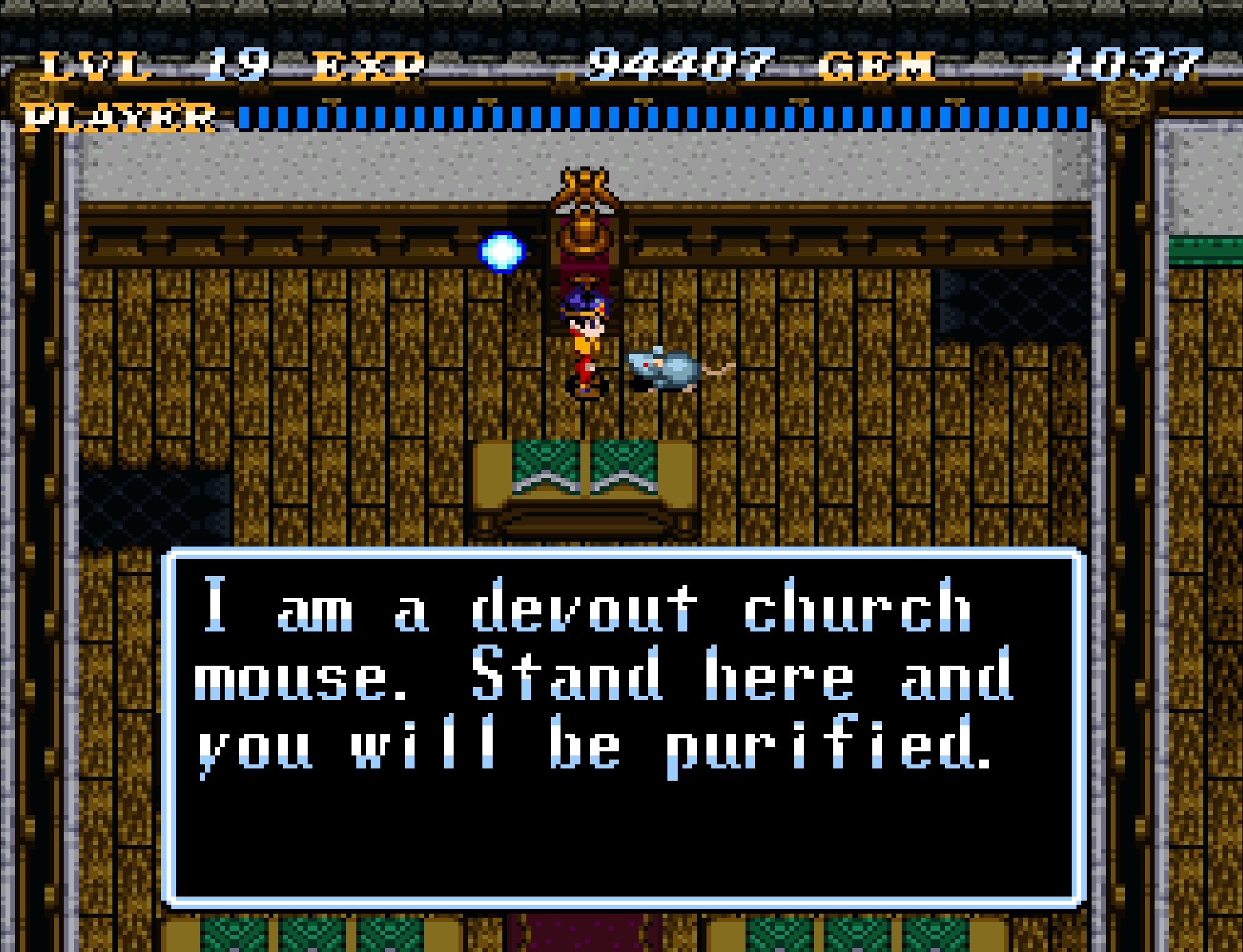
Even so, there’s something about the game’s generosity of spirit, coupled with its intimacy, which appeals to me. Other games about reviving the world, like Okami, do so in one fell swoop. Soul Blazer’s granular approach gives every action you take real weight. At the same time, it reaffirms the importance of Earth not just for human civilization, but for its own sake. Even the objects that humans make are afforded their own dignity.
I was raised Catholic as a child. One of many things that turned me away from religion was the question of life and its value. If there was a God, and that God was impartial, would it not hold all things in the world equally? Why would it reward one and punish the other? In the face of religion that honored humans above all I saw hypocrisy. Soul Blazer re-imagines the battle between good and evil as a stage upon which every life matters, whether it be human, animal, plant or something else. It’s a simple message, just as Soul Blazer is a simple game compared to the rest of Quintet’s catalog. But it’s one that I respect, and is just as relevant today as when the game was released in 1992.