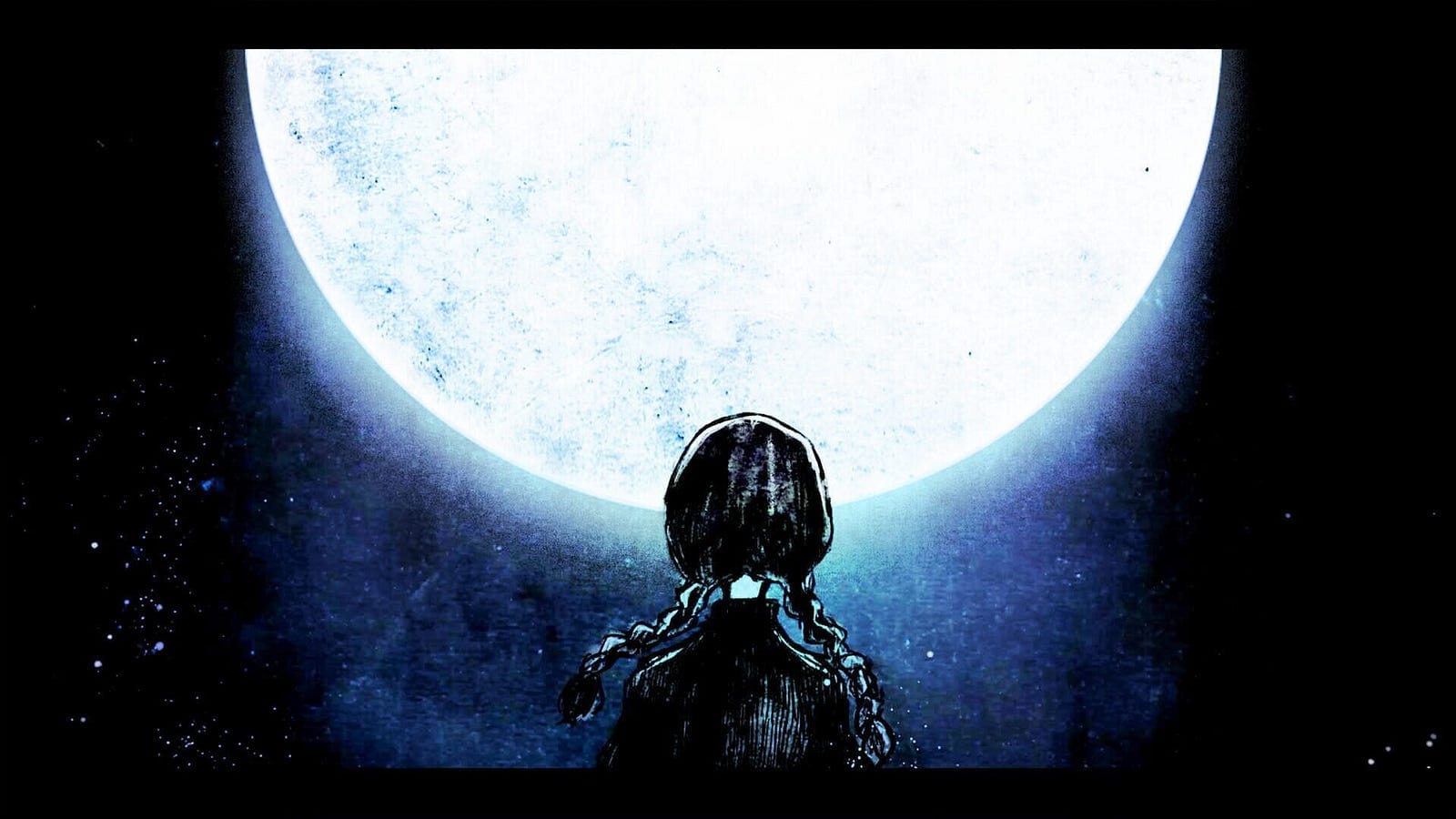
The phone is ringing, who’s on the other side? Unless you pick up, you’ll never know. It could be someone who is alive or someone who is dead. Answer it, and you’ll learn that the moon will fall onto the world and everything will end in 21 nanoseconds. But let’s put the apocalypse on pause for now. What’s the harm in a few last phone calls?
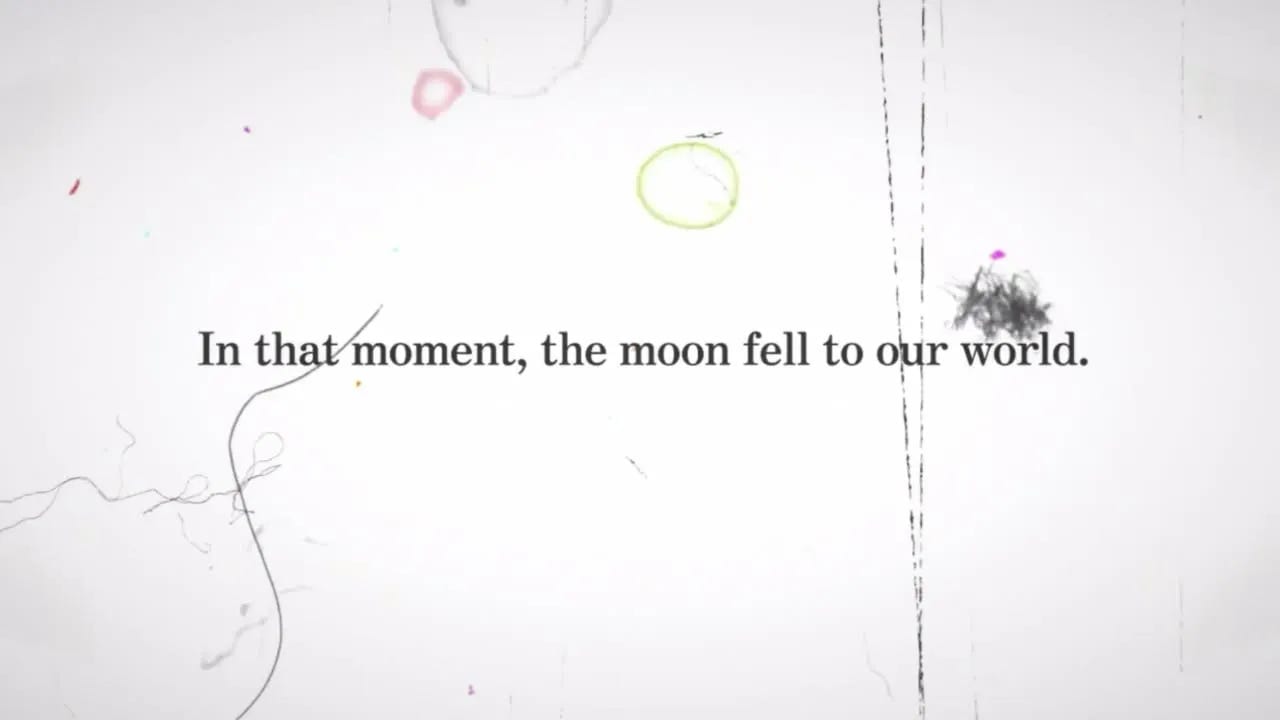
The introduction to Schrödinger’s Call is as confusing and haunting as it is visually stunning. Developed by Japanese studio Acrobatic Chirimenjako and published by Shueisha Games, this unique visual novel skips over the typical emotions that come with apocalyptic doom. Instead, it focuses on the unspoken feelings from human connection we leave unspoken until it’s too late. Schrödinger’s Call invites players to experience both the anguish and redemption found in human connection, unfolding like a beautifully tragic Shakespearean storybook.
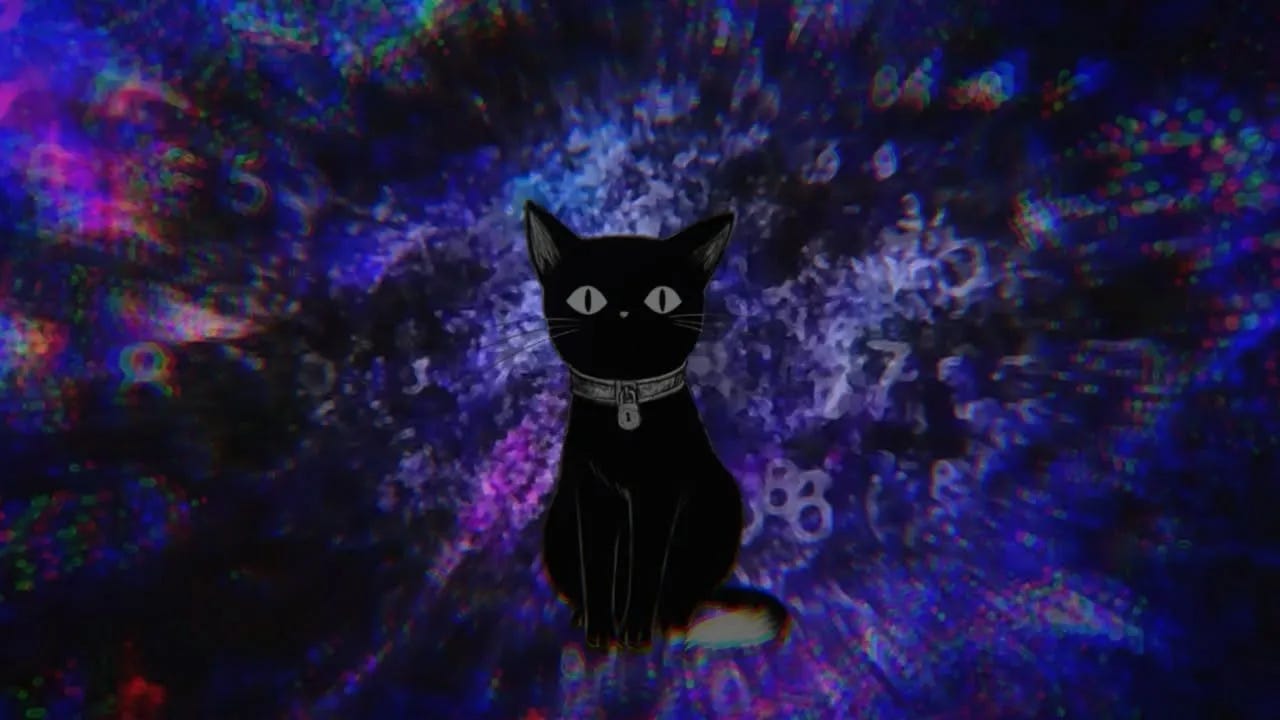
You experience this story through the main character Mary, an amnesiac who is quickly proclaimed as “The world’s last confidant” by the conveniently named cat, Hamlet. In this super-positioned world stuck in between life and death, Mary is able to answer the calls of spirits who died in the middle of a phone call.
Her callers are all depicted as anthropomorphic animals, and Mary’s job is to listen to their regrets during a final phone call placed just before the world ends. Because Mary can only hear these spirits over the line rather than see them, these sketch-like animal designs feel like her mind’s surreal interpretation of their true identities. In the opening chapter, your first caller is Lucy a white-clad fox who escapes from prison on the day of the apocalypse as she desperately calls her estranged son to reconnect before the moon falls.
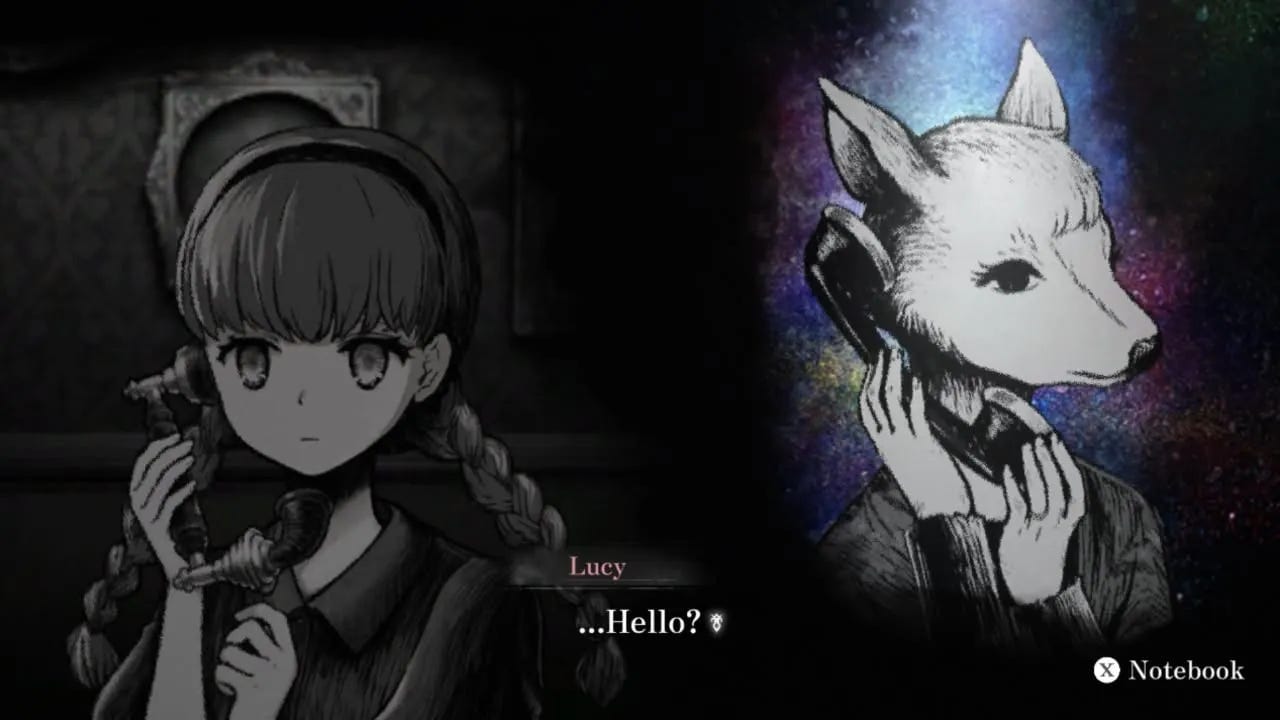
Whilst Mary can soothe their pain, she cannot change their fate. She doesn’t just sympathize with these spirits; she deeply empathizes with their tragedies, hinting at a hidden connection in her own past. It feels like there is something in Mary’s past that connects her to these animals and allows her to relate to their feelings.
The premise may sound like a traditional visual novel, however Schrödinger’s Call gives players more to do than simply click through dialogue. Every conversation becomes an opportunity to uncover memories, piece together each caller’s story, and decide how Mary responds to those reaching out in their final moments. Throughout each conversation, Mary records important details about their life through illustrations and keywords in her notebook. These keywords can later be presented during other conversations, much like presenting evidence in Ace Attorney; however, instead of exposing contradictions to tear down a lie, you are presenting memories, ideas, and emotions to help callers heal and open up.
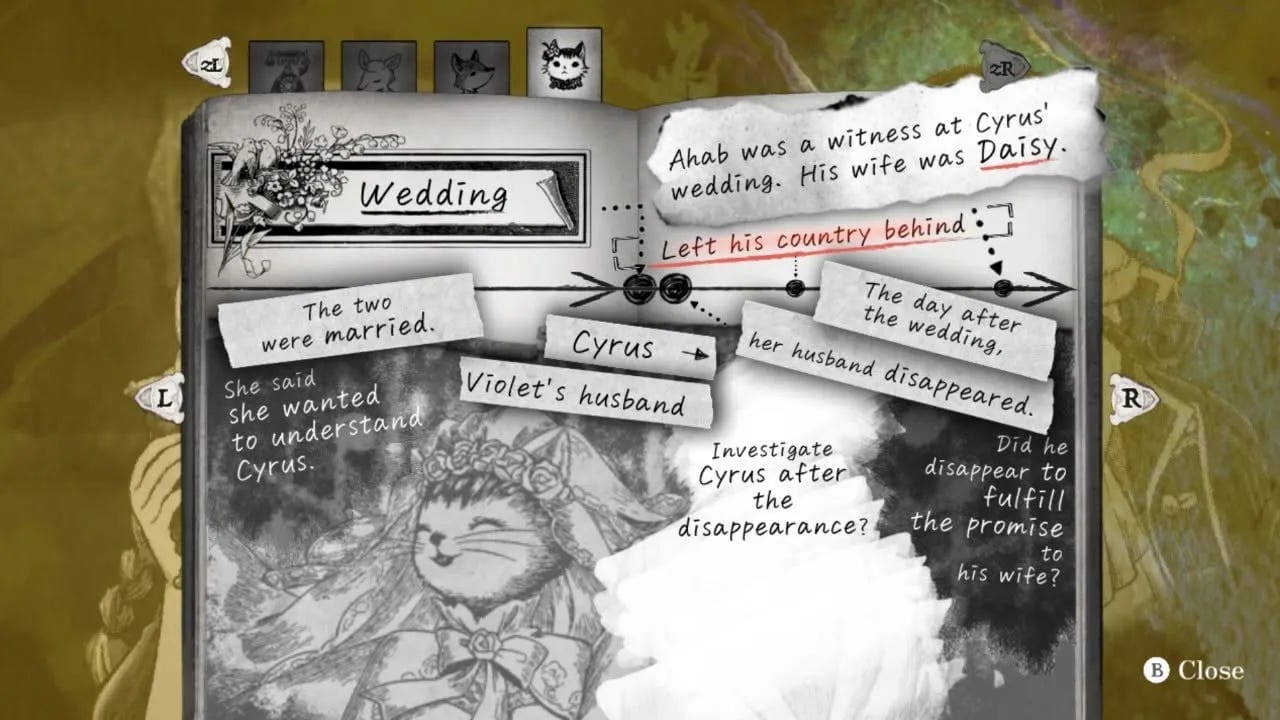
Schrödinger’s Call doesn’t offer much freedom in its moment-to-moment gameplay. There’s usually only one correct dialogue option, and if you make a mistake, the game simply loops back and lets you choose again. Not every conversation lands, either. Characters sometimes repeat information you’ve only just learned, which slows the pacing and makes some scenes drag a little.
Despite these shortcomings, Schrödinger’s Call more than makes up for them with its presentation and storytelling. The artwork doesn’t simply serve as a backdrop for the story — it tells one of its own. Its picture-book aesthetic reinforces the feeling that you’re leafing through fragments of memories, making each new chapter feel like another page in Mary’s journey. Each caller feels like a real person with their own fears, regrets, and hopes, making it easy to become invested in even the briefest conversations. While these individual stories stand on their own, they gradually come together to reveal a much larger picture of Mary’s past and the world she inhabits.
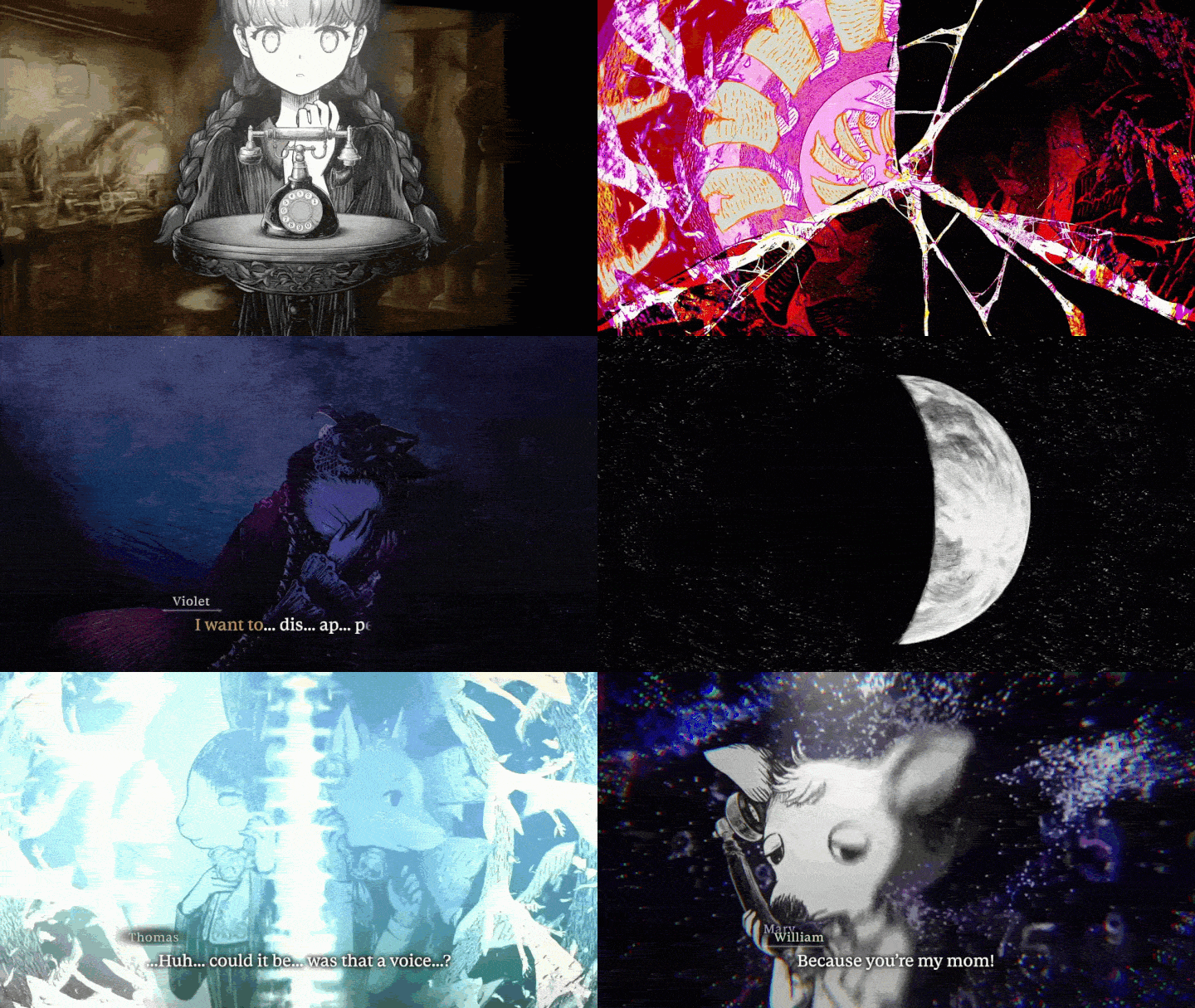
Schrödinger’s Call isn’t really about the apocalypse. It’s about the conversations we never have until it’s too late. Beneath its surreal premise is a story about regret, forgiveness, and simply being there to listen. Long after the credits roll, I found myself thinking about the people Mary spoke to and wondering what would have happened if she’d never answered the phone. Few games make listening feel this meaningful, and that’s what makes Schrödinger’s Call such a memorable visual novel.