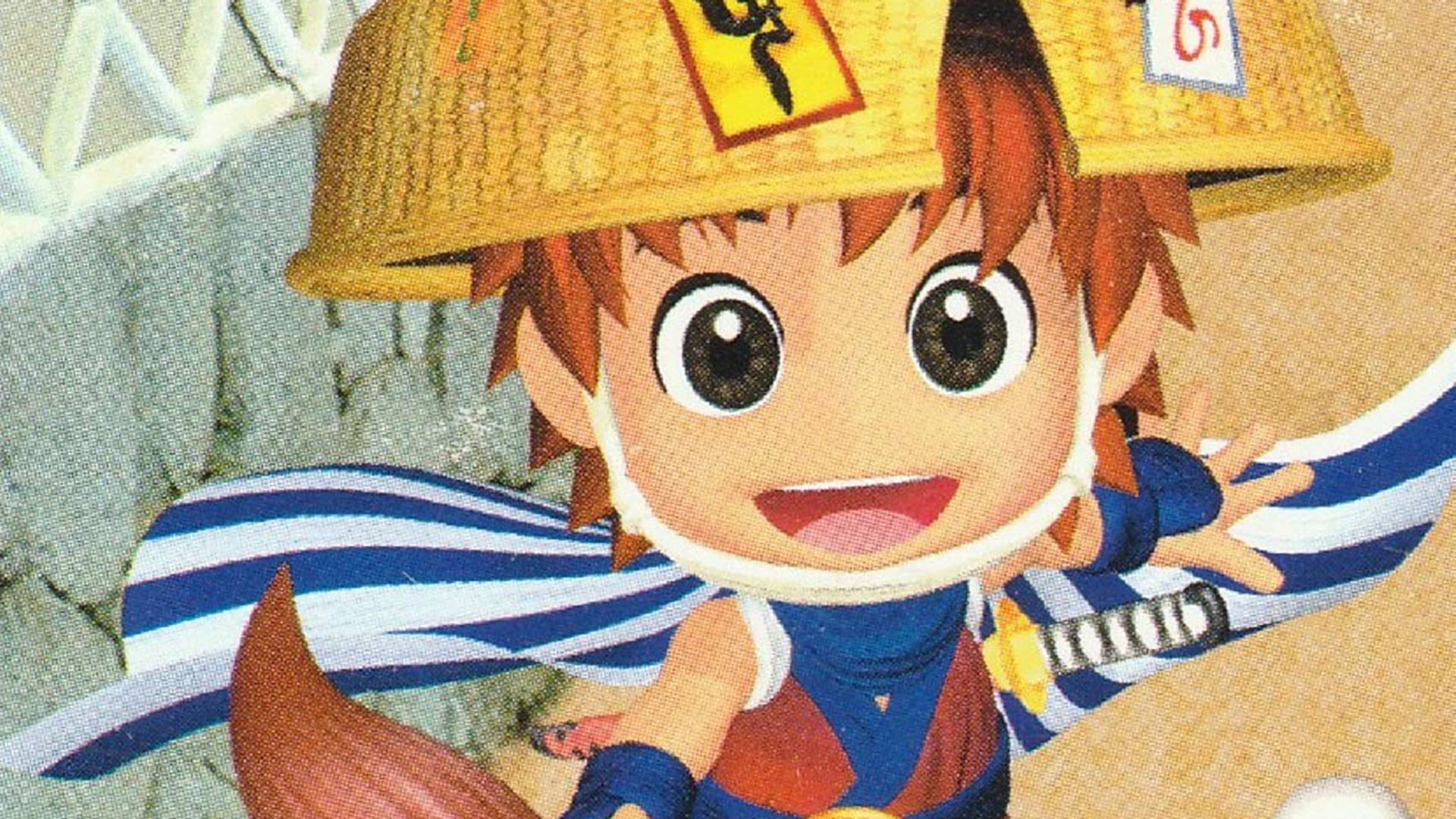
Shiren the Wanderer is a series about gaming systems. The hero Shiren begins every dungeon expedition at Level 1. Should he be defeated, he loses all his money, items and experience. Your only hope as the player is to improvise with what you have. Surrounded by enemies? Escape with Warp Grass, or distract them with a Confusion Scroll. Running out of food? Throw your extra weapons at a Nigiri Morph, who will transform them into delicious Onigiri. Lacking in power? Trick an enemy into killing another, evolving it into a new form, then explode it with Dragon Grass for an experience points piñata.
As far as many fans are concerned, these interactions are the real “story” of the game. That’s what separates Shiren the Wanderer from its peers like Pokémon Mystery Dungeon. Dialogue is kept to a minimum, the story is short and compact. You don’t play Shiren if you want an experience that’s like watching an anime. You play Shiren to engage in an elaborate Rube Goldberg machine leading to your death and salvation. At least that’s what they say. But is that really quite right?
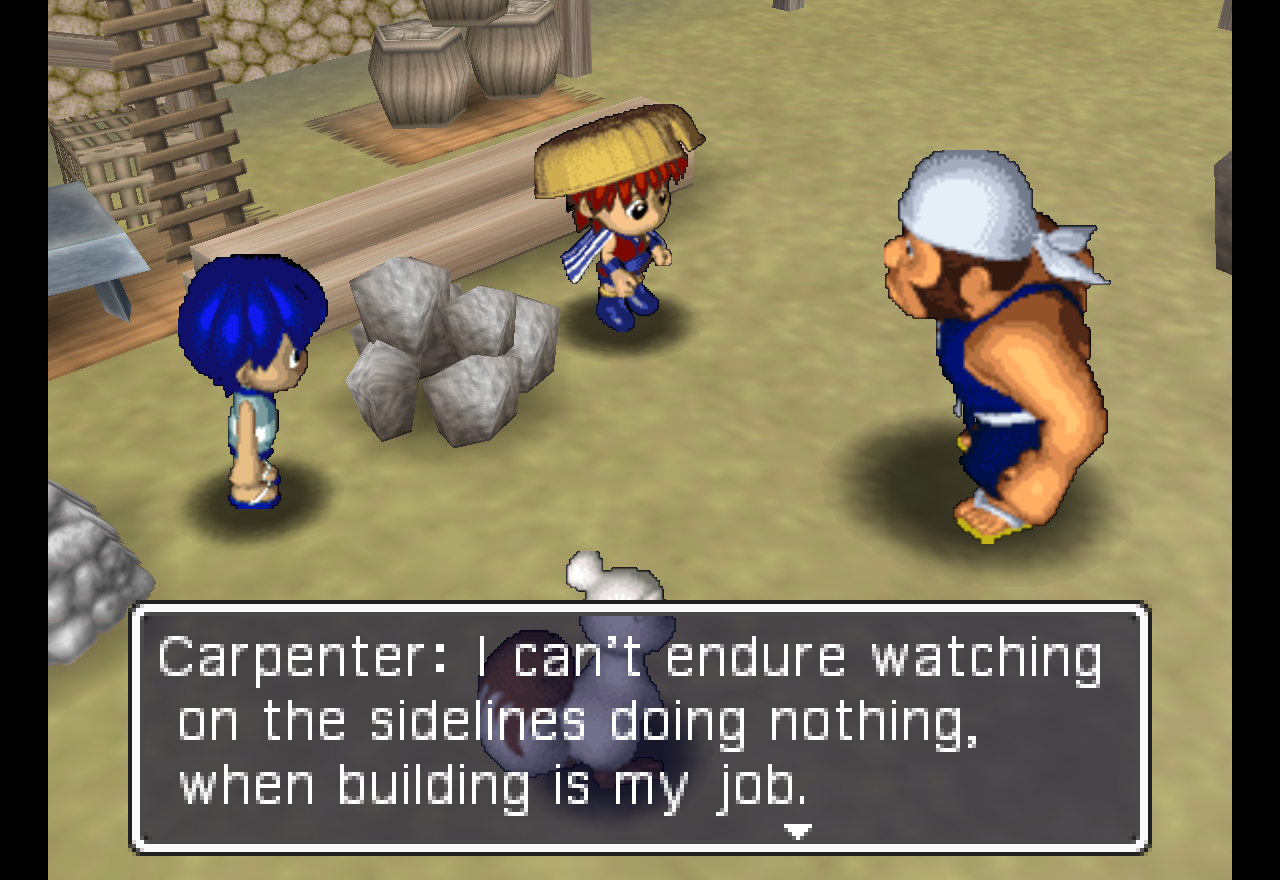
Lately I’ve been playing Shiren the Wanderer 2: Shiren’s Castle and the Oni Invasion, which was released back in 2000 for the Nintendo 64. It begins when a young Shiren arrives with his weasel friend Koppa in Natane, a town beset by oni. Following an old prophecy, Shiren searches nearby Shuten Mountain for building materials: wood, water, soil, rock and iron sand. At the summit, shopkeepers build these materials into castle parts, then send them back down the mountain by raft. Shiren assembles these parts into a castle so that the people of Natane can repel invasion. Yet if he doesn’t hurry, oni will attack the growing castle with their weapons, requiring further exploration to replace broken parts.
While the first Shiren was built around exploring a 30-floor dungeon, iterations of Shuten Trial are always between 10 and 15 floors depending on difficulty. Your goal is not to reach the end no matter what, but to collect as many building materials as you can on the way. This necessitates a certain amount of repetition, which you could say is a weakness. Some players dislike how Shiren 2 gates its advanced dungeons behind a resource grind rather than a traditional challenge. But this repetitive structure also opens up opportunities for storytelling, which the game seizes upon.
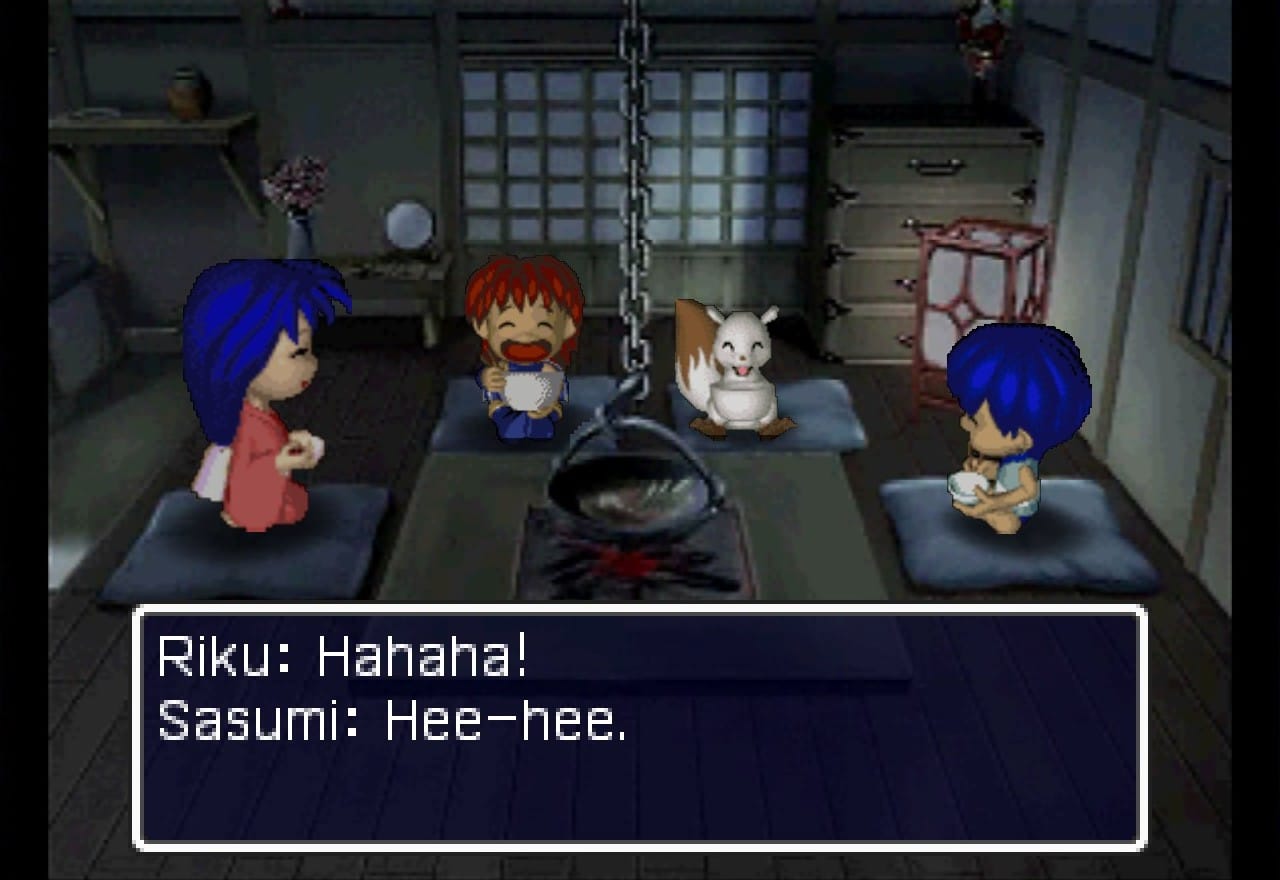
The prophecy claims that Shiren must build the castle alone. It doesn’t take long, though, before the village turns out to help him. First comes Riku, a young boy who looks up to Shiren. Despite his weak constitution, he turns up every day to help Shiren and Koppa build the castle. Later his sister Sasumi invites the three of them to her house for dinner. In a surprisingly charged scene, she asks Shiren to rest his head on her lap. “You got caught up in such a difficult situation,” she says to him. “And you’re still so little…”
Shiren also assembles an adventurer’s party of his own, just like in any RPG. That said, his allies are a lot weirder than you might find in a Dragon Quest game. Aside from Asuka, a wandering adventurer popular enough to later score her own spin-off title, Shiren is joined by a kappa, a talking wardrobe, and even an oni girl named Kirara who has a crush on him. None of these characters are strong enough to hold their own in a fight for long. But together, they can roll through Shiren’s dungeons like a bowling ball, making the game much more accessible for players of lower skill levels.
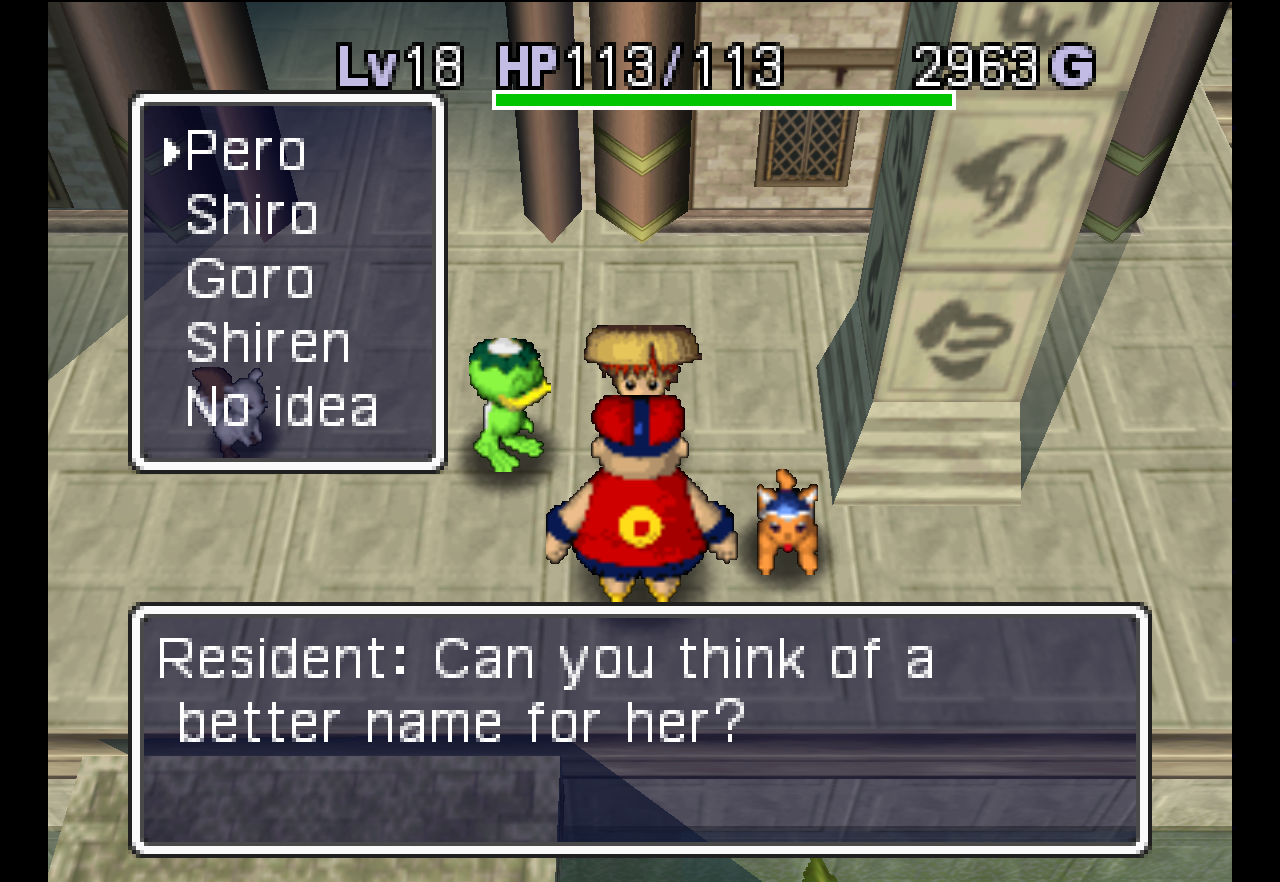
As the player reruns Shuten Trail over and over, they’ll likely experience the kinds of systemic stories that are Shiren’s trademark. But there are other, handcrafted vignettes as well. The shopkeepers at the top of Shuten Mountain for instance have new things to say as you build more castle parts. One keeps trying to change the name of his dog, only for the dog to become progressively more miserable. (When he names his dog “Shiren,” the dog pees all over his shoes.) Another looks out into the distance because (you learn) he is mourning the death of his pet.
As your castle takes shape, more and more inhabitants from the village come out to help. At first they insist that their involvement be a secret. After all, the prophecy insists that Shiren build the castle by himself! But so many others end up helping that the secret’s rather meaningless in the end. At the end of the day, while the castle may be Shiren’s, it was built by everybody in the village of Natane.
Shiren the Wanderer 2 didn’t have to construct its story this way. The original Shiren told a perfectly satisfying narrative via the straightforward experience of climbing Table Mountain. Yet even that first game utilized repeated runs to endear you to the characters. Like Oryu the Blinder, a femme fatale who will eventually join your party if you let her prank you enough times. Or Pekeji, a hopeless shop employee who claims he’s Shiren’s younger brother, but only joins his party after asking for money and food.
The secret of Shiren’s success is how its staff understood the systemic joys of roguelikes were not enough for a wider audience. Chunsoft previously developed the first five Dragon Quest games, which livened up its twin influences of Wizardry and Ultima with vibrant art by Akira Toriyama. Yuji Horii’s writing as well was full of charming turns of phrase that became iconic, such as “へんじがない。ただの しかばねのようだ。” (“There’s no response. It’s just a corpse.”) The Shiren the Wanderer games pull the same trick by changing NPC dialogue over multiple runs, granting the illusion of life. If you, the player, are invested in the world and its people, you’re that much more likely to persist, despite the harsh difficulty of a roguelike.
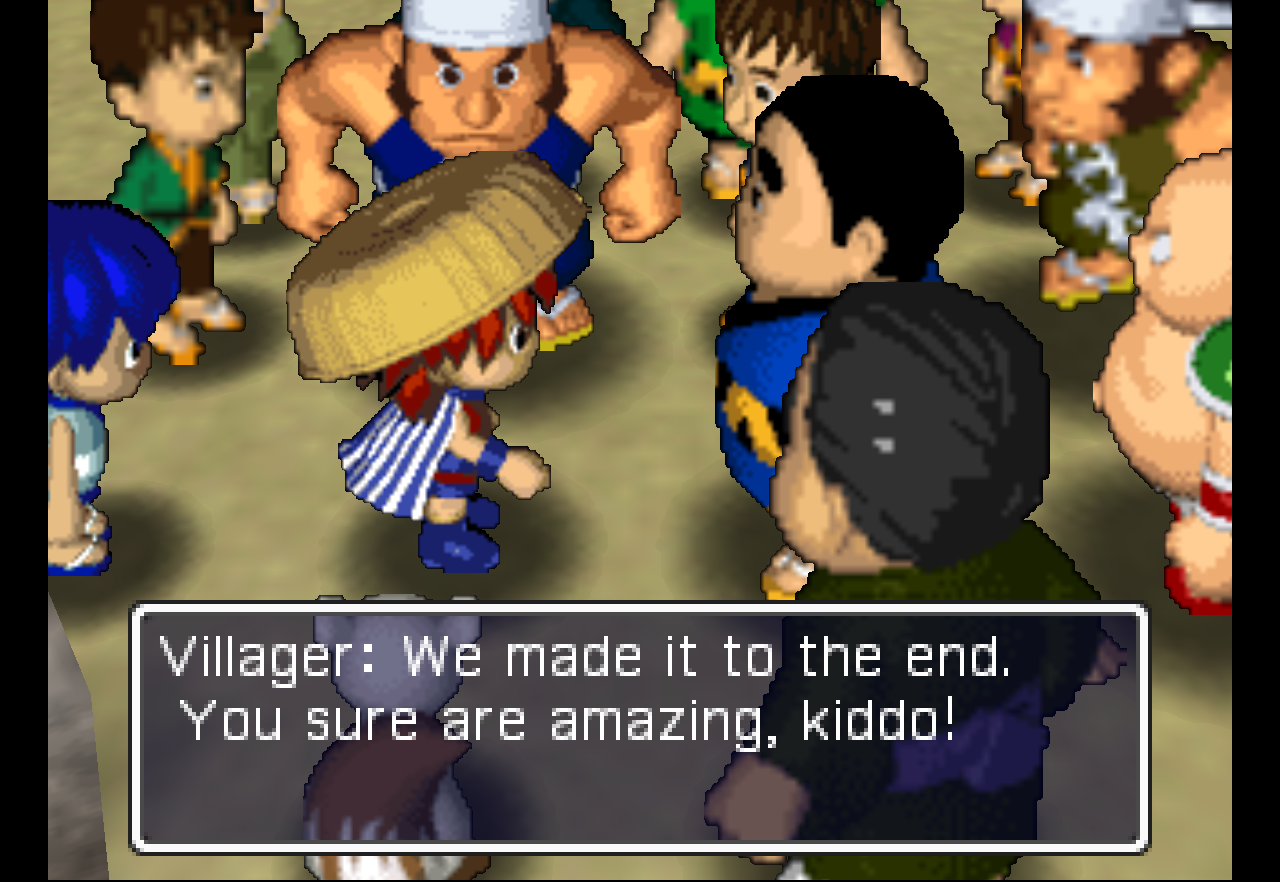
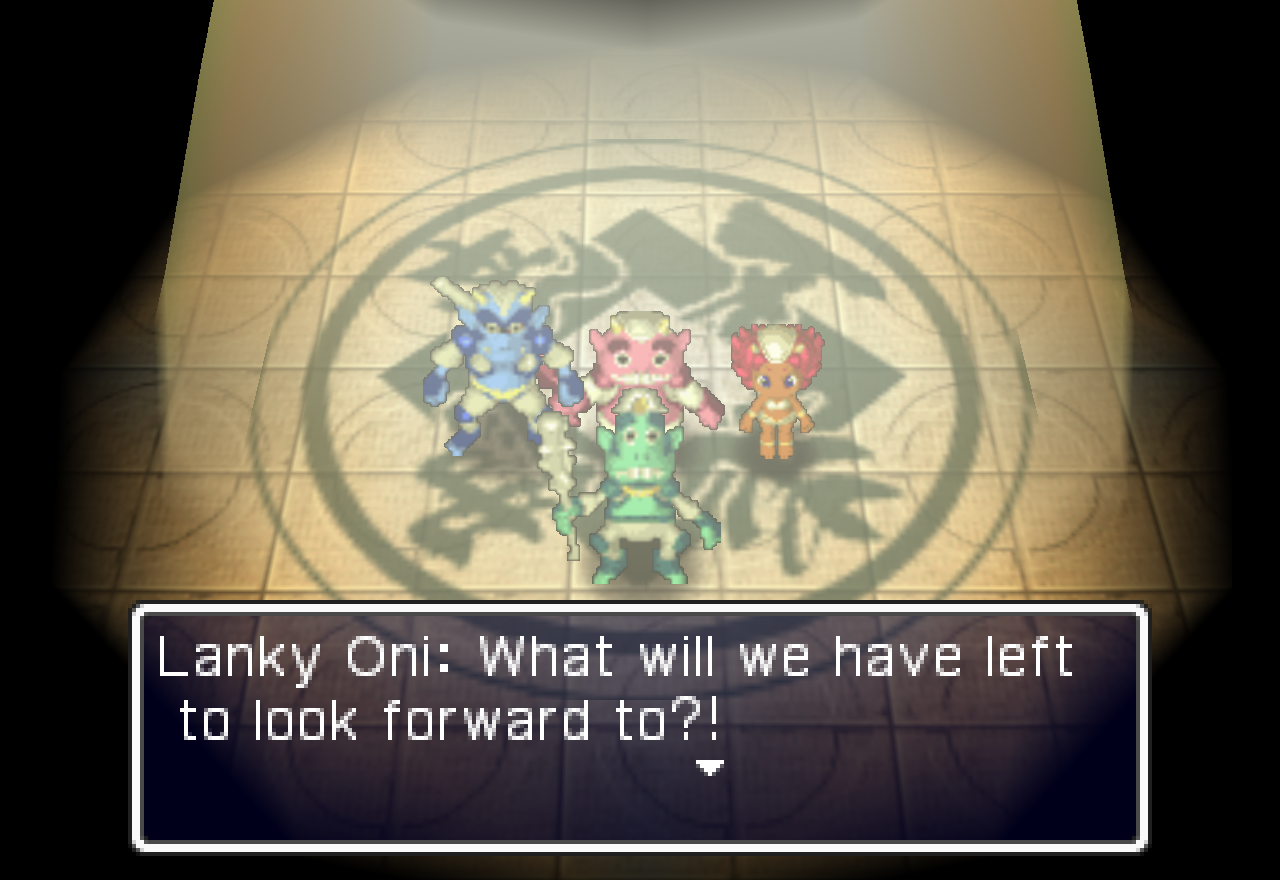
Once you finish building your castle, all the friends you’ve made along the way come together in celebration. It’s not the end of the game by any means. The assault on the oni stronghold of Onigashima remains, which you could say is where Shiren 2 really begins. Yet what the player endures in Onigashima would not mean nearly as much without the preparations made in the early stages of the game. You throw Shiren into mortal danger again and again because you’ve come to care for everybody in Natane–Riku who idolizes you, Asuka your reliable ally, Kirara who sneaks into a festival on the night of the full moon even though full moon rays sap oni life force.
The systems might be the appeal of Shiren the Wanderer for its hardcore fans. But its characters, no matter how goofy they might be, are the foundation of its castle.