
As the virtual YouTuber agency with the largest market share, hololive already enjoys unparalleled success across a variety of mediums. Just the other day. Hoshimachi Suisei was the first virtual talent to “throw” a first pitch at a baseball game, showing that digital avatars are no longer a barrier to nationwide fame. With all of this in mind, what purpose does hololive Dreams serve?
The first answer is, obviously, money. As a mobile game with gacha mechanics and plenty of microtransactions, Cover has the opportunity to make some serious bank by exploiting the weakness of human psychology to such phenomena as the sunk cost fallacy and FOMO. Considering that Pokemon TCG Pocket made more than 600 million yen in revenue last year, that’s a tantalizing prospect for management and stakeholders alike.
Perhaps less cynically, the second answer is engagement. While merchandising and live events are proving increasingly important, hololive’s current business model is centered around virtual YouTuber livestreams that rely almost entirely on individual talent schedules and usually take place in the evening at the end of the work day. Not only does this mean that any gaps in availability are likely to affect the company’s bottom line, fans are only offered a limited temporal window to interact with their favorite personalities.
hololive Dreams arguably solves the twin problems of availability and interactivity by remaining open and active 24 hours a day. Partial voice acting means that talents must have done some recording in the past, but so slight is the commitment that even some graduated personalities are making an appearance in the game. Moreover, the constant uptime means that fans can access hololive whenever and wherever they went, whether that be at home on the PC or on the train on the way to work.
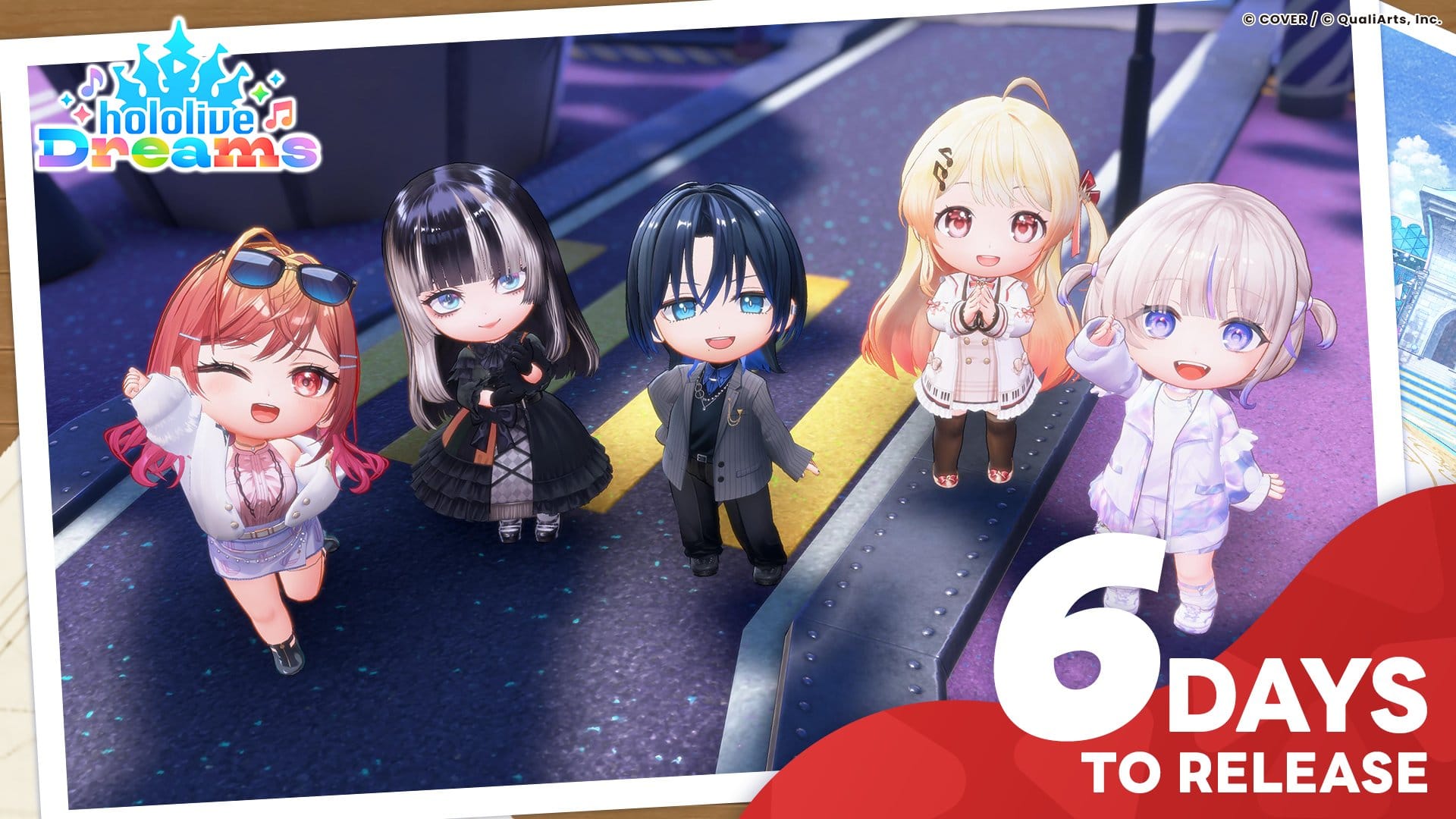
With this in mind, to what extent hololive Dreams offers a compelling experience for fans is the key question here. Just to lay my credentials on the table, I’ve been a fan of virtual YouTubers since Kizuna Ai burst on to the scene in 2017 and hololive more specifically since 2020. I’ve even attended such events as hololive SUPER EXPO many times as well as the most recent 3rd Generation live at K Arena, so believe me when I say that this game is just kind of average.
The elevator pitch for hololive Dreams is simple. What if you could hang out on a tropical island as your favorite hololive talent, participating in private conversations with other members far away from the artifice of the livestream? If the parasocial element of virtual YouTubers is predicated on collecting pieces of information in the same way that Patrick W. Galbraith terms idol culture as “the reality game”, then this artificial world offers a myriad of treasures to uncover.
Nevertheless, one of the things that makes Galbraith’s assessment apply to virtual YouTubers as well as idols is the fact that there is a real person behind a performed fiction in both cases. Gathering pieces of information about entirely virtual characters such as Hatsune Miku or Super Sonico simply doesn’t offer the same experience as there is nothing to glimpse behind the avatar. In the same way, the transformation of hololive talents into mere characters for a game therefore removes one of their most engaging qualities.
All of this would be fine if the writing was funny or entertaining. The weekly short series Holo no Graffiti already proved that the hololive talents can work as characters in a zany series thanks to all of their unique traits and complex interpersonal relationships, but none of this energy is present in hololive Dreams. Many have pointed out that every single interaction on the island follows the same pattern: chat, build, flirt, get hungry, eat food, repeat in a stark contrast from developer Qualiarts previous title, Gakuen Idolmaster.
Indeed, Houshou Marine actually said that the quiet part out loud when she remarked: “This has no fangs.”

With the parasocial element gone and the writing less than subpar, the only thing left to discuss is the gameplay. On the most basic level, the core loop of hololive Dreams consists of playing minigames and clearing beatmaps to earn enough materials to build more facilities on the island. This, in turn, unlocks more minigames and other opportunities to earn materials faster in a system seen in many other mobile titles.
If your only objective when playing hololive Dreams is simply to jam out and move your fingers to some cool songs, then this is totally doable. The rhythm game section offers an impressive selection of tracks from across each talent’s backlog, as well as several covers. Quite hilariously, this makes it into the only title currently on the market where you can play “Snow halation” from the original Love Live!, thanks to a cover from Indonesian talent Ayunda Risu.
Even so, nothing really distinguishes the actual rhythm gameplay from other, similar titles on the market. The ability to create custom tracks theoretically means that the community can come up with new ways to play through each song, but the majority of beatmaps currently available are more focused on stupid gimmicks than providing an actual compelling experience. Much the same could be said about the minigames, which are about as deep as a puddle.
With all of this in mind, perhaps it should come as no surprise that my desire to log in to hololive Dreams has decreased drastically with every day since its launch. If Cover simply wants a way to drain more money from its most dedicated fans, then the fact that the title has achieved over two million downloads in less than two weeks shows that they will most likely be successful. Providing a compelling enough experience for lapsed and new fans alike, however, is another question entirely.