For all the genres and turns Kiyoshi Kurosawa has taken in decades of filmmaking, the director is still someone known primarily for their horror work. The genre put him on the map globally, and transformed him into one of the most prestigious names in domestic cinema also. Yet even as a director willing to experiment, his films are always present, both in their themes and their setting. The Samurai and the Prisoner (Kokurojo), by virtue of being set during the heights of the Warring States era of Japanese history, already marks a huge departure from the mold. Yet for all the ideas he pursues during its runtime bear a resemblance to his broader filmography, the movie itself can’t translate this story into a historical piece while retaining a compelling narrative for audiences to gravitate towards.
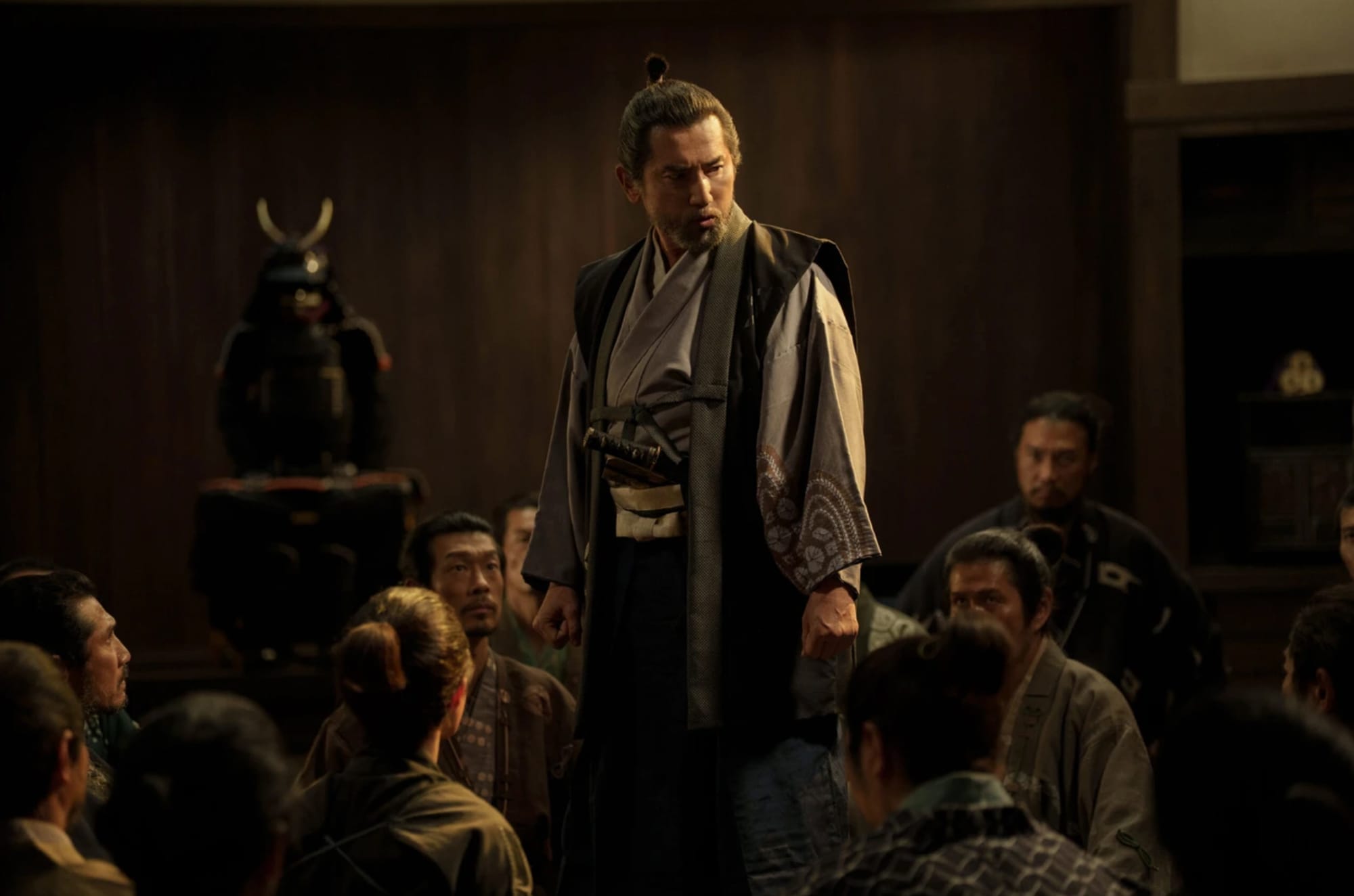
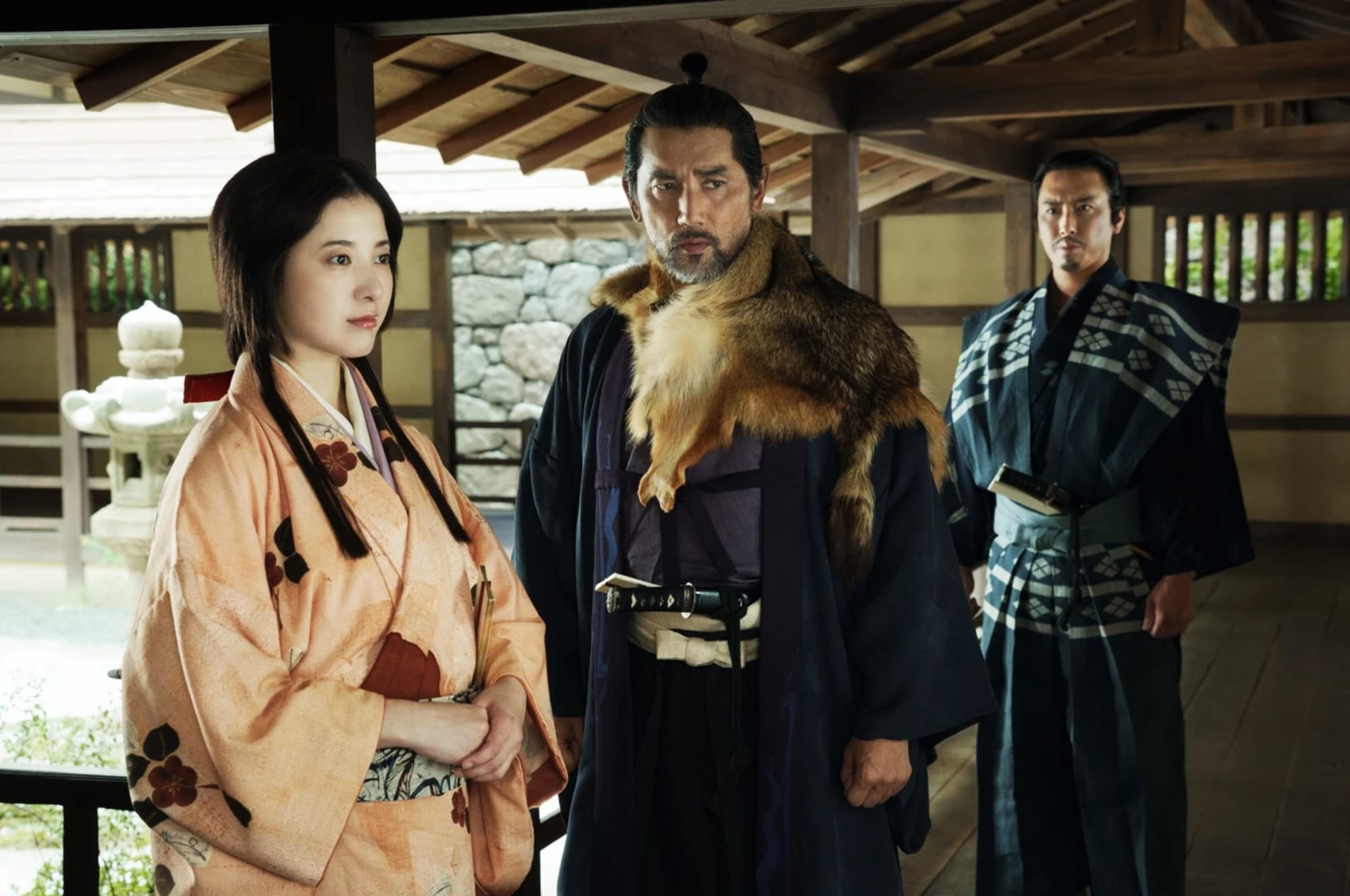
This is mostly because, for all it thematically wishes to travel new ground, experimenting on unfamiliar territory leaves him unable to spread his wings beyond tired tropes. Lord Murashige (Masahiro Motoki) is preparing to rise against the ascendant Oda Nobunaga, a principled move now seen as a death wish considering the near-unstoppable ascent of the warlord during the era. Told over the course of the year, Murashige barricades himself inside the walls of his castle to prepare for the inevitable overwhelming assault when the strategist Kuroda Kanbei (Masaki Suda) enters first to plea for their surrender in order in the thought it would spare his life. While typically Kanbei would be executed for this move, he is instead taken prisoner, beginning the cat and mouse that would follow.
Incidents inside the walls lead to Murashige not merely abandoning the prisoner but consulting him. Another prisoner, the son of a rival samurai, is killed suddenly and without warning, with no clue who could have done it. A possible distant attack, or someone on the inside? A few of these cases pepper the extended two-and-a-half-hour runtime of the film, bringing to question what the purpose is of the treasures and his acts within when the inevitable is set to occur.
It’s a potentially-compelling proposition, bringing an investigative suspense to the more tactical, battle-driven nature of the genre, but it’s one that never fully pays off. The year-long timeline towards the end and the mysteries play evenly across the four seasons, but it lacks cohesion. The film is adapted faithfully from the novel of the same name by Honobu Yonezawa that similarly uses this narrative split between seasons to explore this story, the uniform characters of the samurai, prisoner and a few close members such as Murashige’s wife playing as the tying point between each season. The result, beyond the historical facts of the era that give a progression towards an inevitable goal, otherwise, makes each season, tying to a different incident in the castle, feel more like its own independent short film, down to narrative structure and unique characters.
Despite taking an extended time to tell its story, it never avoids feeling more like watching four shorter films sharing similar characters and actors rather than a complete story. There’s not enough cohesion, nor is their the intersecting narrative threads beyond the inevitability of history taking its course, to make this feel complete. Even more, beyond one story that actually takes things at least partially into the broader conflict, most of the story is so confined that the setting in the era of the samurai feels almost unimportant - you could set this story just about any moment in history where at least the period setting would take place, with hundreds of years of leeway each side, and not sacrifice the core of the story being told.
As such, any sort of grounding it has in a genuinely-fascinating moment of history that could easily enhance the isolation and suspicion of the mysteries at hand falls apart.
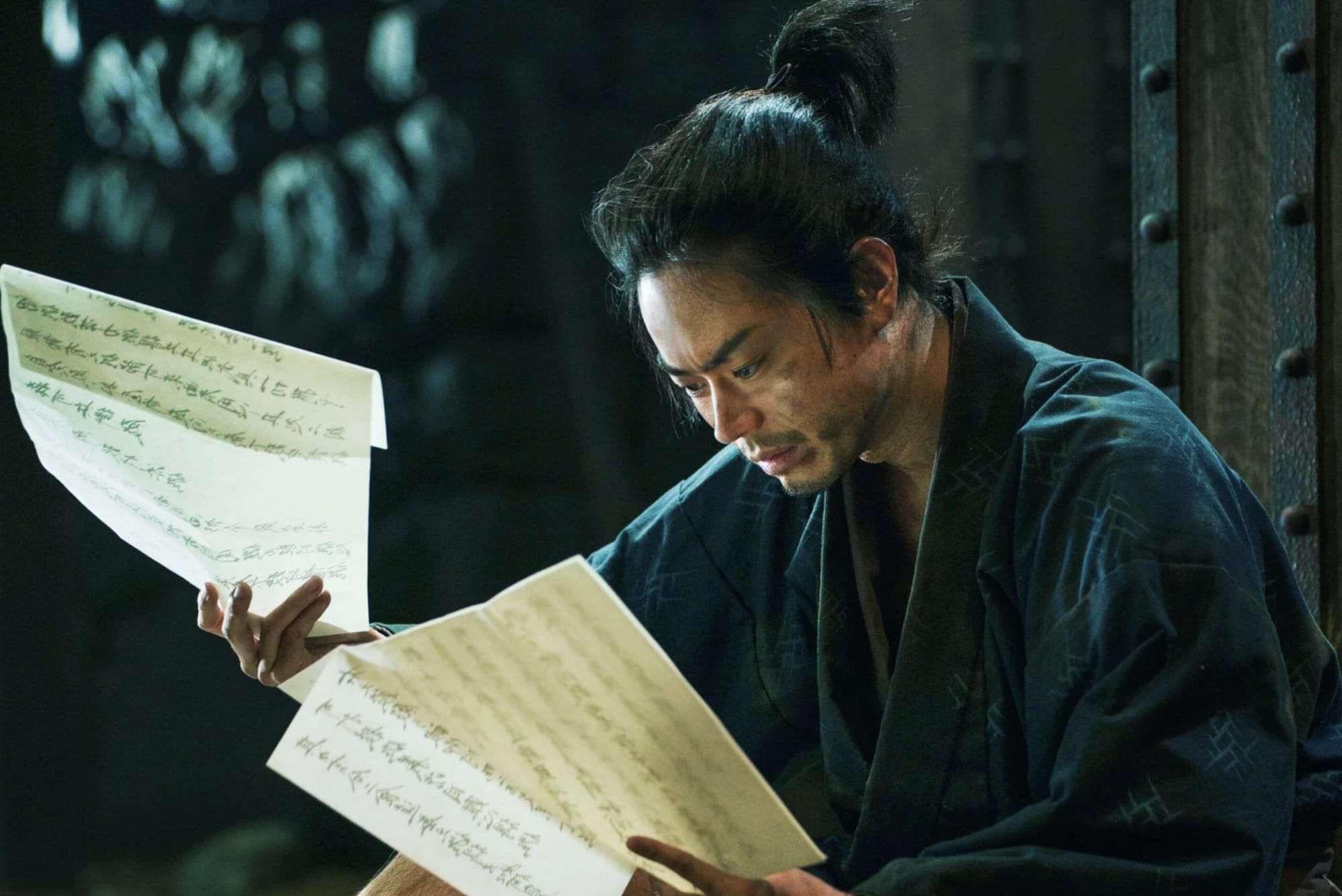
It doesn’t mean there aren’t other engaging elements of the story that remain engaging in spite of its inability to take advantage of what is a unique period setting for a director typically attuned to creating contemporary works. Masahiro Motoki and Masaki Suda in their dual-lead roles carry much of the film in its quieter moments thanks to their layered and hidden demeanors. Their tension and friction with one another, fueled by a power dynamic where morality brings into question who is truly samurai or prisoner, is the chemistry that gives this film purpose.
The most compelling scenes consistently occur underground in the dungeons within which Kuroda Kanbei, and their changing relationship exists and growing respect for one another despite the unchanging circumstances stands as the only enduring and developing throughline between each chapter. At first the mood is hostile, but time brings the pair to equals who can engage more deeply not just on the questions above ground, but their purpose. The dingy prison begins to feel like the inner mind being plucked away at by sharp minds, rather than a lord talking to a captive in what is essentially a dark cavern.
It’s still, however, ultimately not enough to save the film. While detective stories in a jidaigeki sounds conceptually interesting, it never pays off in execution because each case is too similar to one another without something larger to say. Before you know it, you’re in the third chapter where the seasons have changed but the status quo has not, and the credits roll without any real purpose behind any of the events leading up to that point. It’s logical mystery, without the heart and broader commentary, and purely a detective tale in a story in a story with this much to work with feels lacking.
It’s hard not to see The Samurai and The Prisoner as a case of missed potential. Kiyoshi Kurosawa’s best work is as a director that reflects the human perseverance and how social change around us and how we react to that will shape the trajectory not just of ourselves but the memory of us. In Pulse, this is touched upon with the internet in one of his most enduring stories, with Wife of a Spy being a case where conflict forces a choice on what side to stand for. This film begs for that question to be explored here, with an inevitable defeat and a question of whether to stand or surrender amidst a growing isolation for their position reflects a polarized modern world.
But in focusing so much on mystery procedure and held back by episodic storytelling, the film fails to dive into that beyond the premise. It’s ironically a decision at odds with the question his own film poses.