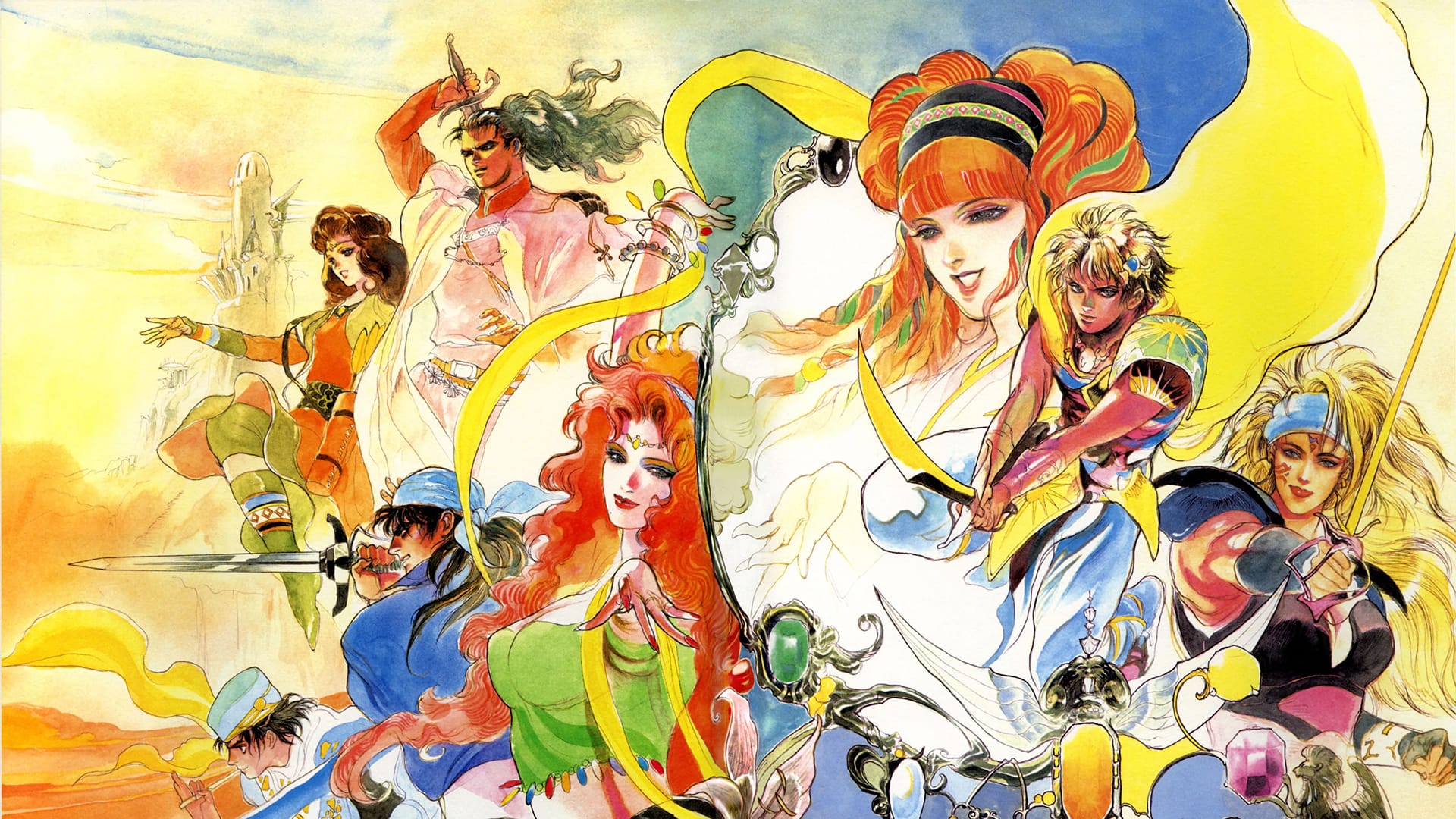
The Final Fantasy series is known as one of the driving forces behind popularizing JRPGs across the globe. So much in fact, that the SaGa series, created by Akitoshi Kawazu of Square, was first experienced by many gamers outside of Japan under the title “Final Fantasy Legend”, spanning three games for the Gameboy in the early 90s. Rather than risk a still relatively unknown genre under a name with no brand recognition, Square’s gambit to get the series some recognition was a starting point for a series that proved to be even less player friendly than Final Fantasy, in a time where video games were often haunted by cryptic gameplay elements due to technological constraints and trends centered around keeping the players busy with the same game.
This was not the only time the Final Fantasy name was used as a gateway to introduce new IPs to an unfamiliar audience outside of Japan, as the first title in the Mana Series, Seiken Densetsu was also released on the Gameboy in the west as Final Fantasy Adventure, which led to Seiken Densetsu 2, released as Secret of Mana in the west to become one of the Super Nintendo’s most popular games. The SaGa series, however, is a bit more of a black sheep in the catalog of Square and Square-Enix RPGs.
SaGa is a strikingly more “hardcore” model of the JRPG
SaGa (first release, Makai Toushi SaGa for the Gameboy in December of 1989) is designed to feel less linear and more difficult (but often with more diverse play styles and character building choices) than the Final Fantasy series.
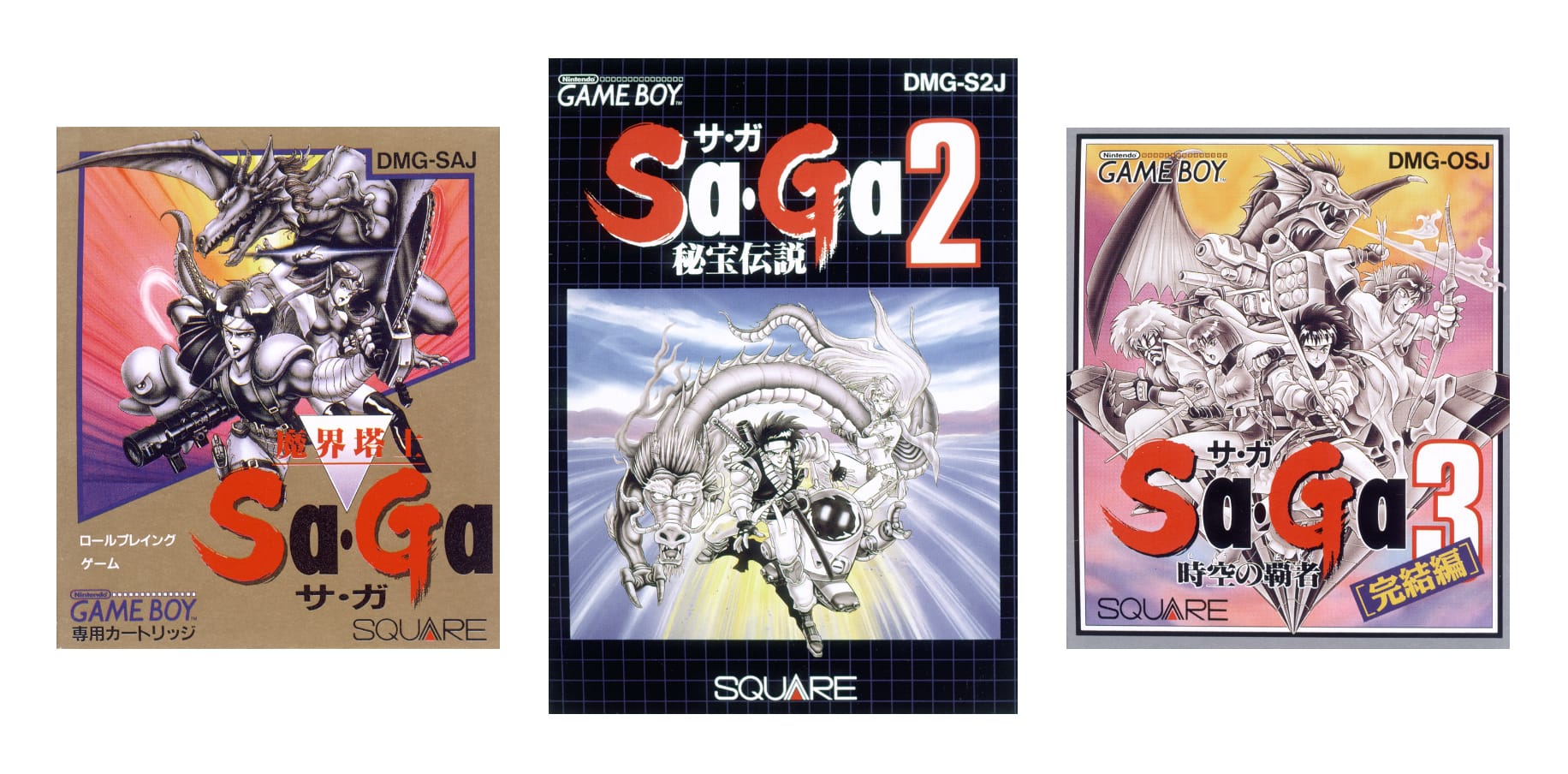
The first two SaGa games on the Gameboy featured a resource system tied to weapons and magic that restricted most offensive abilities to limited use, requiring more strategic planning around exploration and currency management. A monster-based character class that could change into different monsters and rise amongst power tiers by eating meat from slain enemies was also present, both of these core design features giving a much less stable feel to the gameplay and less security to the player to develop their characters in a linear fashion with no risk involved. Rather than leveling up with EXP, character stats would increase over time through action in battle in a similar, albeit more ambiguous way to the system in Final Fantasy II.
The Romancing SaGa series and SaGa Frontier series (on the Super Famicom and Playstation consoles respectively) maintained this system for character power and also introduced and experimented with a system of technique progression centered around using different types of weapons and magic in order to eventually unlock new techniques with different utility or more power. This system has followed the series since, as one of its most recognizable signature gameplay elements.
While earlier SaGa games followed a more concrete story, Romancing SaGa shifted the direction of the series to focus more on sidequests to be completed in a non-linear fashion, with gameplay and story-related consequences to the broader overarching story at stake. This formula, like the technique progression system, has stuck with the series ever since, serving as the template for every new game in the series.
The SaGa series is a mixed bag of both beloved and overlooked games
Though the SaGa series has invented ways for itself to stand out, it hasn’t always been successful. Romancing SaGa did not receive a worldwide release until the modern era of gaming, where the series was remastered and ported to most modern platforms. Although some of the original Gameboy series was remade for the Nintendo DS, these remakes did not make it outside of Japan.
The numerous games in the series since, such as Unlimited SaGa, Romancing SaGa: Minstrel Song, and SaGa: Emerald Beyond, among others, have been localized in many languages, but serve more as cult-classics that are generally overlooked except by longtime fans of the series, which has remained a less linear, more enigmatic-than-average JRPG experience to this day.
Most recently, however, Romancing SaGa 2: Revenge of the Seven, a complete remake of the second game in the Super Famicom trilogy has seen monumental success, giving the series some much-deserved recognition on most current generation platforms. While Romancing SaGa 2 has been considered a classic of the 16-bit era in Japan for many decades, the remake marks perhaps the most recognition and praise that a SaGa game has received outside of Japan in series history.
If Square Enix can produce another game (or remake) of similar quality, the SaGa series might yet prove it has enough in the tank to reach more global popularity. Regardless, SaGa has never been a series that has been held back very far by its lack of mainstream appeal, and thus should be expected to continue to please a smaller selection of gamers, as it has for the last 3 decades.