One day, while I was walking down a street in Shibuya, I heard a woman screaming and crying. I turned around to see a fortune teller giving people their fortunes in the middle of the street. One woman had received a bad fortune that seemed to spell the end of her relationship and she was understandably, devastated. She truly believed this prediction was going to come to pass and ran away crying, with her waiting boyfriend chasing after her. This event made me realize just how superstitious Japan is, and how common belief in the supernatural remains.
Now, you might be wondering: what does this have to do with video games? Well, Famitsu, a popular Japanese video game magazine, asked 191 prominent Japanese developers to list their top five games of 2025. Those surveyed ranged from Kazuhisa Wasa, the current leader of Atlus’ Persona studio, to Koji Igarashi of Castlevania fame. The number one most popular game was, unsurprisingly, Clair Obscur: Expedition 33, a phenomenally crafted love letter to classic JRPGs.
Number two, beating beloved titles like Ghost of Yōtei and Mario Kart World was a much lesser-known game looking at the superstitions of Japanese society called Urban Myth Dissolution Center.
If you’re like I was a few weeks ago, this might be your first time hearing about this game. In Japan, though, it has clearly left a lasting impression. New trailers released over a year after its announcement have garnered over 300,000 views in just a few days. So, what exactly is it and why is it making such waves?
Folklore Meets Forensics
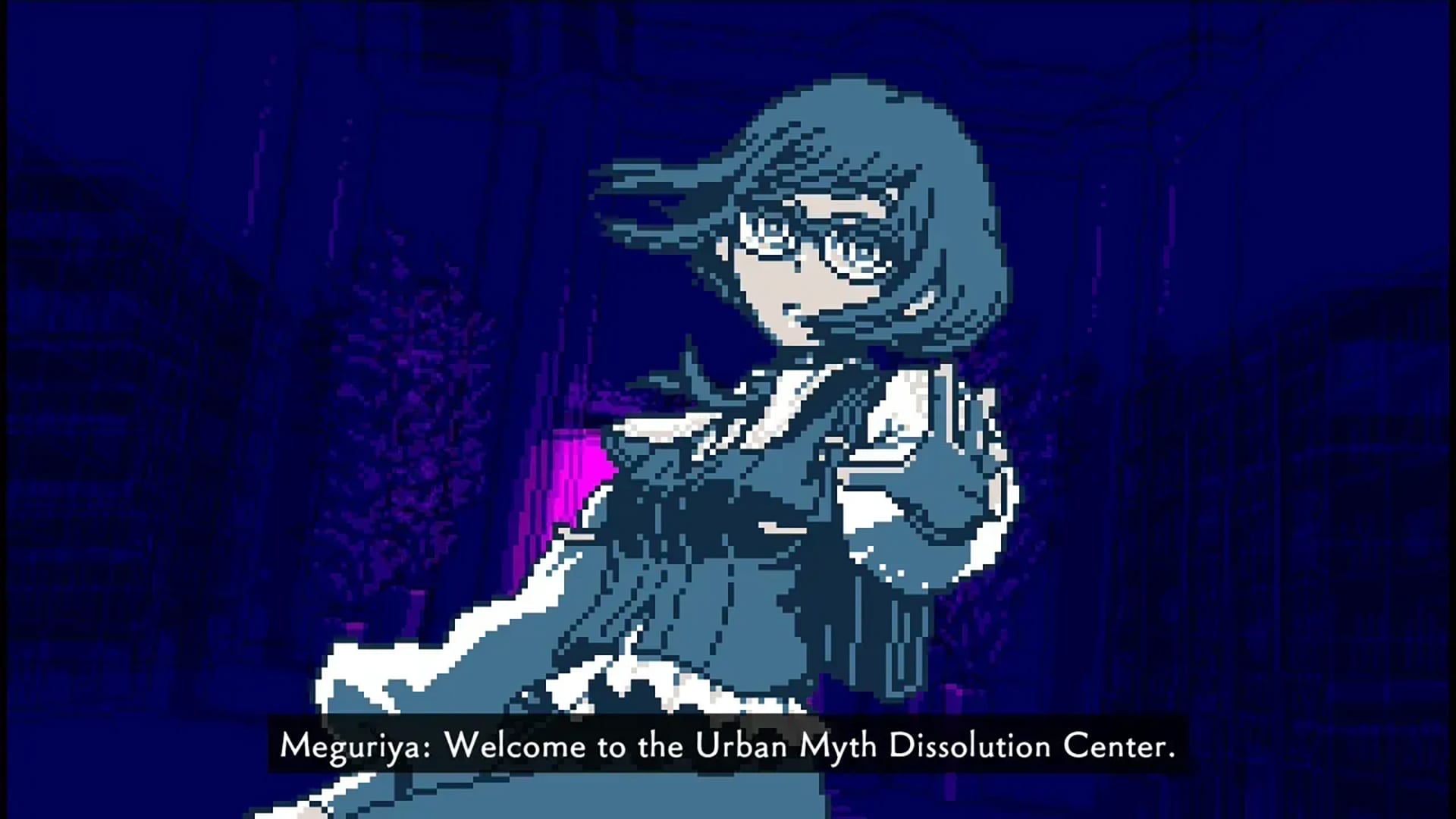
The story follows Azami Fukurai, a university student turned rookie investigator who is roped into working for the titular Urban Myth Dissolution Center. Her job is to investigate urban myths by first identifying the folklore they originate from, such as the second case’s “Bloody Mary.” Once identified, she must then “dissolve” the myth by proving that no supernatural element was actually involved. Doing so almost causes a quantum-level shift in reality, momentarily superimposing the supernatural explanation over the truth and revealing the logic behind the fantasy.
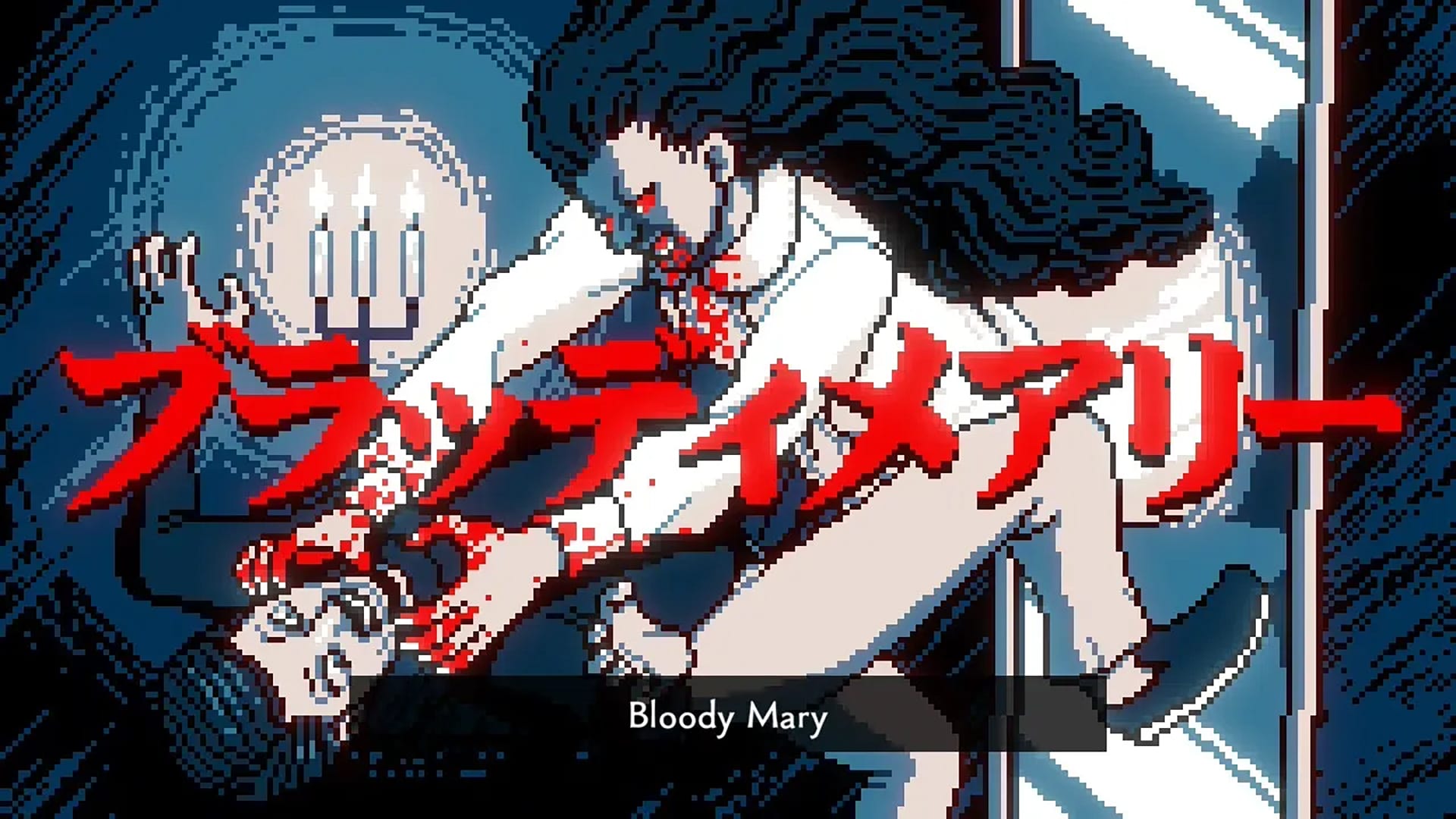
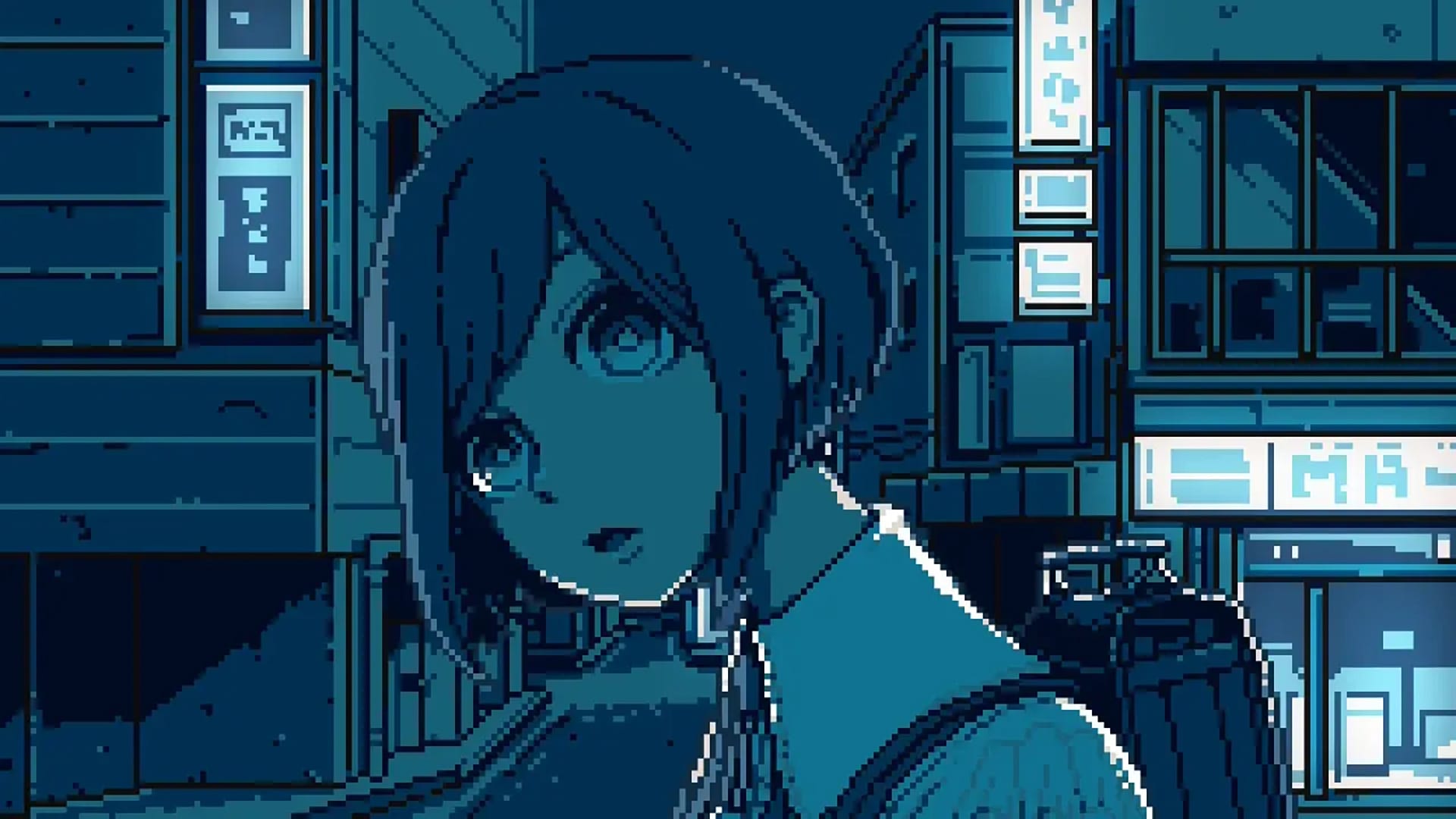
From the very beginning, it’s clear why this game resonated with veteran developers. Its aesthetic and visual style are among the most striking in contemporary games. The developers have stated that they intentionally used the limitations of an 8-bit art style and a four-color palette as a weapon to instill horror. Drawing from classic horror titles like Clock Tower for its investigative and suspense segments, while employing a more anime- and manga-inspired style for key story moments, Urban Myth Dissolution Center blends its influences masterfully. The result is an eerie atmosphere that still pops with flair, enhanced by constant motion and Kikkyaw’s beautiful illustrations, creating an extremely memorable art style.
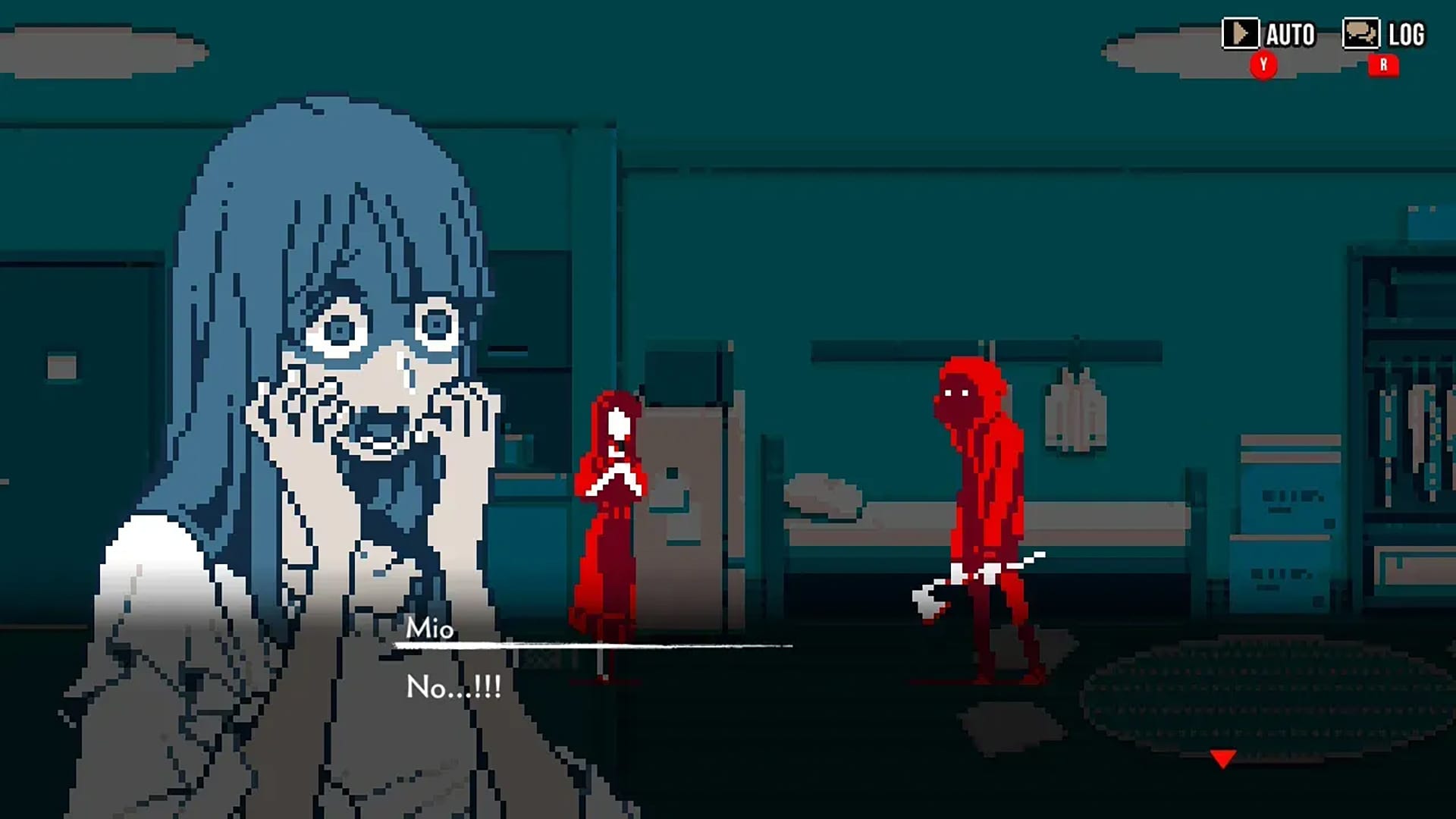
An 8-Bit Nightmare
Gameplay-wise, Urban Myth Dissolution Center is a mystery adventure game, with mechanics similar to Ace Attorney. During investigation sections, players scroll through social media posts to gather clues, brainstorm conclusions on site, and eventually “dissolve” the urban myth by proving who committed the incident. My main issue with the game lies here: the gameplay is extremely simple and never truly evolves beyond the first case. While it feels fresh initially, by the end you may find yourself eager to move on to the next story segment. There are also very few challenging puzzles, and incorrect answers are often removed automatically, nudging the player toward the correct solution. This is an intentional design choice, the developers wanted the game to be accessible to everyone but I’m not entirely convinced it was the right call.
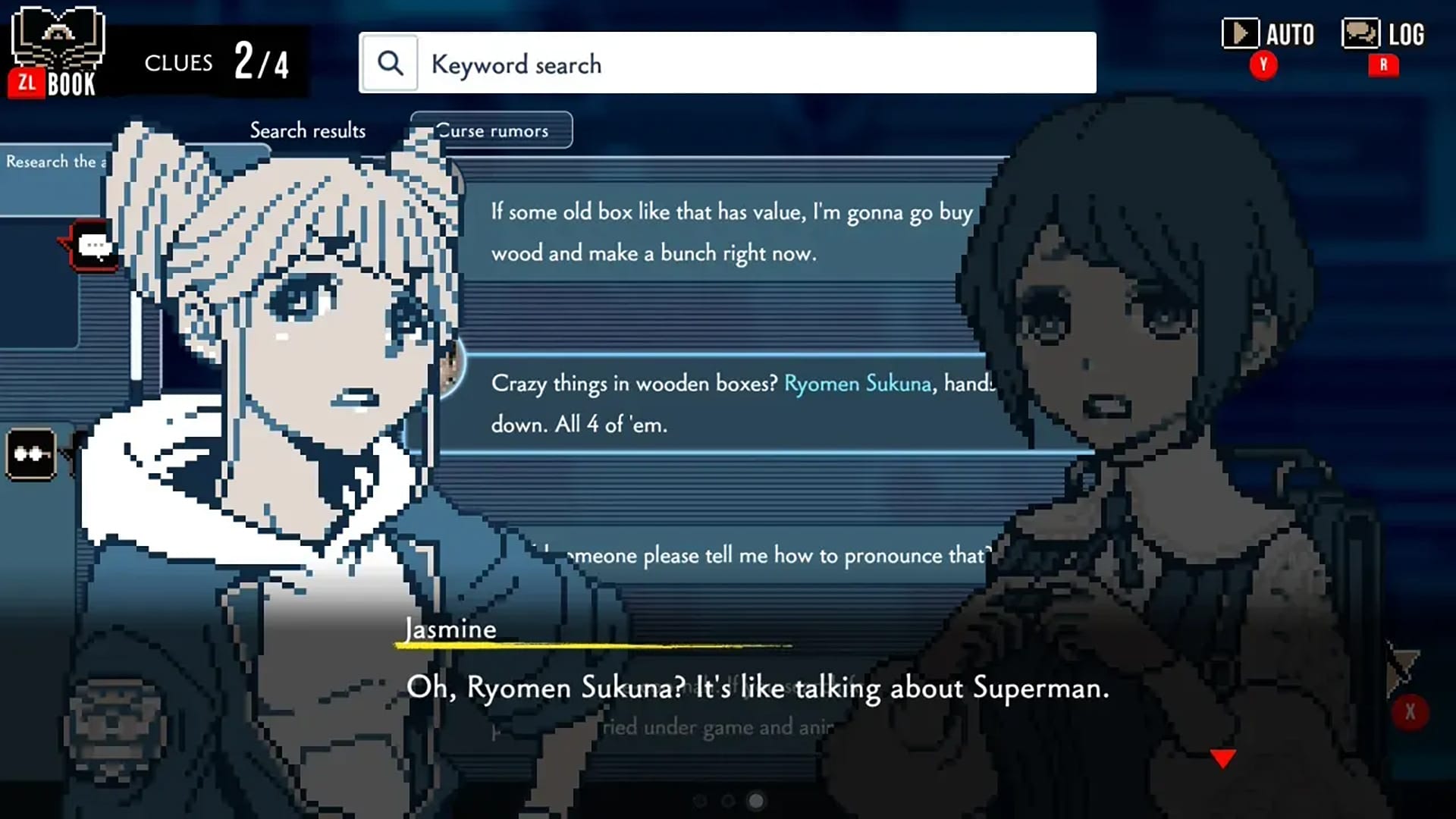
What truly sets Urban Myth Dissolution Center apart, however, is its story. The game explores how traditional folklore evolves in the internet age, where information spreads rapidly and can be manipulated by bad actors. This distortion clouds judgment, leading people to believe misinformation and, eventually, conspiracy theories. These themes are explored across six episodes, frequently using Japan’s famous internet board, 2channel, as a foundation. At the start of each case, characters literally scour social media sites for rumors. Many of these internet legends can be read about in greater detail and are based on real (or fabricated) stories that once circulated on 2ch.
This is why I believe the game is so uniquely popular in the Japanese market: players can relate to its themes on both a personal and societal level. The story demonstrates how Japanese urban legends often blur the line between truth and fiction. However, I don’t think this is something exclusive to Japan; as a result, the game can be enjoyed by anyone. The ending, in particular, leaves you questioning what was fiction and what was reality — and whether the two are more intertwined than we might think.
Urban Myth Dissolution Center is available on Playstation 5, Nintendo Switch and Windows via Steam. If you are interested in one of the hot new indie games being spoken about by Japanese devs and consumers alike, check it out.