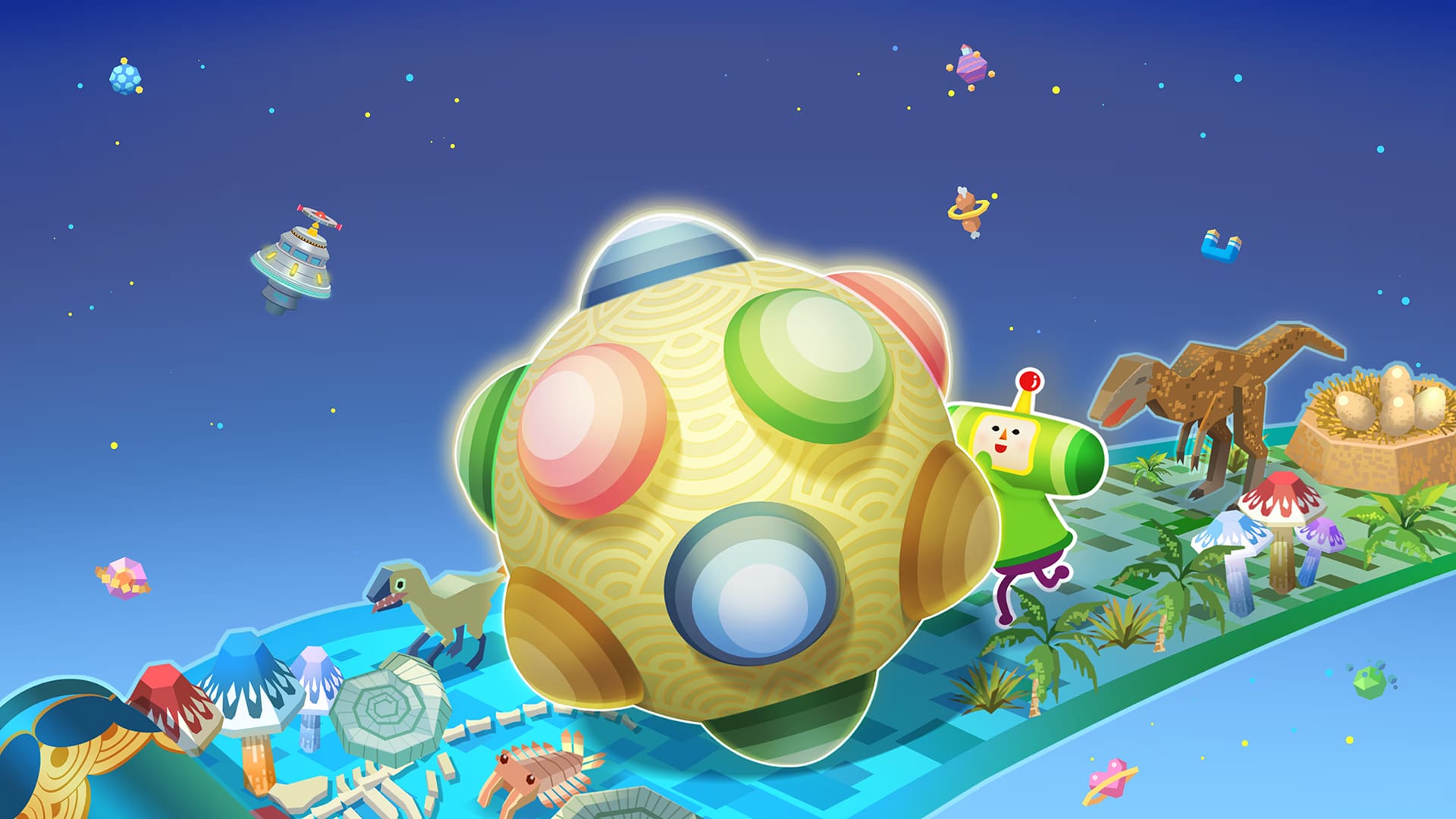
Once Upon A Katamari released late last year as the first original Katamari title for consoles in over a decade, gracing the oddball franchise with the grand return it deserved after a slate of well-received remakes and rereleases in recent years. Even over two decades on from the game’s original there’s no game series quite like this one, a psychedelic fusion of Japanese culture and absurdity playing a miniature Prince rebuilding constellations for the whims of the King of All Cosmos that stands out for its simplistic polygonal visuals, simplicity, and style. That, and the music.
Indeed, it’s the franchise’s eclectic soundtrack that people will often cite first in conversations about the series, even all these years on. The original Katamari Damacy, released on PlayStation 2 in 2003, brought in names from across the Japanese music industry and beyond, not just veterans in video game music, to produce a multi-genre, varied soundtrack that was far from the norm for gaming both then and now. Taking inspiration from the Shibuya-kei movement and artists like Poison Girl Friend and Pizzicato Five while bringing in veterans of 1980s J-pop and beyond like Yui Asaka and Crystal King, the jazz and samba infusions have come to define the sound of the series ever since.
That’s without discussing the powerful rock balled from legendary musician Matsuzaki Shigeru that wraps the experience up in an almost-absurdly epic bow considering the material. Music defines Katamari just as much, if not more, than gameplay, and the impact of Katamari Damacy’s soundtrack is key to this.
Which is exactly what makes the musical landscape of Once Upon a Katamari so fascinating. At the time of the original game’s release, for all the soundtrack veered wildly across genres and styles beyond the mainstream to create its unique musical tapestry, it was still a soundtrack that matched the era from which the game was founded. In the lost decade of economic stagnation in the 1990s, new cultural voices emerged that shook up the audio-visual language of Japanese pop culture, whether that be in the sphere of films as independent cinema rose, new interactive experiences through advances in gaming and non-gaming tech such as the Sony Aibo and Tamagotchi, or in music as subcultural inspirations burst to the fore.
Blending classical genres with modern beats and rising from the livehouses and underground scenes, Shibuya-kei was a noise-driven, unique sound that felt like a truly-Japanese interpretation of indie pop inspired by the specific dissonance and experiences of Tokyo and Japanese life. Yet even as the Japanese music scene and technology more broadly moved on from this era, the sound of Katamari did not. Once Upon a Katamari, as a pseudo-reboot of the series blending the classic platforming roll-em-up gameplay with distinctly-modern updates like power-ups and online play, updates the sound to fit its grand return.
Following the game’s announcement, more attention was being given to the musical artists being brought in to produce the game’s soundtrack than the actual gameplay, and for good reason. While not entirely abandoning the music principles that had defined the series to this point, the soundtrack for this latest title was being almost-entirely outsourced to a litany of trending Japanese pop artists across a range of genres (with some exceptions), updating the musical language of the series in the process.
To this extent, the first song revealed alongside the game’s announcement was a statement of intent by Bandai Namco of their ambitions for the soundtrack. Kocchi no Kento had a meteoric rise to fame in 2024 with the TikTok virality of “Hai Yorokonde.” The song resonated for the fun animation of its music video, as well as its infection preppy sound that masked the discordant nature of its lyrics bemoaning the grind of modern society. As Patrick noted when recapping the viral trends of 2024, the song befit a slew of major hits this decade that clash between pop sound and glum critique.
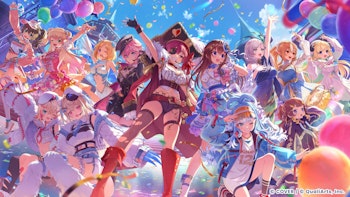
It’s notably distinct from the sound of older Katamari games, and Kocchi no Kento’s contribution, “Eeja Eeja Naika,” has a repetitive, punchy sound familiar to his discography but unlike anything seen in Katamari to that point. It’s a trend seen across the other artists featured in the release that branch across the modern Japanese music industry. Some come from within the Bandai Namco wheelhouse. Saki Hanami (played by Nagatsuki Aoi) is one of the protagonists of Gakuen Idolm@ster and brings a J-pop idol sound to the series with “Katamari on the Doun.”
With Kamitsubaki Studio’s KAF, the frontier of virtual musicians is introduced. The streaming era of Japanese music has brought new sounds and artists who have found fame through new frontiers to the traditional path for music stardom in Japan, and even that can be seen with the inclusion of suis from Yorushika. That group is formed of Vocaloid producer N-buna and suis and became popular thanks to their popularity on Nico Nico Douga and YouTube with complex instrumentation and emotive lyrics. DAOKO and Chelmico bring electronic and rap sounds to the soundtrack, the latter particularly feeling like something unfamiliar amidst the series soundscape.
Even when familiar names find their way into the soundtrack like Matsuzaki Shigeru, it only serves to emphasize just how much more varied and modern the soundtrack has become, helping their contributions to stand out. Once Upon a Katamari’s story places the game across both time and space, throwing players into an impossible array of distinct landscapes and time periods that lend themselves to an ever-shifting musical landscape more than previous titles. It works in defining this game apart from what came before.
There’s of course commercial merit to bringing in these major names for the game’s soundtrack. For a series known for its music but relegated mostly to remakes and rereleases for a decade, a new game is a risky proposition that familiar faces can make attractive to a general audience. Yet there’s more to this decision than that, especially when comparing the sheer number of major musicians included here compared to previous titles.
For all the Katamari franchise has crafted a memorable image and storied legacy for itself, the reality is that after so long out of the spotlight, this is a game unfamiliar to many, releasing at a time competition for the attention of players has never been higher. Rather than abandoning what defined the series, it understood the magic that made the original game so exciting in the first place: it spoke to a cultural moment and reflected it in a unique, expressive way.
Once Upon a Katamari is a larger game than any title in the series prior, familiar yet distinct from entries that have come before it. Importantly, however, it also understands that time has moved on, and instead of reflecting older entries in the series has reflected the intent of the original Katamari Damacy by crafting a soundtrack that speaks to the moment its players are in. Its distinct music mix is not only great to listen whether you do or don’t play this game, it reminds audiences that Katamari has always been a series that reflects the creative culture of the moment.
This music helped give the game an identity that propelled it to respectacle first-week Japanese physical sales and decent placement on global digital charts. It’s familiar yet fresh. It gave the dormant Katamari series a chance for success. In a time of resurgent global interest in Japanese pop culture and a period where Japanese music is more popular than ever, the game also serves as a poster child for just how exciting and diverse the music industry is in Japan. Even beyond business intrigue, it also happens to be one of the best gaming soundtracks of recent years, and deserves to be placed on the same pedestal as the original Katamari Damacy soundtrack.
The King of All Cosmos sure has great taste in music.