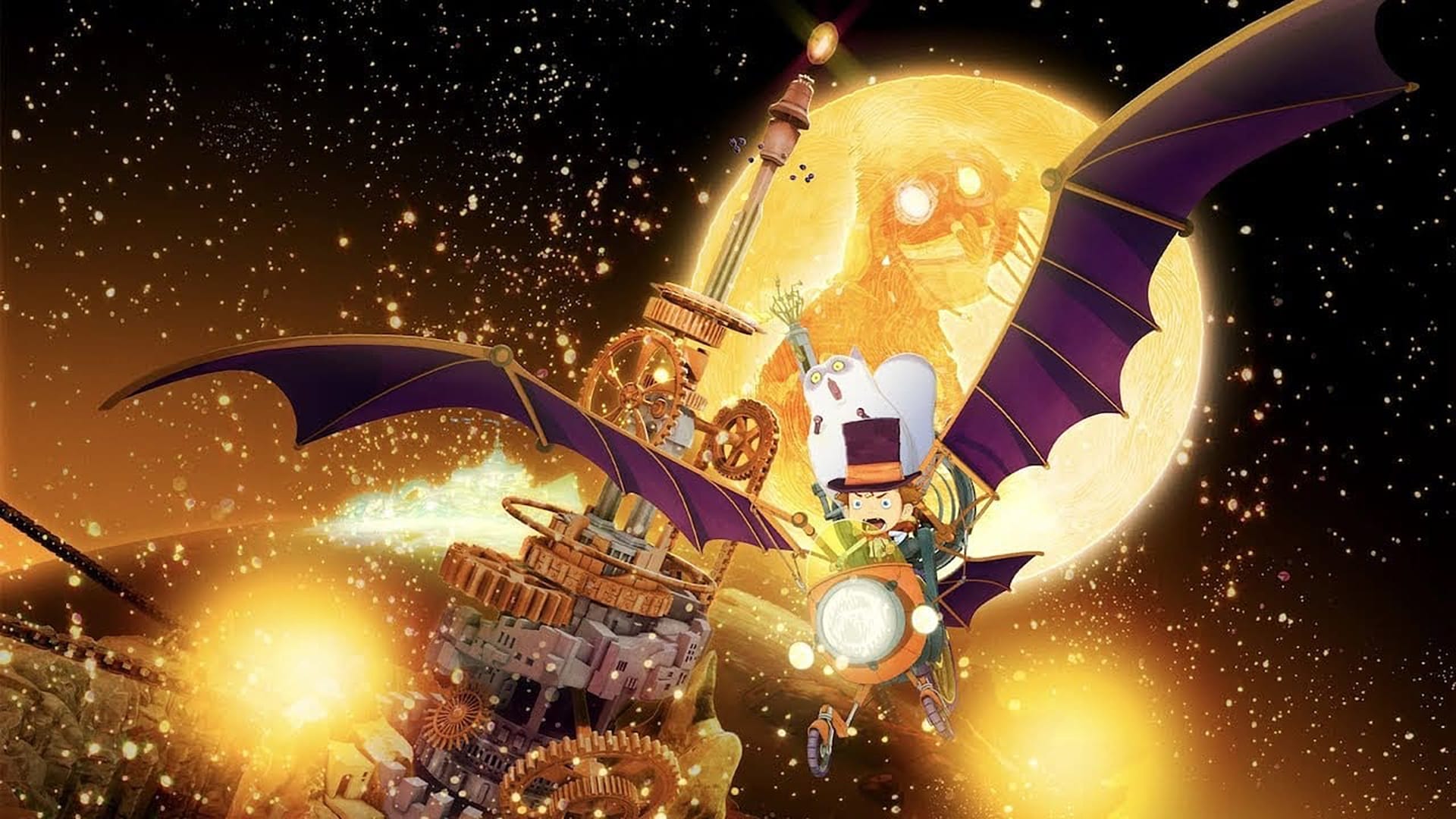
Tackling the aftermath of a big adventure is a story all-too-rare in popular media. Which is why it feels refreshing to see a family film like Chimney Town: Frozen in Time not only attempt to do just that, but make that story accessible and engaging for audiences young and old. Can it achieve that lofty goal? Most of the time, though not entirely. That doesn’t make it any less of an appealing, engrossing film.
The fact this sequel even exists is a somewhat unusual and certainly unexpected result of the initial film’s larger-than expected success in Japanese cinemas. The original Poupelle of Chimney Town released in Japanese cinemas on Christmas Day in 2020, adapting a children’s picture book of the same name created by comedian and writer Akihiro Nishino. He created the book with the help of a team of illustrators and the support of thousands through crowdfunding, bringing his unusual vision of a young boy and a man made of trash becoming friends in a maze-like, imposing town of smoke and chimneys.
They wanted to see the stars, but those were blocked by the smoke of the town. It wasn’t just a story, it was a world with an admitted goal to become an anime, which eventually came true with the support of a similarly-maverick team at Studio 4C. It would become one of their most successful and highest-grossing films to date, earning 2.7billion yen, with the story now a musical, play, even more books, and soon a second musical for Broadway under the oversight of Frank Wildhorn.
That story saw the ‘trash man’ Poupelle (played by Masataka Kubota) befriend the young boy Lubicchi (voiced by Mana Ishida in the original, but recast to Nagase Yuzuka due to Mana aging out of the role), overcoming the discriminatory views of the town to reveal the sky to the town. The trash man became a hero! It cost him his life.
Chimney Town: Frozen in Time takes place in a far happier city, celebrating Poupelle and Lubicchi and glad to see the sky once more. The only one not-so-happy is Lubicchi, mourning the loss of his friend and unable to open up to others about the pain. He tried rebuilding him from trash, holding onto the mementos of their friendship but unable to move forward. Until a series of mishaps leads him to fall into a portal that takes him to a mysterious world underneath the one he knows, where time has stopped.
This is the Millennium Fortress, the film’s allegory for the world beyond. Clocks are carried by people and are carved with the insignia of people’s lives, and they make this place their home. While these clocks function, the large clock overseeing time for the region has stopped permanently at 11:59, with the leader of this new land promising Lubicchi a way home if he can get the clock to work again. Joining him is Mofu (MEGUMI), a fluffy white cat that he happens to meet when landing in this new place but is well-versed in this timeless place.
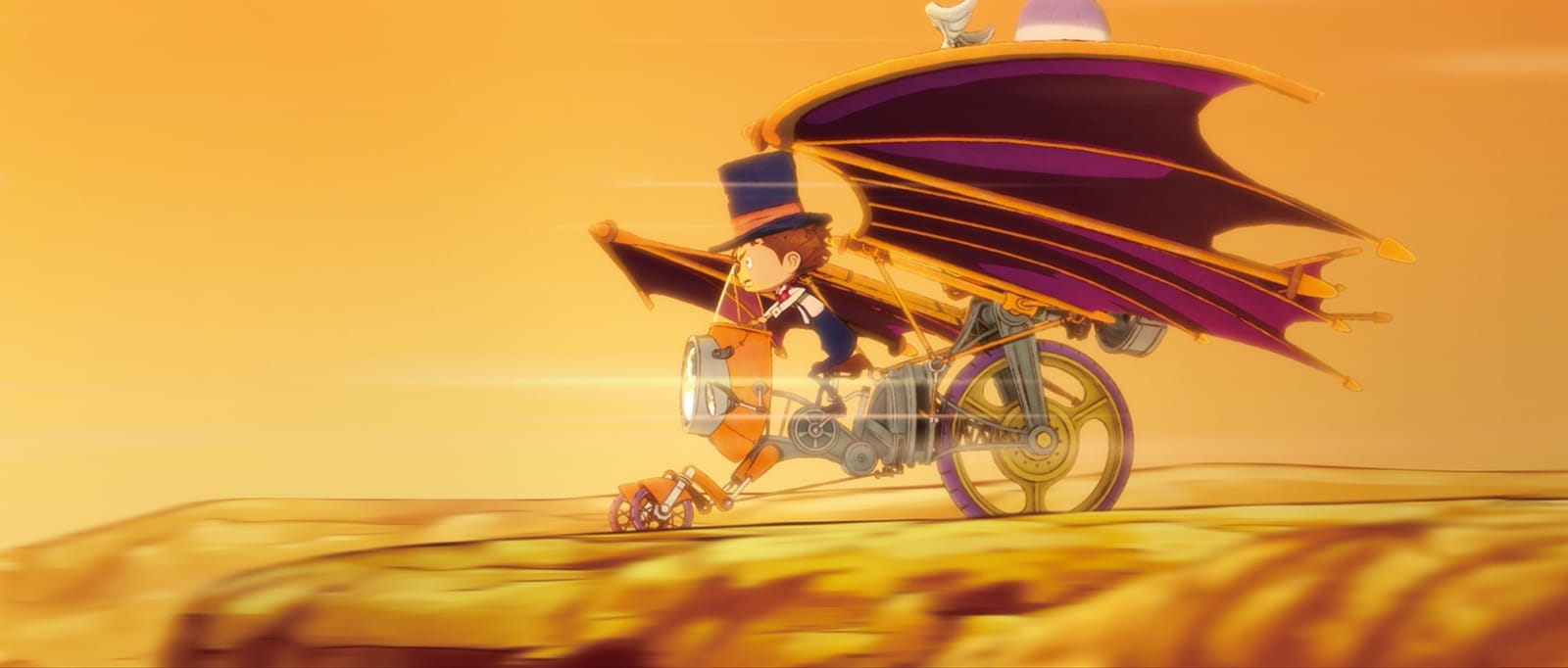
This is a story of grief and loss that, while it can be enjoyed independently of the first film, is most notably a commentary on how the grand adventures of one story have consequences that linger for the characters involved when life moves on once the credits have rolled. It's surprisingly mature for the mostly-young target audience of this story. The clock motif of the film is the visual embodiment of this: the hands of a clock will meet, and separate, once every hour. Separated, but never gone forever. They will eventually reunite, just like our memories will keep the past and people alive and returning to us even when their living presence is gone.
Lubicchi has isolated himself to deal with this grief. If he is to move on, he must not only open himself, but help another face his same pain. The clock overhanging the city is controlled by the clock master Gus (Mitsuo Yoshihara). For all this clock has been static for a century, it’s far from broken. Both the clock and Gus are waiting for one more moment with Nagi (Anna Tsuchiya), a wood spirit that came to the Fortress as a woman. The pair fell madly enough, agreeing to meet at the clock the next time it struck 12, only they would never appear. After a fire ravaged their home everyone assumed they were dead, and in mourning both Gus and the clock stayed unmoving at 11:59, unable to face their new reality.
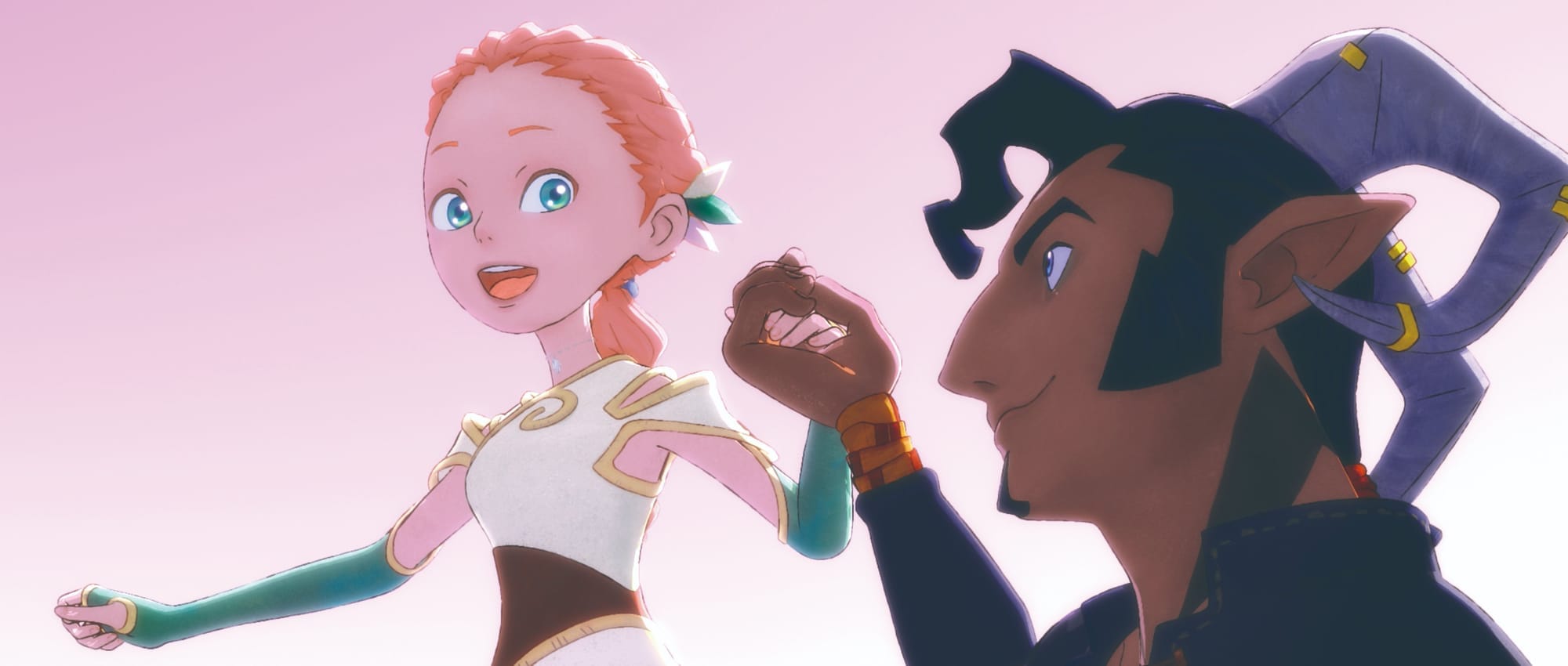
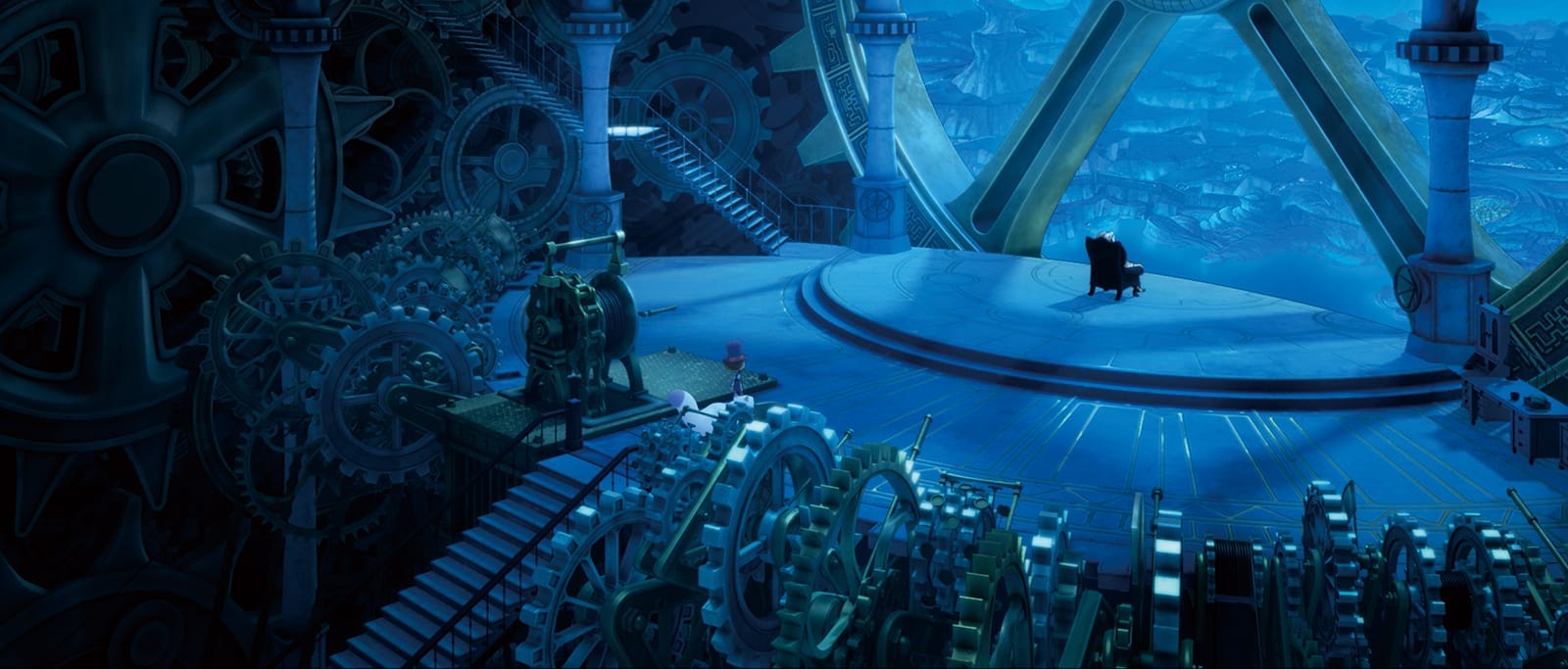
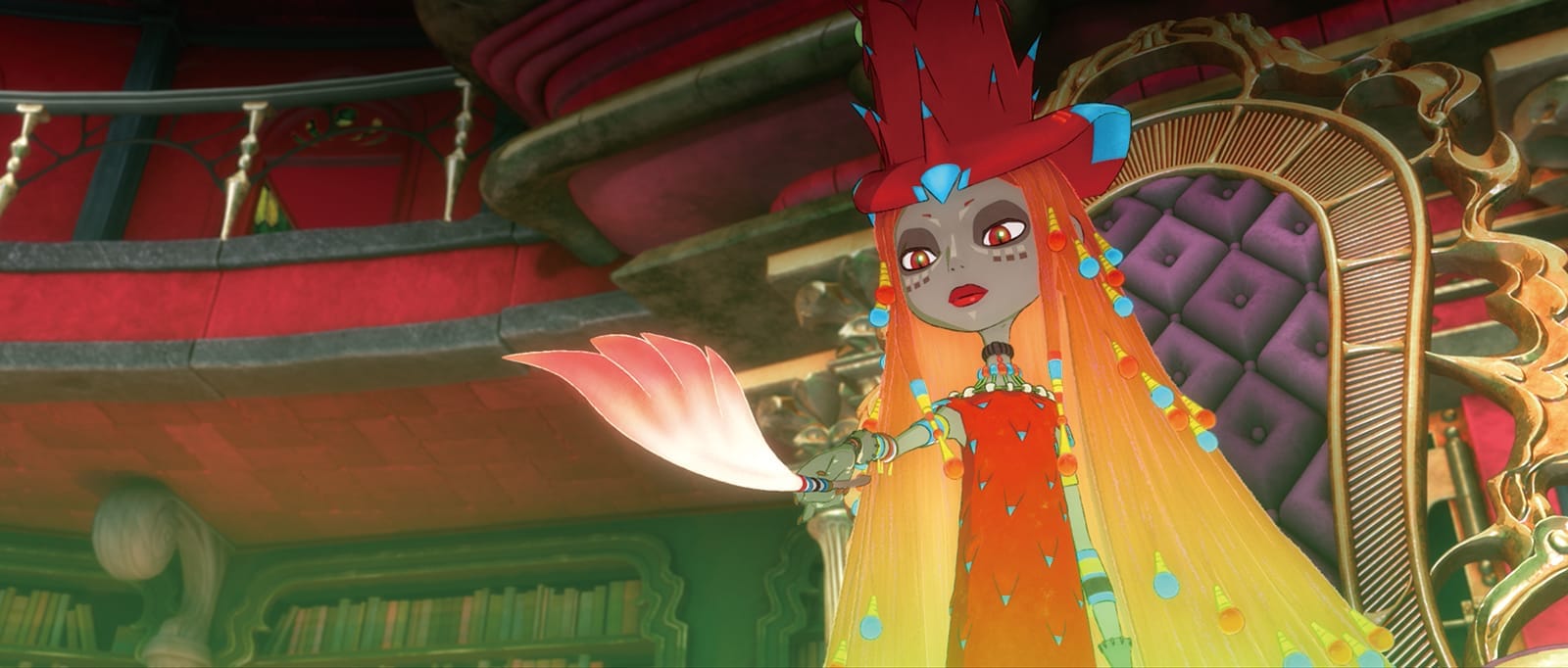
Without Poupelle, the film is narratively split between Lubicchi's quest, and flashbacks that allow us a window into Gus' love and loss. It’s this narrative approach that helps a film certainly structurally similar to the original avoid retreading old ground, with an all-new setting and visual flair that once again remains the film’s highlight. The original film excelled thanks to a unique style blending hand-drawn, highly-detailed 2D backgrounds with CG character animation to create a fascinatingly-rich and textured tapestry.
Yet if the at-times crude implementation in the first film gave it a unique appearance but awkward execution reminiscent of video games, this is a far more confident successor. The camera feels more dynamic, the animation and world leveled up, and the new setting blending Victorian-era cobbles and clocks with a Studio Ghibli-esque whimsy is more engrossing.
Most of all, what Chimney Town: Frozen in Time retains from the original is the ability to blend a rich setting with a story that respects its young target audience and the parents attending the film with them. In exploring grief the film is unafraid to address the topic for what it is - painful, suffocating, and yet a part of what it means to live and love. In my screening, kids were enthralled as much as parents were openly shedding tears, and while it’s possible for films aimed at a younger audience to resonate with all ages, rarely can it capture such a universal emotion to evoke such strong reactions from all ages.
Particularly, where Gus and Navi’s relationship could have felt like an unnecessary and distracting departure in less capable hands, it brings this film together. You can fix a broken clock, you can’t fix what’s not broken. To fix a heart takes time and comes from within, and that's a lesson all can learn when made as accessible as it is here.
Which is why it’s a shame to admit that this story also falls into the same pitfall of the original by undermining its thematically-rich narrative at the final hurdle. After navigating a web of narrative threads and creating something genuinely unlike others in the family space in the range and maturity of themes it explores, its final minutes undermine a climax that pays off two films of character building for a rug-pull and to perhaps open the door for another sequel. It feels like a decision made not because the story needed it but to lift the spirits of its youngest audiences, despite the fact this exact cohort had embraced the complex themes every step of the way and could have accepted the more careful conclusion the story should have ended with.
A narrative unable to end on its own terms somewhat undermines Chimney Town: Frozen in Time a masterclass in world building with 90% of a powerful, universal modern-day fairy tale. It falls short, but it's not a dealbreaker. This is still a great film with a world you can't help but love and wish to explore more. Time flies by when such magical characters and locations are allowed to thrive.