BitSummit, Japan’s biggest indie gaming festival, took to Kyoto’s Miyako Messe for its 14th year, a celebration and statement of intent for the growing strength and diversity of the Japanese indie gaming scene. This was the year when a number of all-new publishers funded by legacy multimedia conglomerates like Toei, Shueisha and PARCO made their appearance or even debut at the event, showcasing a growing domestic publishing scene that plans to establish the country as an indie gaming stronghold on par with what has been seen internationally.
To that end, the event enjoyed its biggest year to date, with 68,000 attendees across its 3-day showcase celebrating over 100 officially-selected titles alongside hundreds more brought to the event by participating console manufacturers, publishers and national creative funds from Japan and around the world. Most impressive of all is the diversity in styles and the topics for which many were willing to explore - visual novels challenging economic and personal anxieties in post-bubble Japan, and rhythm games wrapping intense musical beatmaps in aesthetic and story.
Having scoured the show floor, here are the best Japanese indie games we played at this year’s BitSummit.
Rain98

It’s 1998 in Tokyo, and in front of you, a young girl is standing next to a noose. You interrupted her suicide attempt, and she seems indifferent to it. Everything about the situation is bizarre, however. You don’t know how you got there, except that you might have come from the future, and in a room that makes no sense, this girl agrees to let you stay if you help her create memories. She claims to be a Nostradamus prophecy, and if you create enough memories, she’ll end the world.
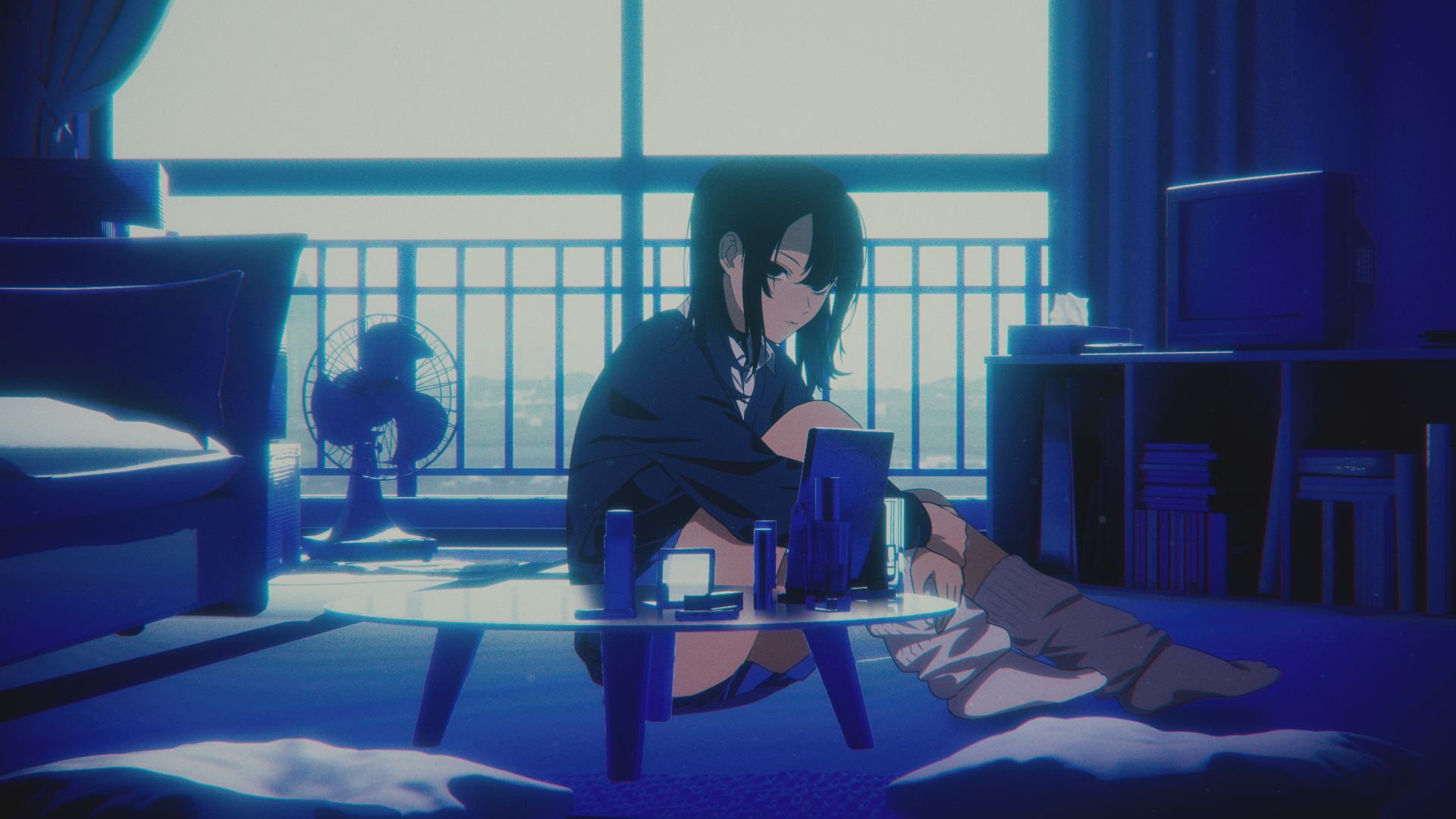
It’s a lot to take in, but it’s this overwhelming, intoxicating, and yet intriguing visual novel that makes it impossible to look away. Scenes in Rain98, from Shibuya-based C#4R4CT3R, are animated like a scene from an anime, tinged in a melancholic blue-toned lo-fi interpretation of the end of the millennium. The setting is deliberate, mirroring the life of this young girl in the economic anxieties of the lost decade of post-bubble era Japan in ways that reflect our modern world - the politicians can’t be trusted, the wealth gap expands, and it’s hard to feel there’s anything worth living for.
Gameplay segments that in the demo are simple, little more than odd jobs for cash to interlude philosophical conversations on life and power. But it’s the high-level yet composed dialogue and questions of what the world could be that linger. The game has no release date as of writing, but it’s already showing potential by refusing to shy away from modern anxieties through its lens of the past.
In Falsus
Developer lowiro, split between offices in London and Tokyo, have perfected a niche in story-driven rhythm games. With original music leaning heavily into electronic and techno sounds and a style of play inspired most closely by the stalwarts of Japanese arcades like Chunithm, In Falsus is just the latest in the team’s polished and ambitious rhythm gaming exploits, and perhaps their most technical to date.
While remaining accessible to newcomers, the title moves away from the mobile experiences the team developed prior as they sought to bring more depth to the rhythm game experience. While performing songs, notes come down along six tracks tied to different buttons, enhanced further by mouse gestures in time to the music as you become one with it through each performance, it’s these minute details and the tuning that makes each song in this demo so satisfying to play that differentiates a good rhythm game from a great one.
Even on a bustling show floor, the world disappeared in the joy of moment-to-moment play, and any fan of the genre should be keeping an eye on this game moving forwards.
Yodelee Golf
The latest title from Kyoto-based indie stalwarts Q-Games, this multiplayer golfing chaos simulator combines the friendly insanity of a title like Peak with the unhinged sports nature of What the Golf for one of the most universally-hilarious experiences you can find. There’s a round of gold you and up to three other players have to complete, but actually taking part is a suggestion. You start with a golf club and a (shared) ball to get into the hole, and an estimated number of shots, but the moment action begins any semblance of the sport’s typical rules quickly fall away.
You can replace your golf club with an caveman’s club, the golf ball with a rubber duck, and even your spoken text can be transcribed into floating text and become an obstacle to progress. When wild animals and cloning come into the mix, the idea of optimal play is unimportant, and the real fun can begin. Driving around with a golf cart in this open world as you talk in proximity chat is fun enough.
The game is still early in development with this being one of the earliest showcases, but it’s already so much fun. Just remember, it’s about the journey, not the destination.
Finding Polka
PARCO GAMES made their first publishing showcase at the show with a number of new titles, the most exciting of which was undoubtedly Finding Polka. The game was an instant hit at the event, coming away with both the attendee-voted Kids Award and the Visual Excellence award, both of which are immediately apparent the moment you sit down with the title. The title says it all, with Polka being the name of a runaway dog that you wander through town to find.
The town itself is made up of thousands of individual hand-drawn sketches animating every minor character, plant, object, building and, of course, yourself. Speaking to the developer on the show floor, they have created thousands of pages of hand-drawn sketches on lined paper to bring the game to life, and the charm and character of seeing the fun interactions with this world brought to life so intricately, especially in an era of AI slop, is heart warming. Many of the sketches were on display, and the developer spent his time on the show floor with such a passion for the title he was drawing new scenes while teaching attendees how to play his game.
It’s a celebration of craft that’s hard not to love.
A few notable extras
Even beyond these four titles, there were so many incredible Japanese-developed games on display at this year’s BitSummit. A slew of previously-announced titles had refreshed and polished updates that marked a new step in their development, with the Denkiworks-developed Tony Hawk-like Tanuki: Pon’s Summer a particular joy for the grin-inducing fun of shredding through postman adventures in a quaint Japanese town. With the game due for release by the end of the year it was great to see how far the team have polished the project since its initial reveal.
The same can be said for Minitature Land, a cool puzzle title created using high-resolution photography of real panoramas that were on display on the show floor.
DDDistortion’s Nightmare Operator plays like a fascinating merger of fighting game combat with PS1-era survival horror, and also deserved its two awards from critics and audiences by the end of the weekend. Never do I feel I played a horror title quite like it, partially because it retains its level of threat by reconsidering the true fear in its setting without artificially weakening its player. TOEI Games made their debut with a strong opening slate of three titles, but with familiarity to both Killa and Hino it was Debug Nephemee, a pixel art adventure that required players balance four hacking minigames simultaniously to save civilians, whose Pragmata-like complexity over its simplistic surface intrigued me.
It’s a showcase of the depth and variety of impressive work on offer in the industry today, particularly from the oft-overlooked Japanese side. BitSummit showed there is plenty of exciting work to come in the following months and years. With the support of new events like Kawagoe Game Digg to further support the scene, there’s so much to look forward to.