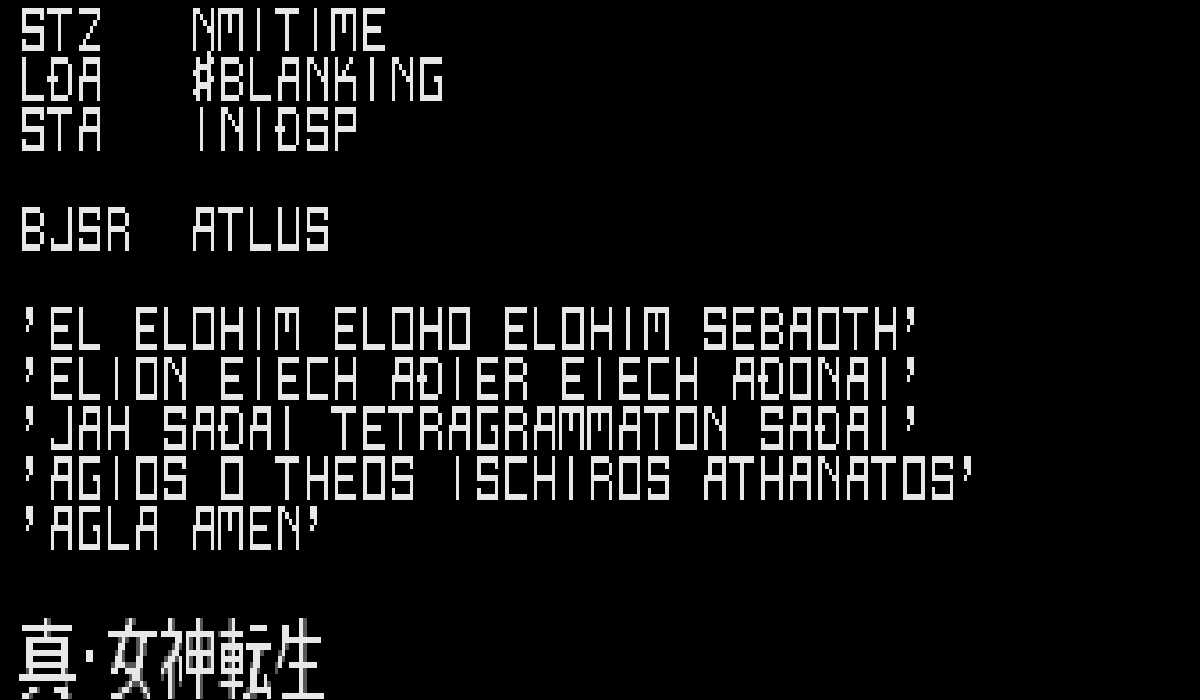
The opening hours of Shin Megami Tensei are the most brutal I can think of in a Super Nintendo RPG. One day while doing chores for your mom, the player character is abducted by the police and locked in a hospital where a mad scientist is experimenting on people to make super-soldiers. After making their escape and picking up two new friends along the way, they return home only to realize that a demon has eaten their mother and taken her place. Assuming they defeat her, the player travels to Shinjuku and is wrapped up in a power struggle between the Americans (represented by the Norse god Thor) and a Japanese military dictatorship. No matter who they side with, the Americans shower Tokyo with nuclear missiles, shattering the city and killing nearly everybody.
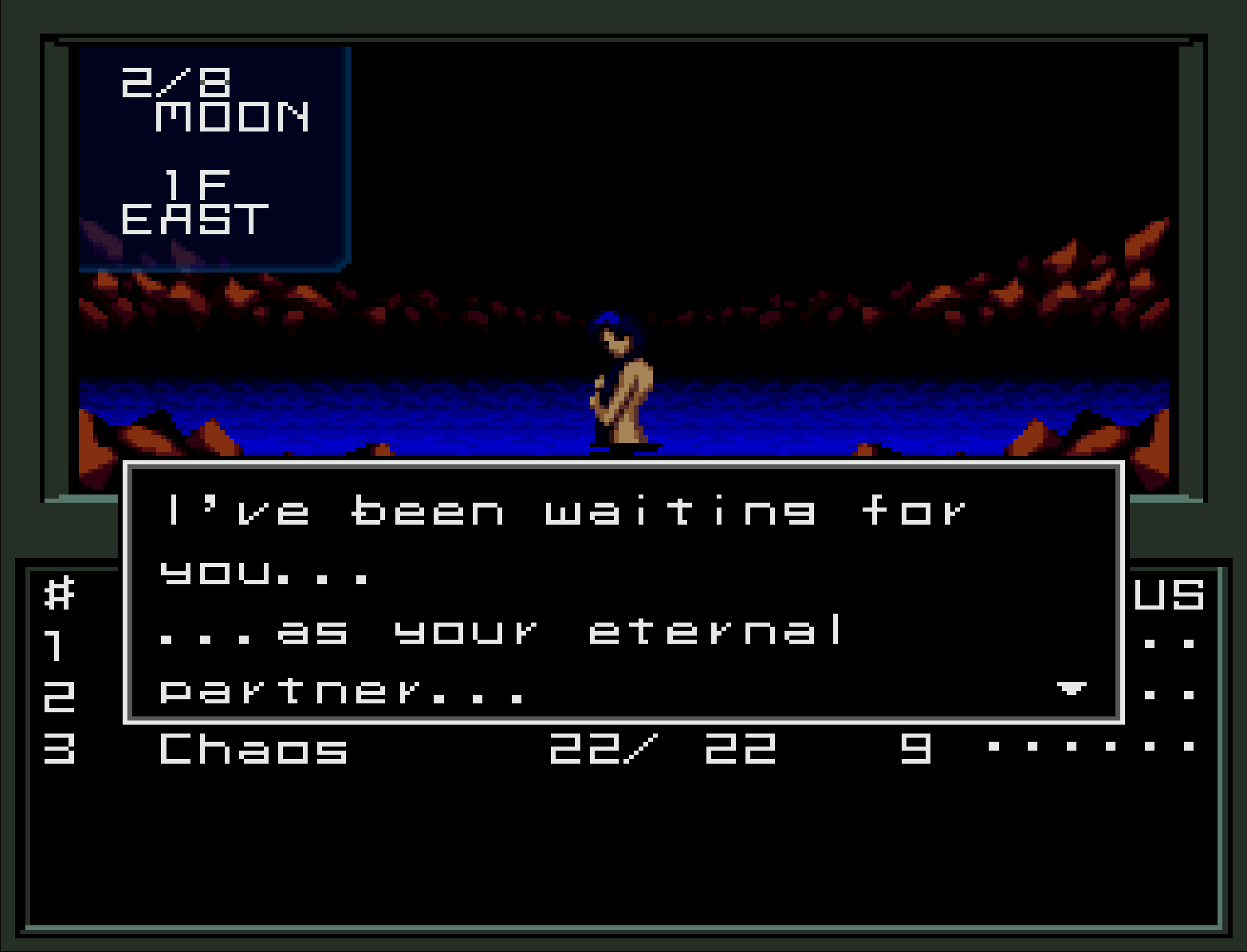
Even before this outrageous series of events, experiencing Shin Megami Tensei feels more like sleep paralysis than playing a video game. The player is dragged through an undulating red maze, lectured by stone faces and made to name various people who are being crucified, crushed or sacrificed by cultists and demons. A beautiful woman named Yuriko says that she has “been waiting for you…as your eternal partner…” Yet it’s implied that the player has never once seen her before.
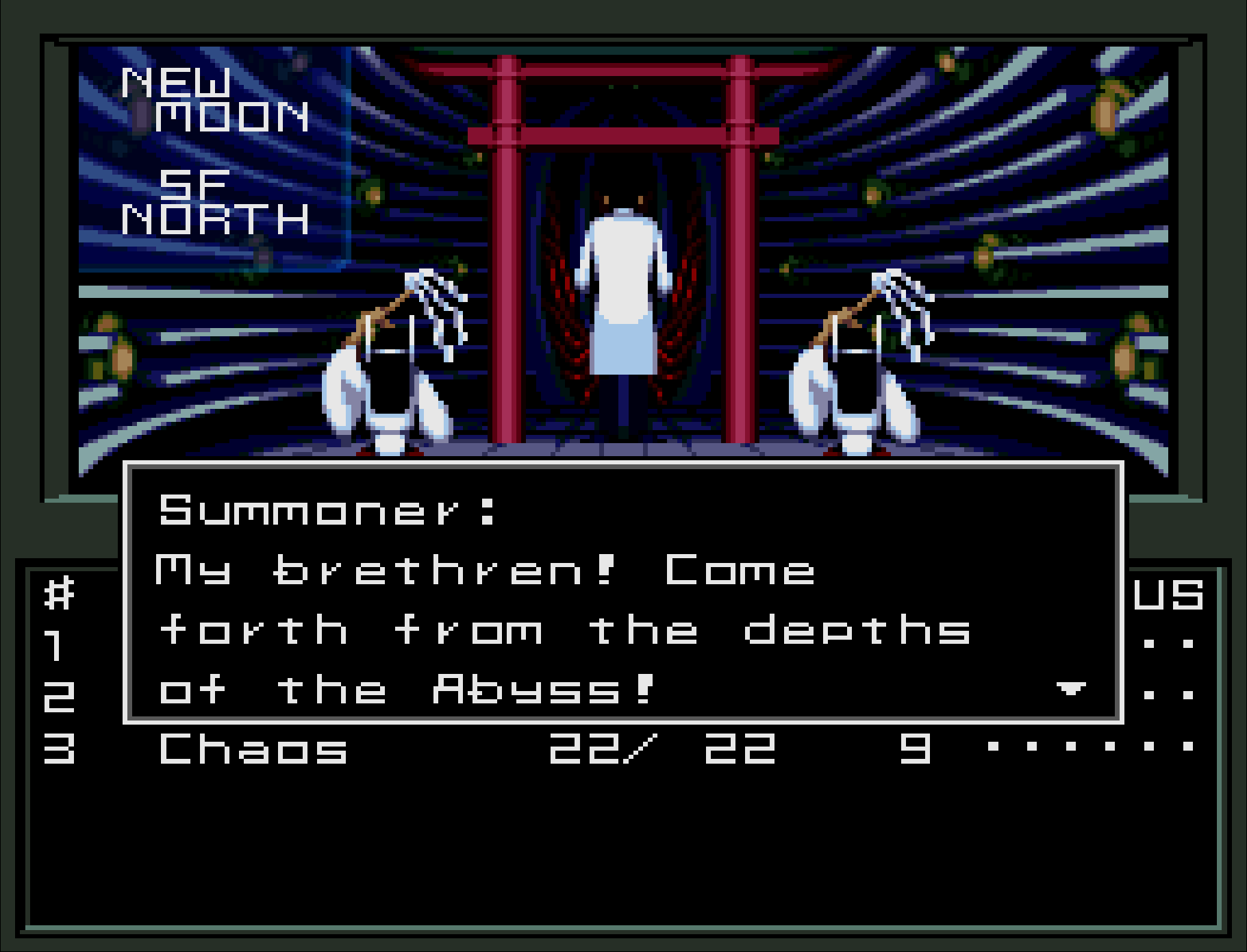
That nightmare atmosphere remains even when your player character is, supposedly, awake. The friends they make along the way are constantly dying and being reborn; most eventually become your enemies. Demons might attack at any time, whether the player is wandering the world map or exploring a shopping complex. Music judders from the speakers like cursed bells summoning the dead, before it switches abruptly into heavy metal riffs. It’s a distressing, confusing, all-consuming experience.
Shin Megami Tensei was released in 1992, the same year as Dragon Quest V and Final Fantasy V. The world of Japanese RPGs was beginning to take shape; its future lay in vast and accessible fantasy worlds defined by Dragon Quest’s charm and polish, Final Fantasy’s maximalism and Ys’s beautiful graphics. Shin Megami Tensei didn’t care about any of that. It took place in the real world and had more in common with the likes of Urotsukidoji than it did with shonen manga. Its first person perspective, high level of difficulty, and branching story all worked to alienate rather than entice casual players.
The game had a reputation to live up to, of course. Its predecessor Digital Devil Story: Megami Tensei II was infamously cruel; in one scene, a statue bites off the player’s arm, causing them to bleed out and lose HP until they find a replacement. Then there’s the Digital Devil Story series of novels the games were based on, which began with the protagonist summoning Loki to murder his (evil) classmates. Shin Megami Tensei’s explosive start was therefore a natural escalation from what had come before.
Neither was it the only harsh console RPG at the time. Final Fantasy II back in 1988 began with the player party being wiped by powerful enemies, only to survive and take the fight to an all-powerful empire. After defeating the emperor, he conquers Hell, and must be slain there too. Also relevant is 1989’s Mega Drive title Phantasy Star II, a game with dungeons so sprawling that the developers later admitted in an interview (translated by shmuplations) that they may have overdone it. Its bleak ending further pushed the boundaries of what RPGs could get away with at the time.
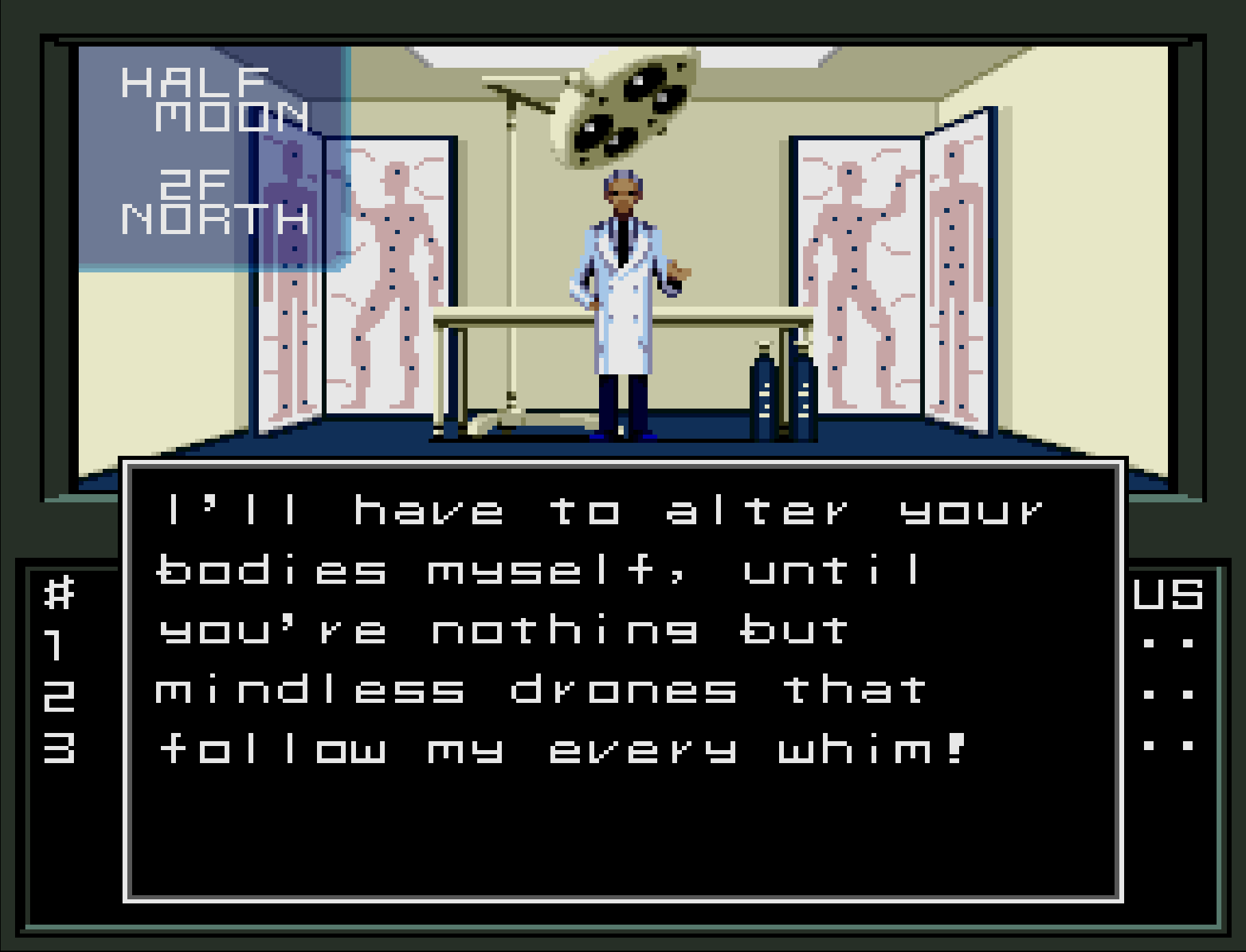
Still, there’s still something special about Shin Megami Tensei, an air of mystery that’s only enhanced by the game’s technical flaws. Its first-person perspective, even though it confuses navigation, also makes every character interaction a solemn tableau. The way in which groups of demons display in battle as a single sprite is another unsettling abstraction in a game full of them. Demon recruitment conversations are long, unforgiving and fruitless, just like you might expect such a conversation to play out in real life.
Later games from Atlus would fill in the game’s blank spaces. Nocturne introduced the Press Turn system, which arguably defines the series and its legacy as much as demon fusion. Shin Megami Tensei V gave the demons real, funny personalities. The Persona spin-offs similarly made your party members people you might want to hang out with, rather than archetypes inclined towards Law or Chaos. Not to mention Shin Megami Tensei’s remakes for PlayStation and Game Boy Advance, which added new graphics and story respectively.
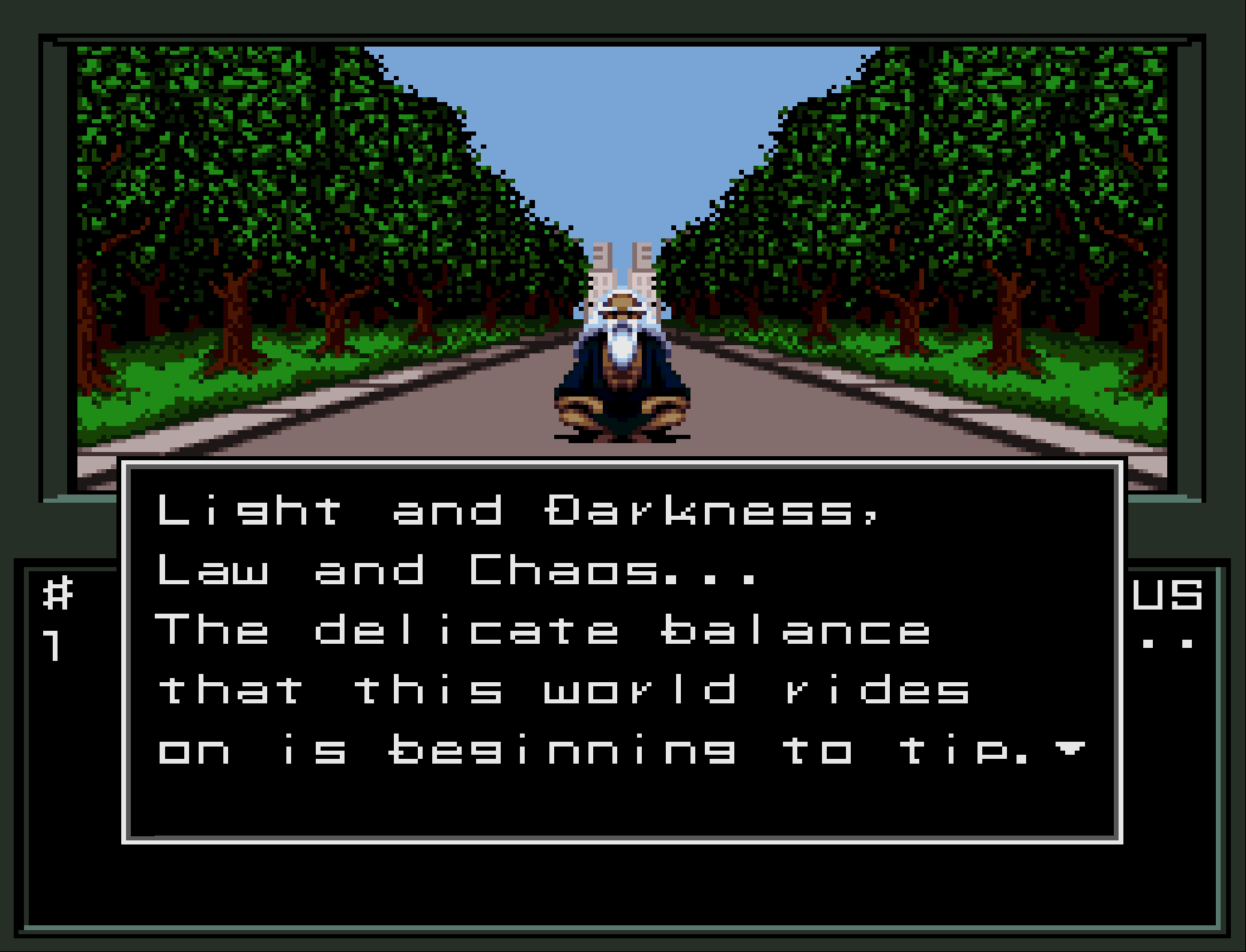
These later games are absolutely more enjoyable to play today than the original Shin Megami Tensei. (Sadly none of them have bothered to fix the franchise’s ongoing misogyny problem.) In terms of atmosphere, though, I think that Shin Megami Tensei for the SNES is still the game to beat. The thinly developed characters, amorphous setting and simple visual presentation steep in the player’s brain, further infused by the game’s soundtrack as well as its punishing difficulty. It’s no surprise that the game attracted urban legends, like the claim that certain copies of the game on start-up demand that the player “turn it off now.” This is not a true story. But if there was any game where you’d think something like this might be true, it would be SMT.
Shin Megami Tensei is a game of grand archetypes, in which the modern world is corrupted and remade by forces beyond our imagination. The game transmits its vision of hell to us through our television screens and speakers–a distorted, second-hand rendition subject to the laws of the Super Nintendo. If any quality survives this process intact, it is anger. Anger at governments for failing the people. Anger at friends for buckling under the weight of the cosmos. Anger at the cosmos itself, which demands unfair things of us. There is no happy ending; the Neutral path, which lays the path for humanity to rebuild, requires killing most of your allies as well as Law and Chaos’s most powerful representatives.
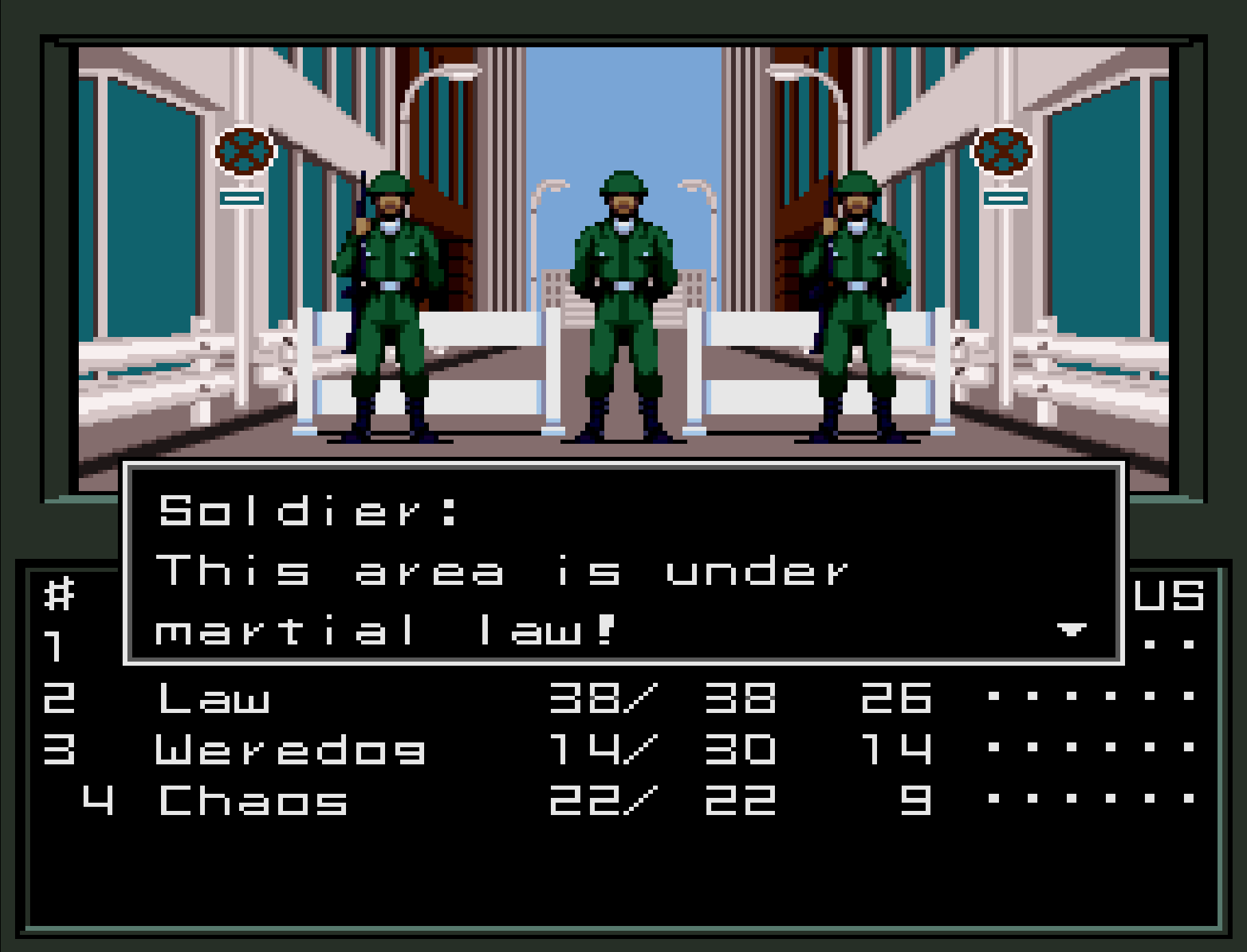
This anger is not very nuanced. Shin Megami Tensei is a product of the 90s, influenced by the excesses of horror and cyberpunk. While the series has tried to reinvent itself over the years, I don’t think it has ever managed to escape its roots. Some players might find those roots to be kinda cringe. For me, that’s what makes the game such a beautiful time capsule. It’s pure, undiluted grunge, and I wouldn’t have it any other way.