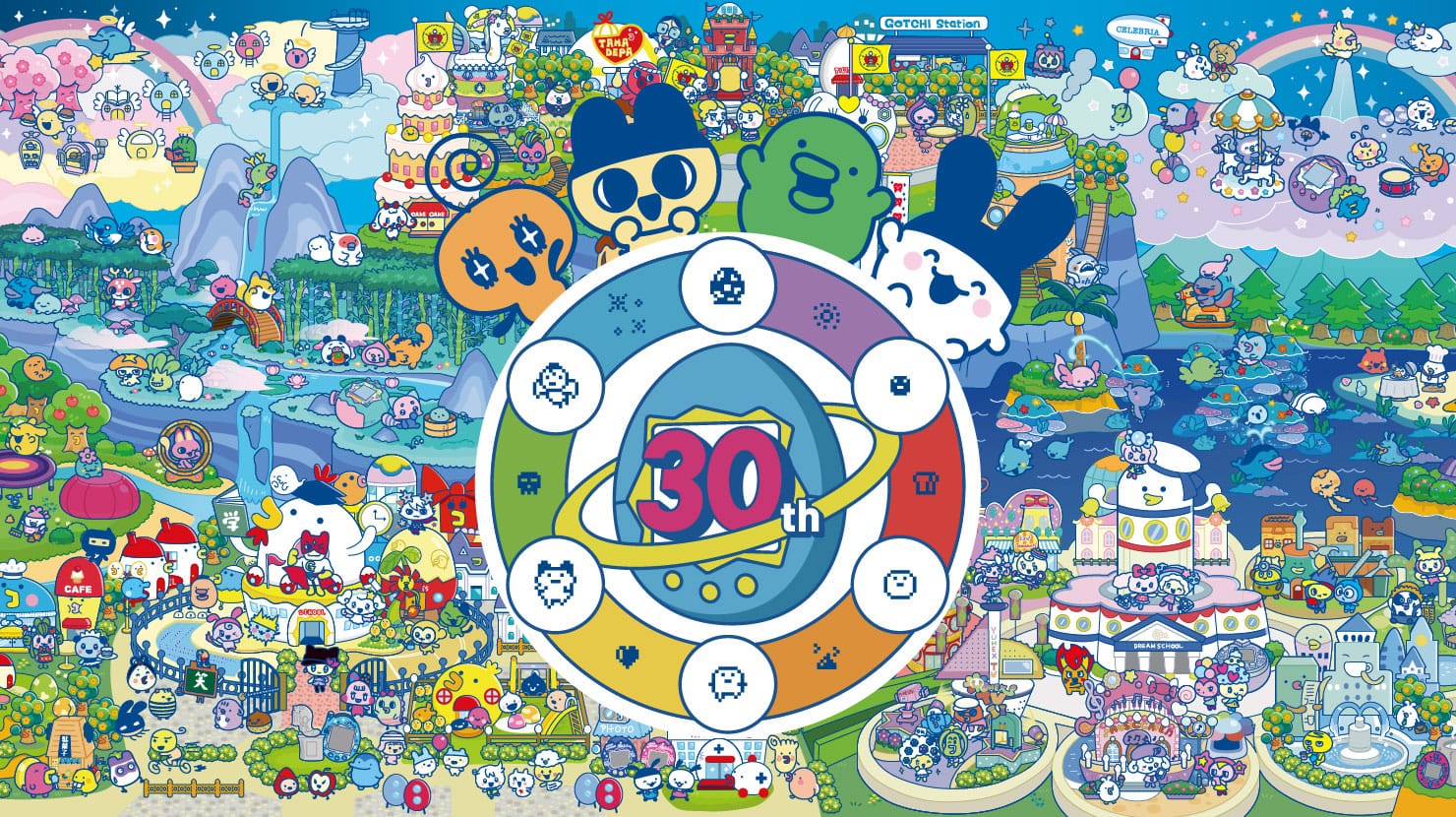
Tamagotchi were an instant phenomenon when they first hit Japanese shelves in November 1996, particularly with young schoolgirls. Part of it is good timing: as Pokémon launched and became a global phenomenon in the late 90s for its ability to collect, trade and battle Pokémon with friends, this imagined a virtual pet for your pocket, as a keychain to hang on your bag, a thing you could play and care for anywhere, all housed in a cute pocket-sized design that could go anywhere with you.
Say it quietly, but Tamagotchi is back. Or, perhaps, it never left. In Tokyo, a number of dedicated Tamagotchi stores have opened. New generations of toys, like Tamagotchi Paradise, were so popular on launch they remained sold out for months. And, amidst clothing collaborations and many more, the same first- and second-generation simplistic Tamagotchi creatures have had a resurgence, with many preferring their simplicity and raising their pets like it’s 1998 all over again with hope still left in the world.
Over the course of the past 25 years these formerly-1-bit, black-and-white simplistic electronic pets have evolved into flourishing, full-color simulators that retain the core characteristics of these original toys but now allow you to connect with friends, engage with more complex games and activities, and even connect online. A dedicated audience for these unique toys has always existed, but things are different right now. Just like when it originally launched, it’s a phenomenon all over again, and you can’t escape Mamecchi’s adorable yellow face.
Why? You can put this partially down to the resurgent interest in Y2K fashion and technology. The bright colors, street fashion and gyaru subcultures have seen a particular revival in Japan in the past 12 months. It can be seen in more overt ways, such as with gyaru leopard prints and fake tan, but also in the simplistic toys and old technology has made its way back into the mainstream. In a retro boom of old tech made new as people revert to CD players, cameras and iPods, Tamagotchi fits perfectly into the intersection of toy, tech, and icon.
But the pets also offer an escape from the more imposing parts of the modern world. Social media is inescapable, and the clinging draw of TikTok can create a pressure to maintain a certain image and manage how your perceived, especially for younger kids where peer pressure dominates. While far from an easier time, many hold a perception that things were a little bit simpler or easier to process compared to now, without the internet interfering. Not only that, compared to keeping up with online trends, there's something a bit more personal about enjoying something together with the people close to you, something that every generation of Tamagotchi, then and now, places at the forefront of its appeal.
The Generation 1 and 2 Tamagotchi were almost suspiciously simple devices, even upon their initial release. They were barely more complex than a Nintendo Game and Watch, merely shrunk down to pocket-size. The screens had no backlight, so you could hardly see them without being in a good environment, and the creatures were designed so alien-like more by necessity than anything else, to make them easy-to-recognize on such a small screen. The cute art of creatures like Mamecchi barely resembles what you saw if you got the creature in these early devices.
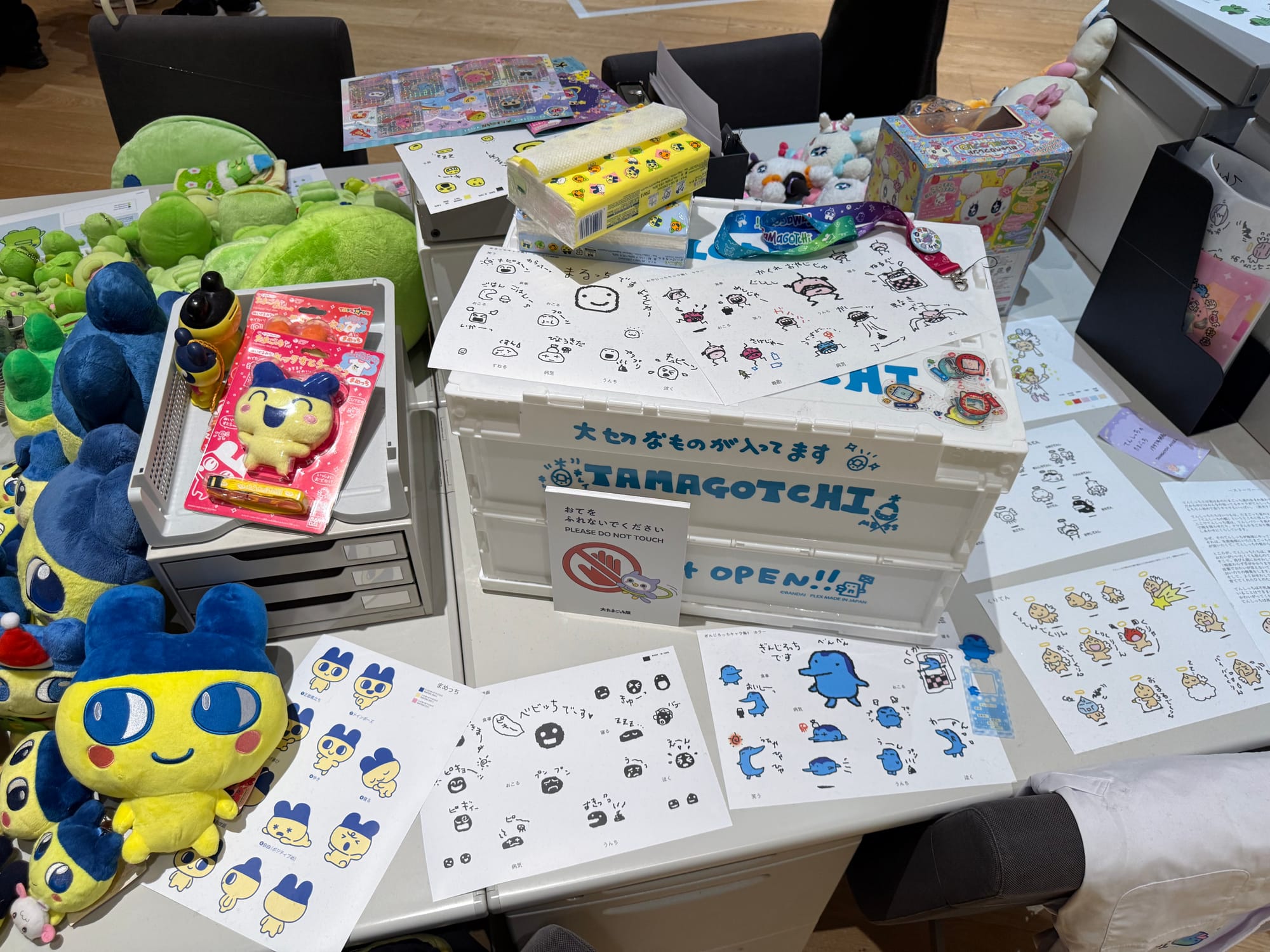
Hatch it though, and its pixelated cries and helplessness make it endearing. Yes, you’ll clean its poop and feed it, but you’ll shoulder that responsibility with a smile. It was the portability that really helped it, though. At a time of electronic pets like Sony’s Aibo, these were pocket-sized, so even if they couldn’t communicate (yet), you could show and care for them together with friends. If you were away for a while, you could give it to them to babysit, and it was something you could share with friends. Of course it took over.
It was a phenomenon, but no phenomenon can maintain that level of popularity forever. New generations added color, the ability to trade and connect with others so the pets could interact. It grew, while retaining its charming simplicity. Older generations remained available throughout, for those seeking something classic. Inevitably, however, it did dip from its millennium-era peak. It remained a toy that those who grew up with it could revisit, a thing that young kids might try out. But with more complex portable gaming machines growing in popularity like the Nintendo DS, which had its own pet-rearing in games like Nintendogs, a Tamagotchi isn’t quite as enthralling.
So why is it in the resurgence today, in 2026, with all-new pop-up cafes and permanent stores? Because it never left, remaining at least relevant to a point by evolving with technology and broader society. The Tamagotchi Smart put the creature into the form of a wearable watch, while Tamagotchi Uni integrated limited online connectivity without losing that in-person connection. It’s maintained a level of relevance and recognizability with the general public by mere virtue of the toys never leaving the public zeitgeist. Mamecchi appeared in the Mario Kart arcade game, and you even had iOS apps and console games, alongside an anime and more.
It sowed the seeds for the current moment. In 2026, the teenagers and young kids who grew up with the toy have kids of their own. And those kids, through social media, are rediscovering the fashion and experiences of the Y2K era and seeking to recreate it for themselves. Bandai Namco, for their part, are not solely trying to ape the past in capturing audience attention during this renewed interest in the toys, either.
In 2025, the company released a new minigame collection for Nintendo Switch titled Tamagotchi Plaza. It’s the first console Tamagotchi game in over a decade, and a game that blended the caring sim-like aspects of the toys with games where they could pretend to run a sushi shop or a dentist, upgrading the shops along the way to improve the town. While this was far more of a minigame compilation than an Animal Crossing-like island simulation, the return to consoles blended with basic town-building elements make it feel familiar yet distinct. It was also one of the best-selling games of 2025.
Beyond interactive experiences, the company has embraced the way that Tamagotchi serve a space within the world of fashion and in shaping culture and a way to meet and engage with new people. In particular, the company has collaborated with everyone from artists to traditional craftspeople to create pieces of art (that are later printed onto original-generation Tamagotchi toys for sale as collectors items and play) or things like fans and ornaments that bring them into the conversation of the real world. All before discussing the fashion collaborations from independent brands like Candy Stripper all the way to the mainstream with Uniqlo.
Nostalgia plays a part, but the key to Tamagotchi’s revival is that the toy never left, remaining a part of the cultural fabric beyond its core experience as a communal toy to talk about and play with friends. It could be fashion, it could be a cute plush toy, it could be artwork, and the characters were recognizable enough from their toy origins that it would spark excitement, a conversation. A recent 20th anniversary exhibition at the Roppongi Museum in Tokyo somewhat embraced this, emphasizing the quirky elements of the toy like their cute designs or the eulogies you would tell friends when they died, but also displayed toys and mementos from across its decades in the public consciousness.
In one corner of this room was a line of every generation of Tamagotchi. Not held behind glass, but on a table for anyone to hold, feed, and play with. They’re communal Tamas, in the care of every visitor, and something you could laugh about with friends and strangers you visited the show with together. This heart is why Tamagotchi is bigger than ever. It’s virtual love in pocket-sized form.