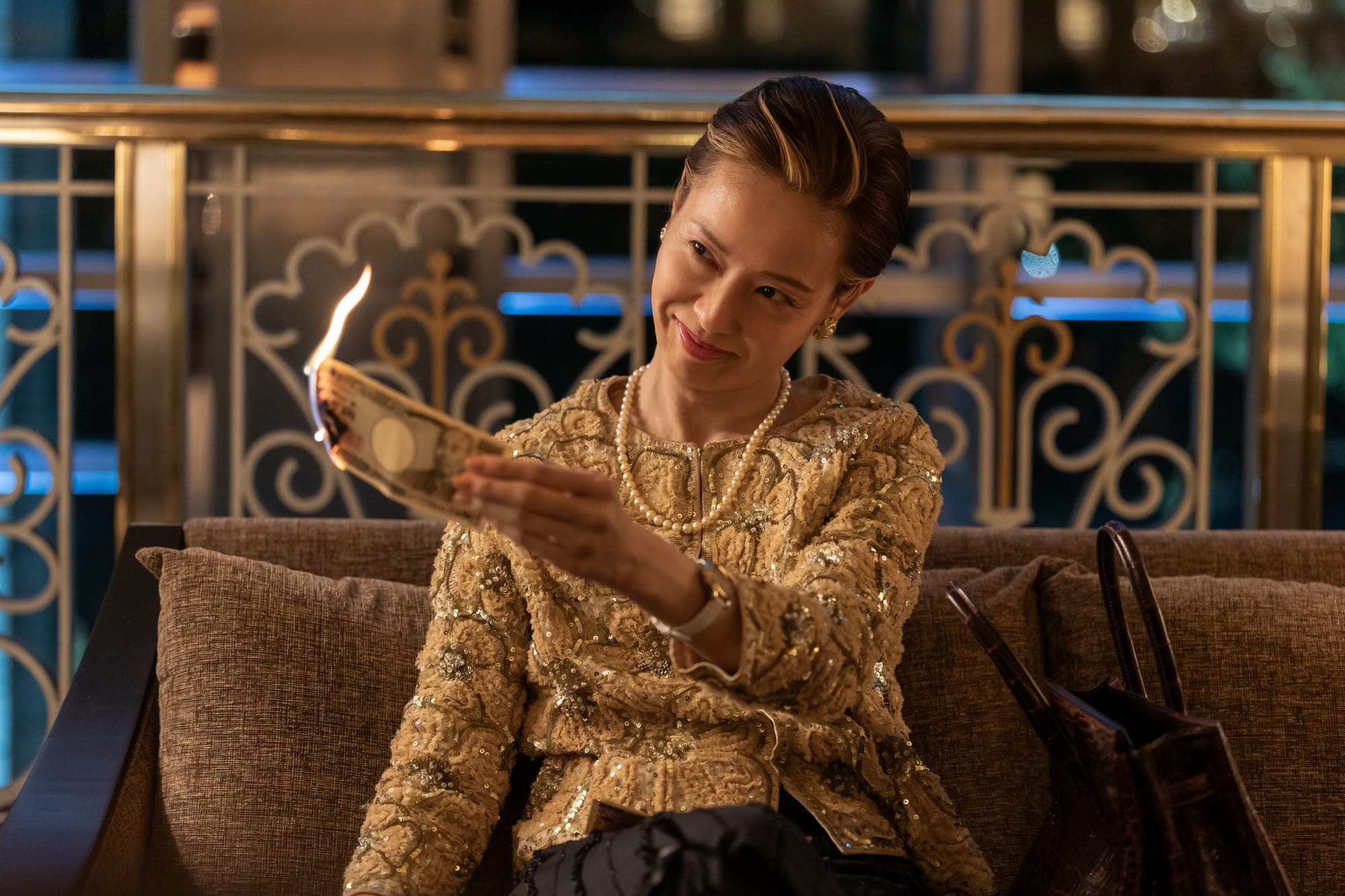
Fortune tellers in Japan are trusted, at least by a specific portion of the population. Their popularity only grew as the economy downturned. When people feel hopeless, they turn to others. Those who claim a deeper, perhaps spiritual connection that can give an accurate predictor of the future, are perfectly suited to an era of uncertainty, of record suicides and self-doubting economic and personal anxiety. Kazuko Hosoki rose above them all, until she faced consequences. She rose to the top, until she fell Straight to Hell.
The Netflix dramatization of her life is fitting for the modern era. It’s a story of a different time, one of mainstream TV dominance and an era where consequences for actions were felt because scandals had staying power in a less oversaturated world. That being said, her role as a spiritual guide for uncertain people resonated for the era she rose to prominence, one which certainly matches our current times. Globally the world is more fraught than ever, and in Japan inflation after decades of stagnation alongside low wages and a weak yen have placed a new strain that seeks a figure, idea or identity to throw all the pressures of this modern world into.
Yet when I note that it was a different time, I truly mean that. For all that the fortune telling business today exceeds 100 billion yen annually, with spiritual guidance generally earning over 4 trillion yen, in recent years a chunk of this business has moved from TV and even the street stalls to online counseling over LINE or phone services. During Hosoki’s peak she could earn viewing figures over 20% and sell over 50 million copies of her book (making the strict, arrogant, outspoken fortune telling TV host and controversial figure the world record holder for the best-selling fortune telling book ever produced). She is a forgotten figure in this space today.
She passed away in 2021, but scandal linking her to underground money kicked her off the airwaves in the late 2000s, and she was rarely heard from since. Her story has the drama, but she’s hardly a considered figure for a biopic today. It’s a strange in-between the series never quite is able to address, a problem that spreads throughout this well-produced but oddly-framed biopic that aims to be Tokyo Vice but feels too cynical and unfocused to deliver that.
The story covers her rise and fall from her childhood to her time as the 'Queen of Ginza' running successful nightclubs to her career as a fortune teller. At her peak, she was trusted and beloved. Blackmail and dealings with the yakuza and others for fraudulent business practices suggest something far darker.
The series asks early, through the inner voice narration of a young author writing a book of her life, who is Kazuko Hosoki. We get our first impression of the woman almost immediately afterwards from one of her shows, in a fiery confrontation where she bluntly claims to read her future and warns not to marry or face personal ruin and commit suicide. A few minutes earlier, she’d been reading an article on the suicide rates, so to track an unhappy marriage to this is foreshadowing that comes up through her downfall.
The confrontation, contrasted to the typically mild-mannered Japanese variety TV environment, speaks both to why she was both hated and so popular in her peak. It’s intense, and a strong introduction.
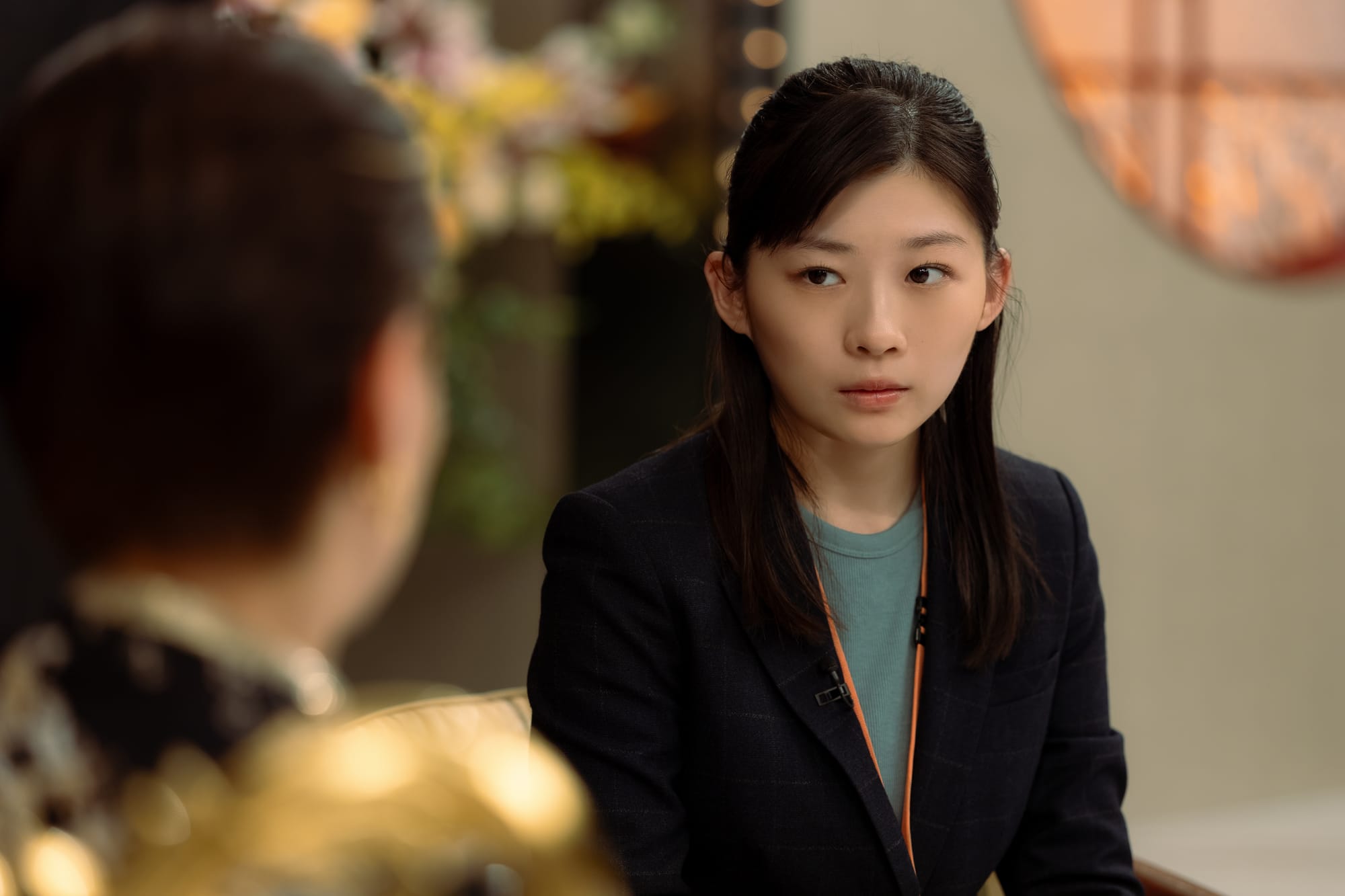
Yet for all we witness her downfall, we feel little from it, because this insight is the limit into her character. She laments the world at the precipice, but even after witnessing her childhood, a vague sense of concocting the future and lusting for power to take advantage of this doom-calling ideology is about the limit to the depth we receive. Erika Toda’s performance in the role captures the venom that defined her TV appearances, but I never feel it gets us much deeper into who the person is. We witness her life, but not the person in it, in part because there’s no space to infer when we’re told everything directly without nuance.
You could say the series is more interested in who Hosoki was in relationship to the nation that elevated her to power, and there is merit to that claim. We see her hunger as she begins to rise parallel to the bubble economy of the 1980s, positioning her in the right place at the right time when things begin to shift. She also tells us it was hunger outright, and that she lived through the reconstruction of post-war Japan after the city had been burned to a crisp in firebombs and occupation. The black market that rose was almost as dark as the war and it left her fighting, which makes for her fighting spirit.
This would be clear without it being spelled out, but the series does this anyhow. We spend significant time and effort recreating the period pieces to a detail and depth greater than entire movies set during construction-era times, flexing a global Netflix budget that a domestic TV drama could never utilize. But in terms of allegory beyond the stated, it falls short and shallow, little more than reclaiming power as a woman in destitution rather than a conversation of why someone can gain the influence she did in her prime.
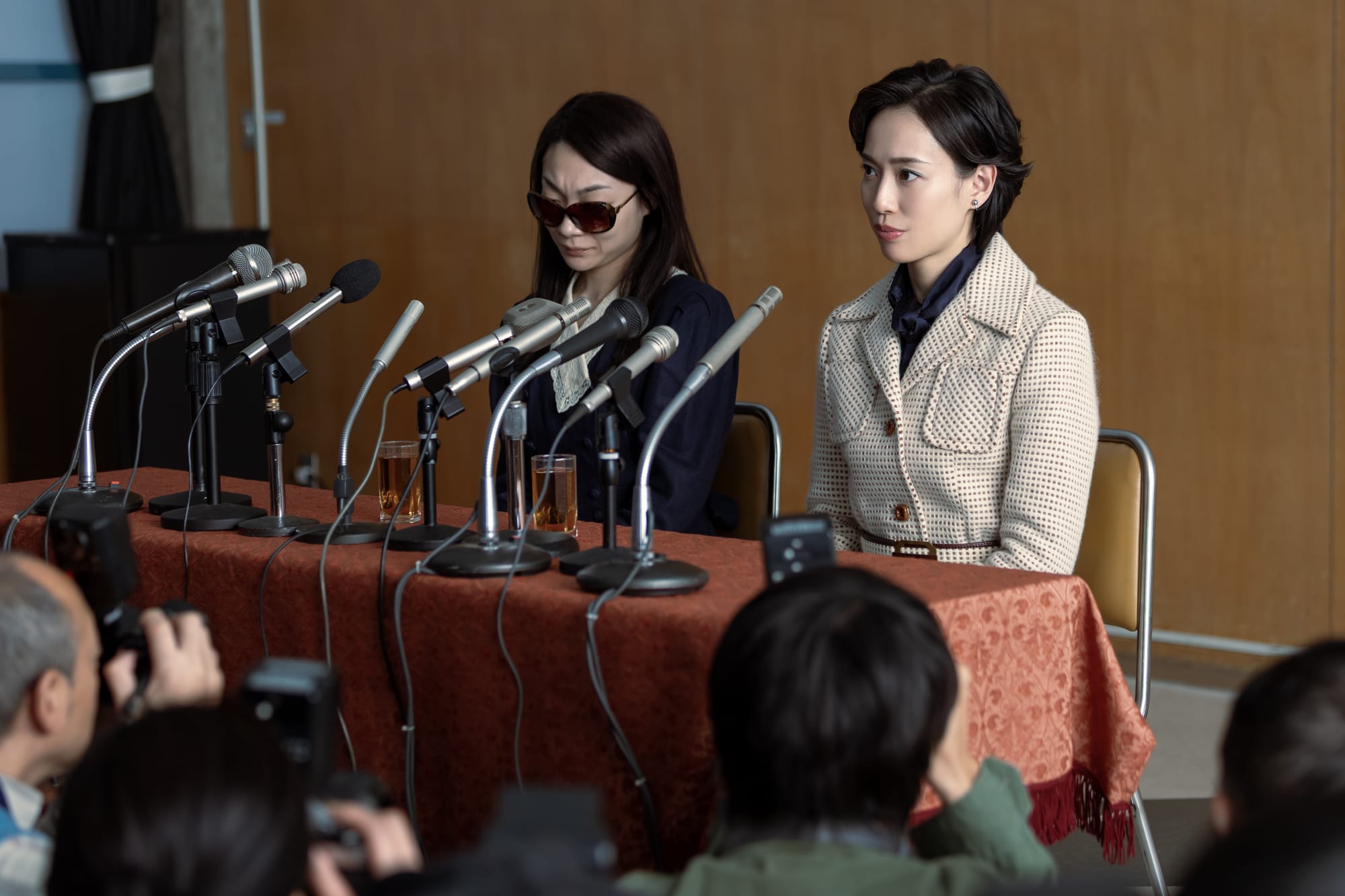
Which begs the question of why the series was made still-further. If the figure is not well-remembered, despite her fascinating past, she must be brought back with something to say. This does not. This is a highly-polished work in past and present, as a production standing out as a showcase of Japanese talent. Not only is this for a story that can’t live up to the expectations here, it can sometimes clash with the story further.
High contrast, moody lighting works when we go to the past or witness her dealings in the underworld, but fail to recreate any TV clips when the actual program she appeared on and variety TV lighting is known to look very different. It misinterprets what made her so alluring by recreating her aggression and dark side within the scene, rather than how her contrast and hidden details in the light of the day contributed to this. The author is a framing device to attempt to bring this complexity, but is rarely effective.

All these issues may appear minor, but they correlate and add up over the course of a full series to a series that never knows fully what to say and where to commit. Worse, the more we get into the underworld, the more flat and dull the series can feel, unable to ratchet tension or push back to create a sense of purpose and conclusion in its storytelling. Even when the full truth of Hisoko’s life reflects a search for power that defined Japanese boom times that she took to extremes, painting a less flattering portrait of the past, we can’t even consider how often it is personality and projection shape our world, never mind the biases of history that would give us so much more to ponder.
Straight to Hell isn't a bad series, but it’s flat in execution and depth in ways that rob us of what could be a fascinating deconstruction of the industry, Japanese postwar image, and the politics of power. What keeps the fortunetelling industry of today so strong is the way it relies on the power of projection that it has accuracy, when the truth is that its hardly more accurate than a magic 8 ball. It’s a reflection of nationbuilding. The series could explore that, or at least delve more into the single figure at its center. Instead, we shake and hope it tells us exactly what we want. Where’s the point in that?