Have you ever found yourself wandering a museum, completely mystified about what it’s actually trying to be a museum about? Have you ever left a museum unsure if what you experienced was a museum at all? This was my bizarre experience at the Museum of Narratives, Tokyo’s newest and most perplexing attraction.
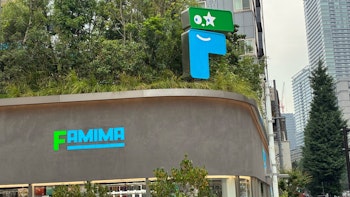
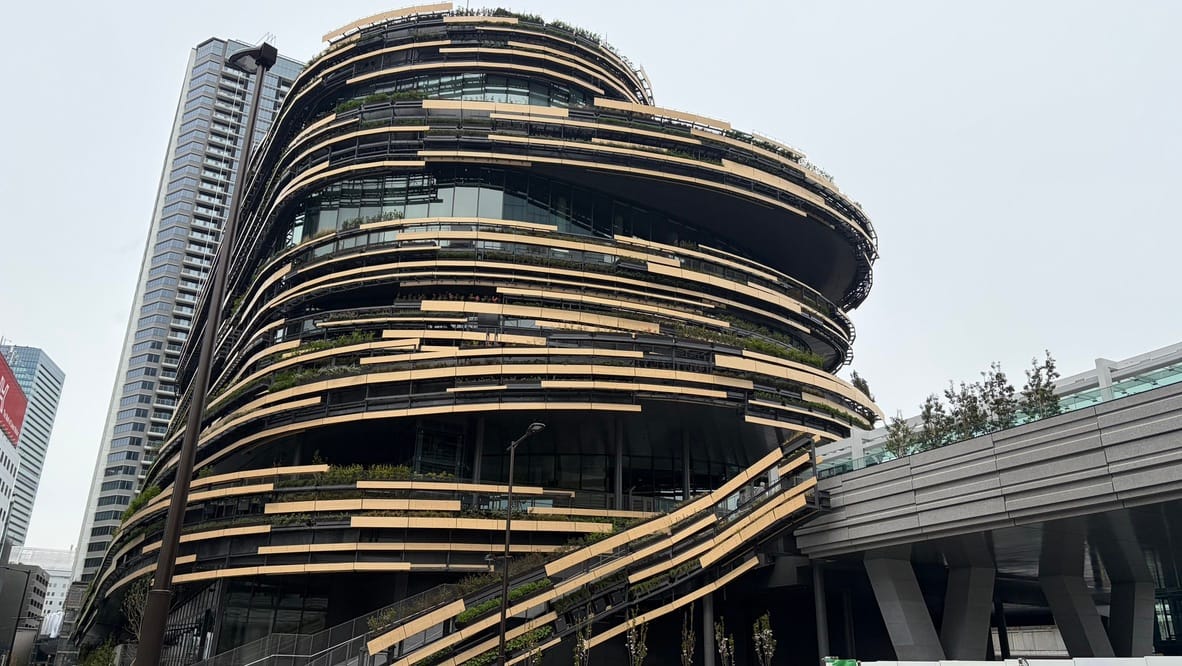
The museum stands in the midst of JR’s new 3.7 billion dollar development Takanawa gateway. Twisting above the railway tracks to its west, its spiraling form was designed by Japanese starchitect Kengo Kuma, while its identity was handled by New-York design firm Pentagram. The museum’s interior is dominated by its vast, shapeless atrium, multi-level and criss-crossed by staircases and floating balconies. An unimaginably vast amount of money has clearly been poured into the museum’s presentation, but what exactly is it trying to do?
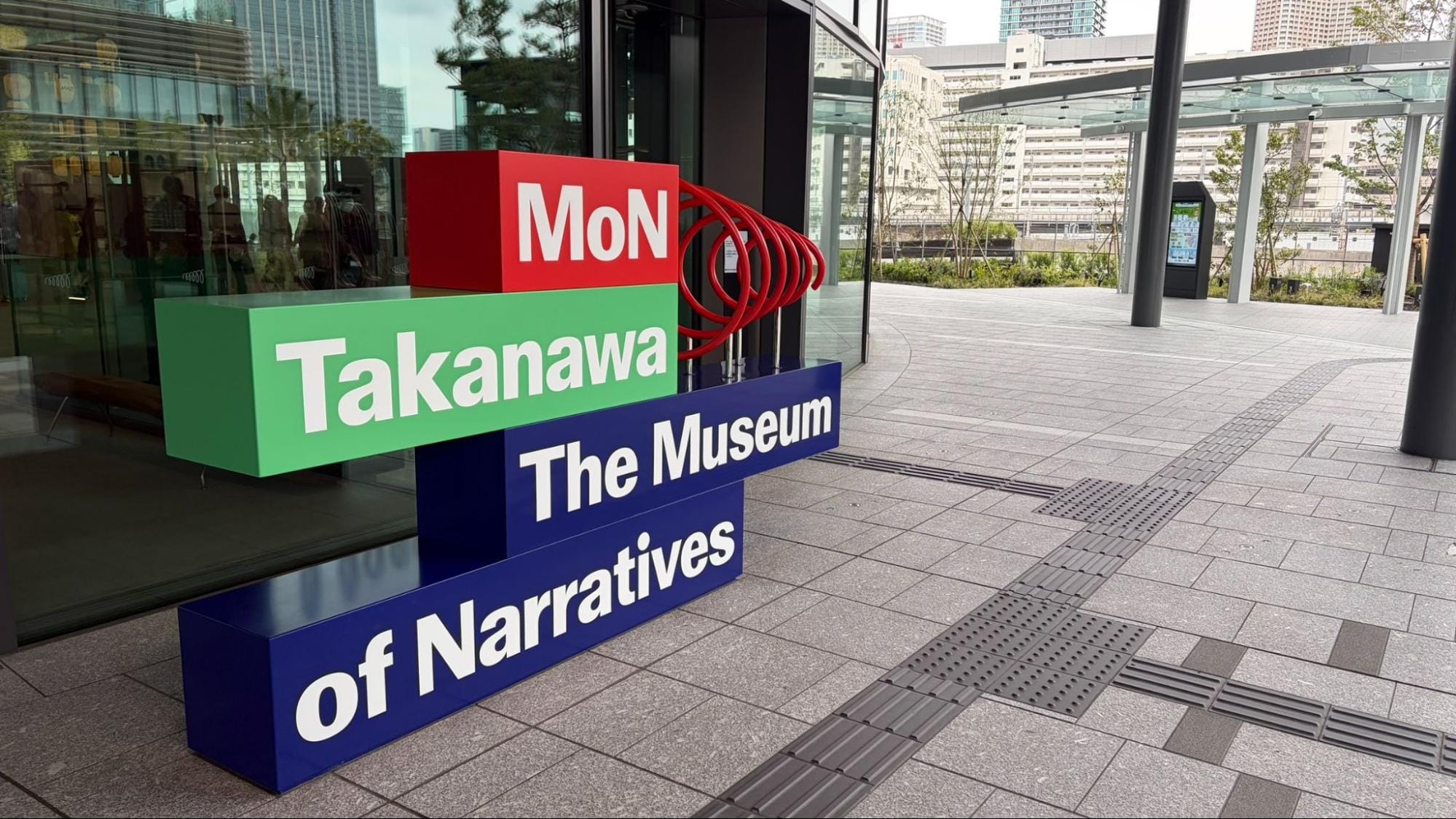
There is an abundance of material written to explain the museum’s concept in grandiose and breathless tones, but a real lack of anything that coherent. The website tells you that their mission is to “Transport Culture for the next 100 years,” while buzzwords such as ‘culture’, ‘connection’ and ‘exchange’ dot the blurbs of producers and directors in the personnel pages. What I can gleam is that they aim to be a hybrid between an exhibition venue and event space– simple enough when written out, but you’d be surprised at how long it takes to get to the bottom of the mystery from the provided materials.
Of course: none of this explains the name, which has seemingly no connection to their actual aims as a venue. You would assume from the title that the museum could feature anything from Film, Fiction, Folklore, Plays, Anime, Manga, Games— Internationally iconic media is something Japan has great volumes of. But there’s no specific focus on storytelling media, their website instead trying to weave together a pretty vague concept of ‘culture as narrative’ without anything to actually back it up. It’s not even an idea that I find conceptually unsound, but I was becoming increasingly suspicious that the concepts described were nothing more than empty words in search of meaning.
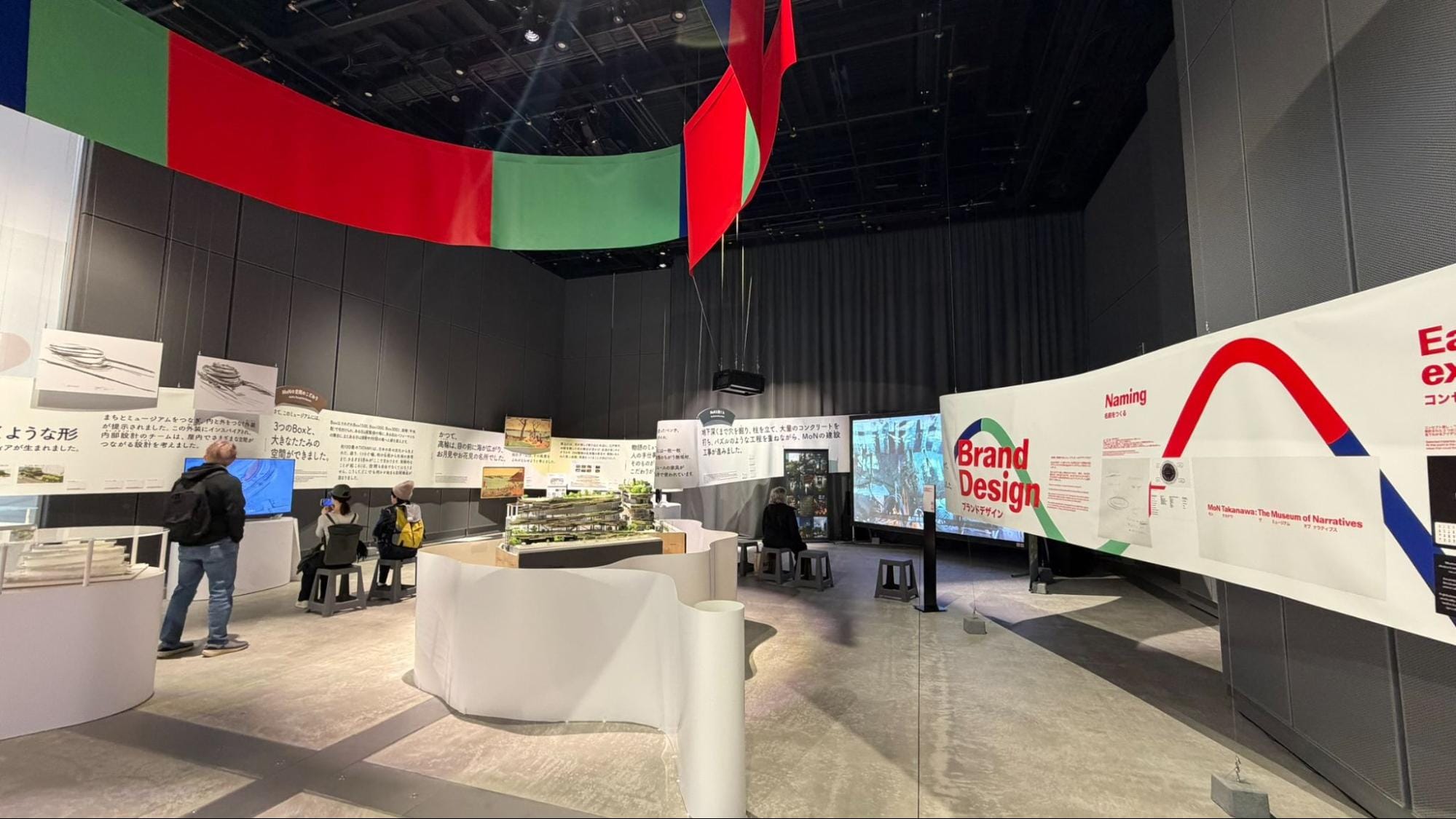
The free display in the atrium attempts to paint the museum in as grandiose and praiseworthy terms as possible without ever landing on a coherent explanation of what the museum really is.
I tried to get one of the museum staff to explain the name: According to her, the abbreviation ‘MoN’ carries a double meaning, connoting both ‘Gate’ and ‘Question’ in the Japanese language. When I asked what exactly that had to do with the idea of ‘narrative’, she seemed as stumped as I was. It was becoming apparent that ‘MoN’ was chosen first, with its meaning decided after.
Eventually, I found my smoking gun: tucked away in a display about the museum’s development was a photo of a post-it from a meeting with Pentagram, the brand strategists for the project. Written in a list were potential words that could slot in as the ’N’: Museum of ‘Now’, ‘Next’, ‘New’, and ‘Nothing’. I felt that almost any of these options would have been a more fitting title than whatever ‘Narrative’ is supposed to mean in a museum without a focus on story, or even a permanent collection in the first place.
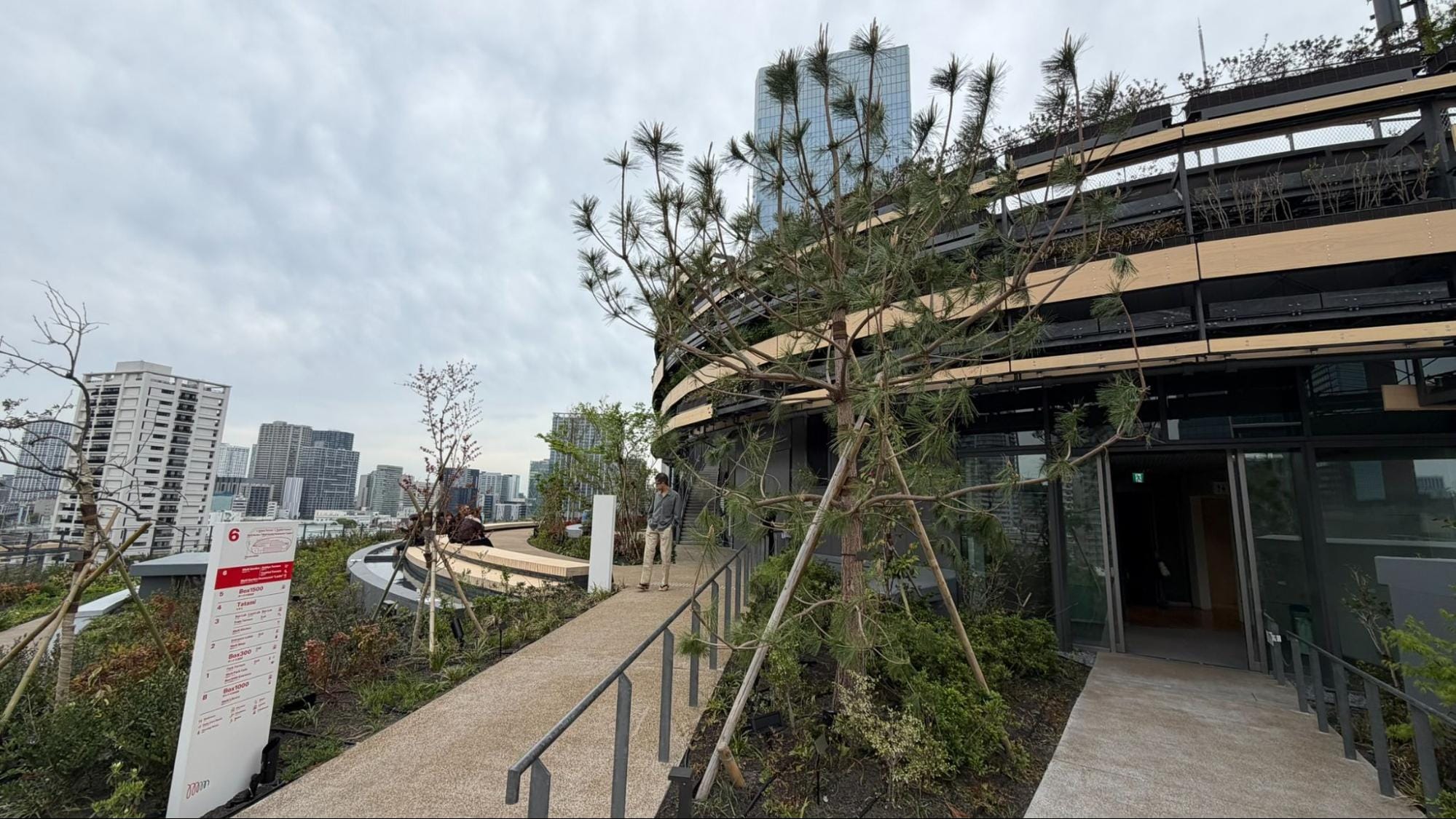
The museum’s rooftop garden overlooks the train tracks, and is one of the museum’s saving graces: it’s sure to be an enjoyable spot in the spring and summer.
Okay, they want to be a flexible event and performance space– that’s completely fine. I was confused by the name, but I’ll put it aside: what does their inaugural exhibition have to say as a definition of their ambitions? As was becoming predictable: Very little.
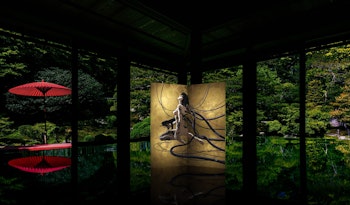
The first exhibition in their massive sixth-floor space is titled ‘guru-guru’ after the Japanese onomatopoeia for ‘swirling’ or ‘spiraling’. The exhibition’s concept seems simple enough: an exploration of spirals, circles and spirals within human history and culture. Despite such an interesting and abstract topic, the actual presentation of the exhibition is a tangled mess, more of a collection of fragmentary ideas with tenuous relation to one another.
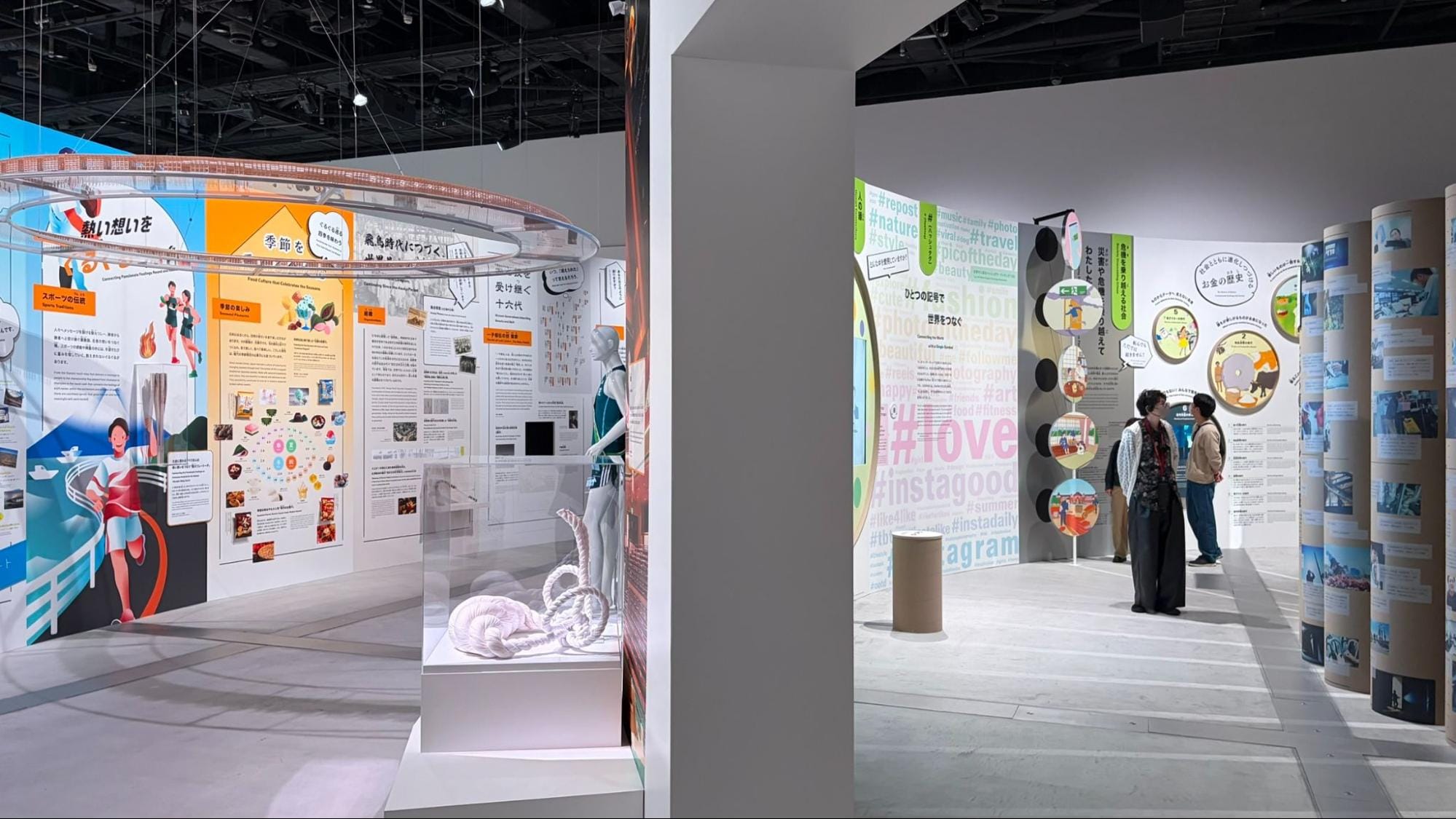
I really could not tell who the show was supposed to be for— despite nothing indicating an aim at children, the tone was overwhelmingly simplistic, and there were many parts where it felt as though they were just trying to fill space. Visitors can enjoy, for instance, the revelation that people wake up in the morning, work during the day, and go to sleep at night. The audioguide was especially cringeworthy, with the exhibition’s mascot repeating ‘guru-guru’ at least once every two sentences. It gets old fast. At the very least, the lack of a cohesive vision seemed congruent with the rest of the museum.
Overall, the museum feels like a classic case of too many cooks in the kitchen spoiling the broth. There’s really no issue with the idea of a dedicated venue for rotating exhibitions and performances without a set theme, but the issue comes from pretending that a theme exists where there is none. Instead, the museum wants to be everything to everybody, conflicting ambitions spreading vision thin and leaving the resulting project on flimsy foundations.
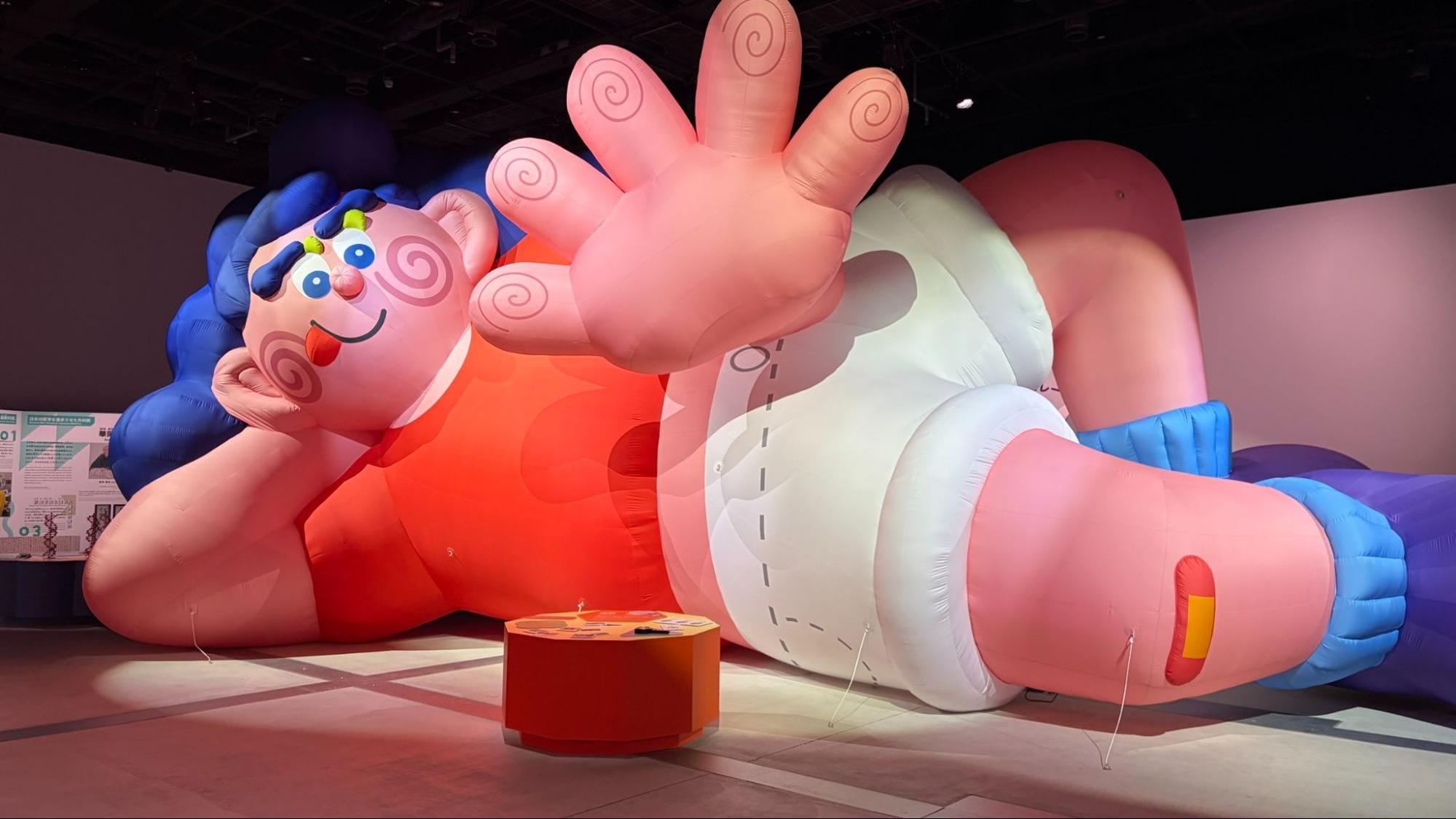
An inflatable version of the guru-guru exhibition’s mascot UZU reclines at the exhibition’s exit.
Having said all of the above, with the museum’s beautiful space and clear ambition to house a diverse range of subjects and mediums I actually can see a scenario where things improve to the point that I’d re-evaluate my first impression— but as first impressions go, it’s not exactly stellar. For all the money that has been poured into the museum, they seem to have forgotten to inject something vital: soul.
Check it out if you’re around Takanawa gateway, but don’t be surprised if you leave with your head in a spin.