I had arrived at about 11 in the morning after passing through Atami, Izu’s foremost seaside resort town. Stepping onto the platform at Yoshiwara, I was struck by the quiet of the village— I had looked around a little on google maps beforehand, but the truth was that there was nothing here but houses, factories, a small park, and the tiny station of the Gakunan railway. A cargo train stood frozen at the end of the platform, its red containers sun-baking in a sequence of mass thrown into the horizon.
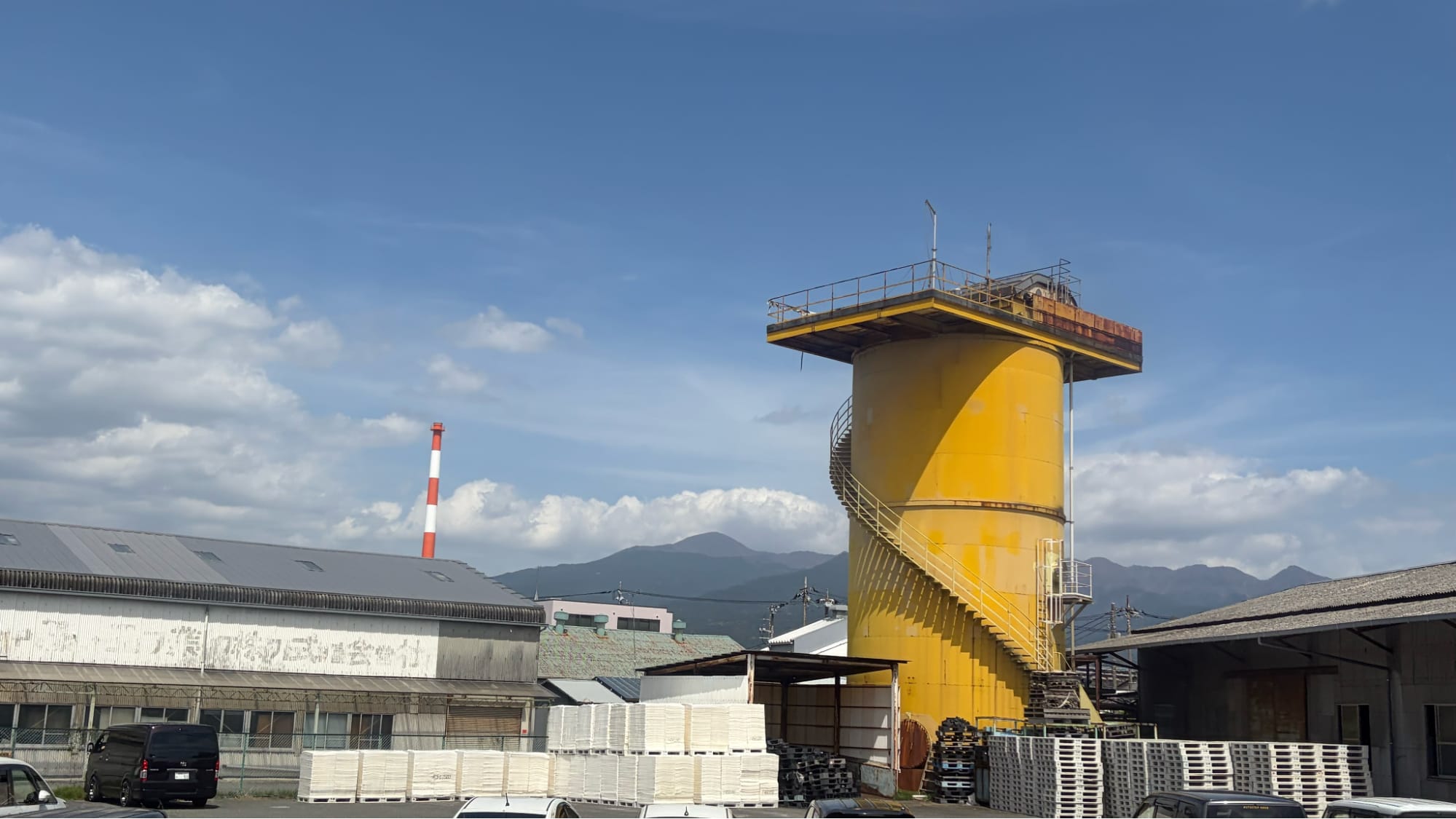
I had some time to kill until my train, so I ascended the 15 metre tower by the port and looked out over the sea and town. Soft sheets of Pacific air brushed against the empty streets. Above, the flat peak of Mt. Fuji stood hidden behind a curtain of sheer cloud. Factory chimneys— Red and white spires above the blue and grey roofs— studded the townscape and flat grey warehouses. Rust had already consumed whole parts of the town, and pale green speckles of ivy were beginning to creep across and swallow others. Running through the heart of Yoshiwara’s factory district is the Gakunan electric railway, a local line less than 10 kilometers long.
The line was founded as the Nissan Heavy Industrial Railroad in 1936 when the town was industrialized, and was used primarily for freight. The passenger rail company was founded in 1948, with the last of its 10 passenger stations completed in 1953. At its recorded peak in 1967 the railway saw an average of 6,034 daily passengers, a figure that dwindled to just 764 at its record low in 2020. After the closure of rail freight along the line in 2012, the line has been operated by a subsidiary of the original Gakunan Railway company, whose main business is now predominantly real estate. The majority of the parent company’s income actually comes from a golf course founded in 1955, its yearly earnings nearly doubling those of the present-day railway line.
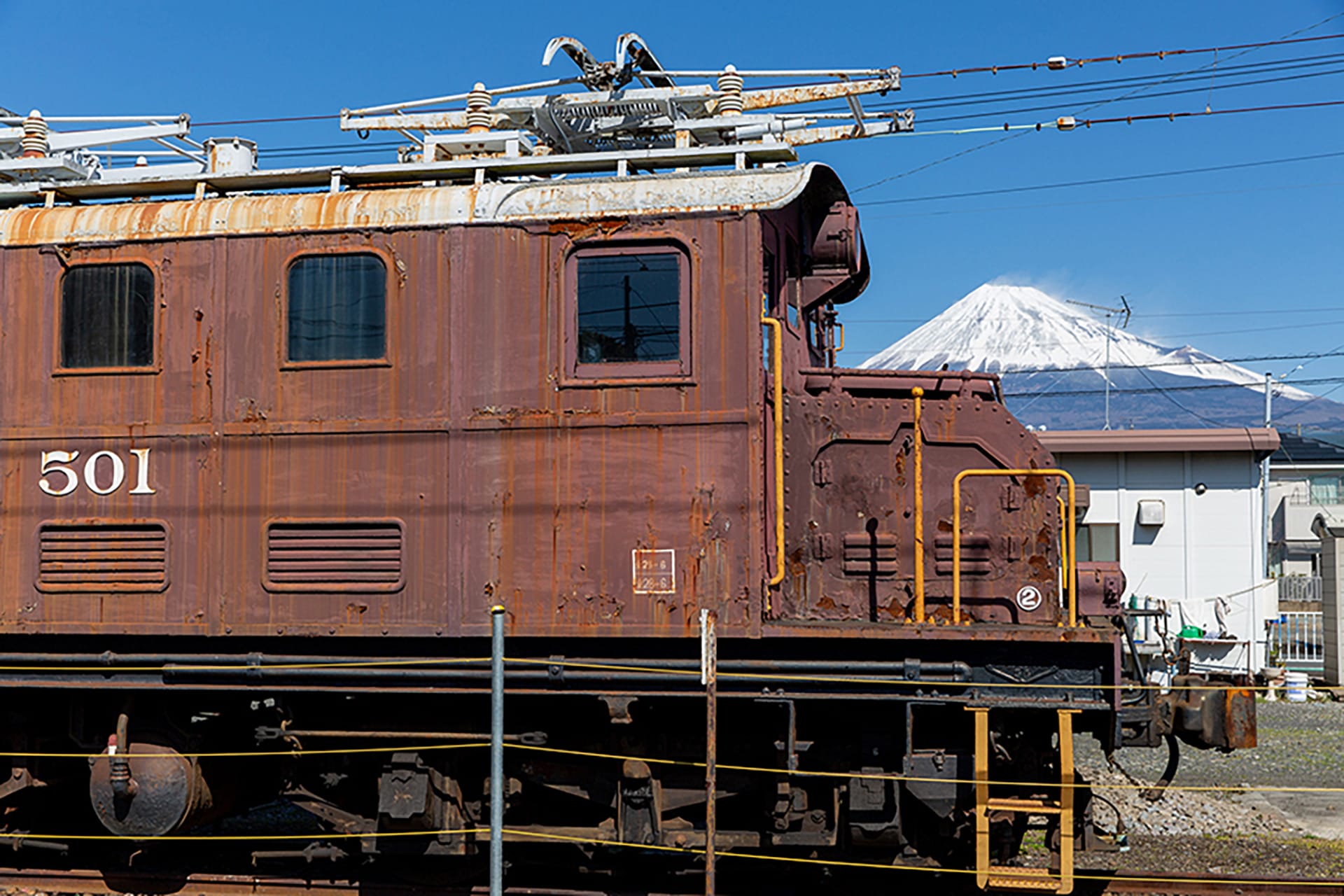
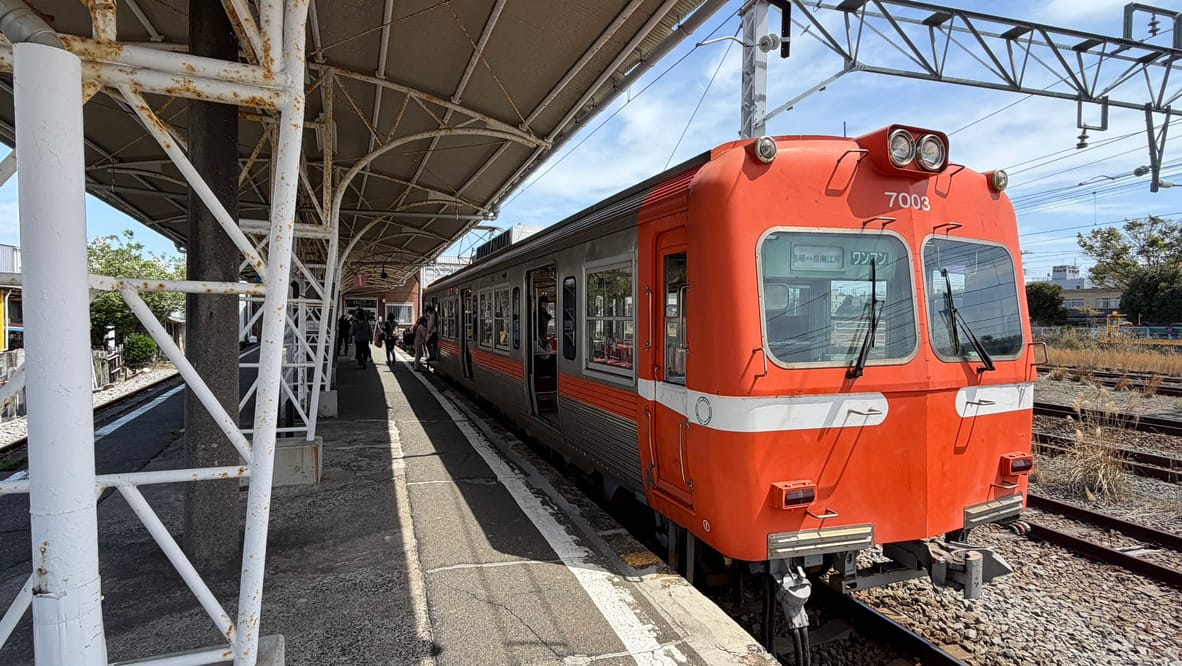
Today, the railway is best known for its loving preservation of its vintage rolling stock, as well as the devoted enthusiasm of its operating staff. The line runs a range of carriages repurposed from vintage Keio line carriages, including two modified 3000 series carriages from Tokyo’s Inokashira line as well as a 5000 series carriage manufactured in the 1960’s. A small railyard near the midpoint of the line preserves a series of 1920’s and 1960’s electric locomotives from the railway’s cargo days, as well as a picnic space where visitors can dine with the trains on one side, and Mt. Fuji on the other.
On the day I visited, Mt. Fuji remained obscure behind a passing stream of thick clouds. The terminal station for the line is a short walk from JR Yoshiwara station, and is incredibly small. Despite its small size, the station still boasts a dedicated waiting room, history corner, gift shop, and ticket counter. The waiting room is filled with books for train enthusiasts, the air thick with the kind of nostalgic wooden scent that makes you understand why they make houses from gingerbread. The platform’s canopy, alongside those at 7 other stations along the line, were installed in 1968 and constructed from a unique tree-like shape. These structures were registered as an important national property in 2021 due to their innovative engineering and graceful forms.
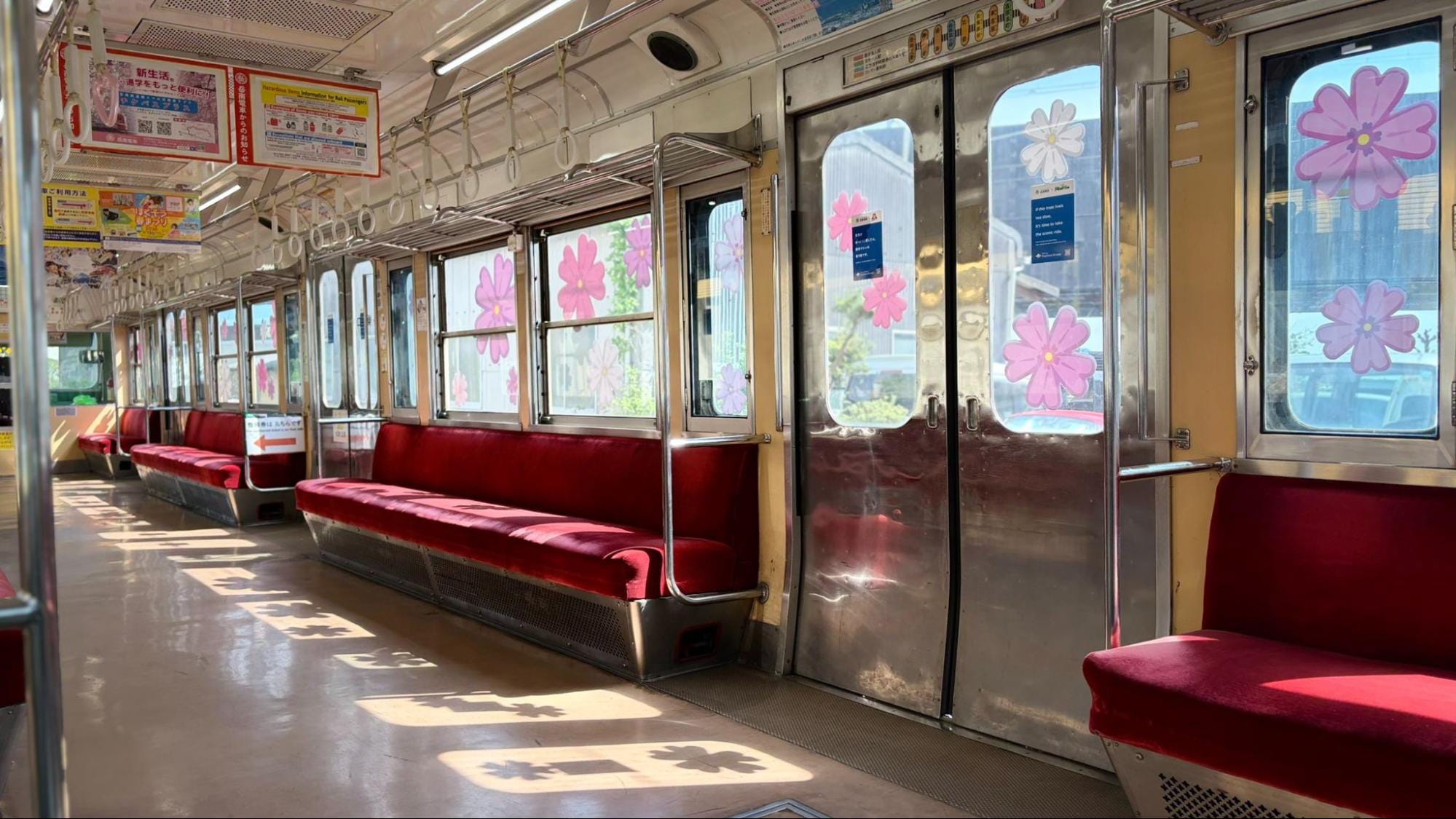
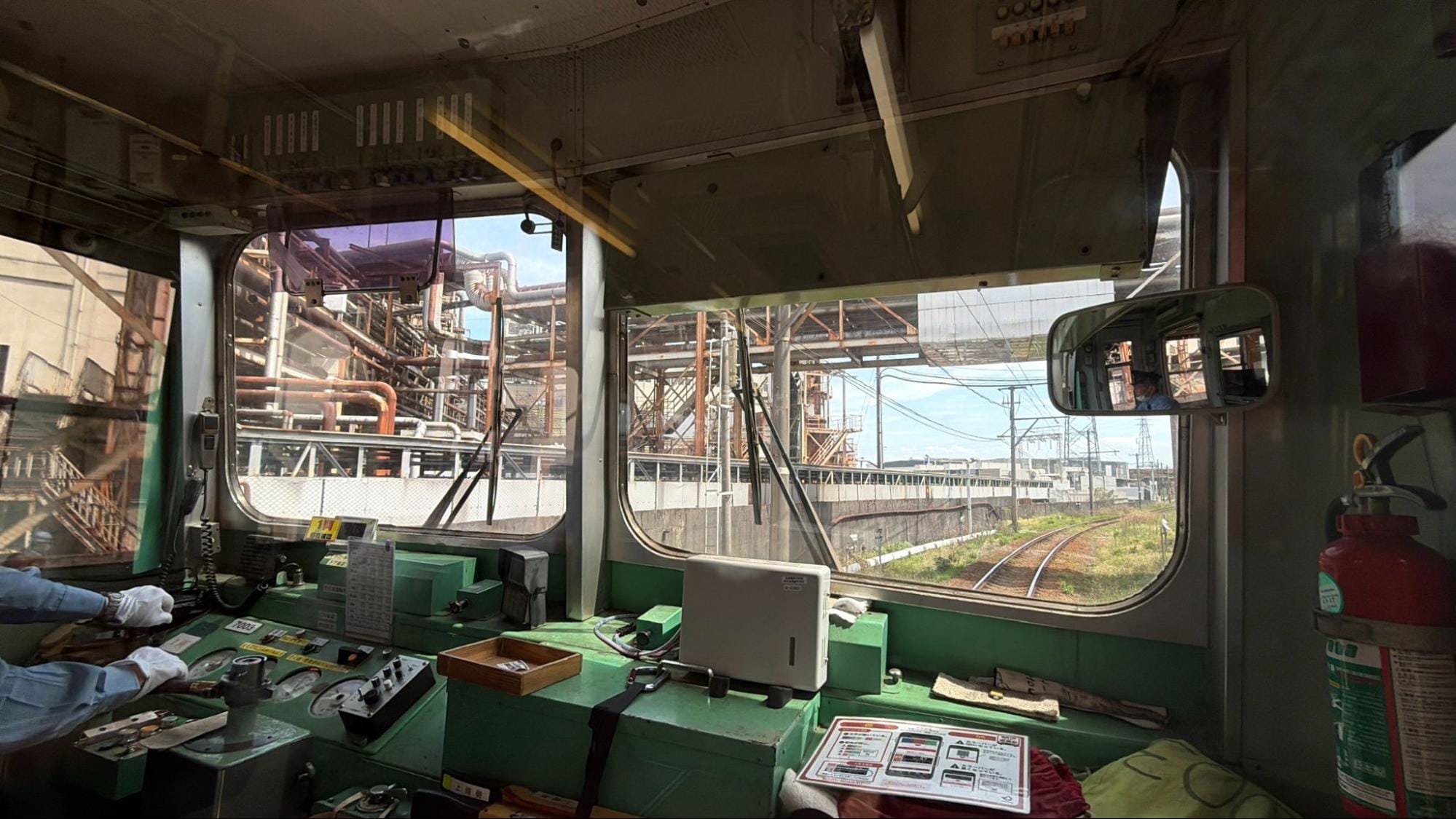
The train is filled with the interior scents of old metal and hot velvet upholstery dappled by panels of sunlight. Leaving the station, we passed factory after factory as I began to sketch notes of the surroundings: The placeless white pillars of a box-shaped funeral home. A wall of green ivy under the steel mill. Flowers growing on the short concrete platforms. Blue roofed homes in curving rows. Piles of twisted scrap metal above concrete walls. Jagged blue peaks plumbing the humid air above the towns.
Eventually, we arrived at the final stop, where I got off to explore the surroundings: there is a small coffee shop open two days of the week, as well as a local rice and koji store within the station open on weekends. The bright orange carriage of the 5000 series lies in the sun on the other side of the platform. The elevated tracks of the shinkansen stand just nearby, the occasional bullet train sliding past in a white streak. Eventually, my train home arrived, its exterior covered in huge decals of colorful flowers against its turquoise-painted exterior.
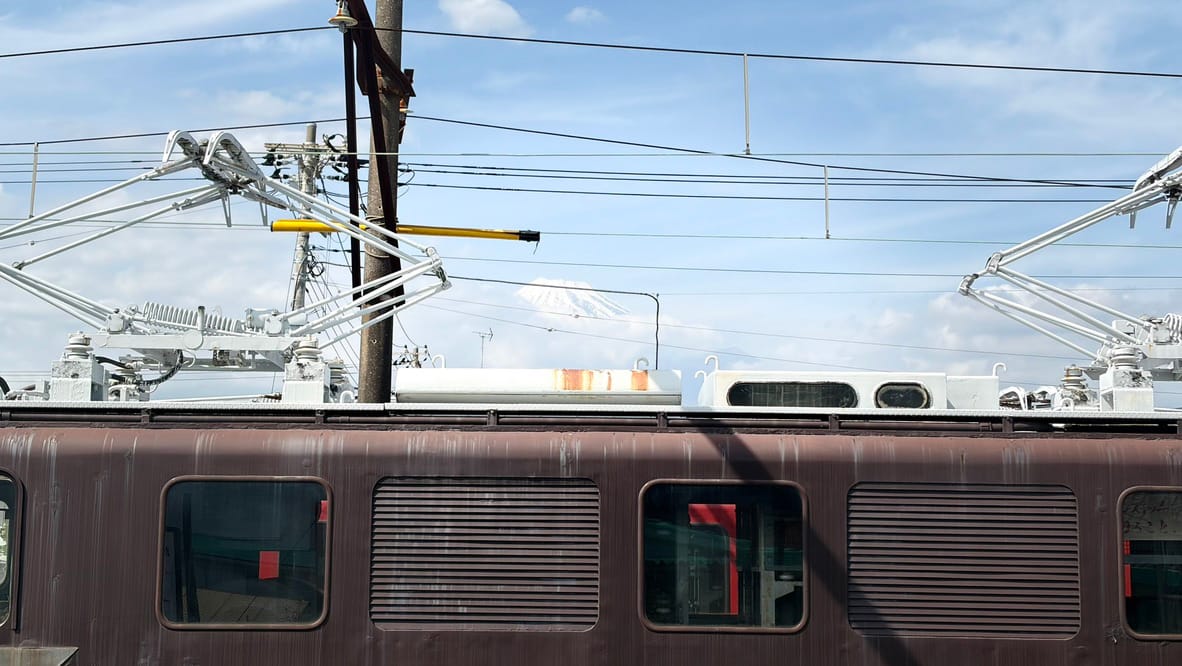
The operators of the line understand its uniqueness: the strange juxtaposition of the colorful carriages against the bare industrial landscape of the town, the tanks and pipes of its factories dwarfed against the elegant and impossibly massive blue-white silhouette of Mt. Fuji. The line celebrates this strange atmosphere with its regular night photography trains, allowing riders to photograph the illuminated shapes of the trackside factories. The line also runs a series of special events, such as special commemorative tickets for Mt. Fuji day (February 23rd), as well as a scenic all-you-can drink Beer train during the height of summer. Mt. Fuji is visible along the entire line — depending on the weather, that is.
If you’re around Shizuoka or Izu — an area famous for its bountiful hot springs, blue oceans and stunning Mt. Fuji views— make sure to pay the line a visit for a truly unique and atmospheric day trip.