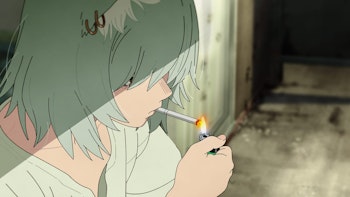
The resurgence of interest in the Mobile Suit Gundam franchise over the past 5 years has been driven primarily by stories that anyone can enjoy, regardless of knowledge. It’s easy to bring a new generation into a franchise as expansive as this when you have a story like Witch From Mercury or GQuuuuuuX, stories that don’t require fans to read an encyclopedia before watching. Mobile Suit Gundam Hathaway: The Sorcery of Nymph Circe is not one of those stories, though there’s still enough style to keep those fans engaged in a rewarding political intrigue primarily aimed at those deep in the historical weeds of the Universal Century.
The first film was already a dense character portrait seeped in not just the history of the events of the original series and the lingering shadow of Char Aznable, but the politics of the inequality that fueled this conflict and remain an issue following the Earth Federation’s victory. Like the novels from which these are adapted, the Gundam Hathaway story is one of character-driven studies of morality against inhumanity and oppression, something further emphasized in this second installment of the planned three-part adaptation to this story.
That first film began as high-powered delegates were on a spaceship bound for Hong Kong, with our protagonist Hathaway Noa also present. This is a disguise, however, as he is secretly Mafty Navue Erin, the leader of Mafty, a terrorist organization opposed to the Earth Federation’s policies and the increasingly oppressive policies of control exerted against immigrant and minority populations by its police force while protecting the economic and social power of the elites. At a time those same elites are exacerbating pollution on Earth and declining living conditions, it provides legitimacy to their acts in the eyes of some of the oppressed.
It’s on this flight a group posing as Mafty board, bringing Noa together with Federation Colonel Kenneth Sleg, one of the controlling military figures in the Australasian sphere, and a mysterious woman named Gigi Andalusia, as they subdue the forces and recuperate in Hong Kong. What follows in that first film is a fascinating character-driven study, more than an action-driven affair, with the simmering tensions of morality against the visible acts of these police forces, the Man Hunters, and the shared feelings of both our Federation loyalist and anti-Federation duo for the muse of Gigi. She stands as a neutral ground, personally driven more by her intrigue in these broken souls and her attraction to Noa’s hidden depths and the power she holds to guide and control Kenneth.
It’s a fascinating, dense, engaging first part whose appeal comes in the film’s charged politics and the love triangle-esque relationship of our main trio on this backdrop. The brutal destruction of human and machine, when rarely visible, are given equal weight, the colossal scale of these Mobile Suits brutal in their destruction and power. The second film begins immediately where the first ends off, after Noa returns to Mafty, with Kenneth, once at least cordial to his new companion, increasingly aware of his true identity as the leader of his enemy. This second film begins so abruptly, in fact, that it even opens with an extended recap before immediately jumping into new events.
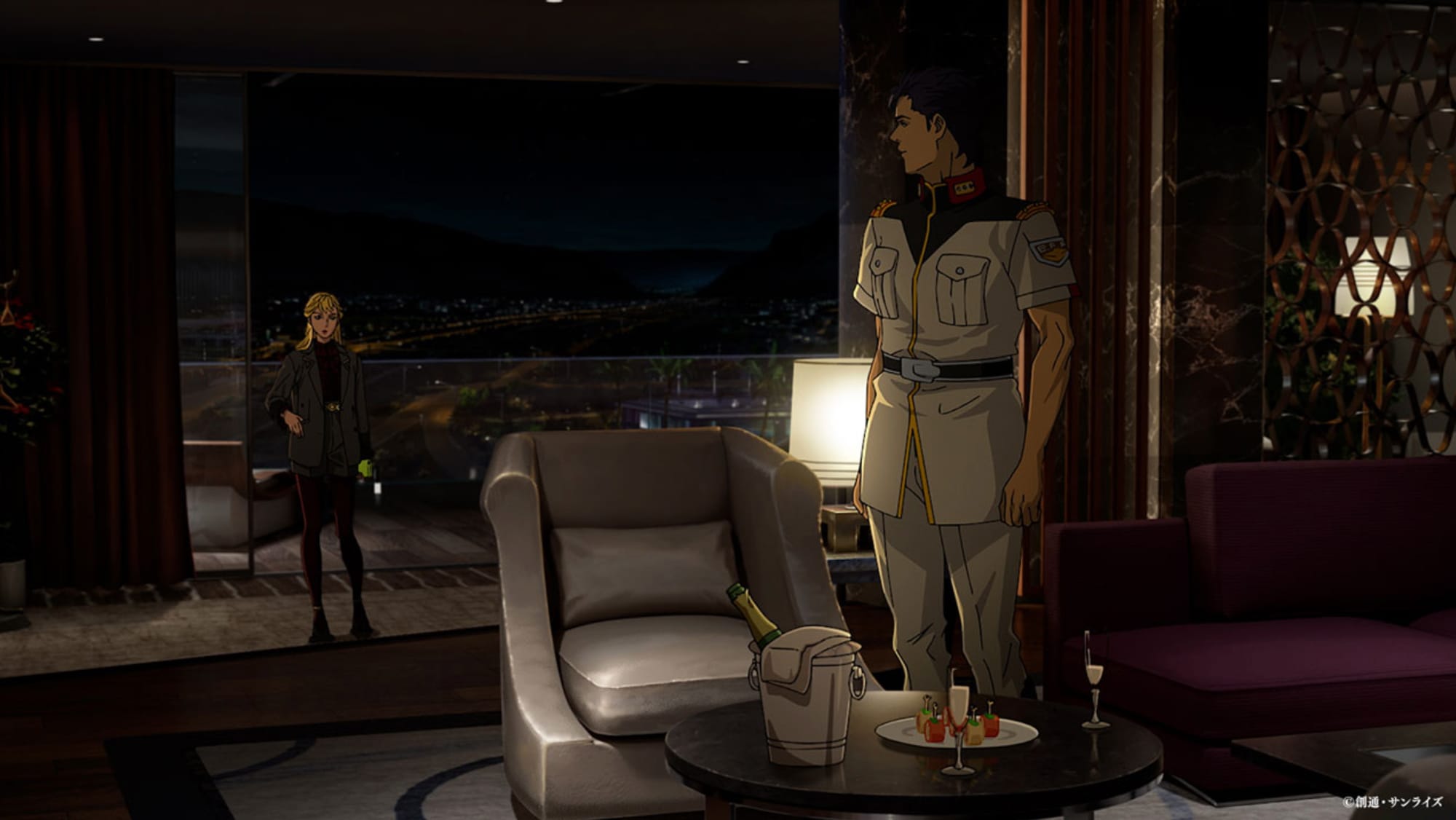
Mobile Suit Gundam Hathaway: The Sorcery of Nymph Circe is a tale of two halves. The first is explored from Noa’s perspective, returning to the Mafty base and reacquainting with his comrades. The other follows Gigi, aware of both sides of this fight and unsure where their loyalties as someone more attuned to getting what they want by weaponizing their sexuality than involving in a fight like this. Their Newtype powers make it near-impossible for anyone to lie to her, usually making her irresistible to them as she uses the knowledge she gains to play to their desires. It’s a power that could change the tide of a fight in either hands, but she acts for now by her own sympathetic draw to the broken people leading both sides of this fight.
As Noa becomes aware of Mafty and its actions (and his influence over that) growing beyond what he can control, this fear merges with the decade-long guilt of failing to save the person he cared for that the internal contradictions over his direction and actions eats further at his fraying mental state. Meanwhile, Kenneth is seeking to defend the conference he plans to attach featuring these diplomats, and Gigi is preparing to decide where she lies. These momentous decisions are established and explored without a Gundam appearing on screen, and just like in the first film their involvement in this story is kept to a minimum. This is a story of political intrigue, and one that at its best is enthralling, if challenging to follow without deep knowledge of the series.
Beyond the Gundam universe, it’s also a story that feels intensely relevant to the world of today - while this second film centers less on showcasing the motivations for Mafty to fight having established this prior, the violent oppression of immigrants and the rhetoric surrounding them conducted by the Federation only feels more relevant against a backdrop of events in the US and the growing rhetoric bubbling in Japan in recent years. This is from a story written in the 1990s too, albeit one which only feels more relevant in today’s turbulent times, and seeing it develop through these characters is more engrossing as a result.
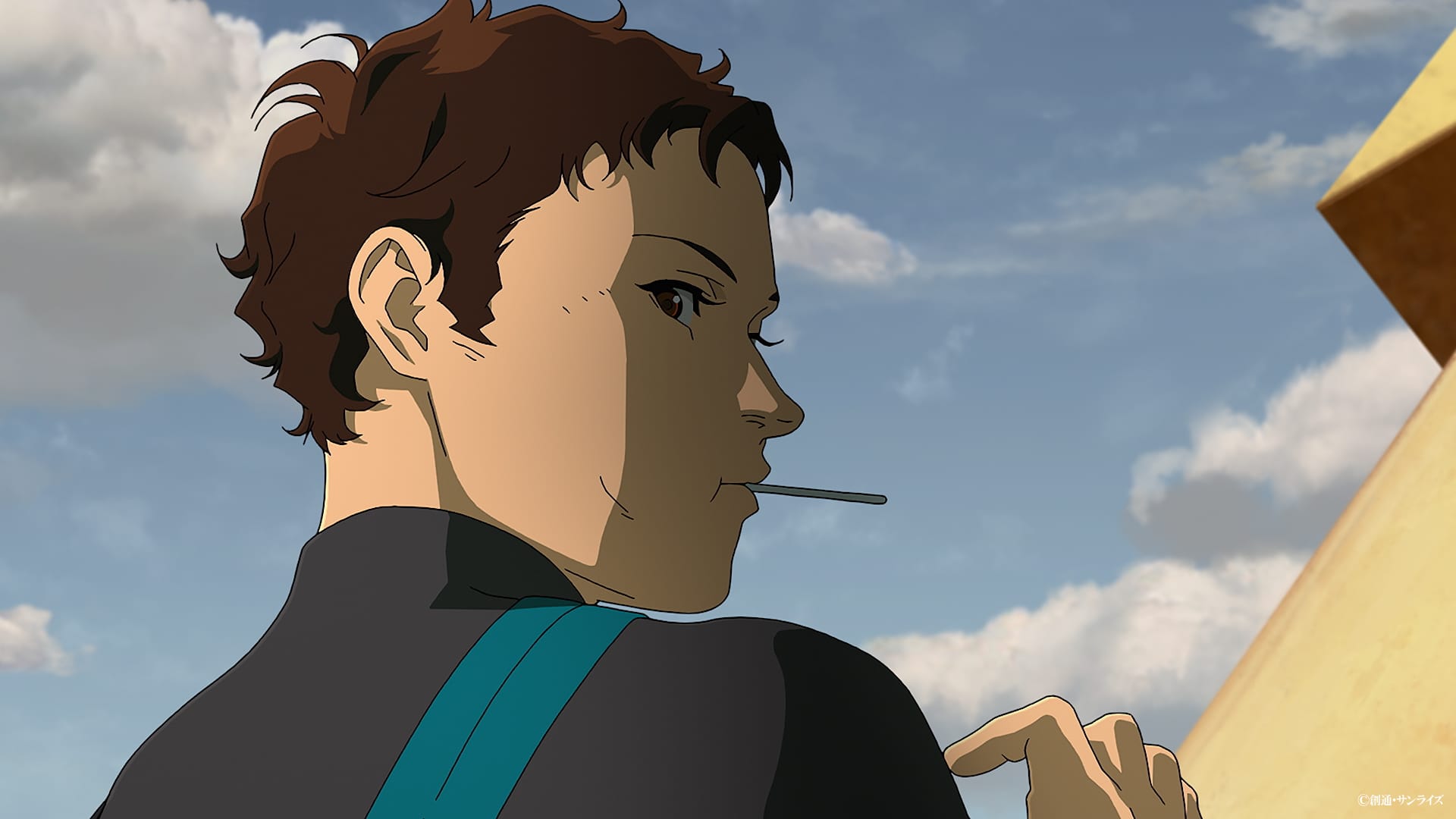
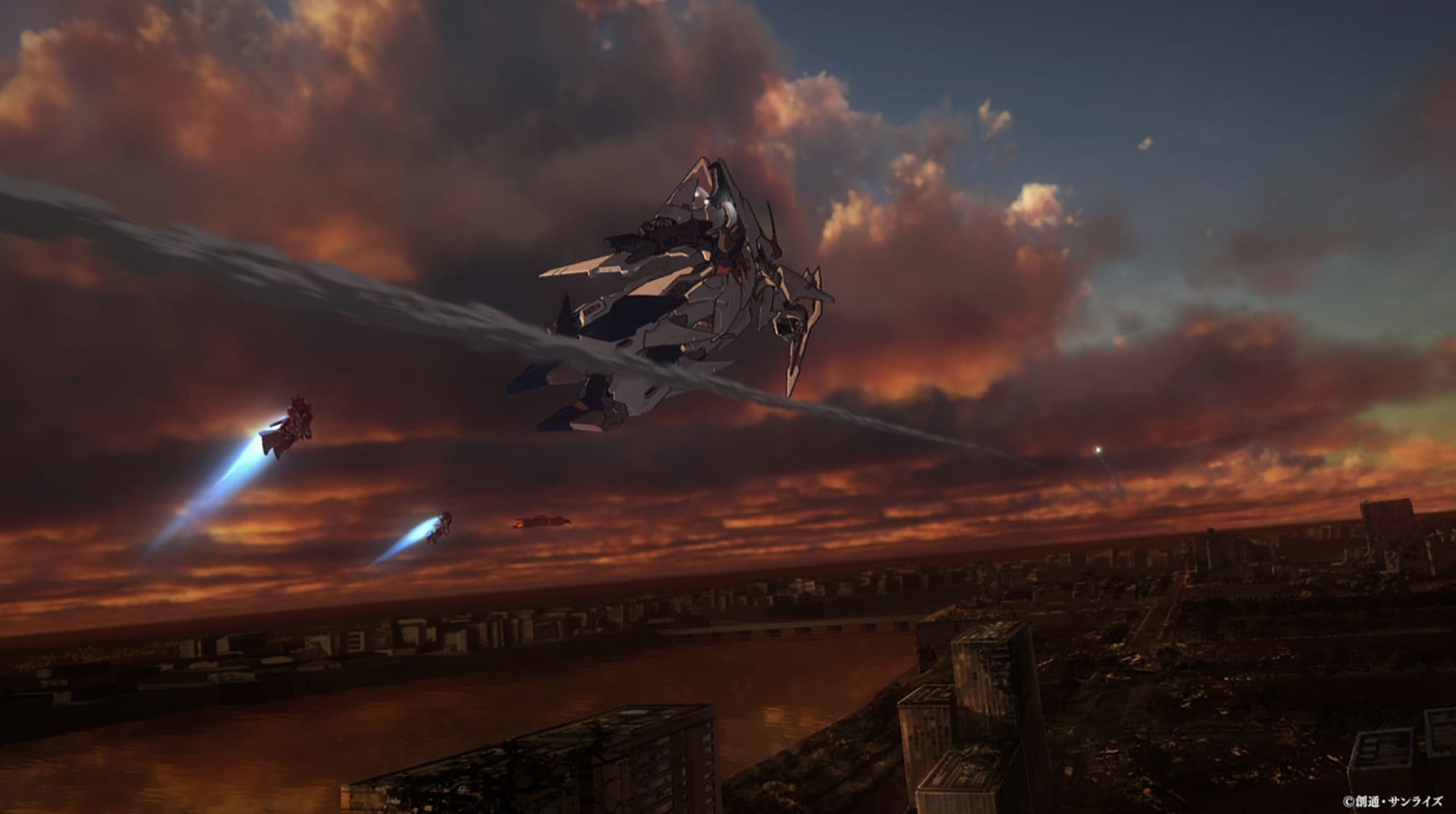
The film continues to probe at this through conversations of power washed in shades of gray that are dense yet stimulating when placed against the systems this story critiques. Yet even beyond this, the film is a visual treat, bringing detail to the barren Mafty base and intricate Federation meeting rooms and Hong Kong cityscapes this story takes place against. Mafty are increasingly tracked and followed by Kenneth over the course of this film, building to the moment our three protagonists, once brief friends, are forced to face each other again. This is also when the Mobile Suits come into play, and their absence beyond this appearance makes their mechanical power and existence for death and control resonate much more when they finally do make an appearance.
It’s what Gundam does best. What’s a well-animated mecha if the series can’t define what’s worth sacrificing or fighting for?
That being said, the film’s biggest flaws are those unavoidable by nature of the story’s place amidst a broader narrative. As the second part of a planned trilogy, only emphasized by the recap at the start of the film, this is a disjointedly-paced film that struggles to define a beginning or end to its story because this story is not yet over. This is a film of meetings, proper nouns, planning for a future showdown, but no true closure until it sets its stall on the uneasy love triangle that unintentionally formed between these characters. It’s hard to follow, without a real payoff.
That being said, for all it may not leave a satisfied conclusion for audiences to sit with, Mobile Suit Gundam Hathaway: The Sorcery of Nymph Circe sets up a finale with the potential for greatness if it sticks the landing. As its well-animated conclusion plays and the stakes for its third part are defined over the rocking sound of Guns ’n’ Roses’ “Sweet Child ‘O Mine,” this left-field needle-drop and everything this film builds up has me oh-so-excited to see where all this ends up.