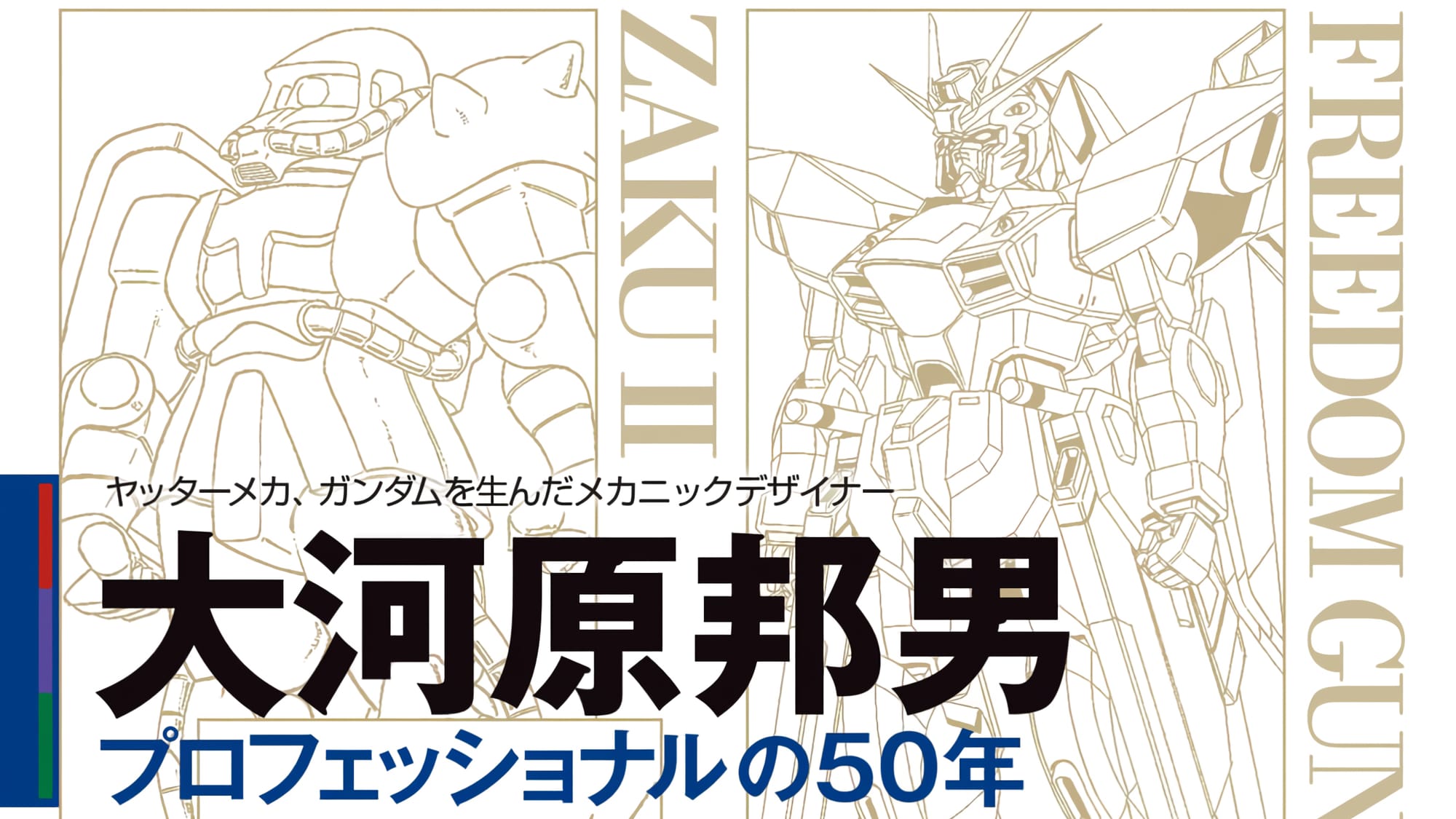
Kunio Okawara: A man whose tactile artistic sensibilities & taste for the practical singularly impacted the creative overture of anime as an entire medium. His in-house robot design work in the early 1970s for the many Tatsunoko Productions mainstays like Science Ninja Team Gatchman and Time Bokan (Yatterman) crystallized in Okawara becoming the first formally titled “mechanical designer.” This would lead Okawara to oodles of mecha design work at a number of different animation firms, most fortuitously Sunrise, where after working on Invincible Steel Man Daitarn 3 with plucky creative Yoshiyuki Tomino the duo would create Mobile Suit Gundam; The resulting “real robot” anime boom forever changing the course of Japanese animation.
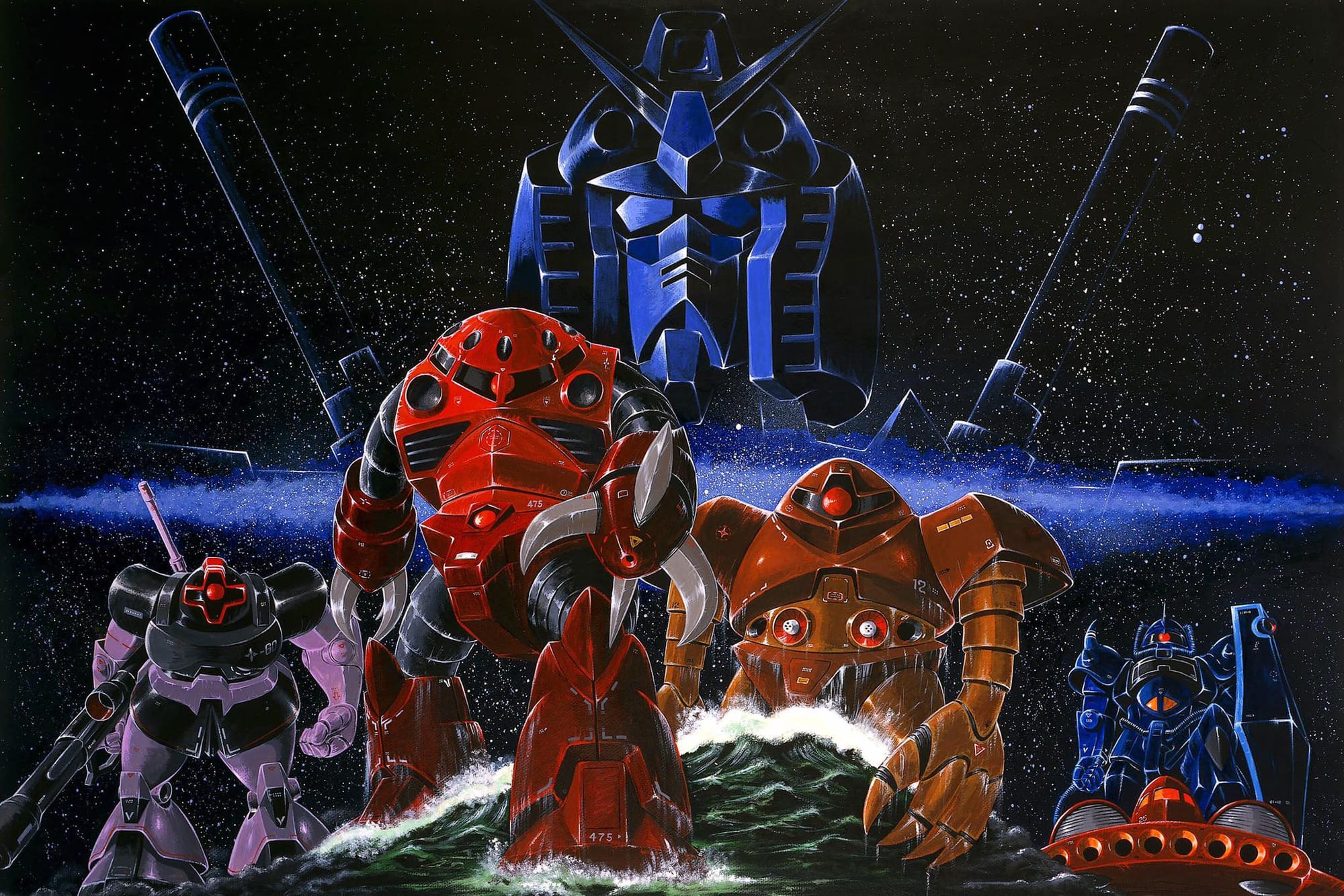
“Real robot” meant eschewing the super-hero antics of your Mazingers and your Tetsujin 28s in favor of (relatively) grounded and heady stories rooted with a kind of realism that necessitated a comparatively true to life mechanical designs that would add weight and plausibility to the war torn and philosophically challenging stories Japanese creatives wanted to squeeze into their shows primarily made to sell toys! Thankfully, Kunio Okawara excelled at the task of giving vision to the types of machines that both kids wanted to buy toys of and adults wanting more out of their entertainment could sink their teeth into.
He excelled so much in fact he would continue mechanical designing for 50 years straight, eventually releasing a compact memoir about his experience whose title roughly translates to “Kunio Okawara: The Designer Who Birthed Yatter-Mecha and Gundam’s 50 Professional Years.” Conducted as a series of long-form interviews and coming in, it's a relatively breezy read (provided you know Japanese) that offers, in addition to a personal history the mechanical designer that made being a mechanical designer a full time job, a space colony full of insight into what goes into successful mechanical design.
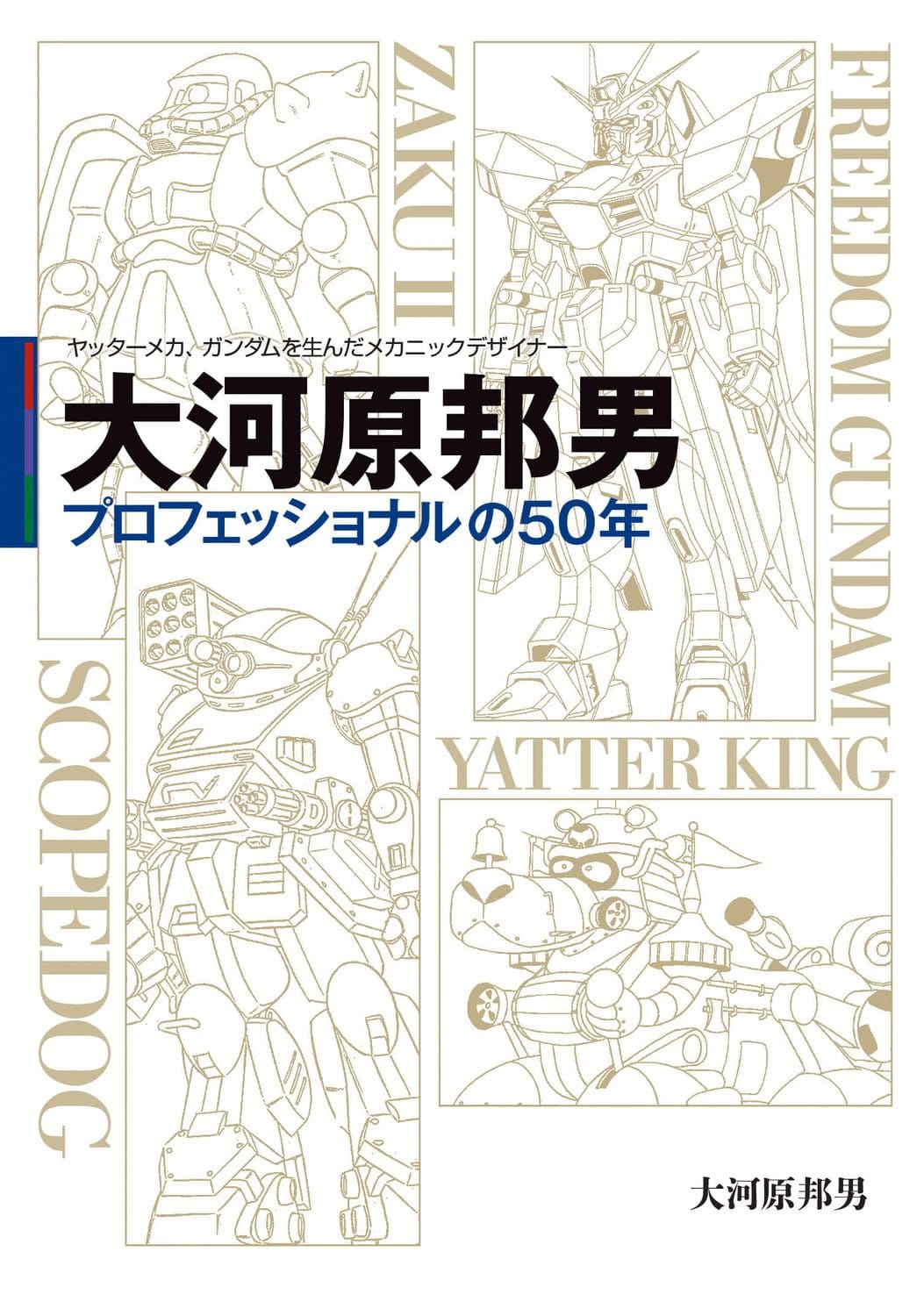
We’ll leave his life story in his own words, but here’s just a bit of the design wisdom Okawara’s autobiography has to offer;
A designer needs to take in a variety of influences from the real world.
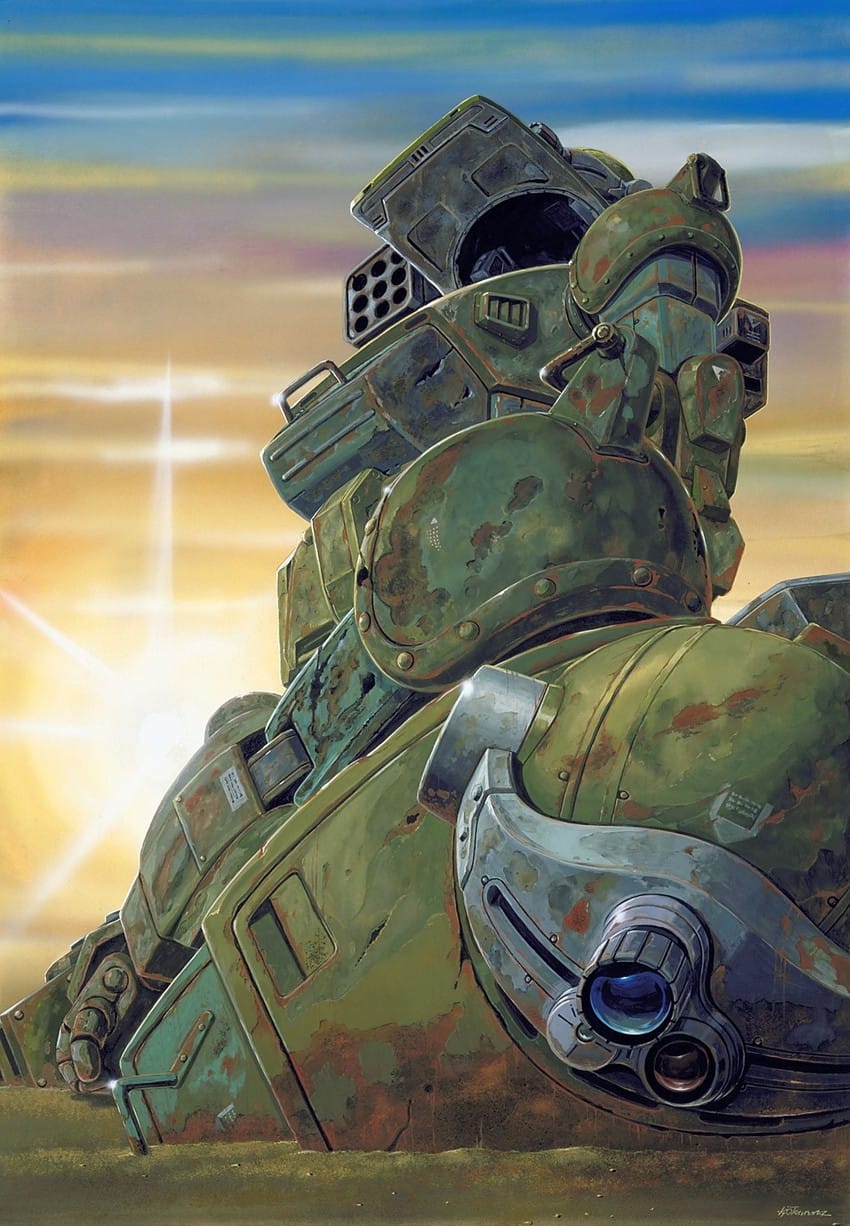
Kunio Okawara got his formal introduction to the arts briefly majoring in graphic design at Tokyo Zokei University, in the era where graphic design was all done by hand. He actually transferred to the textile department of his school and got a job out of college designing suits, not of the mobile variety, the kind flesh and blood people actually wear. As a kid in post-war Japan he was surrounded by soldiers and military machinery which very much informed Okuwara’s approach to designing the original RX-78-2 Gundam and Armored Trooper VOTOM's Scopedog amongst many other iconic mecha.
The appeal and uniqueness of a design needs to be understandable at a glance.
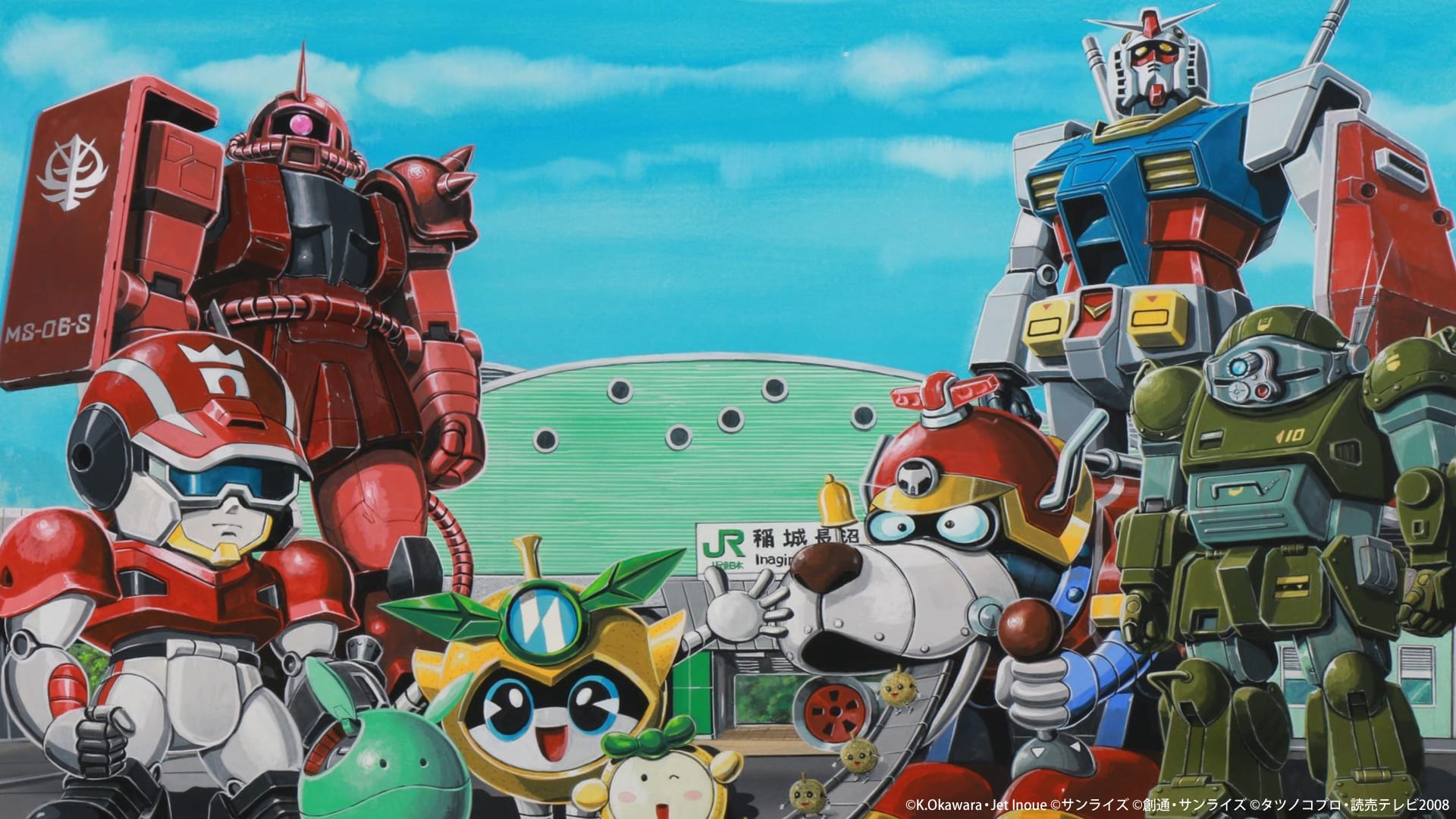
“Great character designs can be recognized by their silhouette alone.” Some permutation of this sentiment constitutes Design 101 for any creator whether they make spiky-haired anime monkey boys or grizzled giant 50 ton machine gun toting robots, and it applies to Okawara’s design philosophy as much as anyone’s. In his autobiography he directly cites Pokémon as a creation that perfectly exemplifies the idea that designs should be able to be decipherable at a glance; The pro designer stressed this philosophy extends beyond a character, mecha, or in this case Pocket Monster, being visibly recognizable alone but also that one should be able to instantly gauge what any given design’s “abilities” may be.
Keeping in mind what exactly one is designing for is paramount.
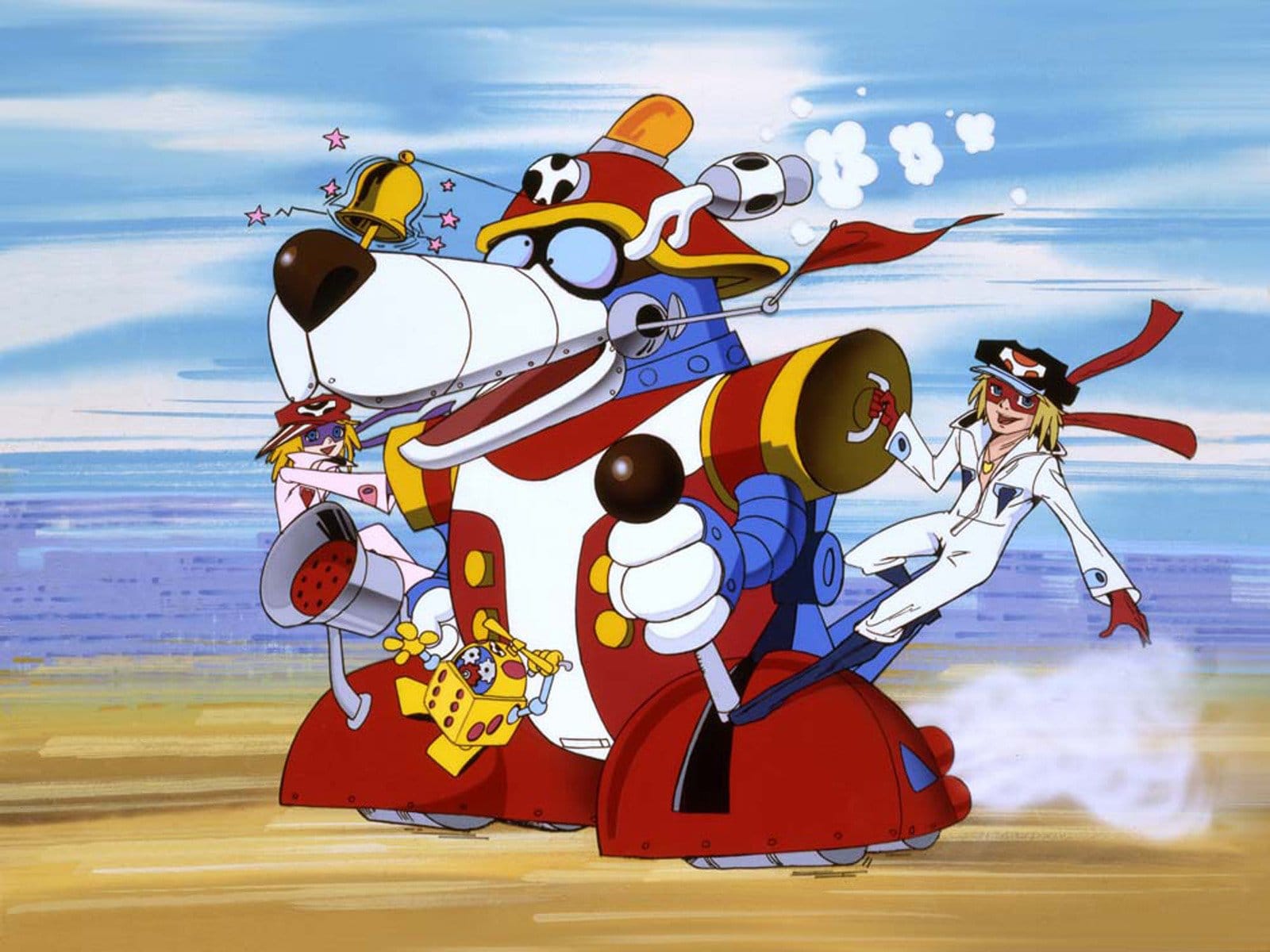
When Kunio Okawara got involved in creating mecha for anime, Japanese cartoons were not some beloved national treasure nor a billion dollar industry; It firmly existed in the realm of children’s entertainment and toy commercials. Thus creating designs that wouldn’t, in his own words, upset the local PTA board remained of utmost importance. Approach to design goes beyond when one needs to, say, design a giant mechanical dog named “Yatter-Wan” or when the boss man orders you to go back to the real robot well just because that's what the respective anime series call for, one needs to keep in mind everything from how a design may look as a plastic toy to more esoteric concerns such as what a design may invoke in its audience.
One should be agreeable, always remaining open to input and compromise.
While every visual artist fills sketchbook after sketchbook with their own ideas, continually trying to realize their vision on paper, animation making first and foremost remains a collaborative effort between many individuals and, worse, sponsors. Sometimes a series director has a real specific idea for a robot, sometimes a toy company wants to make a certain type of toy and brings with them a paycheck that keeps an anime studio afloat for another year. Kunio Okawara has long since accepted the fact that a designer’s job is to design and that revisions come part and parcel to the process. He actually prefers having a little bit of direction, saying it's the worst when his orders are simply for “a cool robot.”
Creating for the virtual should be treated as creating for real life.
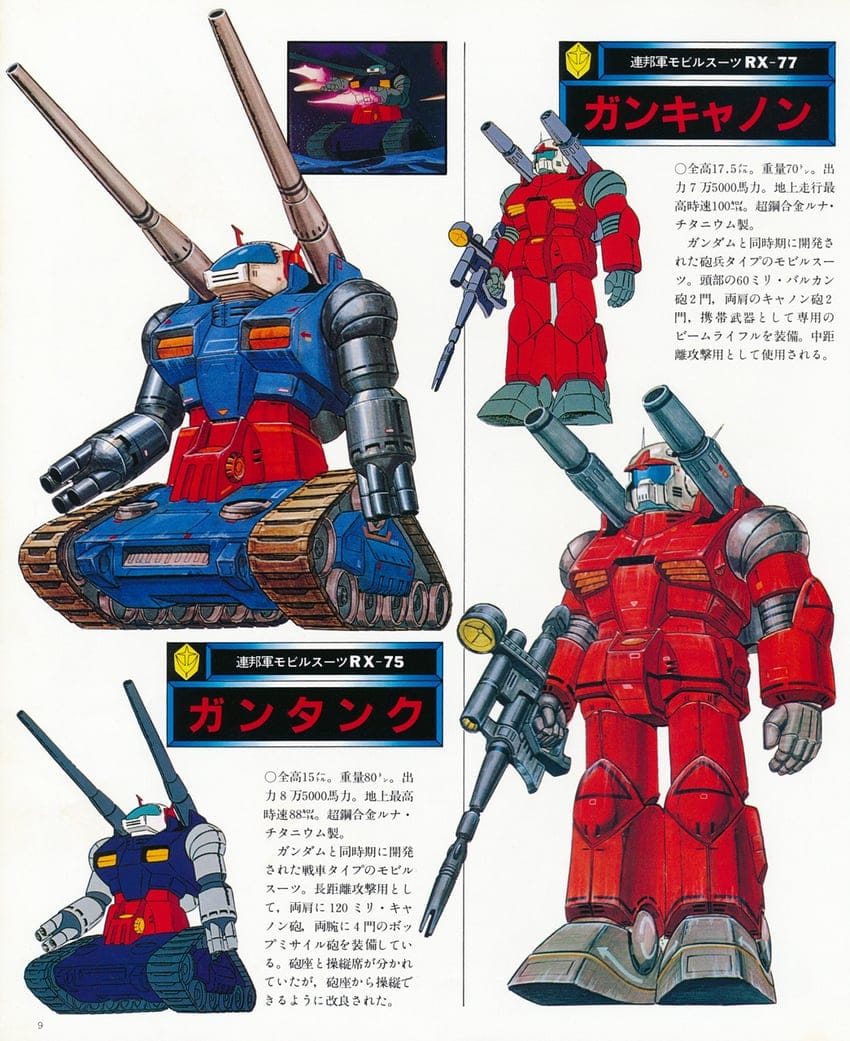
For Kunio Okawara, every part of his designs form a holistic hole that goes beyond the visual; They’re functional. Of course bipedal giant robots that run around war zones and White Bases that oversee space battles don’t exist in reality, but Okawara designs them as if they do. The placement of every joint on the Gundam is intentional because, of course, how could a mobile suit run around without proper joint and limb proportions. A Guncannon couldn’t move as freely carrying around two giant mortars, that would necessitate the tread-bound Guntank. Okuwara truly believes a design won’t work unless one can understand how it moves, no matter how cool it may look.