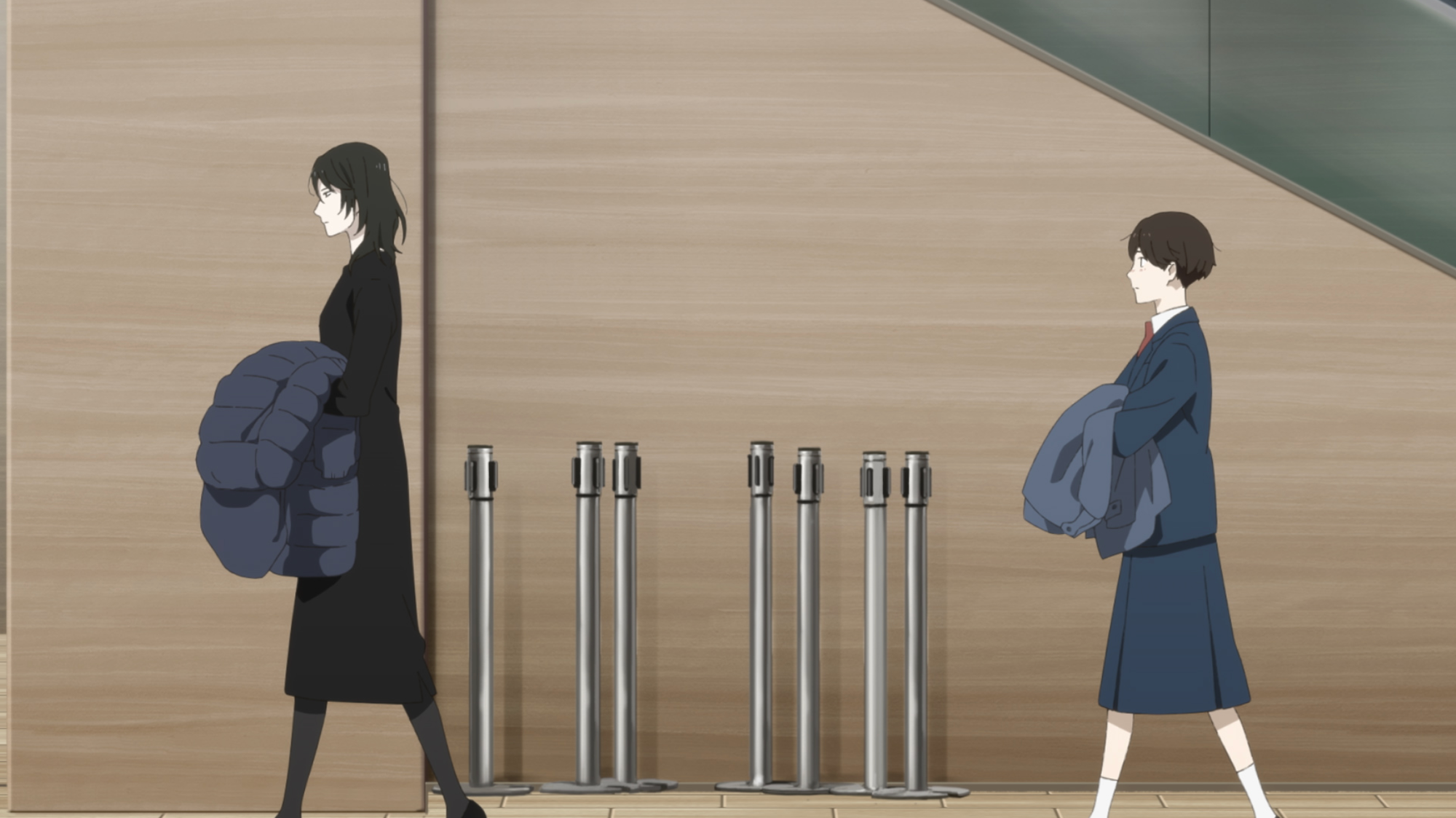
Journal with Witch (Ikoku Nikki) was one of the highlights of the dark winter months when it comes to anime, toning down the intensity for a pensive reflection on grief and the way death forces us to reflect on the relationships of our past. Yet this is far from the first retelling of this careful story, capturing a painful universality core to what makes this story so effective differently in each medium.
The core of this story is the very different perspectives of our two characters brought together by tragedy. Asa Takumi is just 15 years old when both of her parents die in a sudden car accident, leaving her alone and forced to come to terms with such a shocking change to her life. At the funeral, just meters away from her, the family can’t help but gossip about how tragic it is but that there’s nothing that can be done to help her. Makio Kodai was the sister of Asa’s mother, though the two didn’t get along. Even at the funeral, she’s unmoved because internally, she hated her sister and the fact they could never see eye to eye.
That being said, it’s not like she can sit by seeing the isolation and judgement Asa is facing. Despite not being the most responsible adult and her reservations about her sister, she doesn’t want to see the young girl left to feel so alone, seeing herself in the girl and wanting to see her given a chance. Makio invites her to live together with them, and the pair start a new, uncertain life together while attempting to work through the feelings that have rose from the loss of this overhanging figure in both of their lives.
When trauma hits, the guard is raised, both between yourself and others and yourself and the raw emotions that have yet to process. When it happens at such an emotionally-turbulent time of your life as adolescence, a time when so many emotions rumble that you can’t help but bury them, that only becomes harder. The original manga by Tomoko Yamashita debuted in 2017 and centered on the conflicted emotions and experiences of this novelist and niece, both internalizing this pain at their own pace and struggling with how to interact with others.
The anime adaptation is closest to the original story, taking the extended runtime of a TV series to fully explore the ideas of the original series in full. In particular, the thesis tying all the minor life moments that culminate in this plain but intimate tale is that progress is never linear. Many dramas can fall into a habit of finding a need to evoke the strongest reactions from an audience by relying on sea-change moments of realization, when often the only time you realize that someone has actually grown from their past is once the journey is long since over.
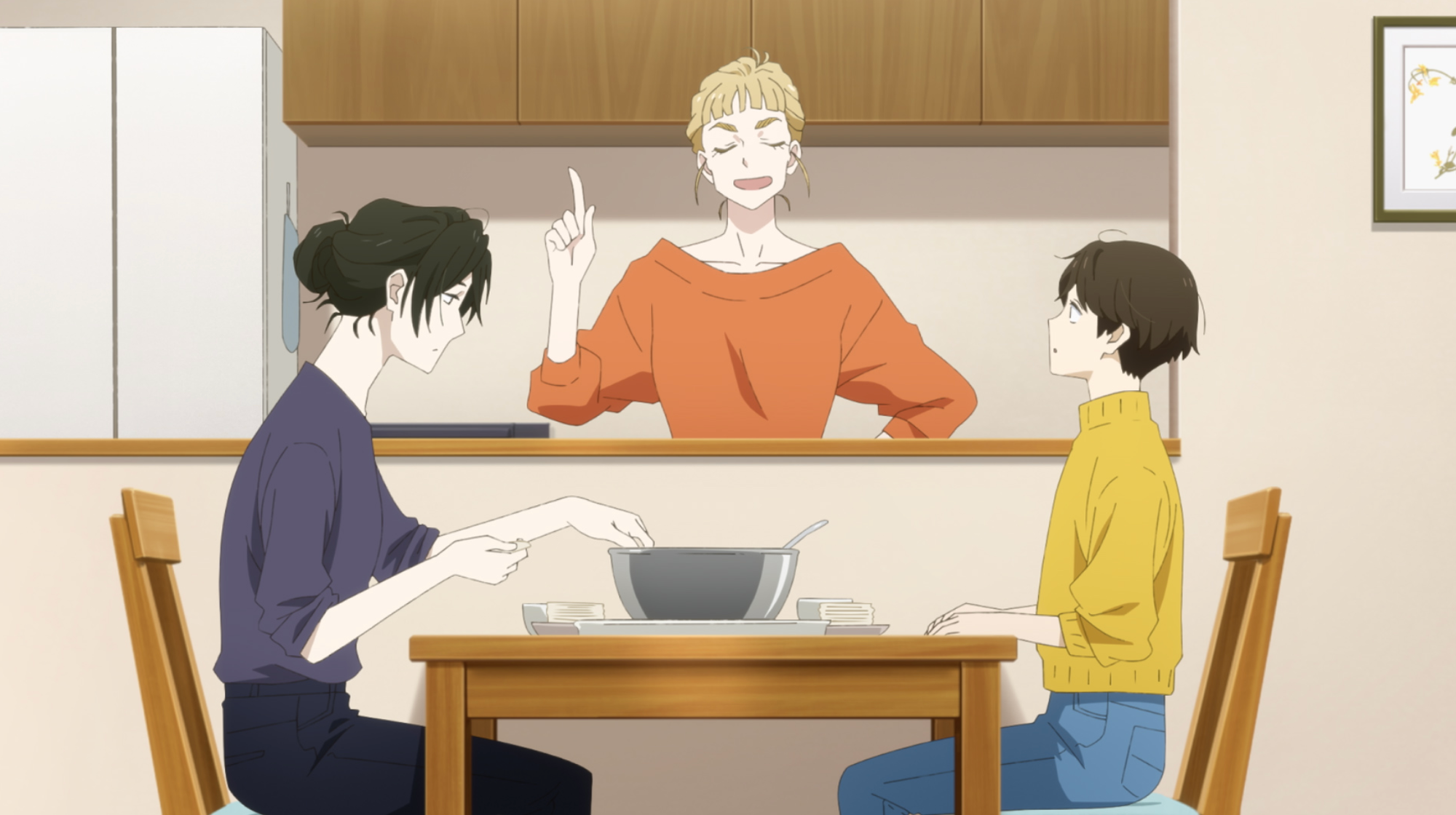
The story avoids melodrama for minor moments in life like cooking and sleeping as ways to capture the subtle readjustments that come with processing grief. When Makio brings Asa in so suddenly, the need for paperwork to make themselves a legal guardian or what it means to take someone on hasn’t been considered, and that naturally means the pair need to return to Asa’s home to clear it out and collect her belongings and anything needed to assert legal guardianship. Often, it takes a trigger for the emotions to come loose, so facing this head on leads both to witness flashbacks to the judgmental eyes of the lost mother and sister speaking and staring back.
But how both compartmentalize this pain is unique to the individual. Asa tries to brush past it until her body reaches a limit, leaving her to rest in a vast, lonely void. It’s isolating, but it’s safe, and the anime and manga both quite literally visualize this through imagery of sandy deserts, both a dry and lonely place for anyone trapped within it. Makio is far more selfish and blunt to others, but it’s its own wall to sincerity and can hurt when spoken incorrectly to the wrong people. Both lack true life experience that make this harder, and when the world wants them to slow down and face it they get angry that they will never understand.
The story possesses an emotional intelligence so rare in any medium to tackling grief’s endless abyss. Neither character begins or even ends this story equipped to deal with the complexity of what it means to grieve, because no one ever fully gets through that journey. Media often wraps a bow on that, but to live means to constantly grieve, whether that be people, time, relationships that were and could have been. You could compare it to a journal, exactly like the one Asa keeps upon recommendation that becomes the bridge. It’s a way for the series to sidestep drama for subtle acts of kindness that say far more, especially when Asa graduates from middle school and navigates new relationships in high school.
The live action adaptation of Ikoku Nikki (released in 2024 and known in some English-speaking territories as Worlds Apart), directed by Natsuki Seta, inevitably flattens the manga in its attempt to compress the manga into just two hours, yet similarly avoids melodrama for a reflective coming-to-terms with this reality. There’s a therapeutic quality to these stories, a mature and adult story not attempting to be universal and thus feeling more personal to anyone who has had to go through these emotions.
Another thing that makes these stories so rare is how female-driven they are. Such stories remain rare in a Japanese context, but this female-written manga with female staff in charge of the anime and live-action films, there’s a particular way these stories touch on the camaraderie in gendered relationships that enhances the question of grief at the core, also. Female friendships, and both opposite- and same-sex attraction, are confronted, forming a backbone of what makes this story feel so complex and layered.
A complexity not limited to adults in this tale. Where other stories can minimize younger voices as less valid, when it comes to grief all are equal. Asa’s pain is just as real and difficult to understand, her friend Emiri’s attempts to support and understand her feelings also have no simpler answer’s just because she isn’t yet an adult. Music is a step on that journey of grief, which Asa uses to challenge herself by joining a k-on club in high school as an outlet for herself, but it’s not a cure. As much as this story is about grief towards the dead, it’s about the emotions of the living, and no one has ever fully understand how the brain comprehends what it means to live with others.
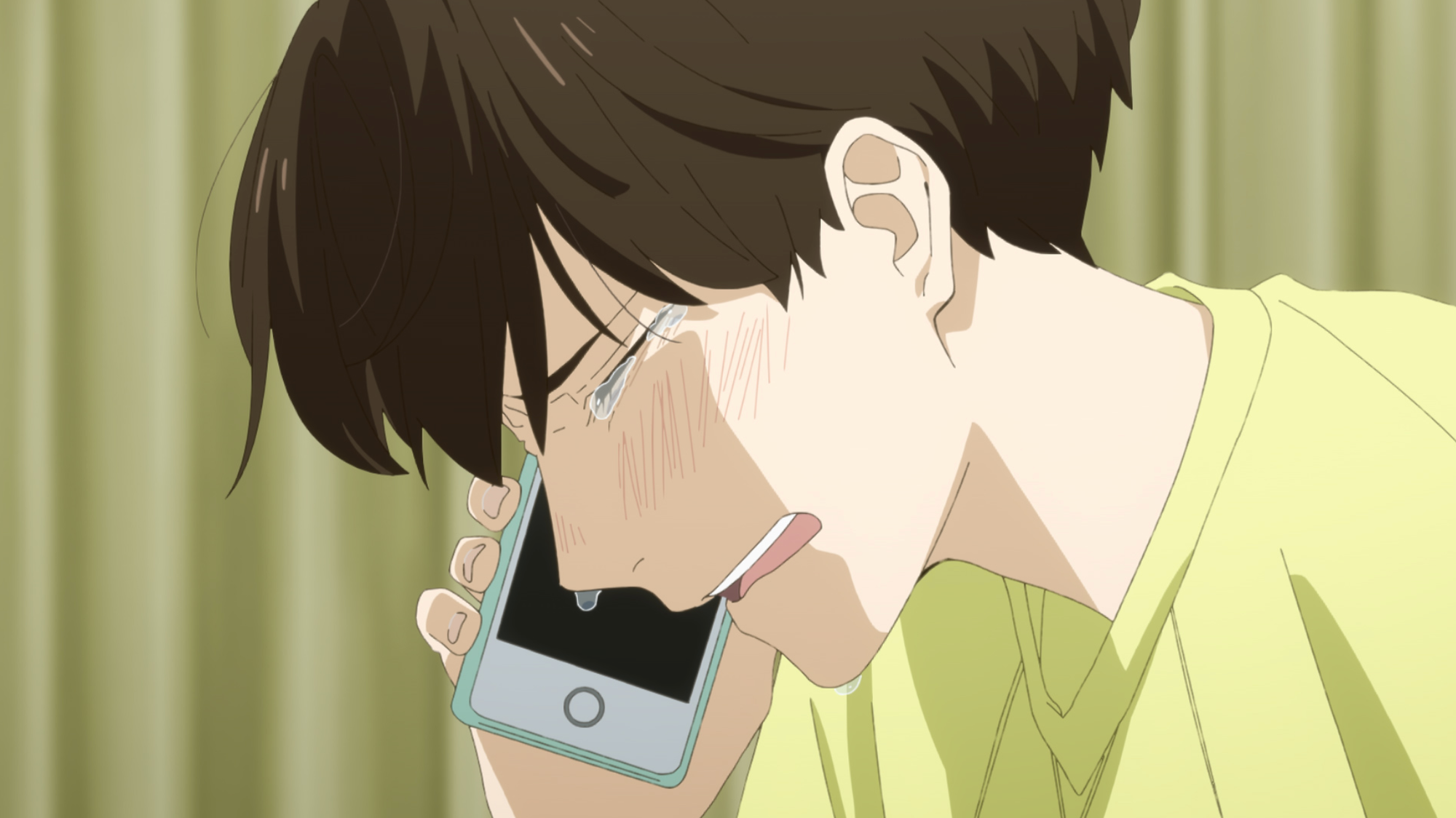
Journal with Witch was the highlight of the winter anime season because few stories in animation tackle this topic as well as this. It’s soft animation subtly reflects the muted emotions of our protagonists who despite their differences deeply understand one another and try and find ways to coexist and step forward together. They understand a co-dependence and independence shared is what will break through the desert of isolation, every feeling of frustration and pain and joy no less real. It’s also a unique adaptation, standing apart from 2024’s live-action film by taking more time to tackle Asa’s character and question how the worldview of others and ourselves can be shaped by grief.
If I had to pick which story explores these ideas better? That would be the anime, bringing to life the manga while giving it more time. Not every story needs more time, but when we talk about a journey like grief that never truly ends even when a story chooses to conclude, more time isn’t a bad thing. Both come recommended for their own progressive, intertwined ways of handling grief like few stories do. Write it down, in Asa’s way turn it into a song. To step forward, you need the agency to accept it and take the first step.