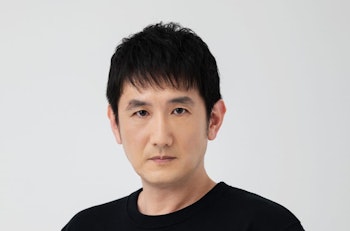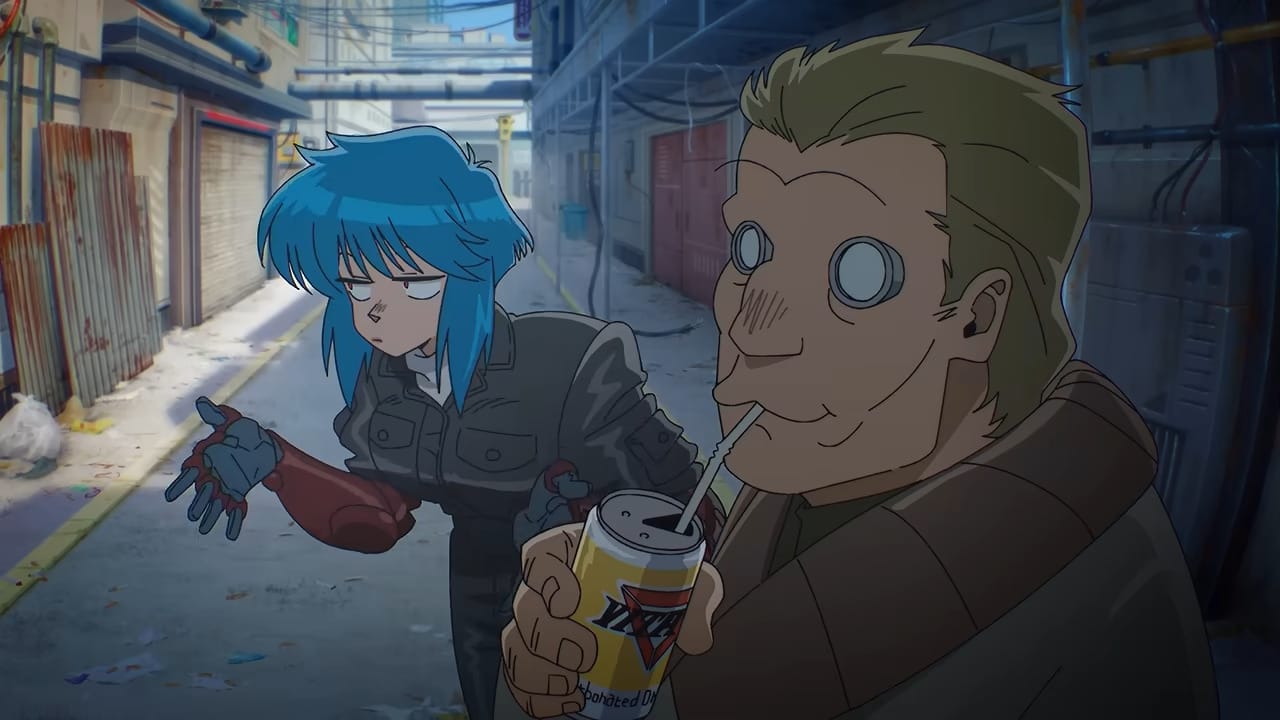
Since its announcement, the staff at Science Saru making the new Ghost in the Shell anime have insisted on the project’s faithfulness to Masamune Shirow’s source manga. “For the world, the story, the characters, and the theme,” the show’s director Mokochan said to Gizmodo, “it’s all the same because we want to honor the original manga.” He even went as far as to say, in an interview with WIRED Japan (quoted by Automaton), that he sought to “achieve spiritual union with the original creator,” like a Japanese itako (or “trained female medium.”)
I’ll be honest and say that this wasn’t what I wanted from a new Ghost in the Shell project. At this point, between two films, multiple television series and an OVA, the series had been done to death in animation. That’s why I was initially excited that Mokochan, one of Science Saru’s most promising new directors, was collaborating with Toh Enjoe, a smart and famously impenetrable science fiction writer. Could they show me a Ghost in the Shell I hadn’t seen before? When it came out that they were slavishly adapting the manga, I was bummed. If I wanted to read the manga, I could just go do it. So I did.
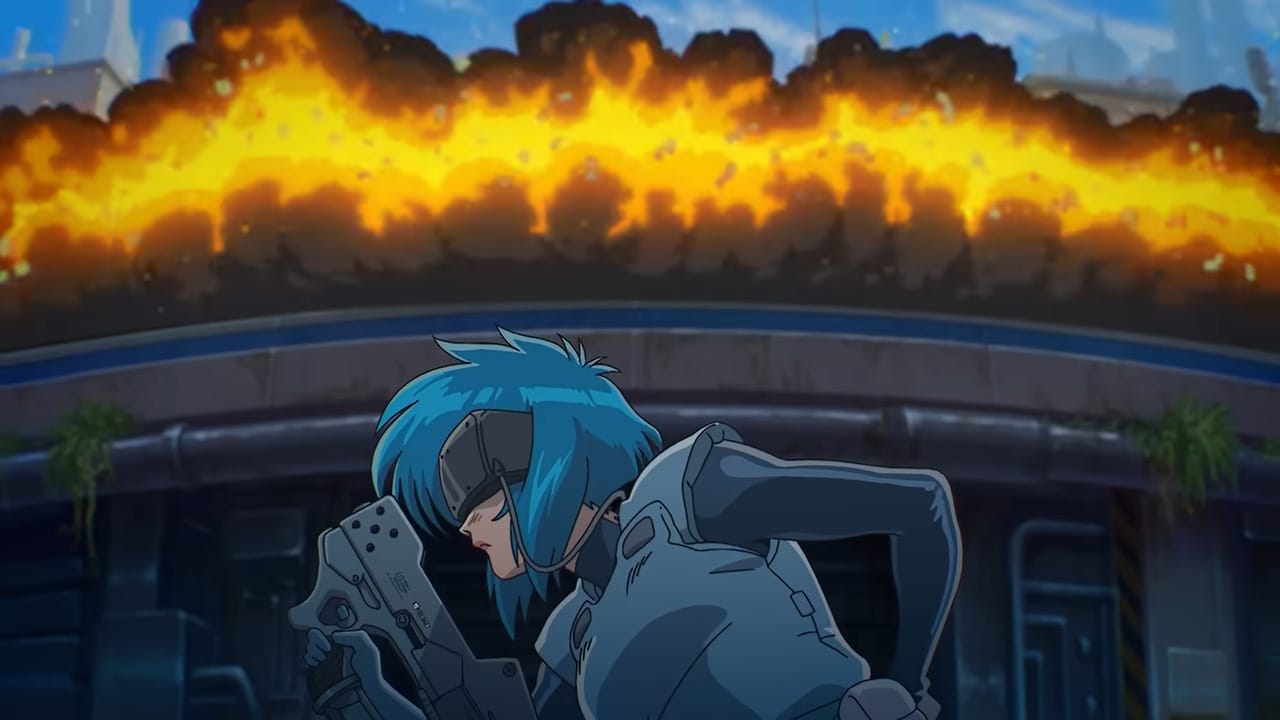
You see, up to this point, I’d never actually read Shirow’s original Ghost in the Shell. Instead I grew up with the excellent 2002 television series Stand Alone Complex. I had also seen the famous 1995 film, although its relative coldness initially frustrated me. (It wasn’t until just a few years ago, when I rewatched the film for an article, that I finally “got” it.) Shirow’s manga by comparison I had always taken for granted, as an obviously great work that I would get to one day when I was ready. That day finally came a week ago, when I picked up the book to better understand what Mokochan and his team at Science Saru was doing.
As you’d expect from the various anime adaptations, Ghost in the Shell is a science fiction cop drama about a cyborg named Motoko “the Major” Kusanagi who solves crimes with her colleagues at Public Security Section 9. There are beautiful women, explosions, and cool vehicles, like you’d expect from this kind of story. Yet Shirow avoids human motivations in favor of overlapping footnotes, inscrutable politics and technobabble. A later conversation between the Major and an AI known as the Puppet Master abandons the physical realm for brain-expanding abstraction. It was around this point that I realized, “oh, this is why they hired Toh Enjoe.”
Shirow himself was an outlier in the manga world. An artist from Kobe with a day job, he made his reputation with fan comics rather than by working his way up as an assistant. As he said in a recent interview, when an editor came to scout him, he admitted that he had avoided signing a contract with a major publisher because “those are hard on manga authors if they run over a deadline.” While Ghost in the Shell is more accessible than his earlier work in some respects, it remains just as dedicated to Shirow’s specific niche interests. That the series became so popular anyway speaks to Shirow’s skill as an artist.
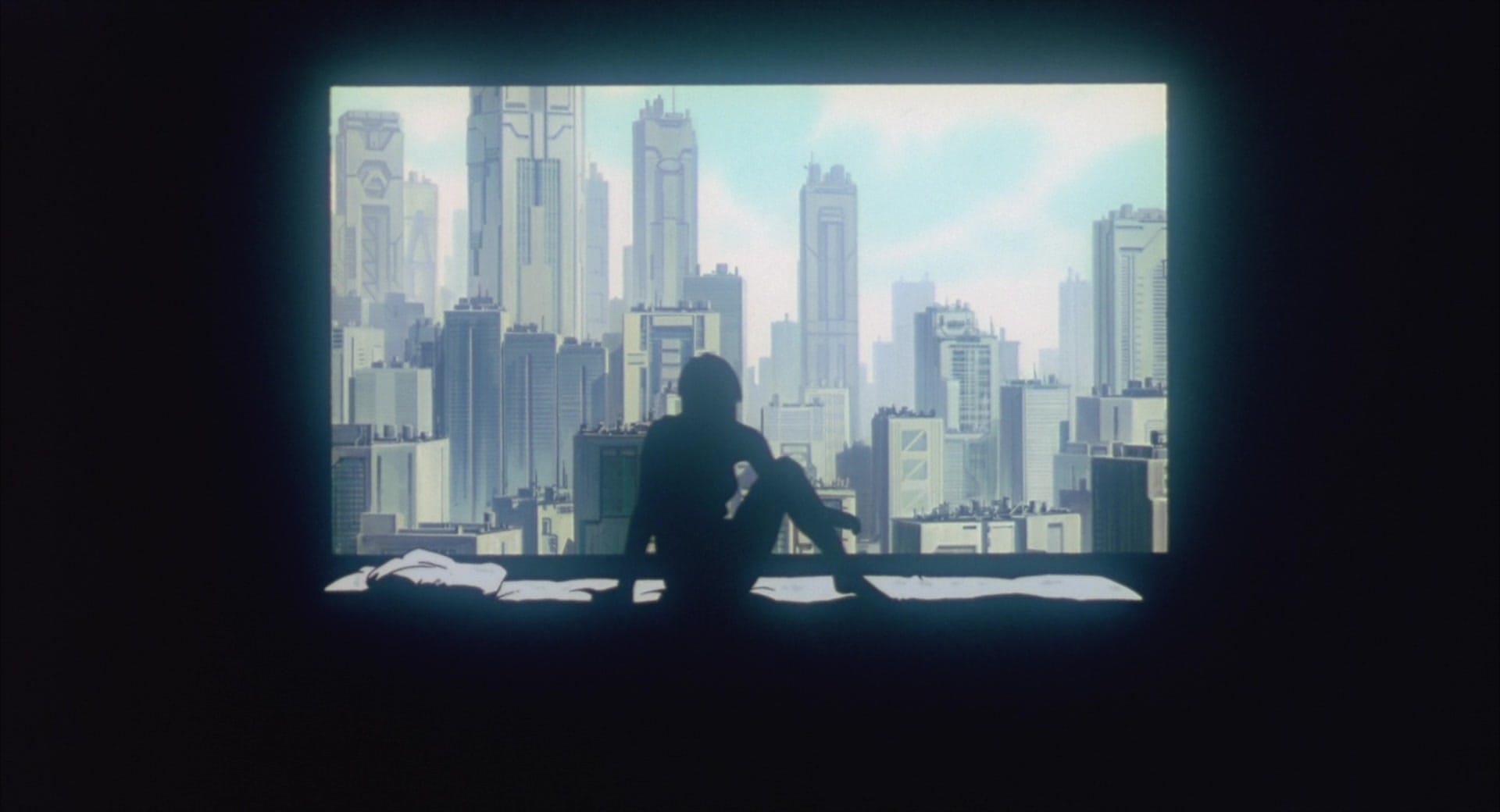
Since the manga is so dense, every adaptation had to choose what to choose and what to leave out. Mamoru Oshii’s 1995 Ghost in the Shell film was particularly stressful in this respect, since (per an interview with Oshii) it was made with “even less time and budget than I had imagined.” Oshii’s team chose to “focus on Motoko Kusanagi’s identity as a human and a cyborg”; imply off-camera detail by setting the film in a chaotic city inspired by Hong Kong’s “rows of gigantic billboards and posters, throngs of people, planes in the sky, and boats in the water below”; and emphasize realism via updated character designs and meticulous firearms research.
At the same time, they made sacrifices, cutting beloved parts of the manga so as not to dilute the film’s focus. The fuchikomas, which address the question of artificial intelligence as a parallel thread to the Major’s cyborg ruminations, were removed. This frustrated many fans of the manga, among them game designer Hiryuki Saegusa. "When I saw the movie I remember being disappointed that fuchikoma weren't in them," he revealed in an interview with The Playstation magazine (translated by shmuplations.) “It was all about Motoko Kusanagi.” Just two years after the Ghost in the Shell film, he worked with the Japanese game studio Exact to adapt Shirow’s series into a video game that (this time) let the player pilot a fuchikoma.
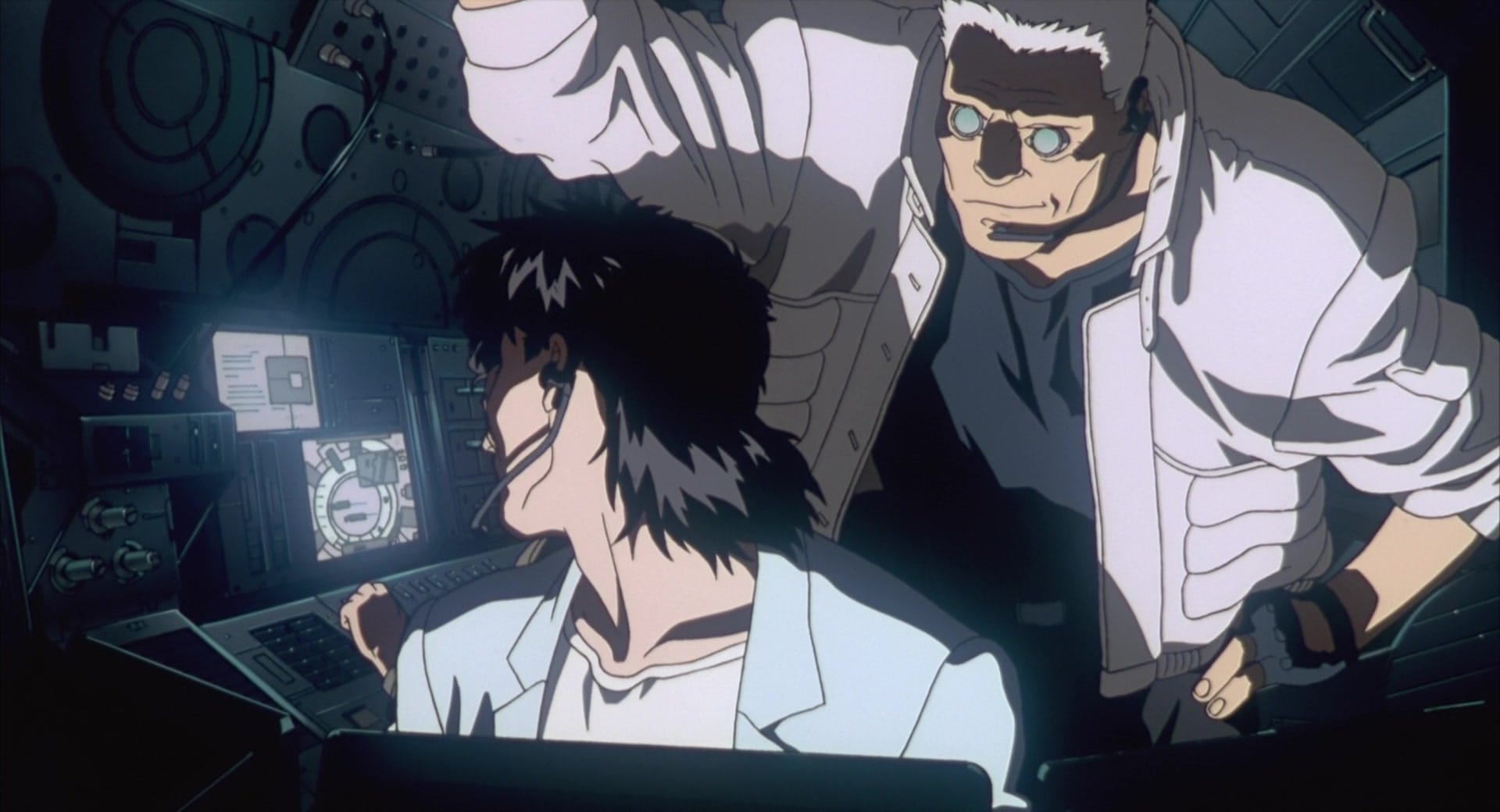
Oshii’s film is quite different from Shirow’s manga in some respects. But it is not a rejection of it. Some of its differences, like the comparative lack of action scenes, were due to time and budgetary restrictions. Others, like the increased focus on realism, were implemented with the belief that the manga’s “abstract expression” would break the film in the transition between mediums. Above all, the crew’s number one priority was capturing Shirow’s obsession with details via every method they could (setting, sound effects, backgrounds.)
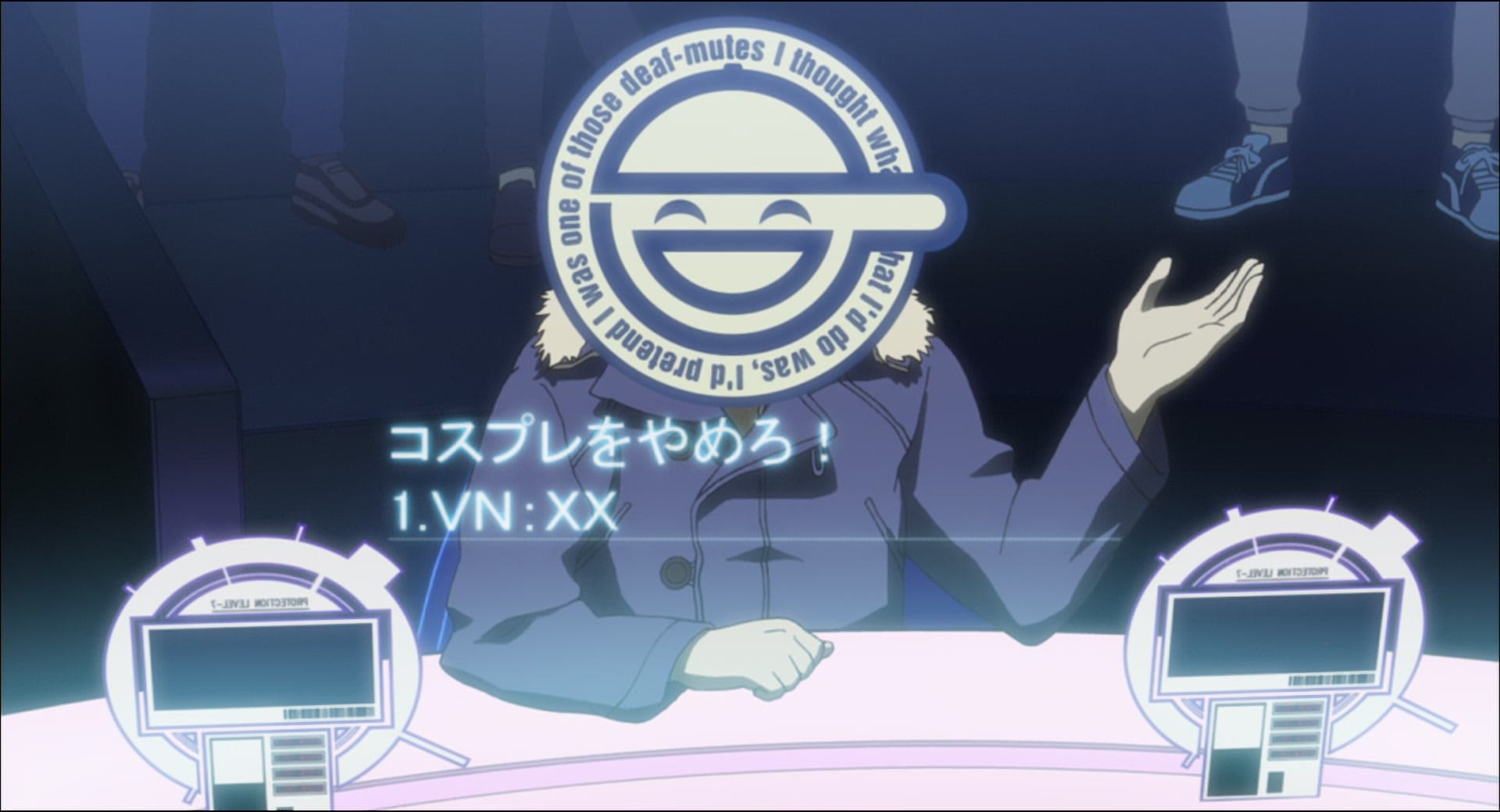
In this respect, Kenji Kamiyama’s adaptation Stand Alone Complex was even more heretical than Oshii’s. In an interview, Kamiyama said that he set out to make a “‘Ghost in the Shell’ for the living room screen.” A version of the story that could even be enjoyed by “people who were frustrated and overwhelmed with the amount of information in the original manga.” At the same time, Kamiyama chose to show the Major and company’s “sense of justice more clearly and prominently as characters,” while simultaneously “having their justice stand in opposition to someone who was speaking out against society and its systems or major problems.”
Once again, Kamiyama and his crew were adapting the story to a new format. Television anime is serialized in 20 minute chunks rather than all together as a one and a half hour movie. The audience consumes less at once but much more over time. This meant finding a balance between delivering a satisfying Ghost in the Shell story in a short time frame, developing the characters and setting over a longer period, and keeping up the quality of the animation without breaking the production.
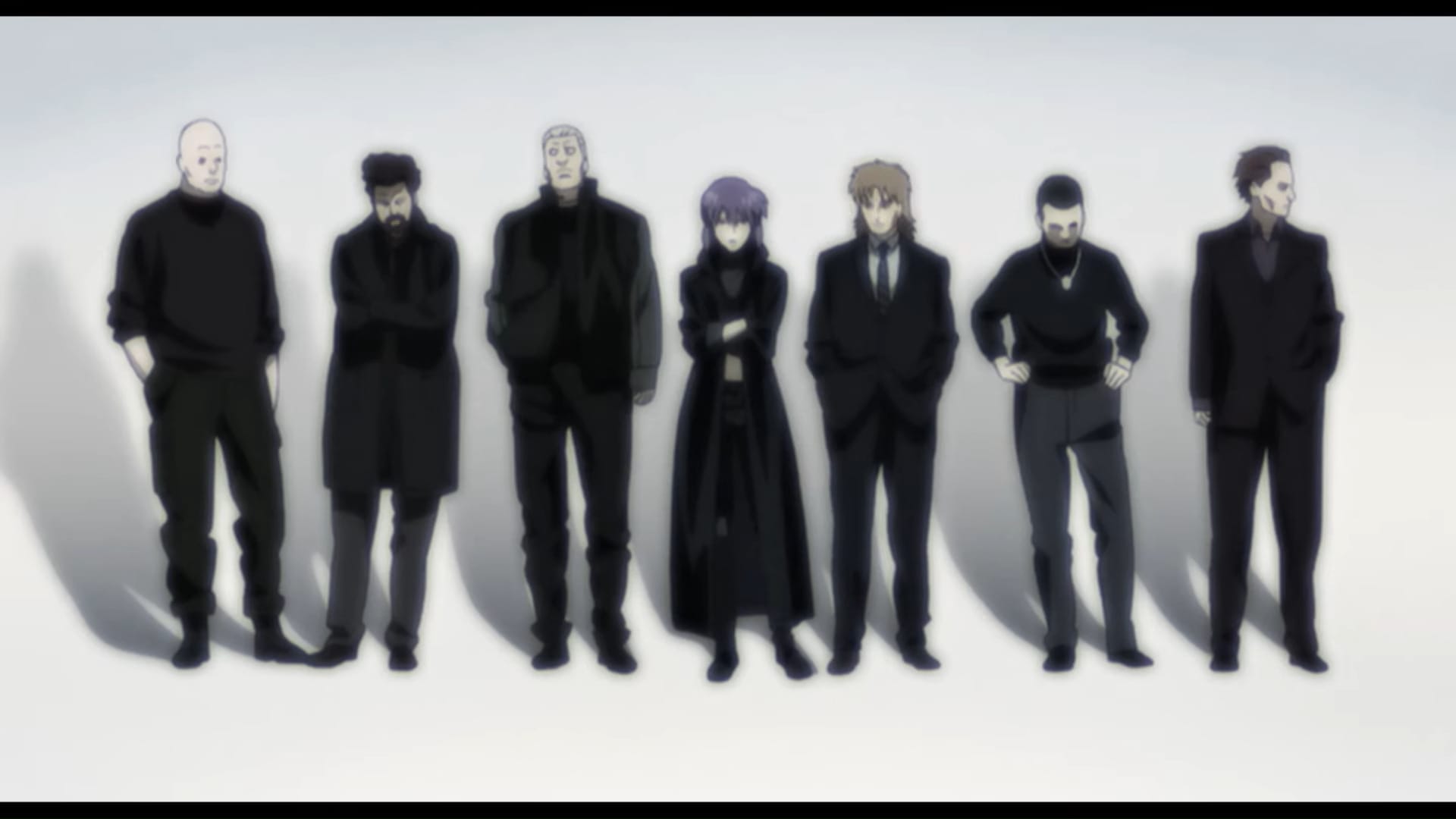
Says Kamiyama, “the great majority of people thought it was impossible to make ‘Ghost in the Shell’ work as a TV series in the first place.” The series was meant to lead up to Oshii’s then-upcoming film Innocence, which left very little production time. Even worse, the TV series would inevitably be compared to Innocence. But Kamiyama had a relaxed attitude. “Ghost in the Shell presented a setting that could serve as a canvas for what a creator wanted to do,” he said. So long as his team could tell the story they wanted in that setting, they would be satisfied.
While Stand Alone Complex is an alternate continuity from the manga, it is faithful to it in its own way. Kamiyama respected the Major as one of the first great female protagonists in Japanese science fiction, and so kept her at the center of the series throughout. The increased scope of television also allowed for his team to introduce the tachikoma, which replicate the manga’s fuchikoma story that Oshii cut in his film. (If anything, the theme of artificial intelligence is developed even further in Stand Alone Complex than Shirow accomplished in his original series.)
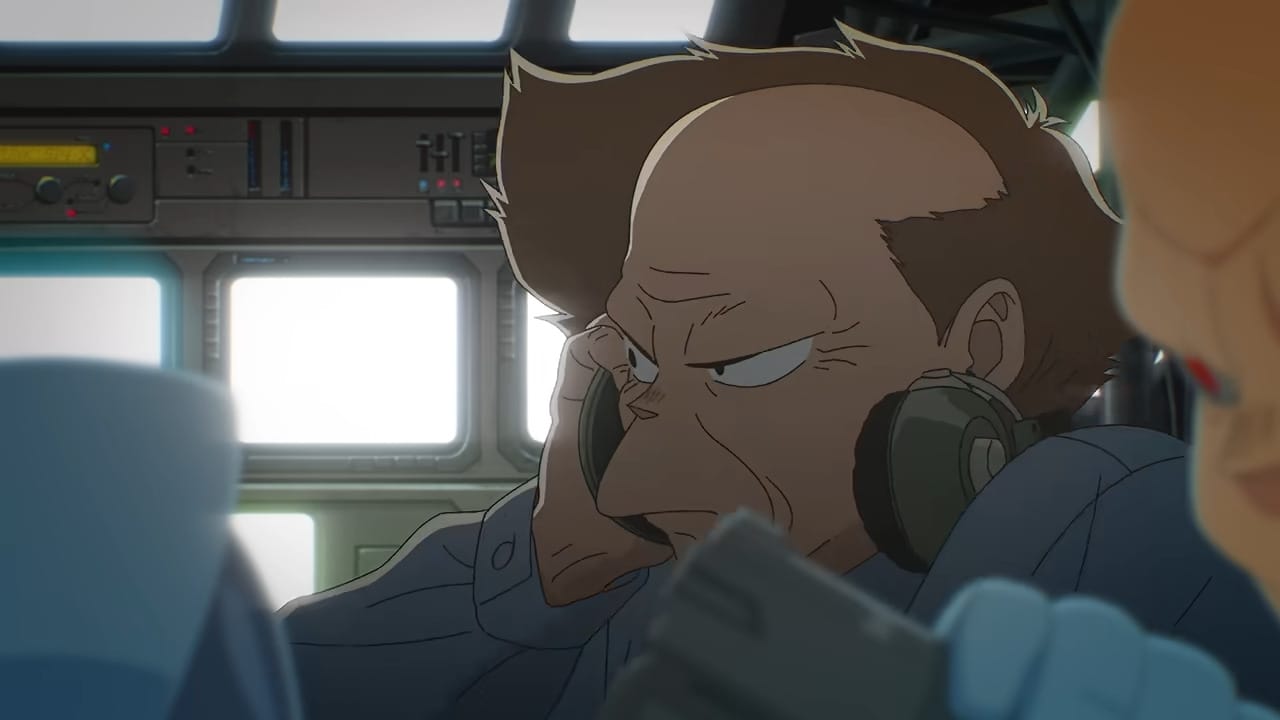
Shirow has always been interested in the cutting edge, centering his story on the question of “what will become of humanity in the future?” rather than the “relatability and universality of tragedy and emotions…” While it might be read as a period piece now, that was not his intent. That’s why every adaptation of the story so far has had to push the boundaries, to live up to that ambition. Oshii’s film channeled the source’s cyborg futurity into depicting fleshy, realistic bodies. Kamiyama sought to capture in Stand Alone Complex how the internet was “more mature now” compared to when the manga was created, but also how (at least at the time) it could still save us rather than damn us.
Which leads me back to where I started: why make a “faithful” adaptation of the Ghost in the Shell manga, when the manga was always about the future rather than the past? In a SCREENα interview translated by the blog shinseki, the director Mokochan said that the new anime series was intended “from the proposal phase” to be faithful to the source. That said, “how closely to adhere to the original was left up to me…” The decision to reimagine the manga as an anime, separate from previous adaptations as well as the team’s own tastes, was Mokochan’s own.
“The Ghost in the Shell has a very long history,” Mokochan said. “It’s a work packed with as many personal feelings to it as there are people who love it. To take that, reinterpret it, and put my own version out there felt somehow wrong, like I’d be appropriating the work.” Yet even though he wanted to adapt the manga faithfully, there were still aspects of the series that befuddled him. It wasn’t until his hands began to “move on their own” that “the phrasings and the comedic sense that I struggled to grasp at first just clicked. In that instant, I felt the original work and my heart melting into each other.”
This reminds me so much of Tom Herpich’s own experience reading the manga, which he wrote about for The Comics Journal in 2021. At first he struggled with the book’s confusing dialogue, lack of characterization and sudden tonal swings. It wasn’t until he told himself “that I wasn’t going to understand it…that I was just peering into an alien world and taking from it what I could,” that the book finally clicked for him. As he says earlier in the write-up, Shirow’s work at its best is “like a magic eye puzzle, where you’re staring at it forever until suddenly it comes into focus and it’s been there the whole time…”
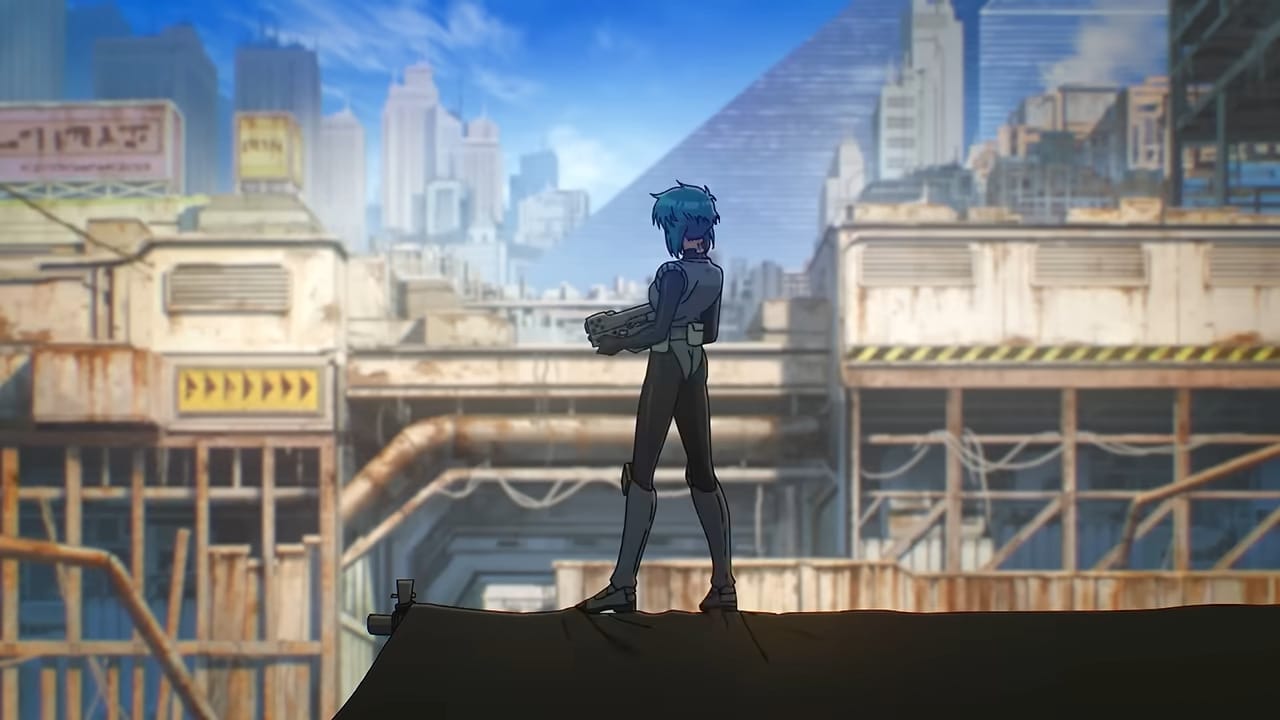
Herpich here is speaking to the manga’s sheer density of detail, a density that every team that has ever had to adapt the series has had to confront. Oshii cut some while implying the rest via shorthand. Kamiyama watered it down to function as television. Science Saru’s adaptation though has gone all in on density, from Toh Enjoe’s involvement in series composition to the blink-or-you’ll-miss-it on-screen annotations that are everywhere in the manga but missing from most adaptations.
Today’s audiences have been so conditioned by media exposure that keeping up with the pace of Shirow’s original is no longer a distant dream. Even the show’s annotations could be said to be just another layer of subtitles for fans already used to those. Could this new adaptation of The Ghost in the Shell be the first to capture the hyper-density of Shirow’s manga without compromises? It’s still too early to say. Regardless, if the production team could achieve that goal, that would be a Ghost in the Shell that I have never seen on screen before, which is what I’ve wanted all along.