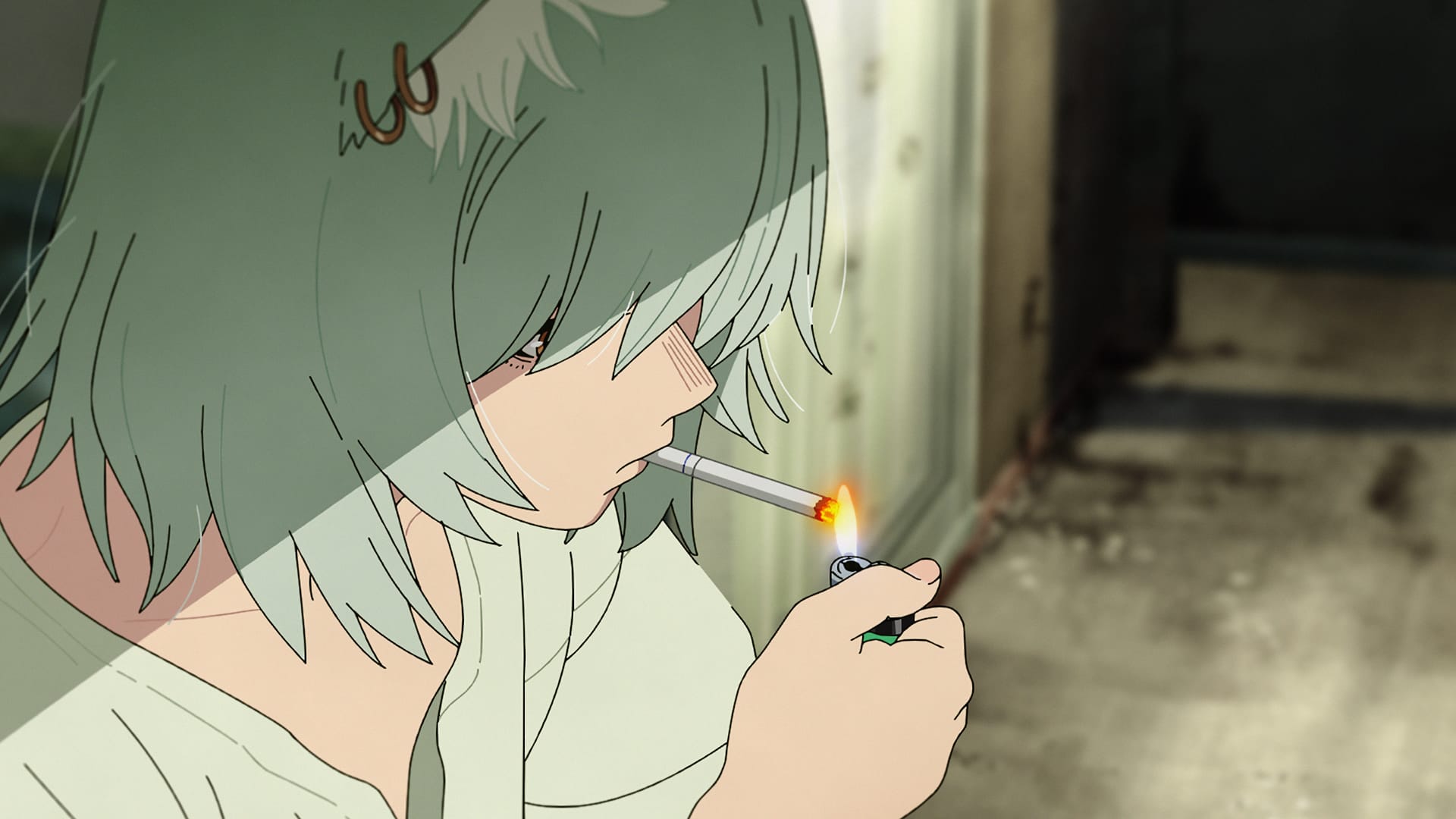
Smoking is having a moment in Japanese popular culture. While cigarettes have always functioned as an essential part of the rule of cool, two of the most popular anime from this season revolve almost entirely around the habit: the romantic Smoking Behind the Supermarket With You and the disgusting, depraved Chainsmoker Cat. Even so, hidden beneath this fiction lies a complicated reality.
According to the results of an annual survey conducted by the Ministry of Health, Labour and Welfare, the number of people in Japan who say that they smoke regularly has consistently declined since 2012. In 2025, this proportion was just 14.8%, tying 2022 for the lowest yet. Part of why is undoubtedly because of new restrictions passed in 2018 that limit smoking in public places to dedicated smoking rooms or smaller establishments under 100 square meters, but the habit is still much more prevalent in everyday life.
In terms of smoking rates, Japan far outstrips many countries in Central Europe and North America with similar legislation. At 1841 cigarettes per person, it sits alongside South Korea and China as one of the biggest smoking countries outside of Eastern Europe, where numbers are the highest. This means that smokers in Japan are much more likely to be heavy smokers on average, particularly when paired with the corporate environment.
Despite many measures taken to improve work-life balance in previous years, the number of people who received compensation for death and illnesses related to overwork recently hit a record high. This is because while Japanese employees are limited to a legal maximum of 216 hours per month, many white collar professionals perform unpaid overtime as a result of indirect social pressure. With this in mind, smoke breaks can become one of the only opportunities for rest and respite during a busy office day.

Here is where the truth of Smoking Behind the Supermarket With You comes in. Main character Sasaki is a tired, despondent 45 year old office worker who only lives for his next cigarette, as well as the opportunity to see his one-sided crush at the supermarket. Not only does this fit the aforementioned profile of the Japanese heavy smoker, that Ministry of Health, Labour and Welfare survey also puts the highest rate of smoking precisely among men in their 40s and 50s.
Nevertheless, the idea of finding a cute girl like Yamada to smoke with is something of a pipe dream. While the number of men who said that they smoked regularly in the 2025 survey was given at 24.5%, that proportion is only 6.5% among women. In fact, women have always smoked less than men: even in 1966, where cigarette consumption was at its highest, Japan Tobacco reported that 18% of women smoked as opposed to 83.7% of men.
That same point could be applied to Chainsmoker Cat, but the world of Nyan Nyan Factory’s original series is obviously not meant to be our own. If viewers are supposed to accept that cats can walk and talk like humans, then it should come as no surprise that Yaniko and all of her almost exclusively female friends are addicted to cigarettes. One thing that does rub up against reality, however, is the fact that the titular cat is forced to perform all sorts of degrading acts to get her next fix.
Although this can fluctuate depending on the brand and place of purchase, a pack of 20 cigarettes usually costs around four dollars in Japan. This is ludicrously cheap compared to countries such as Australia and the United Kingdom, where the price can be as much as ten times higher due to stronger taxation. Consequently, smoking in Japan is a relatively affordable habit that even poverty-stricken felines like Yaniko should be able to afford alongside life’s necessities… as long as she doesn’t smoke them all at once, obviously.

The low price of cigarettes in Japan is undoubtedly part of the reason why smoking rates continue to be much higher than most other countries in the G7. Experts have also urged the government to mandate pictorial warnings on packages instead of just text, but who knows what kind of effect popular media such as Smoking Behind the Supermarket With You and Chainsmoker Cat have on the issue? At the very least, the latter series had to run a special feature on the dangers of smoking in this week’s Young Magazine, possibly out of a sense of social obligation.
In any case, one reality that neither series has really captured is the growing popularity of heated tobacco products. While e-cigarettes and vapes have exploded in popularity in other parts of the world, the classification of nicotine liquid as a pharmaceutical ingredient instead of a consumer product means that they cannot be sold over the counter in Japan. This has created a huge gap in the market that products such as IQOS and Ploom have exploited, using an internal mechanism to heat up tobacco leaf instead of e-liquid.
For the final time, that 2025 survey put the number of smokers who use paper cigarettes at 60% and HTPs at 40%. Not only is that huge growth for a product category that simply didn’t exist a decade ago, women in particular are much more likely to smoke HTPs than men. This makes the paper protagonists of Smoking Behind the Supermarket With You and Chainsmoker Cat somewhat out of touch, even if other characters in their respective casts do use the devices.
Fantasy doesn’t always match up one to one with reality, nor should it, but it’s never a bad idea to take the opportunity to sit back and assess the state of humanity’s worst vice in society. Don’t smoke, kids.