The earliest surviving photograph– a view of sunlit rooftops captured by Nicéphore Niépce in 1826– was created by a days-long exposure of light onto asphalt-coated pewter. The photons themselves had ricocheted within the sun for a hundred thousand years before ejecting into space. Traveling the eight minutes to earth, they rained upon its surface and scattered in a blitz of angular coincidence until arriving upon the rudimentary camera plate. The resulting image is vague, grey-dull, and depicts a world as experienced by no human eye: Sunlight covers every surface simultaneously, the entire sky averaged into blank, blinding white.
To the society that encountered the earliest cameras, it appeared as if an eye outside of time. Some early sitters were made uneasy by the capture of their image, fearing the entrapment of their spirits within the machine. Others were fascinated by the supernatural quality of the photograph: The rise of ghost photography was almost exactly concurrent with its diffusion as a technology for the recording of reality. It helped that the image took several long minutes to capture, any unconscious movements forming strange, incorporeal streaks as though its sitter were being dragged through time. It was no great leap to believe that this new machine could somehow see beyond the veil, as it was true that the camera was perceiving what we could not: an accumulation of time inaccessible to the human eye.
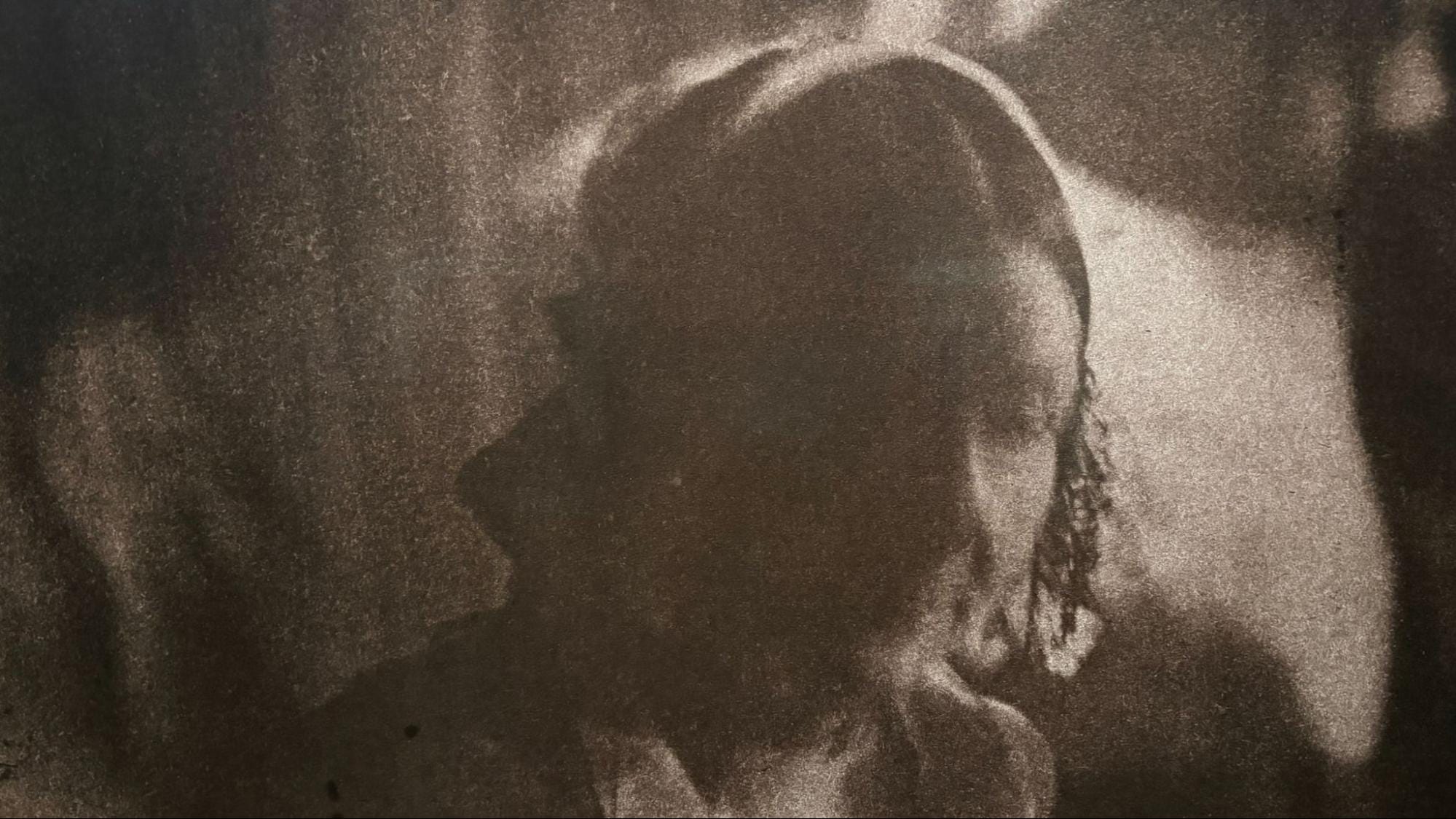
It was not until the development of the silver halide process in the 1870s that photography gained immediacy. This new emulsion could capture an image in a fraction of a second, its negatives remaining stable until their later development. Before, photography had required its subjects to still themselves over several minutes of exposure. Now, the camera could itself freeze time. With the mastery of the visual world came the illusion of the photograph as a capture of instantaneous reality. Two centuries of the photographic would come to follow.
If you trace its roots to Niépce’s first image of sunlit rooftops in 1826, you could say that 2026 is the Bicentennial anniversary of Photography.
It was in 1976, 150 years after the invention of Photography, that Hiroshi Sugimoto began his career. Through his explorations of artifice, memory, time, and light, Sugimoto’s work is an investigation into the phenomenology of photography itself. Now, on the occasion of the artist’s 50th year of practice, the Museum of Modern Art Tokyo has opened an ambitious retrospective of the photographer’s work under the title ‘Extinction’.
The title holds a number of overlapping meanings for Sugimoto: the revival of the extinct via replica is a central theme across the artist’s career. His earliest series ‘Diorama’ (1976), which inhabits the first three rooms of the exhibition, presents large-format images of taxidermy animals at the New York Natural History Museum. At first glance, the animals appear strangely lifelike– A polar bear flares its fangs at a seal above an ice floe, a swarm of monkeys clamber through a thicket of branches, and a flock of vultures descend upon a desert carcass.
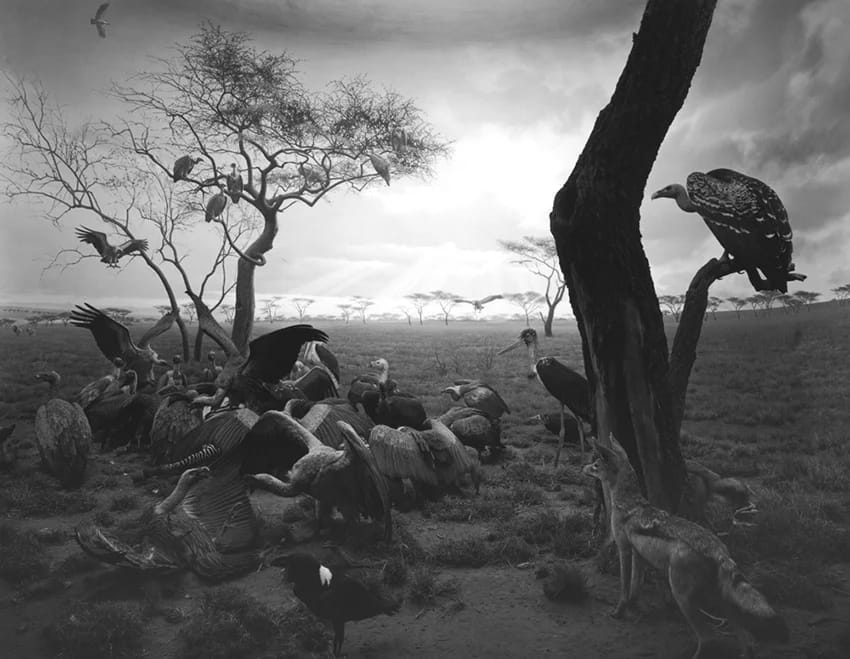
The scratches and seams of each composition become apparent on a closer look, but the reality of the light and shadow, the illusion of depth in each scene, and the fidelity of absolute texture creates a kind of uncanny superposition: The image fluctuates between real and unreal, its inhabitants alternating between animate and inanimate. With each exposure lasting several minutes, the capture of each subject in animation is only possible in such detail by virtue of their total paralysis.
This potency of the image to impart life to the replica is seen again in Sugimoto’s ‘Portraits’ (1999). The series casts the celebrity residents of Madam Tussaud’s as stand-ins for their deceased counterparts. Unlike the liveliness conveyed by the naturalistic poses of their animal cousins, these replicas appear alive (and possessing of intentionality) in their apparent effort to still themselves before the lens.
It is unimportant that the camera’s presence is anachronism. The likes of Henry VIII and Queen Victoria appear just as natural before the photographic gaze as Princess Diana. The latent spirit of the celebrity that haunts the cultural consciousness is implanted in its vessel through its viewer, inverting our fear of the camera soul-stealer– the result is a kind of possession. The figure’s fakeness is irrelevant to their role as a body for their subject: reanimated as image, the people’s princess grins again, again, and again.

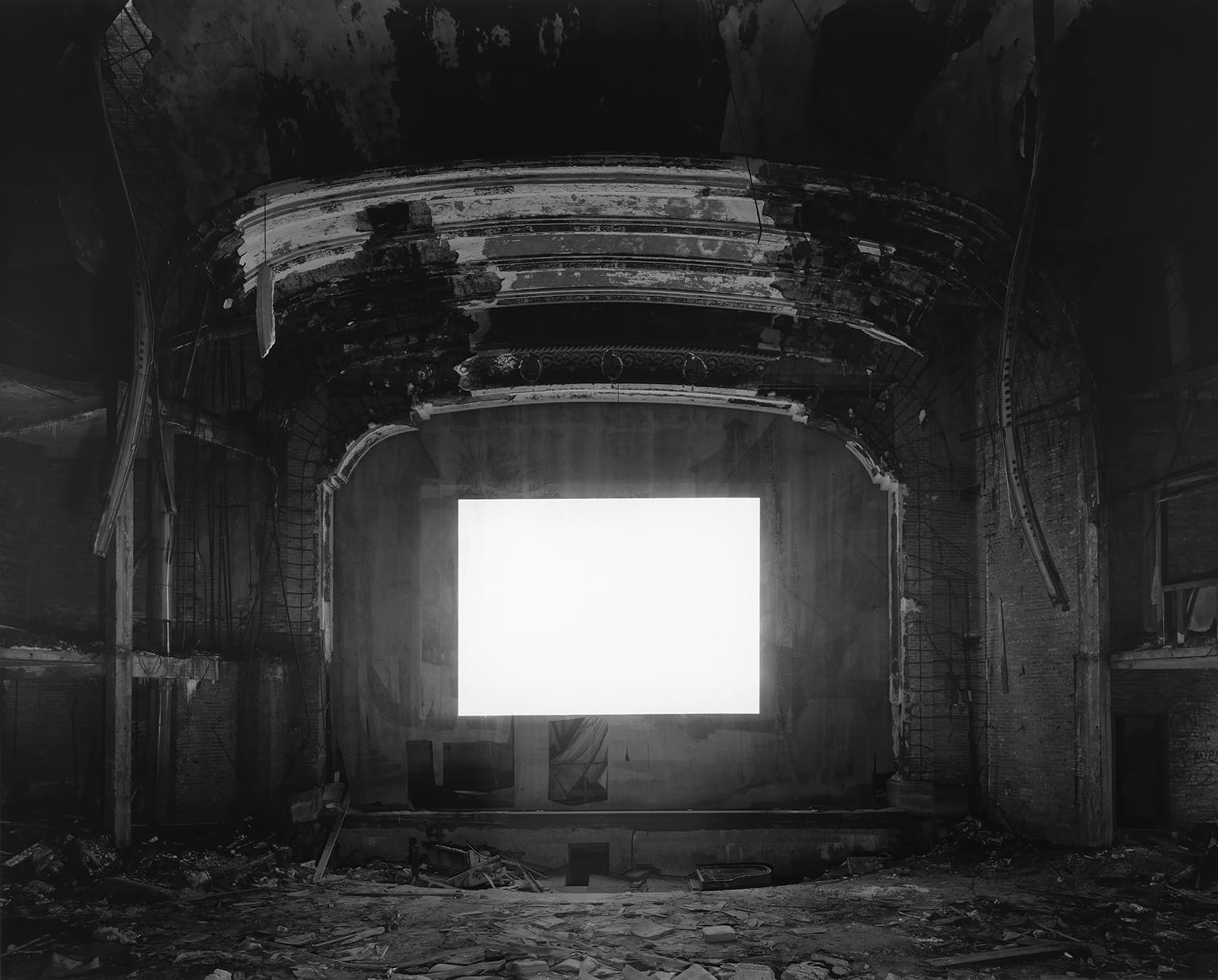
But among Sugimoto’s more literal extinctions exist extinctions of an immaterial kind. Each photon constituting each image is extinguished in its chemical reaction with the film. In ‘Seascapes’, the peaks and valleys of the ocean waves are made anonymous by the smoothing of the long exposure, while ‘Theaters’ exposes a cinema screen for the duration of its projection, its contents averaged– like the sky of Niépce’s first photographic plate– into a rectangle of total, featureless white. ‘Architecture’, meanwhile, attempts to restore the material consequence of thought to its ur-state, shooting images of iconic buildings at twice-infinity focus to recover the blurry, indeterminate quality of a picture’s first glimpses within the imagination.
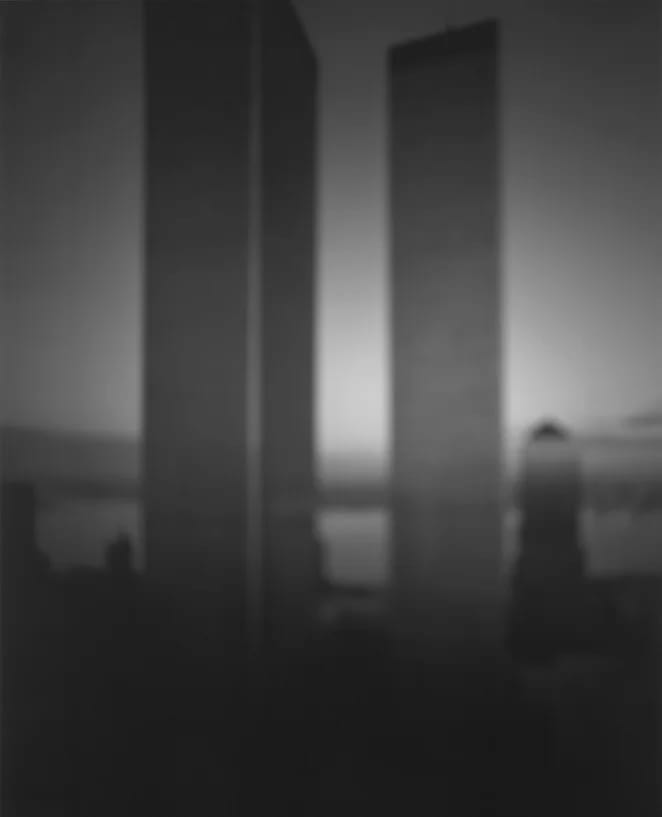
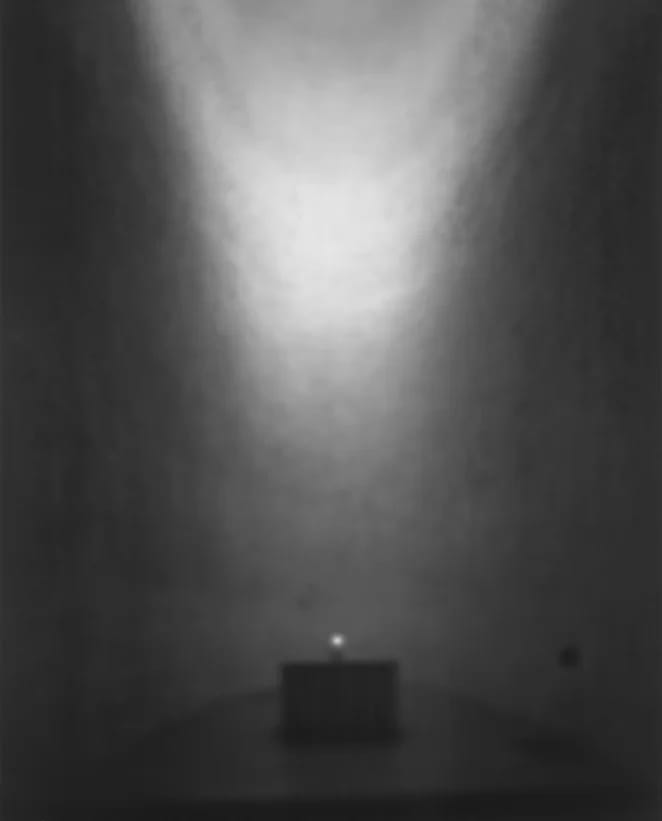
Architecture © Hiroshi Sugimoto
Perhaps it’s true to say that all photography is a form of ghost photography. The specter of reality is the photon-body that emanates and reflects from its surfaces, the subject it describes already ceasing to exist by the time its aura has radiated into the camera lens; already– like a fading afterimage– receding further into nonexistence with the passage of time. The mind produces a continuous negative overlaid onto vision, a veil made visible only in flash when the eye is shut. Memory records the sequence of spectres, each phantom image made permanent only through a sort of mutation into mnemonic. But that mnemonic remains fragile, and it too can be made extinct when exposed to the assertive power of the physical image.
After countless rooms of monochrome, the colours of Sugimoto’s ‘Opticks’ series appear as a shock of stimulation to the retina. Squares of Red, Yellow, and Blue– the primary colours described in Isaac Newton’s 1704 treatise of the same name– sit along the wall, each extracted from sunlight via a set of prisms and mirrors. The featureless plane of each print make clear the subtle variance in colour where each frequency blends between nameless neighbors, makes clear the vignette of the lens, the vignette of the eye– and, in the absence of grain or detail, makes visible the noise inherent to the retina’s attempt to discern its subject.
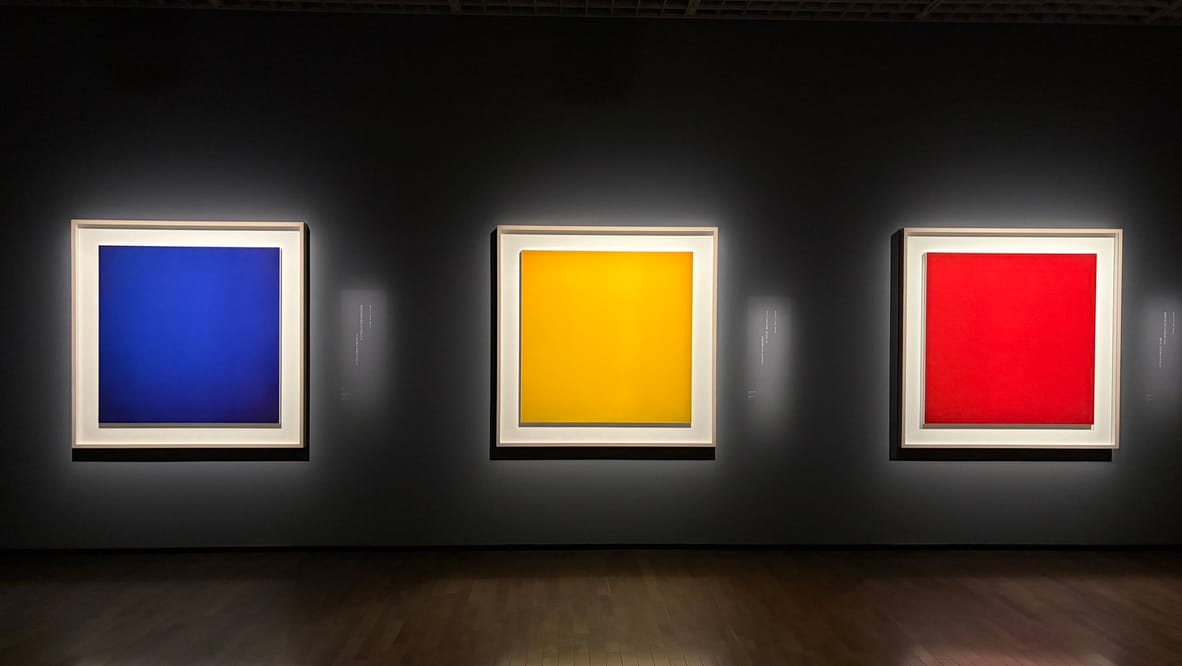
However we account for the relationship between image and reality, and however we trace the evolution of photographic technology, the visual field sits only upon the back of one’s own eye. This concept has appeared throughout his career, but it’s Sugimoto’s most recent work that articulates the nature of vision most directly.
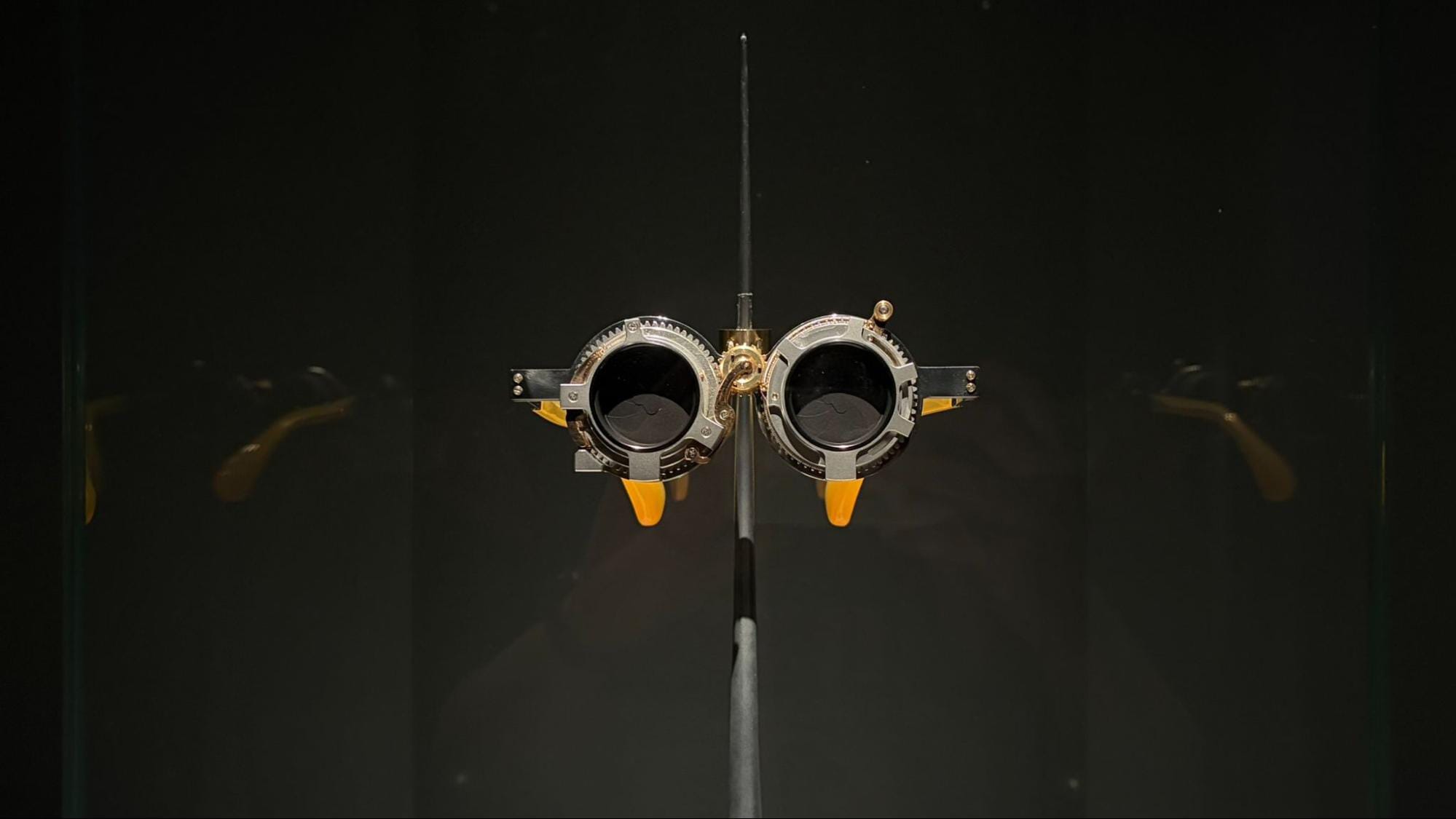
Sitting aside the exhibition’s exit, ‘CAMERAMAN’ (2026) stares blindly from atop a metallic spire. Its irises remain closed, but the object’s form is recognizable as a pair of glasses. With the push of the lever, the glasses become a shutter, exposing light against the retina for the period of a second before closing.
The afterimage of the world shines in brief, vivid negative before dissolving not into black, but into Eigengrau, the noisy grey hovering just above imperceptible, absolute dark– even in the light’s absence the optic nerve remains stimulated. The extinction of vision is reserved for the blind, the sleeping, and the dead. Until then, we grasp about within the ghost.