It’s been two years since the 2024 Noto Peninsula Earthquake.
Jutting out into the Sea of Japan from Ishikawa Prefecture, the Noto Peninsula once served as a major commercial hub and features unique traditional industries and festival customs. The local lifestyle, centered around “satoyama” and “satoumi,” was the first in Japan to be designated as a Globally Important Agricultural Heritage System by the FAO, and it is indeed a land where peaceful farming villages, the sea, and mountains coexist in close proximity.
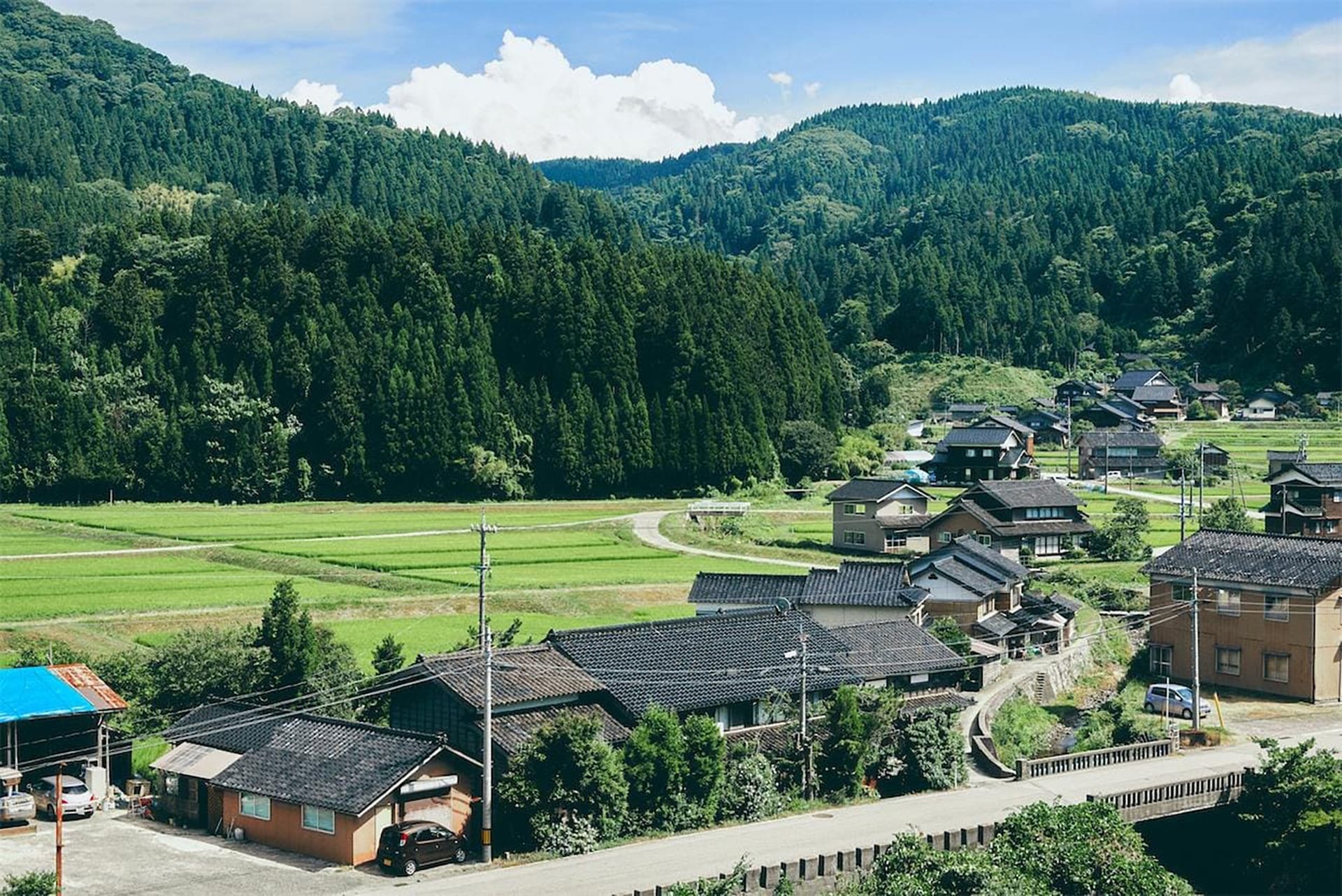
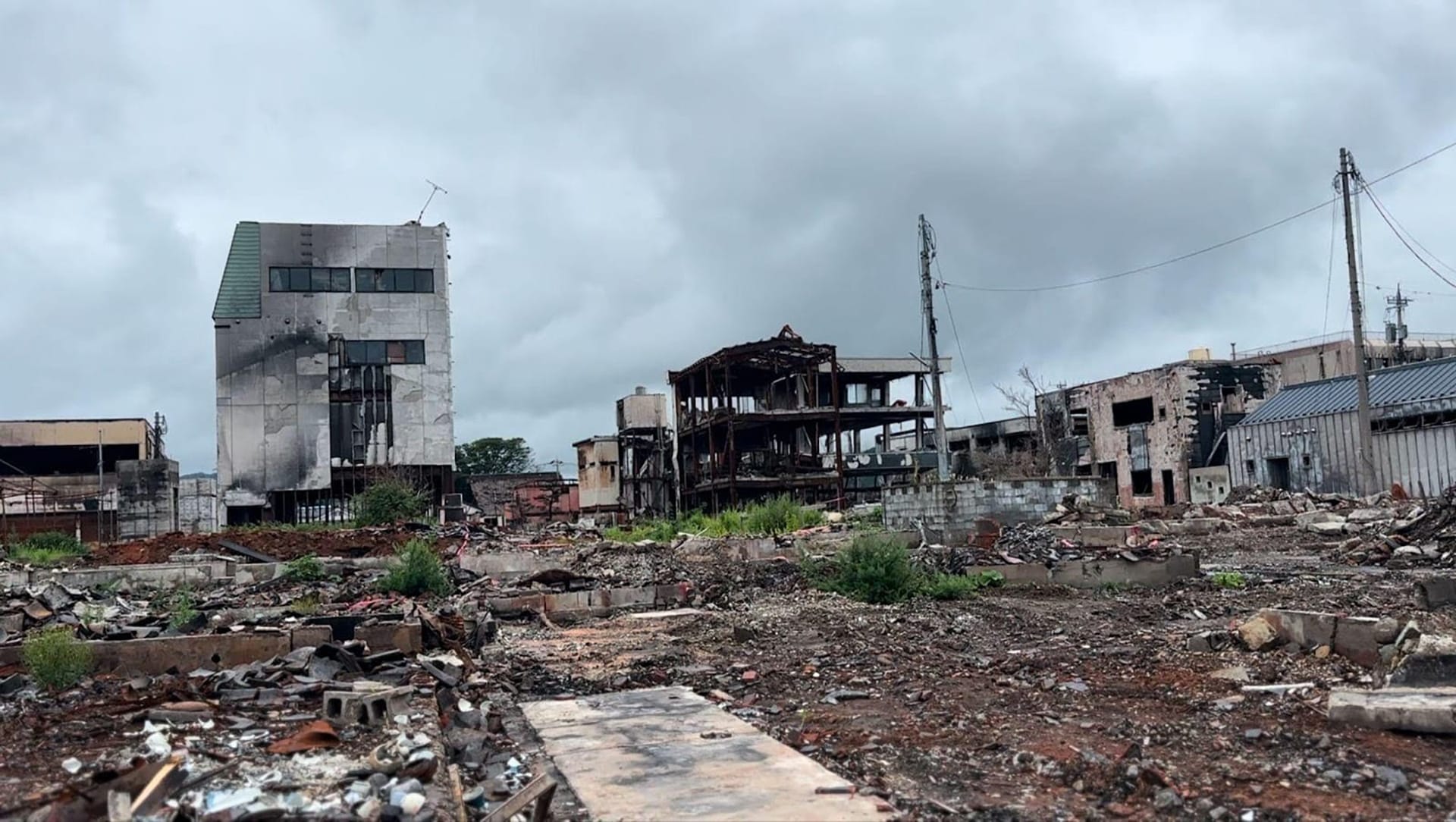
After a streak of increasingly intense seismic events in 2022 and 2023, the Noto Peninsula was struck again on January 1, 2024, by a magnitude 7.6 earthquake. In September of the same year, torrential rains concentrated on the Oku-Noto area and caused large-scale house flooding and landslides.
These disasters resulted in the collapse of over 150,000 homes, forcing more than 30,000 people to move into evacuation shelters or to leave Noto altogether.As of the end of 2025, approximately 18,000 people still live in temporary housing. Many who evacuated outside of the peninsula remain unable to return, while others have resorted to permanently settle in other prefectures.
Three months after the 2024 earthquake, I started work on Noto Arite, a book collecting the oral histories of Noto's local craftsmen and artists. All proceeds from its sales went to support the recovery efforts. I also helped organize special classes held in Noto’s elementary schools, focusing on regional studies and art, and collaborated with the local triennale.
Through all these activities over the past two years, I’ve had the chance to witness how, amidst the widespread loss caused by disasters, cultural memory finds a way to survive and reinvent itself and extend into the future, and I would like to share what I’ve seen.
The Oku-Noto Triennale and the Yasser Project
The Oku-Noto Triennale began in 2017 in Suzu City, on the northernmost tip of the Noto Peninsula. The underlying concept is to turn this otherwise underserved periphery, abandoned by institutions, into an artistic center capable of leaving its mark for years in the future. The festival was then held in 2020 and 2023.
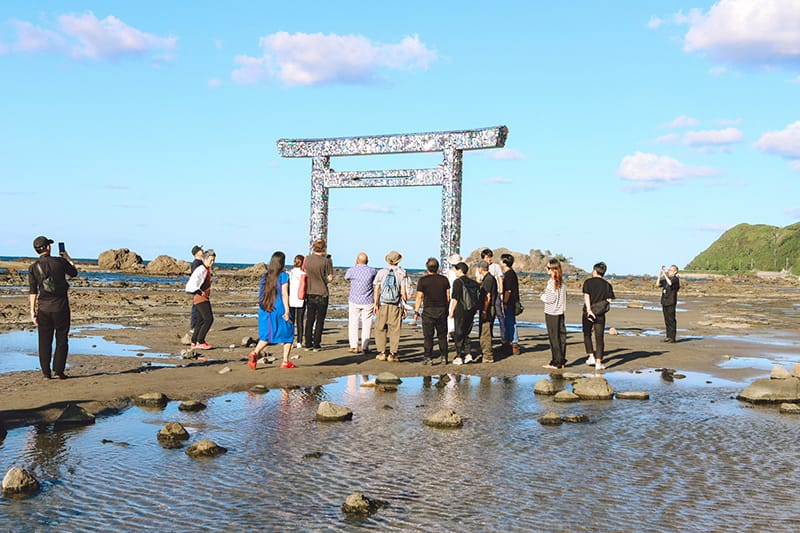
However, its momentum was halted by the January 2024 earthquake. The disaster damaged numerous permanent installations and crippled the local tourism industry, leading to the postponement of the fourth edition planned for 2026.
Amidst this, a group of volunteers involved in the festival launched the “Oku-Noto Suzu Yasser Project.” This initiative has continued activities centered on art and culture, including supporting the number of artists who immediately returned to the area to repair works, provide community support, as well as documenting the local situation.
Among these community-focused initiatives, one stood out to me in particular: the revival of the “Sunatori Bushi festival.”
The return of the Sunatori Bushi festival
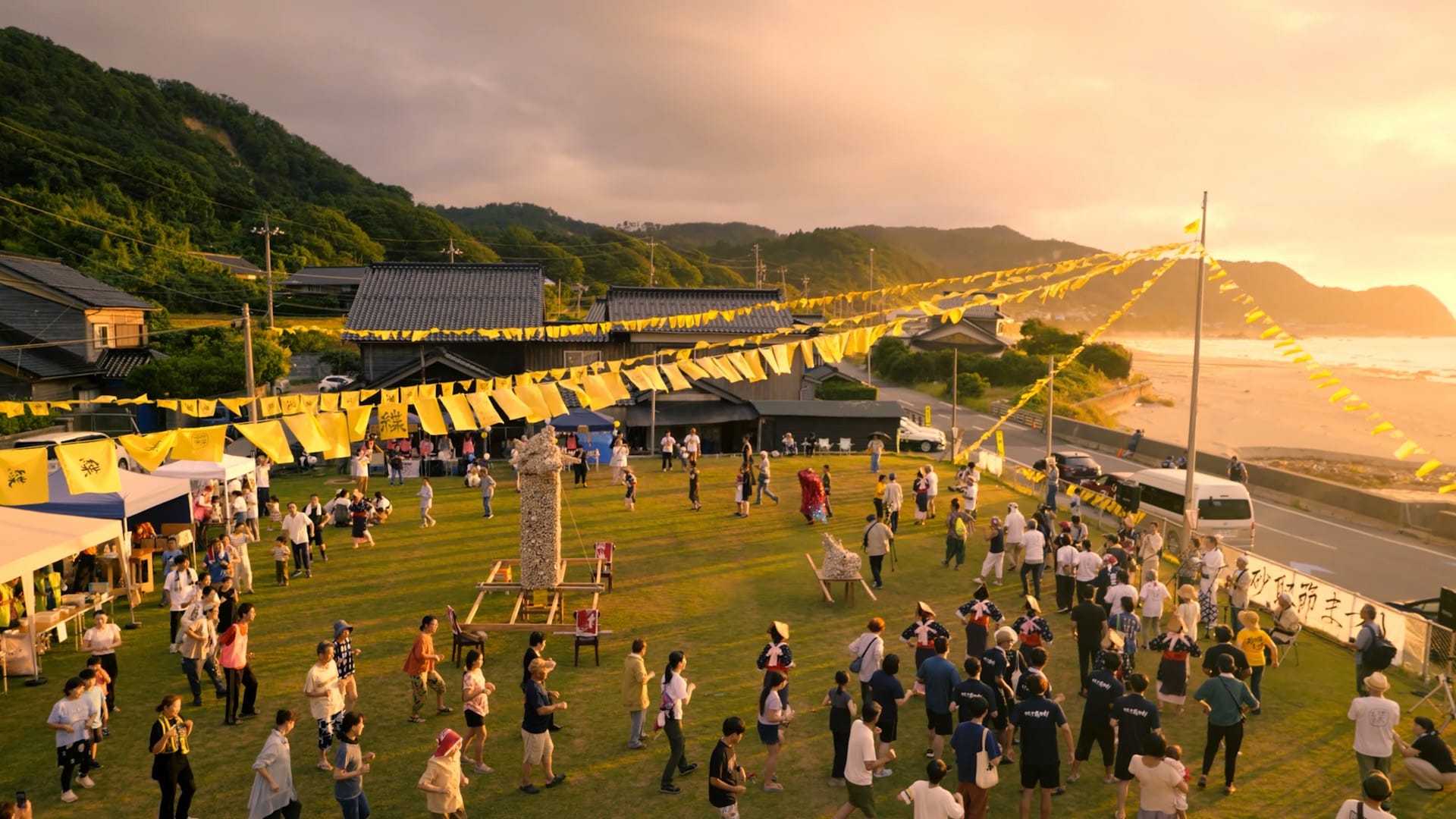
The Sunatori Bushi festival was held in Matsunagimachi, Suzu City, an underpopulated area that in recent years has seen its population dwindle, in part due to relocations after the disasters. With fewer people to carry on the tradition, the festival, which had lasted for over 50 years, was declared officially ended in 2023.Then, in 2024, when “Yasser” members visited there, they happened upon local residents singing and dancing to the “Sunatori Bushi”. Thanks to that find, the festival was eventually reestablished, becoming a way for the now estranged locals to gather back to their original community.
At the festival, a large crowd joined and danced out into the sunset, moving along the new coastline emerged due to the movement of the ground. A staple of Suzu festivals, the kiriko lantern floats made an appearance as “sazae-kiriko,” thanks to the artists participating in the Oku-Noto Triennale. Working together with the local community, the artists collected the leftover shells of the sazae sea snail that residents had foraged during their time in evacuation shelters, waiting for provisions to arrive.
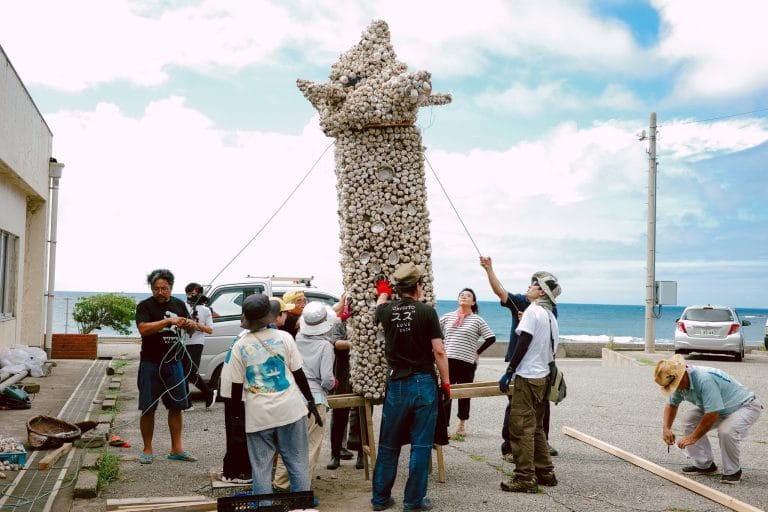
This episode showed me that even in places afflicted by disasters and depopulation, there is more than just constant loss. Each individual story, although not preserved in history textbooks as a major event, becomes a kernel of hope for the people living in this land.
SIDE CORE: Living road, living space
A two-and-a-half-hour drive from Suzu City, in the 21st Century Museum of Contemporary Art, Kanazawa — one of the urban poles of Ishikawa Prefecture — an exhibition connected to Suzu City has just run its course.
It was “Living road, Living space” (open until March 15, 2026) by the artist collective SIDE CORE, featuring artists also in the Oku-Noto Triennale 2023.
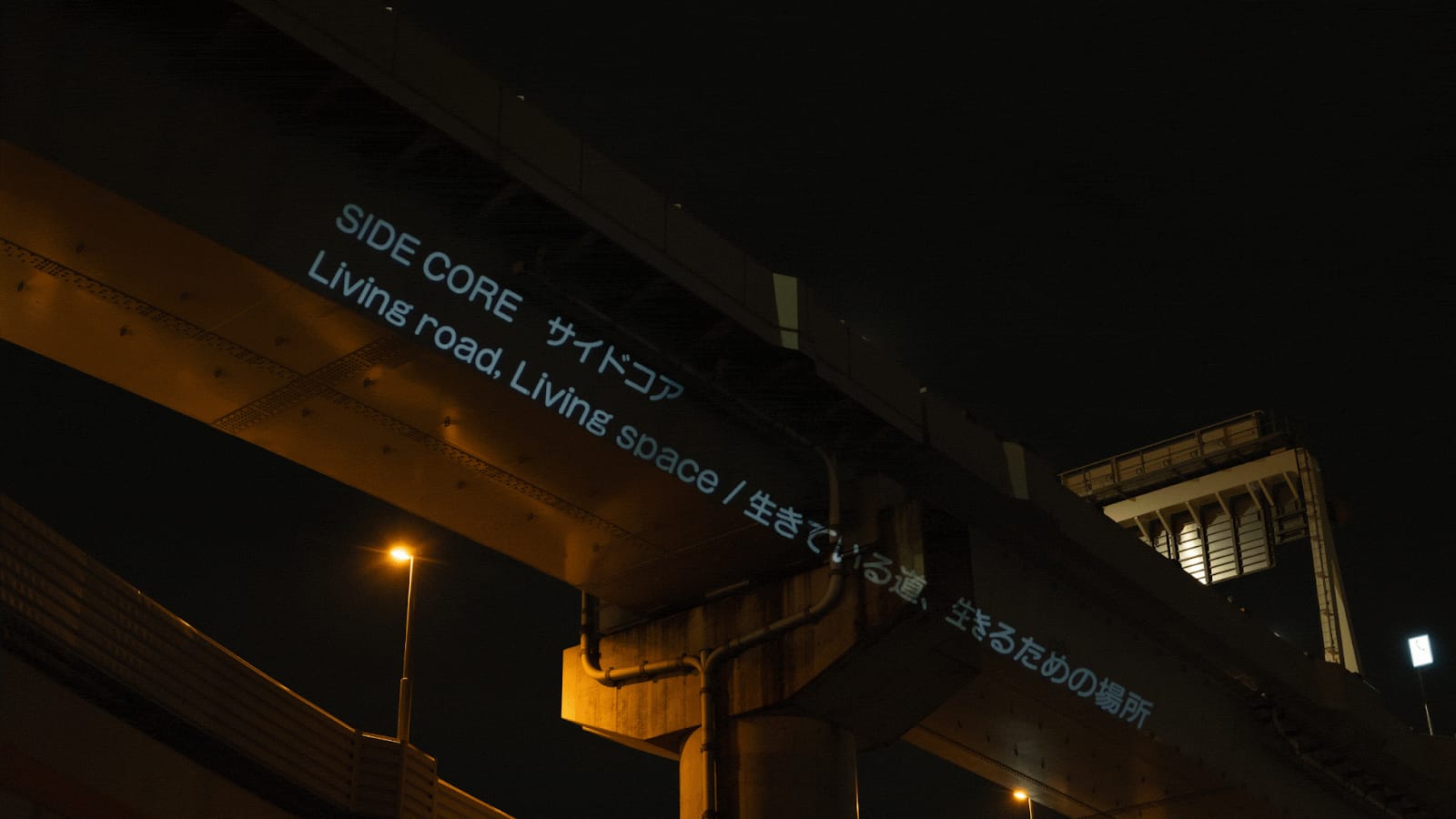
While previously based in Tokyo, SIDE CORE shifted its focus to “the relationship between cities and other regions” following the 2011 Great East Japan Earthquake. Since then, they have developed multiple projects centered around street culture.
“A city cannot function without rural areas”. Based on this realization, the group explored how to convey rural situations unimaginable from urban perspectives and how to restore connections between cities and rural areas. The theme emerging from this exploration is encapsulated in the keyword “road = a connection to a different place,” a common thread running through the works featured in the show.
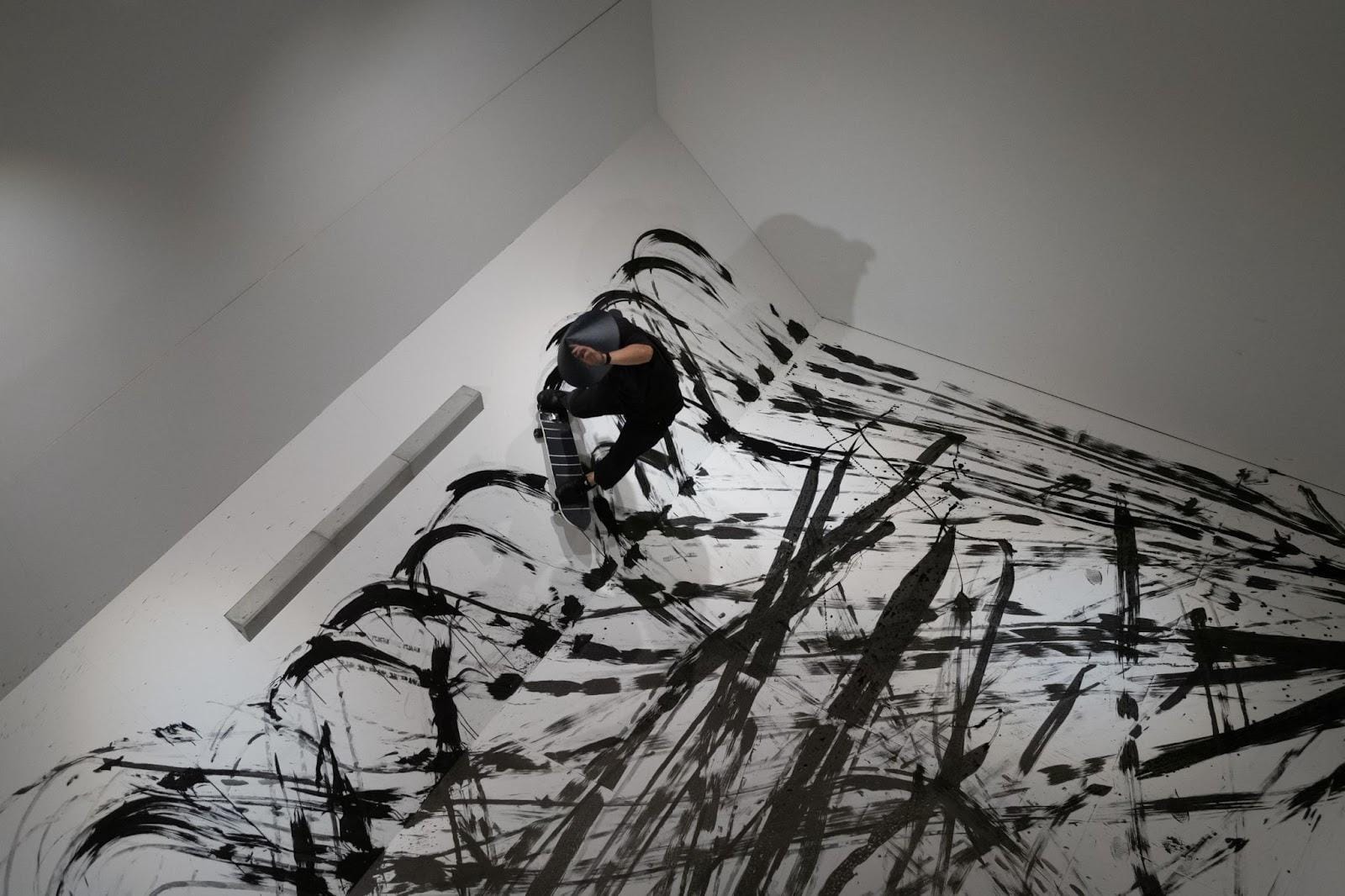
The road to Noto from the city and its museum
The exhibited works included numerous video pieces filmed in Noto, created while doing volunteer work in the peninsula.
For example, the video work titled “new land”, installed in the museum's courtyard, evoked a connection to Noto through the viewing experience itself.
The footage in “new land” shows the artist standing on the new ground created by coastal uplift following an earthquake, blowing a bird whistle. It talks about the “connection between landscape and people” through human intervention in nature's cycle, while also serving as a record of the landscape and its transformations immediately after the disaster.
Stepping outside through the courtyard door from the exhibition space, viewers climbed onto a structure resembling scaffolding at a construction site. From this high point they could view the work, projected onto a screen installed on the museum's rooftop.
This scaffolding stood approximately 4 meters high—roughly the same height as the most significant uplift in the areas along the Oku-Noto coastline. Climbing to that height, I felt a strange sensation—as if peering from the museum toward the coast of Oku-Noto.
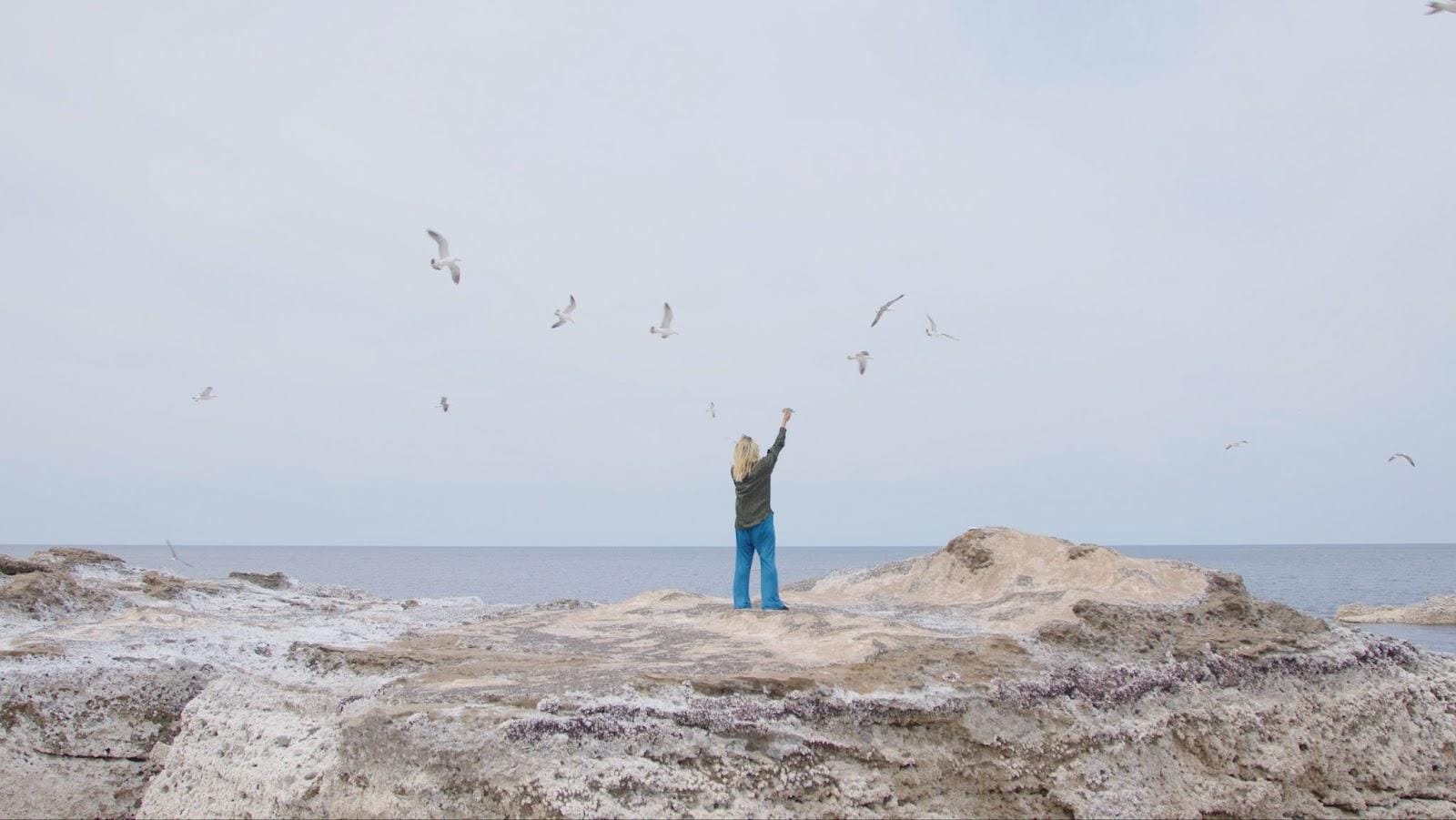
I have seen this uplifted coastline in Oku-Noto several times. The surrounding area was also hit by landslides caused by torrential rains. The memory of dust swirling from dried sediment left in the town and the eerie sight of the nearby cliffs, fractured and collapsing, revealing rows of white, diatomaceous earth rock faces, remains vivid in my memory of that coast.
Watching the footage brought me back to 2024. It was the stark contrast upon arriving in Kanazawa city after the two-and-a-half-hour drive from Noto, where crowds of ordinary tourists bustled about amidst urban life.
Seeing people wearing stylish clothes, laden with souvenirs and pulling suitcases, I felt quite out of place in my subdued work clothes and mud-covered boots. It felt like I had traveled to a completely different world.
During the exhibition period, the visiting program “ROAD TO NOTO” has been held over four scheduled dates. The participants were taken from the 21st Century Museum of Contemporary Art, Kanazawa to visit areas in the Oku-Noto region, such as Suzu City, to engage with locally created artworks and key sites related to the earthquake.
Experiencing Oku-Noto
Lastly, I would like to introduce the new hub “Suzu Record Center,” which opened in Suzu City in 2025, along with future initiatives for the Oku-Noto Triennale and activities you can experience now.
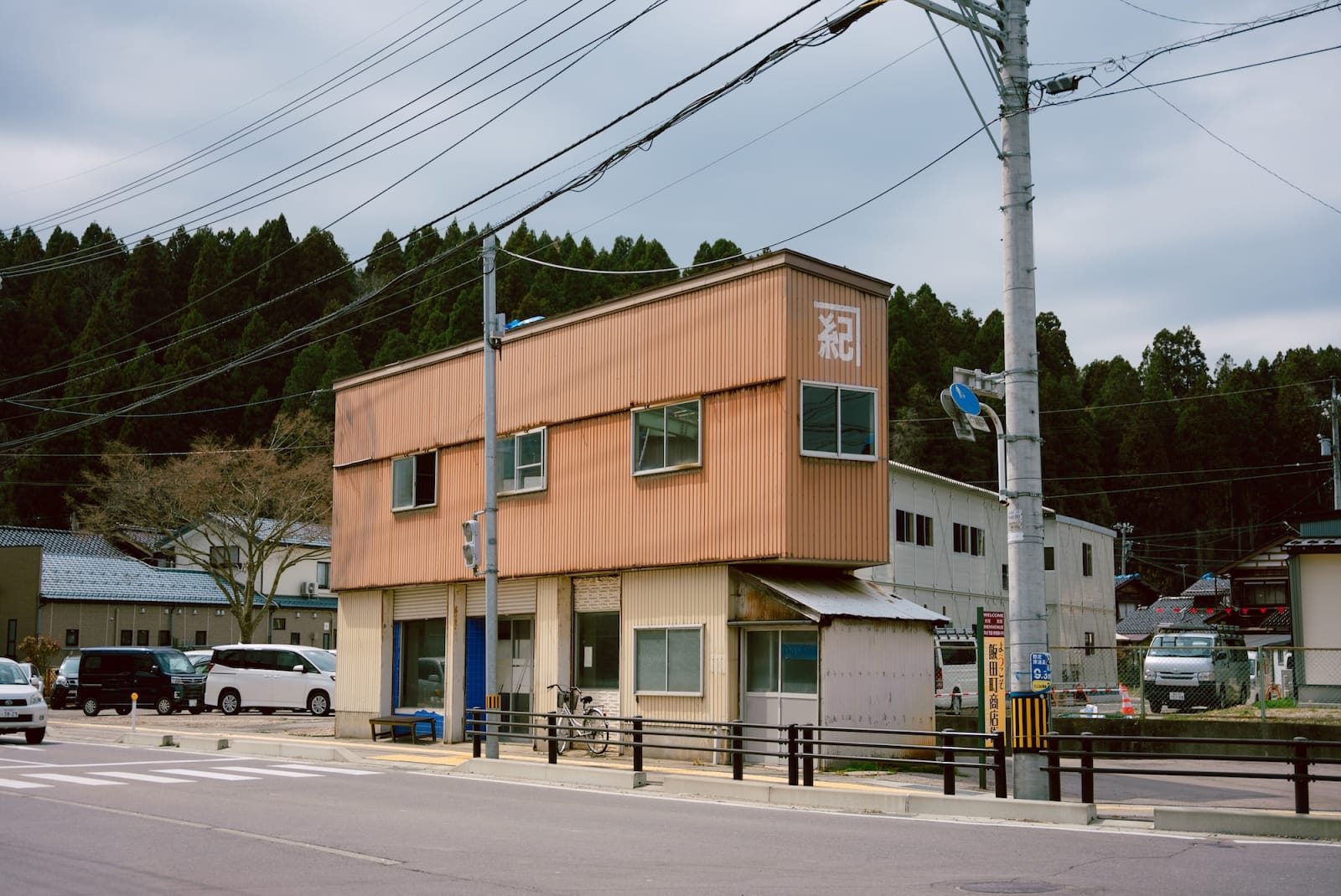
True to its name, the Suzu Record Center was established in Iida Town, Suzu City, as a facility centered around “recording.”
Many photographs and documents related to the region were salvaged from houses collapsed by the earthquake and the floods. Even years after the disaster, the town experiences constant transformation. Beloved buildings, once pillars of the community, are sadly demolished, and many houses are torn down, leaving vacant lots. The townscape itself has deeply changed.
This record center was created as a participatory archive project to preserve these materials for safekeeping and to share them through exhibitions—to remember these memories (or perhaps to leave them behind).
The current exhibition “Record Fair 2026” (until March 31, 2026) showcases various archival materials collected since the first opening, along with photographs, videos, sounds, and objects newly brought in by people in the surrounding area after the disaster.
Furthermore, the Oku-Noto Triennale announced the launch of a new initiative, “Oku-Noto Triennale (Being),” in late 2025, collaborating with the Yasser Project. While plans to hold a conventional art festival are for now suspended, the committee of (Being) will move forward with a program including tours and workshops, under the theme of “harnessing the power of art for a creative recovery.”
Oku-Noto Triennale (Being) official Instagram: https://www.instagram.com/okunotojp/
Details about the Oku-Noto Triennale (Being) and past art festivals are also extensively covered in the exhibition “Creating Here, Continuously” currently being held at the JR Kanazawa Station Tourist Information Center display corner (until March 31, 2026).
Full disclosure: I was responsible for the panel design and layout for this exhibition. All panels include English translations, and sales events for Suzu City specialties and art festival goods are scheduled on weekends and holidays. If you’re coming to see Kanazawa, please check it out!
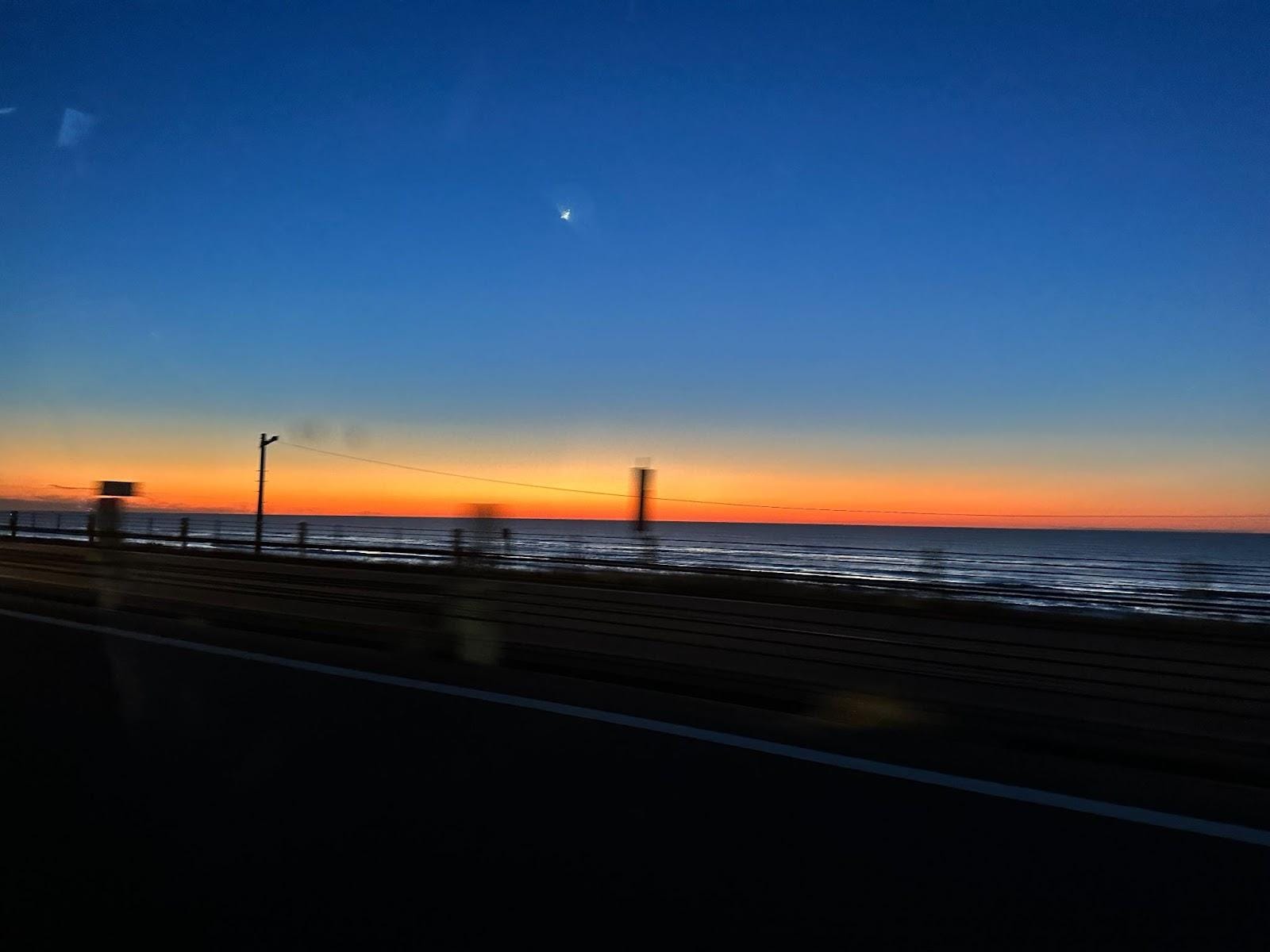
In conclusion, I think experiencing Kanazawa and the Noto Peninsula allows one to witness firsthand how art can contribute to society, and how artistic initiatives can have a real, positive effect on people's actions and perspectives, even more so in the wake of dramatic situations like natural disasters.
Art festivals and museum exhibitions offer accessible opportunities for many people to engage, even through social media and other outlets. I hope this article can serve as a catalyst, encouraging more people to connect with Noto through various paths.
Translation by: Giacomo Nioi