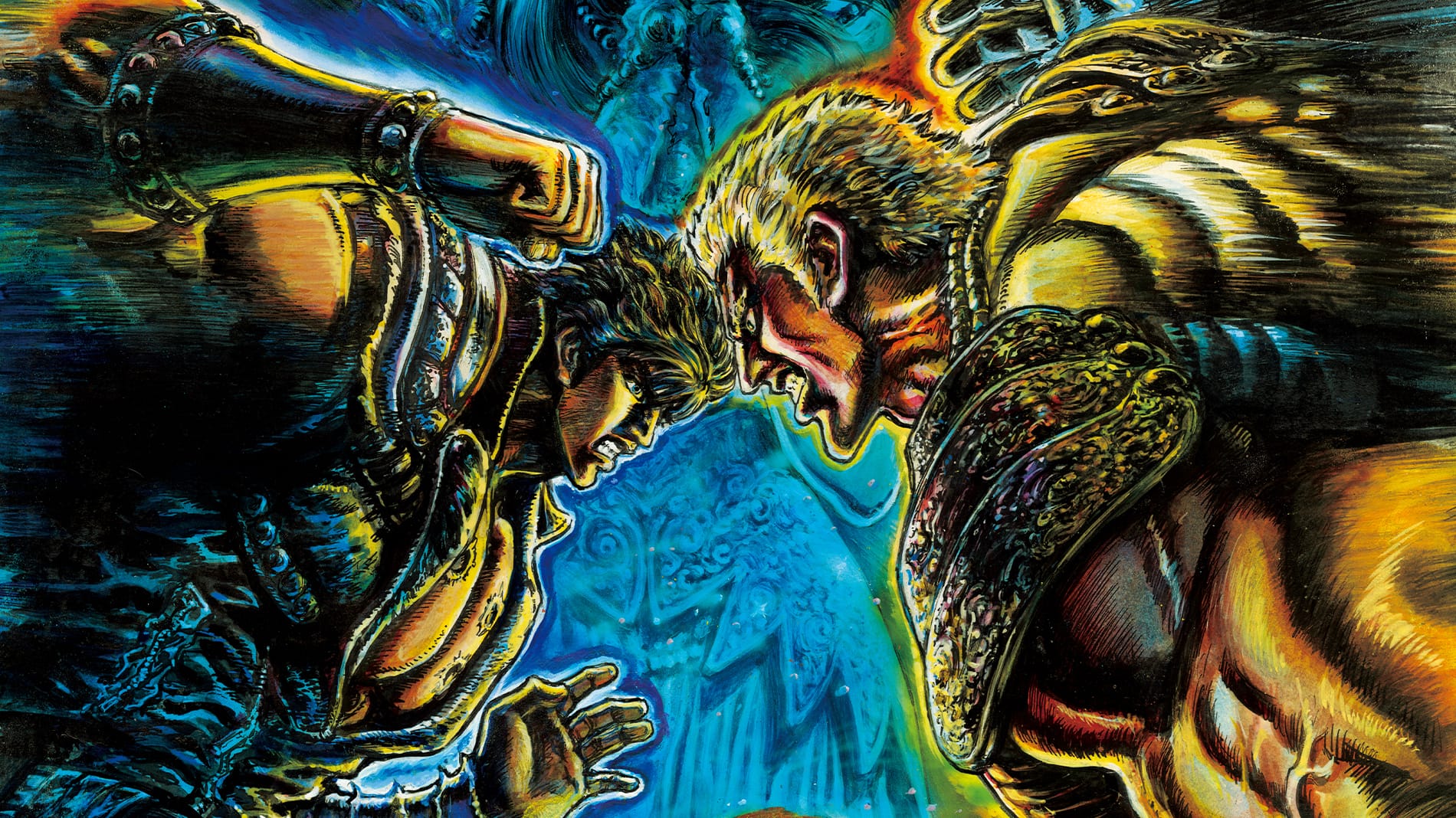
Before there was Berserk or Chainsaw Man to entice manga readers with intricate depictions of violent action, there was Fist of the North Star (Hokuto no Ken), the original over-the-top, comically gory fantasy martial-arts epic that continues to inspire illustrators, game designers, and scenario writers in all things anime and manga related four decades later.
Many of the tropes commonly associated with shonen manga, and even much of the episodic pacing found in most popular titles can be in some way attributed to Fist of the North Star and its iconic run. From the protagonist Kenshiro’s unwavering, unflinching demeanor, to the enigmatic mythology behind the fictional martial-arts styles and special techniques used by Kenshiro and his foes – which often have names that feel almost as important to the “character” of the work itself as any living character found in the series, Fist of the North Star is nothing less than the blood-spattered blueprint for decades of satisfyingly visceral action stories riddled with intricate and often ridiculous lore.
Fist of the North Star is the creation of not one, but several visionaries
Given how instrumental Fist of the North Star has been in establishing so many well-known genre staples, it isn’t too surprising that it came as a result of the combined efforts of two men: Yoshiyuki Okamura, AKA Buronson, responsible for writing the series, and Tetsuo Hara, the artist who brought the scenarios to life.
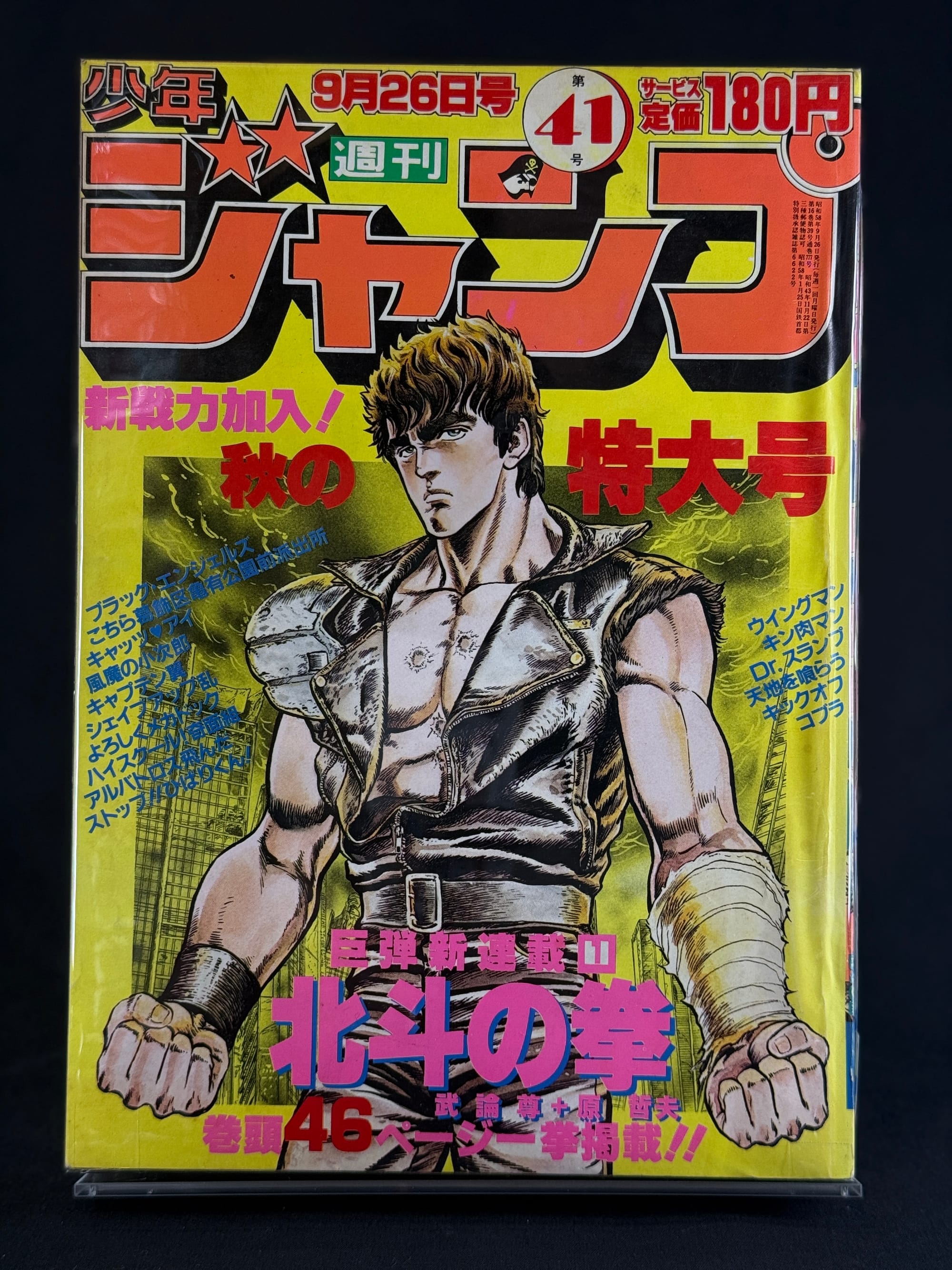
Hara was interested in the idea of an action martial-arts manga and fed some inspiration for the backstory of Kenshiro and the concept of the story by his editor Nobuhiko Horie, who ultimately played a significant role in the creation of the first version of what became the series we know today. This led to the publication of a one-short story in Fresh Jump magazine, in April 1983, which was met with immediate praise by readers, and enough popularity to warrant a sequel just two months later. Shortly after, Hara was paired up with Buronson to work out the details for the full series, which was serialized in Weekly Shonen Jump in the 41st issue of 1983.
Hara and Buronson fed off of each other’s artistic visions in a perfectly complementary way that allowed both of them to contribute equally to the success of the series, which was according to accounts, constructed as they went along more often than planned-out far in advance. Horie acted as the intermediary between the two, while also gauging reader interest and feedback.
Despite its popularity, Fist of the North Star media has often been somewhat scarce
Being a smash hit, the series got a 109 episode anime adaptation in 1984 by Toei Animation, airing on Fuji Television, and a sequel series of 43 episodes, totaling 152 that aired between October 11, 1984 and February 18, 1988. However, it was not available as a full series for consumers until DVD release in 2002.
Similarly, movie release in 1986, simply titled The Fist of the North Star, served as an alternate retelling of the manga’s first 72 chapters got an international release and English dub, making its way to VHS in September 1992, however, the original television anime series would remain unreleased in full in the west until 2008, when it got a subtitle-only release. Prior to this release, the first 36 episodes of the series had been dubbed in English in 1999 for a partial VHS release.
While the movie was never a smash hit with North American audiences, it was something that anyone invested in anime culture at the time was familiar with, leaving the original anime series desired for decades among North American anime fans before its proper release. During the period where anime and manga were first gaining popularity overseas, Fist of the North Star was somehow a household name – perhaps with its reputation preceding it through word of mouth.
Trying to find an anime fan who is not at least familiar with the meme surrounding Kenshiro’s catch phrase, “Omae wa mou shinde iru”, or “You are already dead” would at this point equate to a generational gap in anime and manga knowledge. Fist of the North Star themed video games have made their way worldwide over the decades, including more recently Fist of the North Star: Lost Paradise, developed by Sega as a pseudo-spinoff to the Yakuza series of games. There is even Fitness Boxing for the Nintendo Switch, featuring Fist of the North Star.
And despite the fact that the series has had many stumbling blocks that stunted its potential popularity among western audiences, it still has managed to maintain a reputation as a golden classic to anime fans worldwide, which serves as a testament to how influential it has been to all things anime and manga since its inception.
Thankfully, we live in a time where the drought has come to an end, and all things Fist of the North Star are readily available to fans new and old at their convenience.