The very first Family Mart, opened in Saitama Prefecture’s sleepy Sayama neighborhood in 1973, served as an experiment. Arriving years before American-born brands Seven-Eleven and Lawson set up shop in the country, the fledgling Family Mart brand wanted to create a Japanese take on convenience.
It worked, with the chain arriving at a moment where consumer demands in Japan shifted. What started as a test in Saitama became a standard all across the country.
Family Mart is trying to re-imagine what Japanese convenience can be with its Famima Park Azabudai shop. Opened on Friday, July 10, the outpost acts as the chain’s first flagship store and an attempt to evolve the concept of a konbini in an age where convenience stores have become a part of the country’s cool.
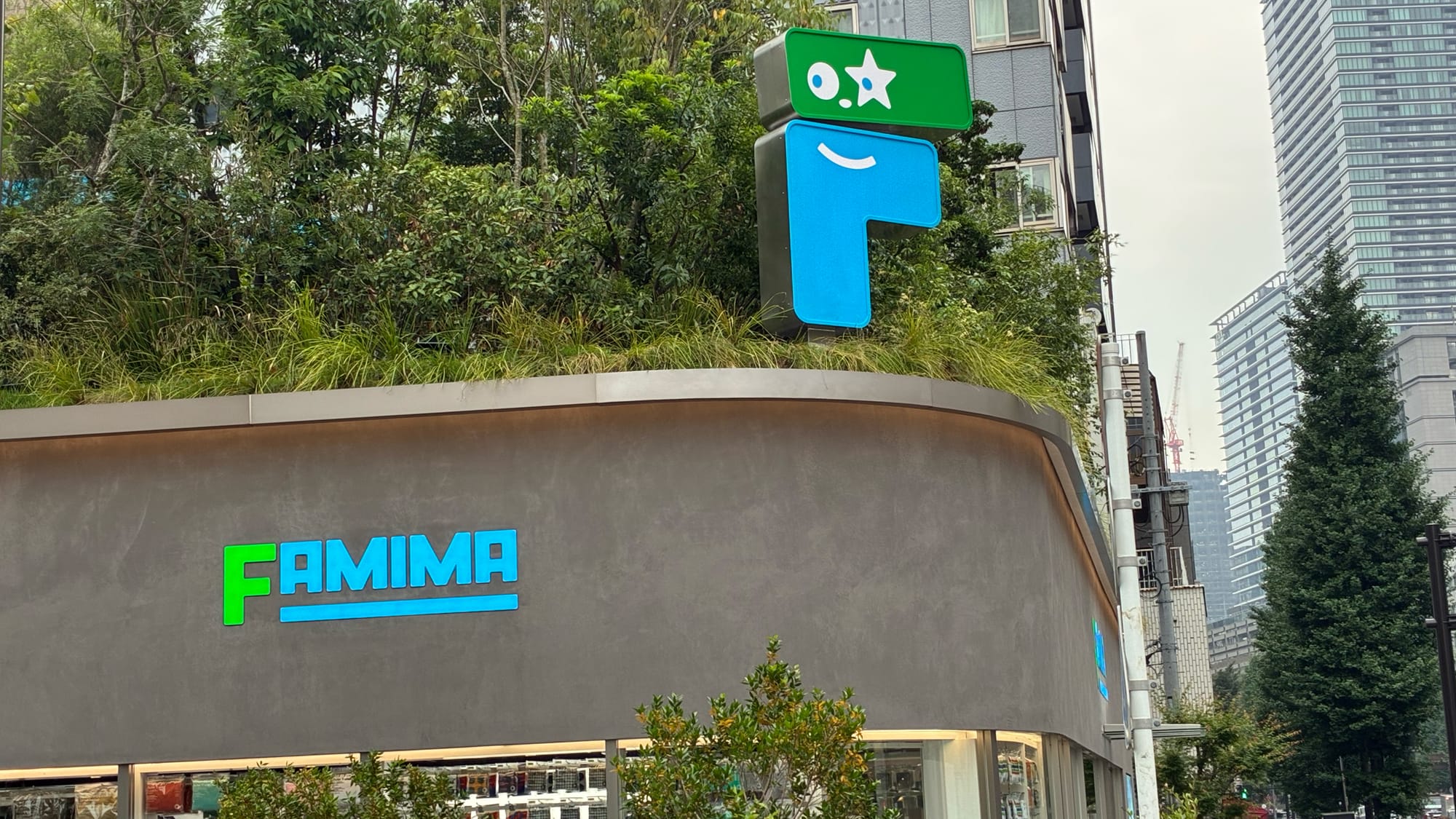
Overseeing this Family Mart facelift is Japanese fashion legend Nigo, who became the brand’s creative director in 2025. The Azabudai spot — located just outside of exit two from Kamiyacho Station on the Hibiya Line, or a manageable 10-minute stroll through nearby Azabudai Hills via Roppongi-Itchome Station — sits in a sleek grey building with plants placed on the roof. To the side of the entrance is a small outdoor area featuring benches in the shape of the store’s new mascot, a cartoony “F.”
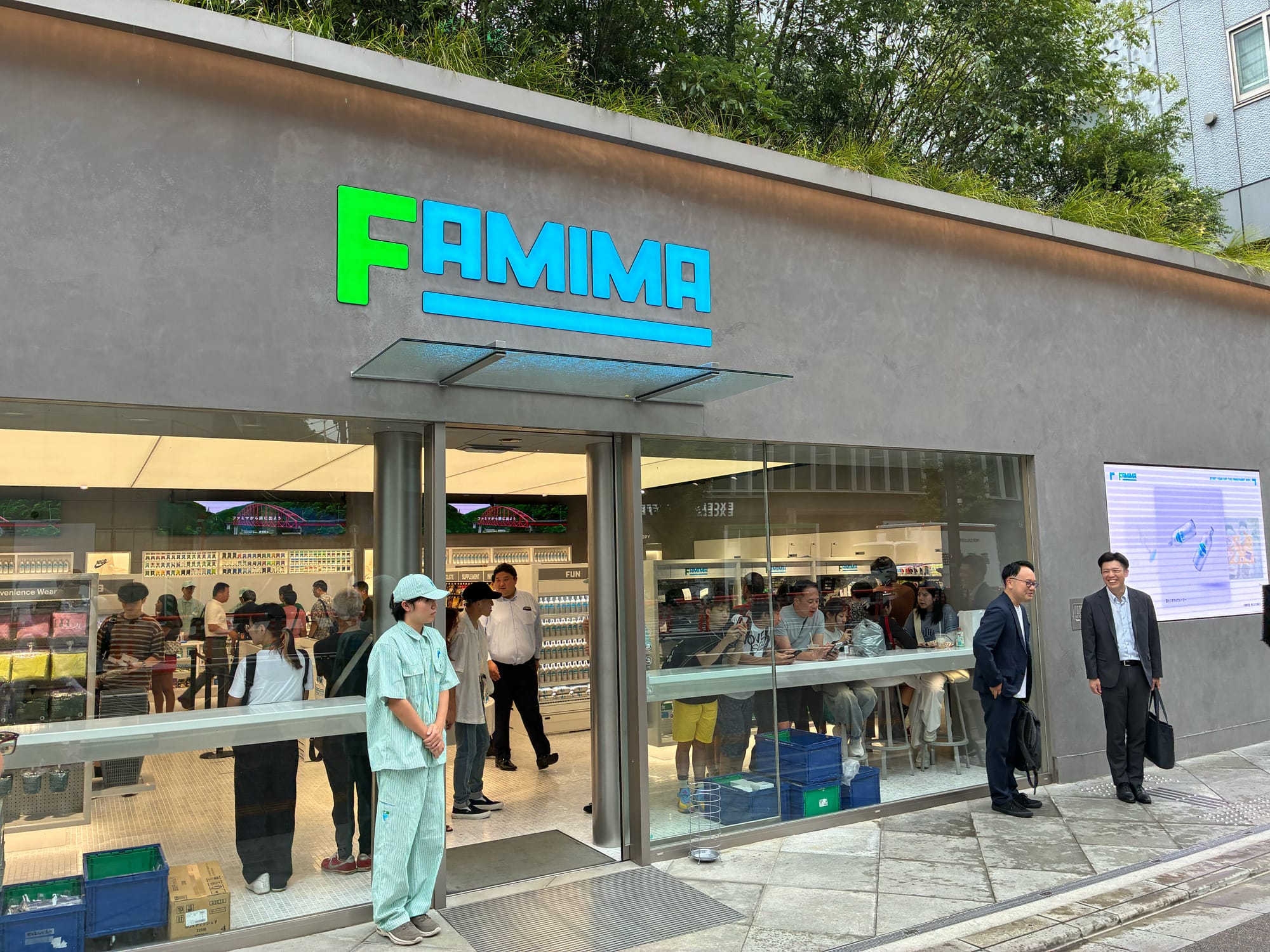
When I visit on a rainy Monday afternoon, dozens of people loiter around the shop, with customers taking turns entering and exiting the store due to overall demand. The inside of Famima Park Azabudai can be roughly divided into three sections: to the right is exclusive merchandise specific to this outlet; to the left is a boutique-style nook devoted to Family Mart’s “Convenience Wear” clothing brand; and in the central part, a traditional konbini selling food and drinks.
It’s the first two that give Famima Park its unique atmosphere, and point to a potential future for convenience stores at large. Whereas many konbini in business districts over the last five years have turned towards smaller spaces built around efficiency (and less staff), this Azabudai store aims for a bigger space offering something that almost feels experiential, complete with multi-lingual staff, sporting snazzy uniforms.
Nigo’s presence also looms large. The “Convenience Wear” corner feels like a miniature HUMAN MADE shop, complete with dressing rooms to try the clothes on. The limited-edition goods — ranging from towels to pens to pillows to tumblers among much more —reflect his streetwear smarts, specifically the limited-edition nature of the items themselves, turning a keychain that looks like a Famichiki wrapper into an exclusive “drop” that you’ll feel terrible about missing out on (indeed, many people wandering the aisles lament many of the exclusives already being gone…even I start wondering if I should have skipped out on all family responsibilities this past Saturday to get a now-gone pillow).
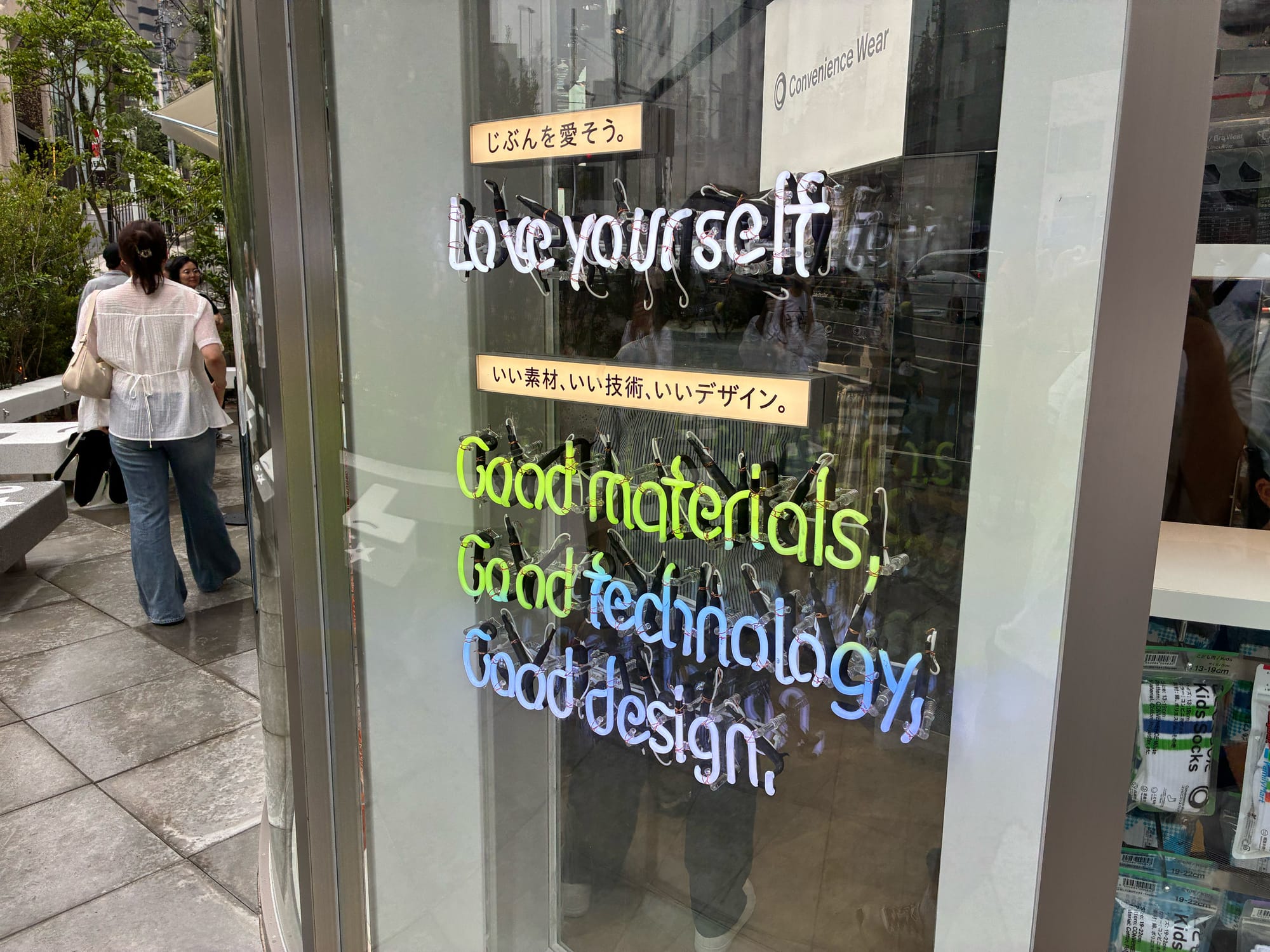
It’s all in service of trying to push the very concept of the Japanese convenience store to another level, reflecting the state of the country in the process. The official press release for Famima Park Azabudai features a section devoted to how it “expands its IP business” alongside a bunch of other marketing gobbledygook. It boils down to: they want to make the Family Mart brand even stronger, aimed both at domestic customers wanting to incorporate it into their lifestyle while also appealing to the on-going tourism boom coming into the country.
The latter is out in full force when I visit. Despite the weather, dozens of tourists explore the store, stocking up on Family Mart goods and filling the Convenience Wear area to the point of being near impossible to squeeze through. And where there's tourists, there’s influencers. A stocky man loops around the building talking loudly into his camera about “how cool the design is.” Multiple folks stand outside trying to get the perfect shot. The standing eat-in area is completely taken up by people staring into iPhones to offer their takes on the store (“all the limited-edition stuff is gone but…I like the vibe,” one provides to anyone nearby).
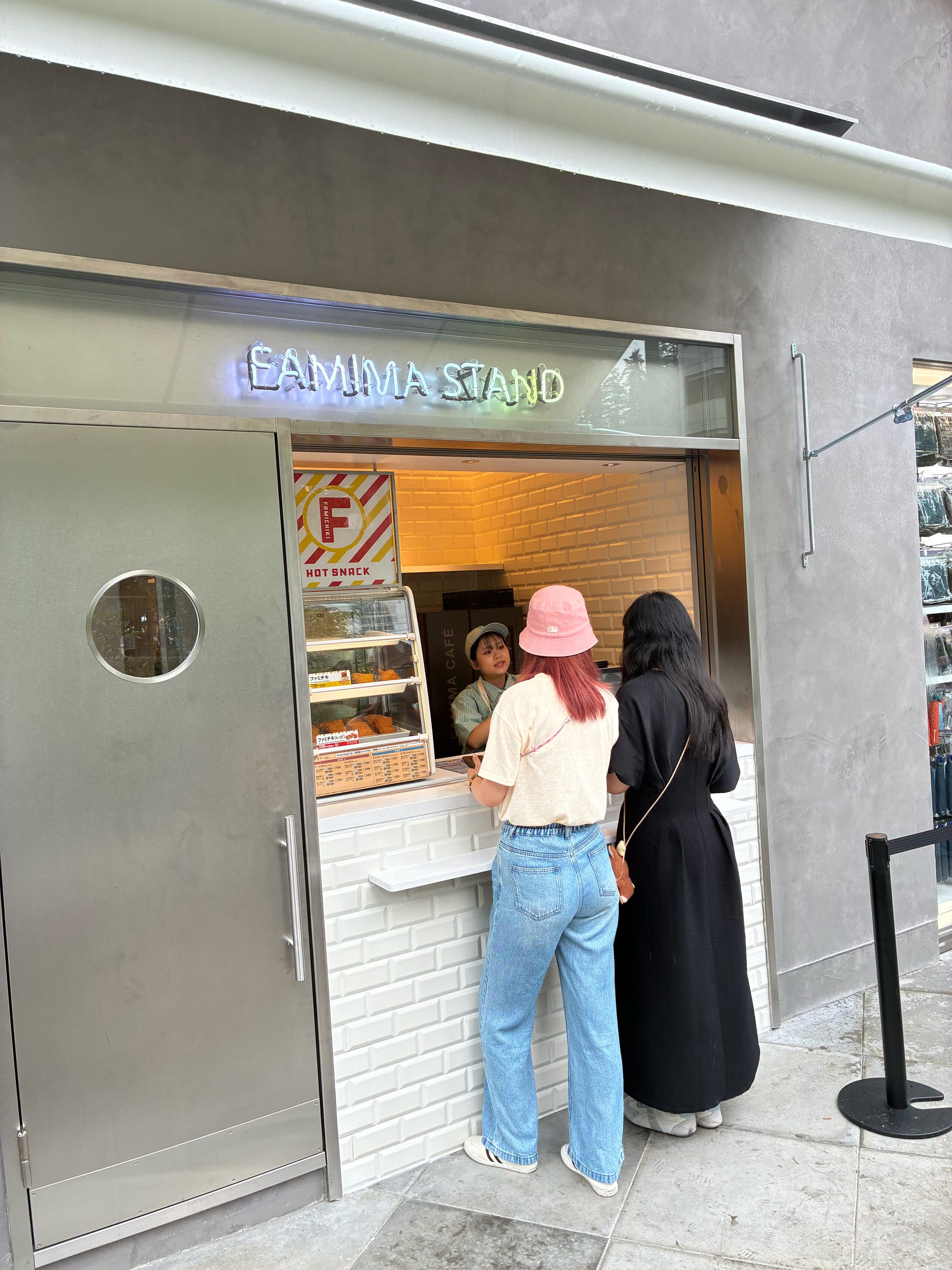
A better development comes via the Famima Stand located outside. This space sells coffee and tea items — including some featuring exclusive beans — alongside the hot-box star of the franchise, the Famichiki. It’s a novel twist, and a nice way to get a drink or snack without having to venture into the possibly crowded store.
Still, despite the overall busy nature of the shop (which is open 24 hours a day…maybe at 2 a.m. it’s easier to navigate), it does feel like an effort to elevate the konbini experience into something like a hybrid grocery-lifestyle store. It’s very much an attempt at creating a tourist spot centered about the very idea of the Japanese convenience store — about five minutes away, you can visit a more old-school attempt at this at a Seven-Eleven that has a big paper replica of the base of Tokyo Tower looming over its snack aisles — where they can experience a konbini while also having access to exclusive goods (kind of like a gift shop) and clothes (kind of like…another gift shop).
It’s a fun visit and an interesting experiment in imagining what a konbini could be when pushed beyond chain expectations and instead matched the mood of the neighborhood it’s in. In many ways it feels built towards the modern state and future of Japan — more emphasis on lifestyle offerings and more catering to international visitors.
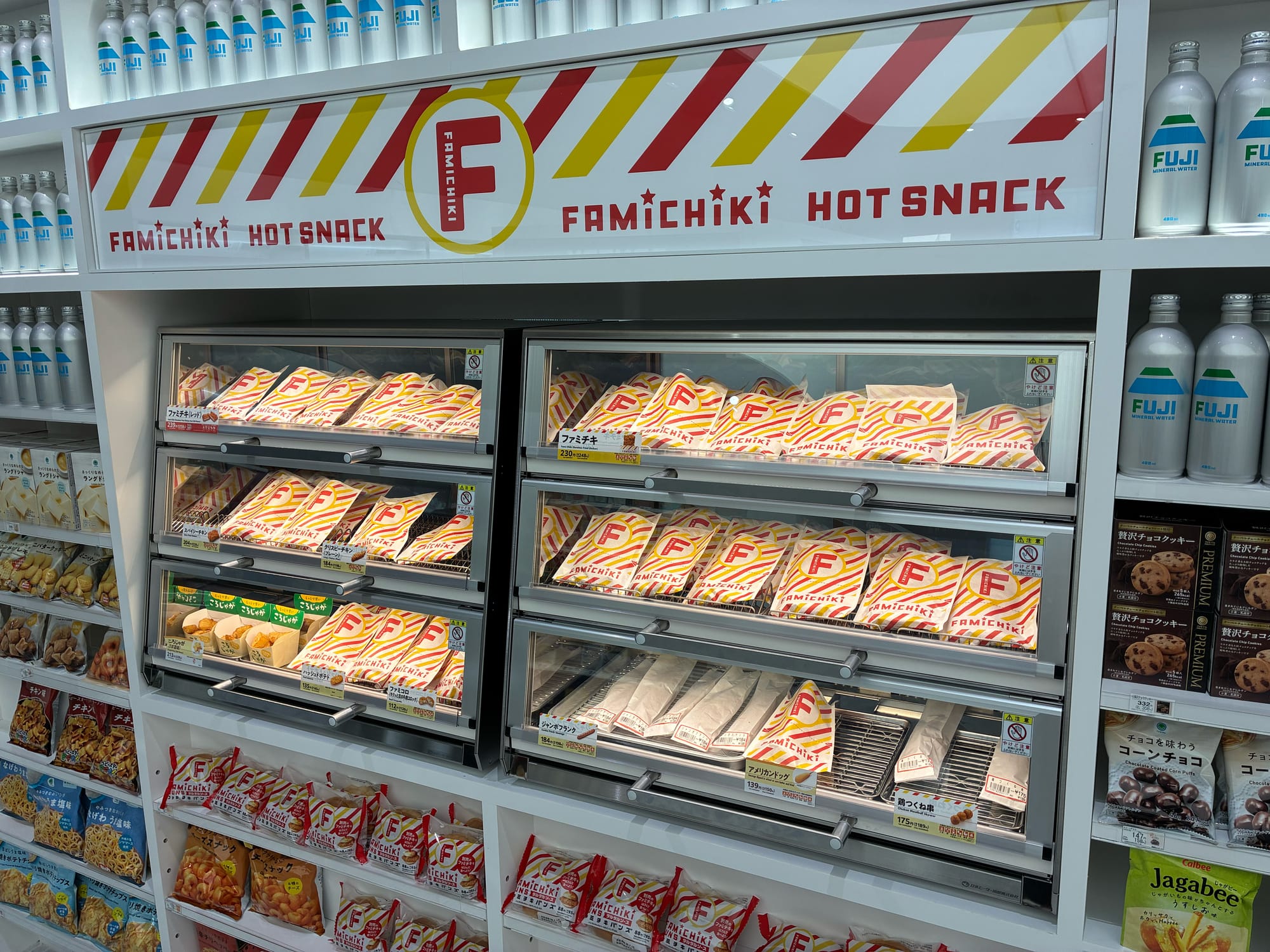
Not quite as emphasized, though, is “convenience.” The biggest space here remains the food and drink offerings, and this part largely offers everything you would expect at any old Family Mart. The hot snack corner is bigger (with a heavy emphasis on Famichiki, fair enough), with a wall of coffee machines and self-checkout machines on the opposite side of the wall. Everything you expect at the chain is here…but it’s much more crowded and doesn’t feel like a place you just pop in for a quick lunch. Rather, it’s somewhere tourists can experience what popping in to buy a pre-packaged salad might feel like.
About a minute away on the other side of the street is a much smaller Family Mart, more in line with the original Sayama store. There’s nothing fancy about it and if anything it feels drab after spending time in the trendy spot seconds away. Yet there’s no vloggers, no families struggling with the coffee machine, no crowding around socks. Just a chance to go in, grab something and head out to continue on with your daily life.