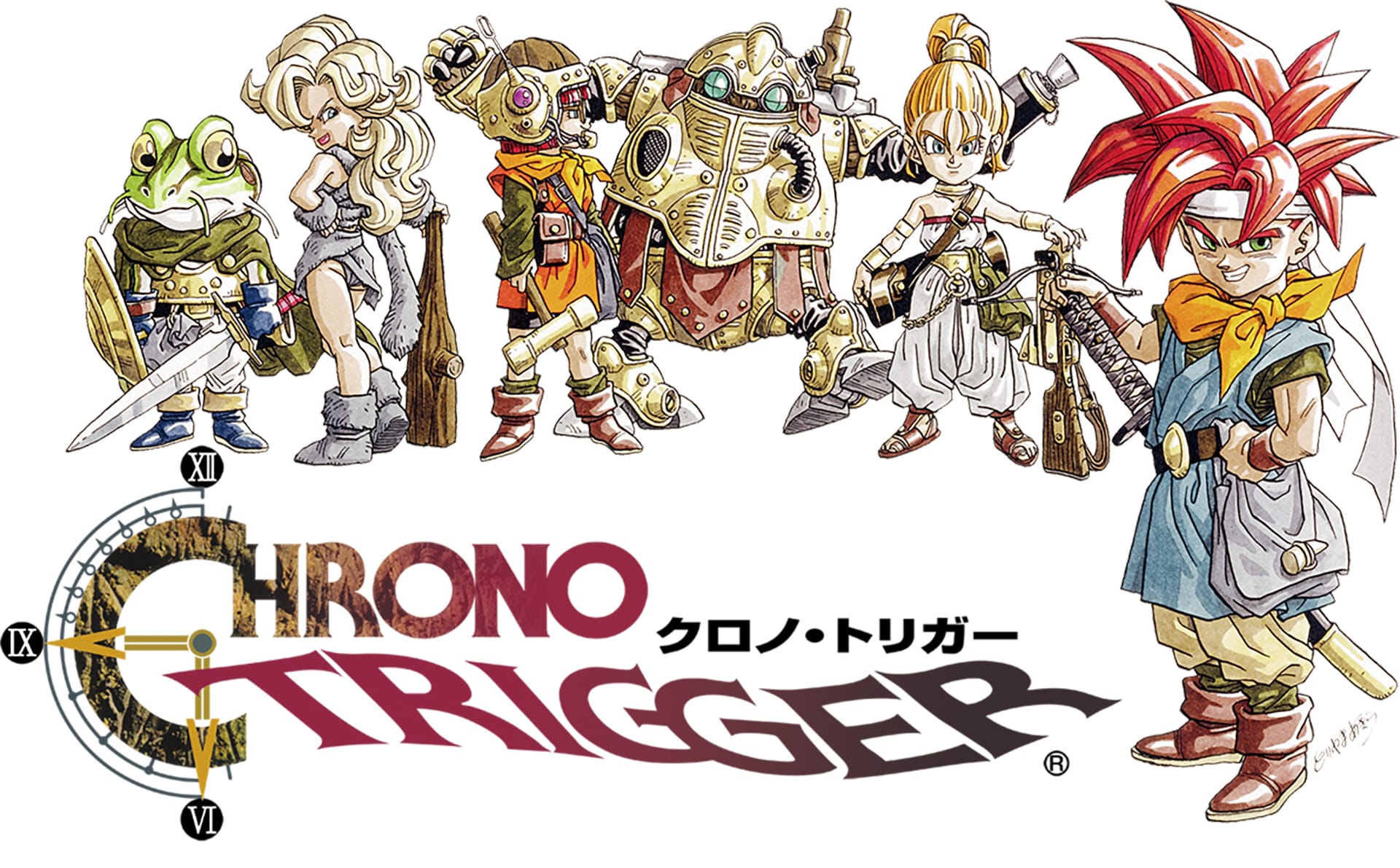
No other Japanese RPG has received as much universal praise as Chrono Trigger, released in 1995 as one of Squaresoft’s final console games of the 16-bit era. Following a laundry list of classic RPGs throughout the early 90s, Square was able to put together a team of the most experienced and creative game designers that in turn used everything they had learned from the previous decade of game development and unlock the full hardware potential of the Super Famicom to design a masterpiece that frequently tops the best-in-genre lists of fans and professionals, occasionally transcending RPG-specific lists and landing a top or near-top spot on best video game ever created lists.
Why do so many consider Chrono Trigger the greatest of all-time?
When the level of talent involved includes many names that have already achieved global fame and all the right framework is in place, the potential to make a highly cohesive and coherent work is high. Chrono Trigger is perhaps the most quintessential example of these qualities.
First and foremost, consider the combined efforts of Hironobu Sakaguchi, better known as the creator of the Final Fantasy series, and Yuji Horii, the creator of the Dragon Quest series. Each created one of the two most popular Japanese RPG franchises and would now work together on Chrono Trigger.
Next, add in Akira Toriyama, the author of the Dragon Ball manga series that had maintained popularity in Asia throughout the 80s and 90s, and would soon achieve massive worldwide success. Akira Toriyama had also designed the characters and was responsible for the artwork associated with Dragon Quest, making all three iconic industry veterans that Square would dub “the dream team” in their marketing for the game. The talent doesn’t end there, however, with other notable names including Masato Kato (story-writer), Kazuhiko Aoki (producer), and Takashi Tokita (scenario, co-director) playing their respective parts.
Chrono Trigger also represented an opportunity for Yasunori Mitsuda, a rising composer who is responsible for the majority of the music in the game. Veteran Final Fantasy composer Nobuo Uematsu was able to offer his expert tutelage and assistance to Mitsuda, even providing a few tracks of his own and filling in a few patches wherein Mitsuda had suffered illness during the production. After Chrono Trigger, Mitsuda would prove himself to become a household name in the industry.
The game itself is praised for having a masterfully-written story based around the concept of time travel, which offers the player a relatively non-linear experience from the second half of the game onwards, which was a key achievement for the time. While reaching “an end” to the story can be achieved in a little over twenty hours, there are also a number of late game side quests that expand on the story. Most importantly, a number of alternate endings (totaling 13) can be achieved using the time travel mechanic to finish the game in various ways, encouraging the player to try different ways of encountering and ultimately dealing with the game’s villain, Lavos. After all is said and done, a seasoned and thorough player could expect to spend between forty and fifty hours to see all that the game has to offer.
Despite its fame, Chrono Trigger has yet to re-emerge in modern times
Sometimes game devs have the foresight and restraint to accept that attempting to mess with one of the greatest games ever made is a fool’s errand. Even simply trying to remaster or reimagine a title to make better use of modern hardware and attract new fans (A practice that Square, now Square Enix, has been experimenting with in the past few years with different titles and levels of rework) can be difficult when working with legendary source material.
Despite this, Chrono Trigger celebrated its 30 year anniversary in 2025, and many fans are expecting something big on the horizon to be unveiled in the near future. Some of the talent involved with the inception of the original game have separated themselves professionally from Square Enix, retired altogether, or in the case of Akira Toriyama, tragically passed away.
Although the series has resulted in spinoffs, such as Radical Dreamers and Chrono Cross, and some re-releases (of both the main game and spinoffs) over the years on various platforms, it has never been given much more than light touch-ups, with a small amount of additional content in the Nintendo DS, Windows, and iOS versions of the game.
However, the fact remains that some of the key players still remain at large, ready to assemble a team of the greatest talents in the industry when the time is right. If there is a will, Chrono Trigger will soon have its time in the limelight once again, if you can even rightfully ascertain that a game so highly lauded has ever truly left center stage.