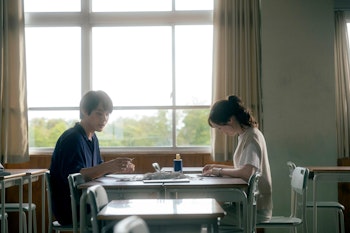
Portraying deafness to a hearing audience is more difficult than it appears. You could muffle and remove audio, but with sound such an integral aspect of creating the atmosphere of a movie doing so risks cutting off the emotional connection and ability for an audience to fully immerse in a film if the effect is played-out for long periods. But then, without recreating the impediment, it’s hard to put the audience in the shoes of someone living with being deaf full-time when the story comes across identically to us as an audience as any character. In finding relativeness in universal COVID isolation and the desire to prove yourself, Small, Slow But Steady finds a way.
Just as much as it’s difficult to create a movie like this, it’s difficult to create a movie about being a boxer. The technique is difficult for an amateur, while the tension is hard to capture no matter how effortless Rocky makes it look. Never mind that if you strip the film of expected masculine heroism inbuilt bias around the sport inevitably rears its head. Keiko Ogawa (Yukino Kishii) and her personal challenges elevate this to something unlike other sports memoir-like stories into the life of a boxer, using the struggles of professional work and the isolation of both her lack of hearing and the world impeding her journey act as a conduit to explore the why behind the fight that’s impossible not to endear.
This drama based on the memoir of the real boxer Keiko Ogasawara starts not with the boxer’s earliest career days learning the ropes, but after they’ve established themselves in the sport. Overcoming their disadvantages Keiko succeeds in winning her first two matches, setting her up as a strong fighter with a bright future in the sport. It’s at this time that everything begins to turn upside down: her gym that acts as her sponsor risks closure after its owner falls ill. Which would be bad enough, but to Keiko this careful owner Katsumi Sasaki (Tomokazu Miura) has been her mentor since she was far younger.
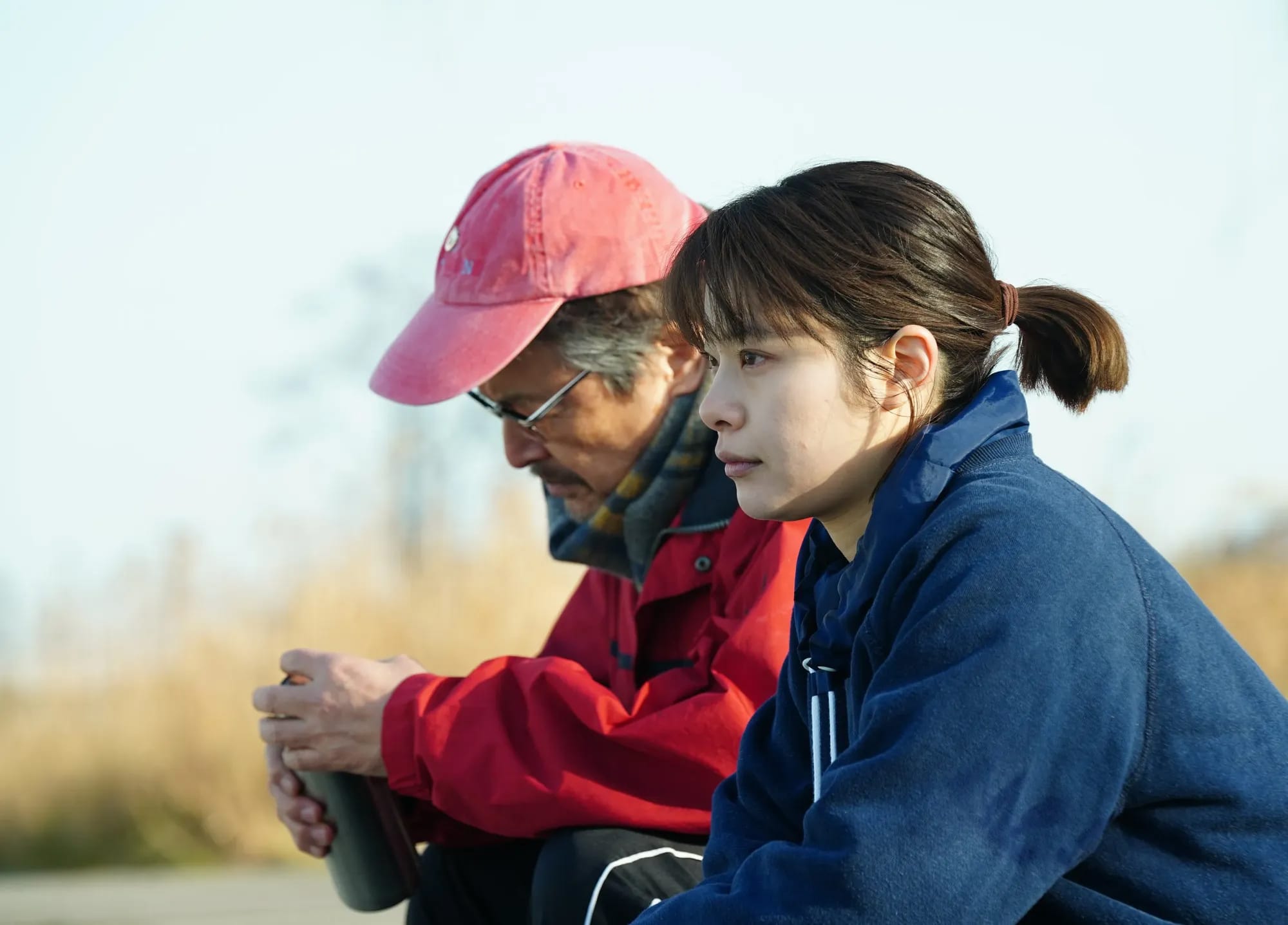
Training for her was under his careful instruction. She would read his lips, or occasionally take tips from a white board, with a mutual respect beyond words forming between them. It’s what made the fighting feel like a place where she could be understood, truly, for who she was, rather than her deafness, which gave her purpose. When fights are also shifted and put into doubt with COVID that strips her of this boxing ability, the whole question of self and the reason to fight comes into question.
What’s so interesting about Small, Slow But Steady is that this isn’t just ‘a deaf story’, but a story about personal strength through sport, transition, communication, and the nostalgia of reminiscing on that which is being lost and has already gone. It just happens to have a deaf protagonist and uses it to enhance its core messaging. The original memoir covering the boxer’s real life actually takes place in a pre-COVID era, with the story merely updated to reflect the COVID reality of when the film was short, partially as a necessity of production. Even this happy accident becomes integrated into the dramatization of the story, however.
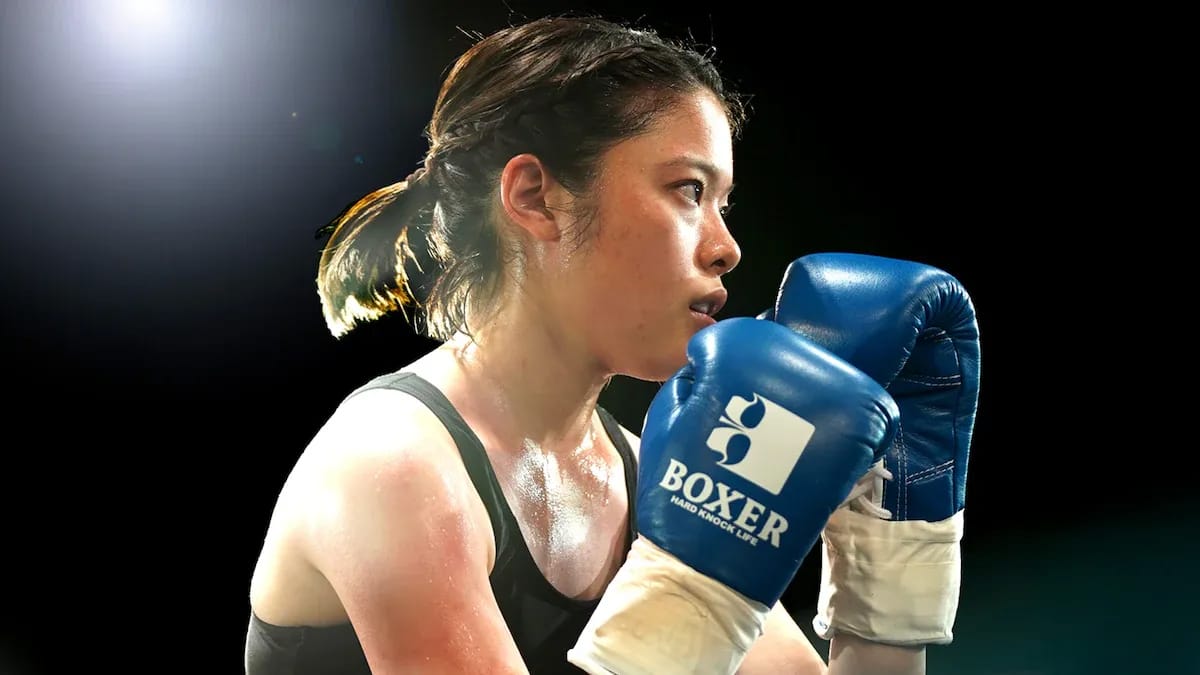
You see, without the ability to use a voice of what you can see from the mouth, the eyes, and the internal world become so much more important as part of a reflection of truth. We actually spend so much of our time focusing on the fate of the gym without ever stepping into the ring, making so much more about the confidence and conflict that goes into the moments before and after firing a punch in the heat of a match. A feeling that comes from the drive to fight and a thing to celebrate and protect, emphasized by just how much the film wishes to focus on the stuff that goes on before stepping foot in the ring.
Our view into Keiko’s boxing world is framed by the people she is closest with, those being her mother (Hiroko Nakajima), her brother (Himi Sato) and her co-workers at her hotel housekeeping day job. Each don’t get the appeal of the support, to the point when the mother sees her daughter fight she winces. But they each recognize what it means, so they support her. That distance does create an uncertainty matched only by Keiko’s own feelings of inferiority for her condition that feel more profound when the closure threatens her loss to the one person who understands her.
The relationship with the gym owner is the soaring heart of the film, his flailing health a mirror to Keiko’s own internal conflicts that are emphasized by her lack of hearing. What makes this movie so emotional isn’t simply the story of loss and soul-searching for purpose, but how this story is enhanced using deafness not as a burden but as a framing device to contextualize and enhance the emotional uncertainties anyone would go through, but only become more real when this relationship is all you have. It’s rather unassuming, but it creeps on you through long sequences of training that can last minutes of minute gestures, or subtle communications in the late evenings through sign language.
Further bringing us into Keiko’s internal world is the cinematography with the design to shoot entirely in 16mm film. The deliberate softness this creates acts as a softening that reduces our reliance on what we see to what we do (or don’t) hear. Where boxing films revel typically in their intensity, the sweat, the close-ups and the physicality, the dreaminess and general lack of genre pleasantries is a welcome shift that only works to place us within her self-doubt and make this whole story so powerful and resonant even for those typically disinterested in the sports world. When we’re so far in the internal, a visual approach that forces us to shift our mind onto this is an inspired approach.
As all the desire to fight is lost and we see the people swirling to take advantage of the circumstances, it’s here that the resolute desire comes through. Because for this sports drama, it’s what’s outside, not inside the ring, that matters. Which is precisely what makes it such a noteworthy film in the last few years more than worth visiting. In changing Small, Slow But Steady into a COVID-era story and weaving it into its very core (about finding a reason to fight in your own shortcomings and the strength of others), the meaning of what it’s like to be isolated by circumstances beyond your control makes this one of the most resonant sports movies of recent years as a result. The unfamiliar is familiar, because we've all had a reason to fight.
scrmbl's Classic Film Showcase shines a light on historical Japanese cinema. You can check out the full archive of the column over on Letterboxd.