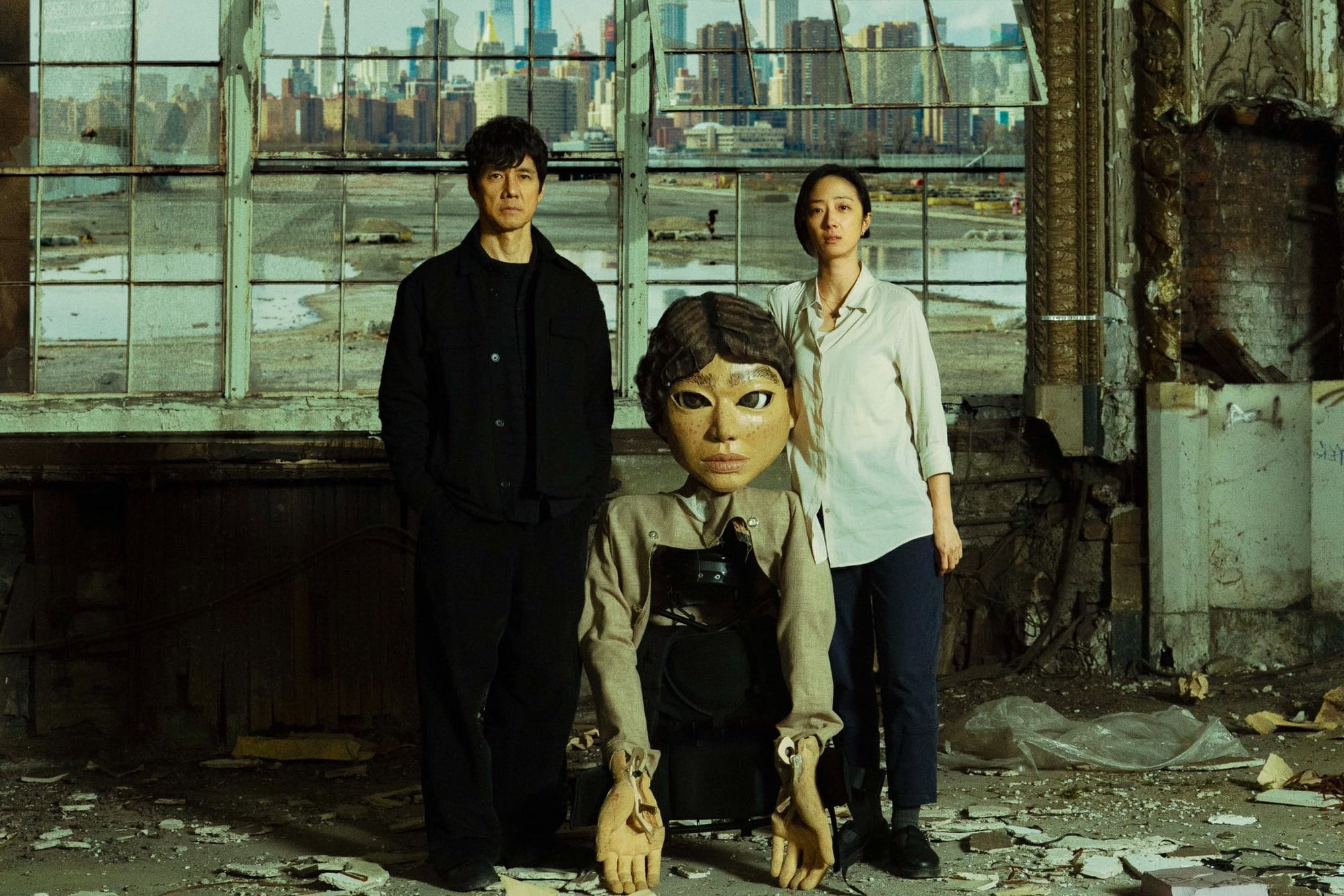
Hidetoshi Nishijima has had an interesting career following his explosion in global visibility thanks to his performance in the Oscar-winning Drive My Car. Far from slowing down or being more selective, he’s thrown himself into everything from zany mainstream Japanese comedies to Shin Ultraman and just about everything in between. Even then, Dear Stranger stands out for just how much of a departure it is from his past work: an arthouse drama that allows his acting to shine, except this time performed entirely in English on the streets of New York.
Indeed, the Japanese Nishijima and the Taiwanese Gwei Lun-Mei have each taken it upon themselves to push their talent into new territories with this international co-production, performing outside of their native or even fluent languages with a project that nonetheless feels rooted in their cultural backdrops in Japan and Taiwan respectively, and the tapestry of immigrant life in the United States. Director Mariko Tetsuo is also challenging himself by leaving his home country to direct the film. It’s a shame that though the framework is here for something truly investing, it’s these challenges that prove too insurmountable for these talents to overcome.
Dear Stranger sees Nishijima’s Kenji Saiga and Lun Mei’s Jane Yang struggling to balance their work, childcare and caregiving for Jane’s older relatives in ways that are straining their marriage. While Jane’s grandfather is struggling with mental and physical decline in ways that are clearly too much for her mother to handle, she’s returning to her artistic pursuits as a puppetmaker and theater performer in a new performance. Kenji is working on a new academic book and research project on ruins, inspired by losing her family in the 3/11 earthquake. Neither can handle it and keep care for the child. Then they go missing.
For all the film takes place in the biggest, loudest and brashest city of all, the film is much more quiet and lonely both when these characters are together and apart. The weight of their history and responsibilities weigh in the tension that rises between these characters, both living in the city but seemingly distant from its sense of place and even their own languages. Like actors, the characters are not native English speakers, and neither can speak the other’s own tongue, leaving them with some gap no matter how close their marriage is.
How they cope is different. Kenji gets lost in his work at times to the point of neglecting to assist in the rearing of his child, while Jane’s return to her puppet creation and running a small theater troupe to put on minimalist shows with puppets from hand- to human-size feels motivated more by the desire for an outlet for her frustrations than anything else. Kenji goes to abandoned places, seeks help from his only friend (a car mechanic named Miguel), and drives his car through the city.
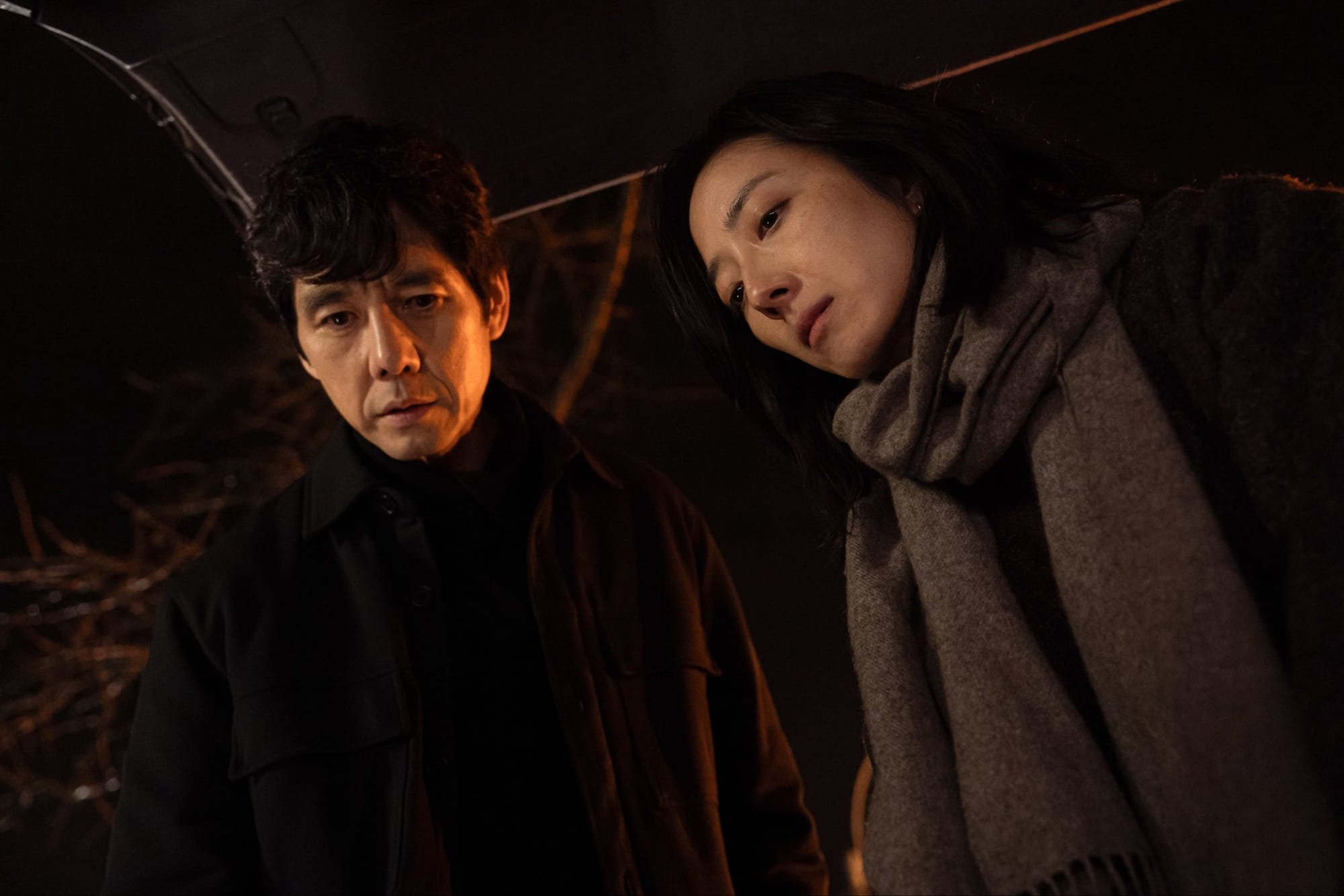
This is actually the first English-language live-action film for Toei, showcasing the company’s desire to take advantage of the growing interest in Japanese cinema. Yet while many take advantage of co-productions where international companies can lend local expertise and guide the project, this feels held back by a lack of understanding for true New York life beyond stereotype and for the language much of the film is spoken in. It’s even more disappointing to note that it’s Nishijima who stands as the weak link holding this film back from what it could be.
Within the opening act that is surely the film’s highlight, the actors showcase everything that has earned both these actors plaudits as some of the best to come out of their respective countries. There’s a stoic distance and complex, unspoken pain on Nishijima’s face as he wanders alone through abandoned theaters, just as Lun Mei’s battles against her own puppets reflect her own struggles as she pirouettes and turns these static objects into the ideal duet. She shows genuine care for her child, also, and when it’s only her on screen either alone, with this kid or her American acting troupe, she feels comfortable and confident in her ability to express her character’s artistic journey while keeping a jovial-yet-distant connection to those around her.
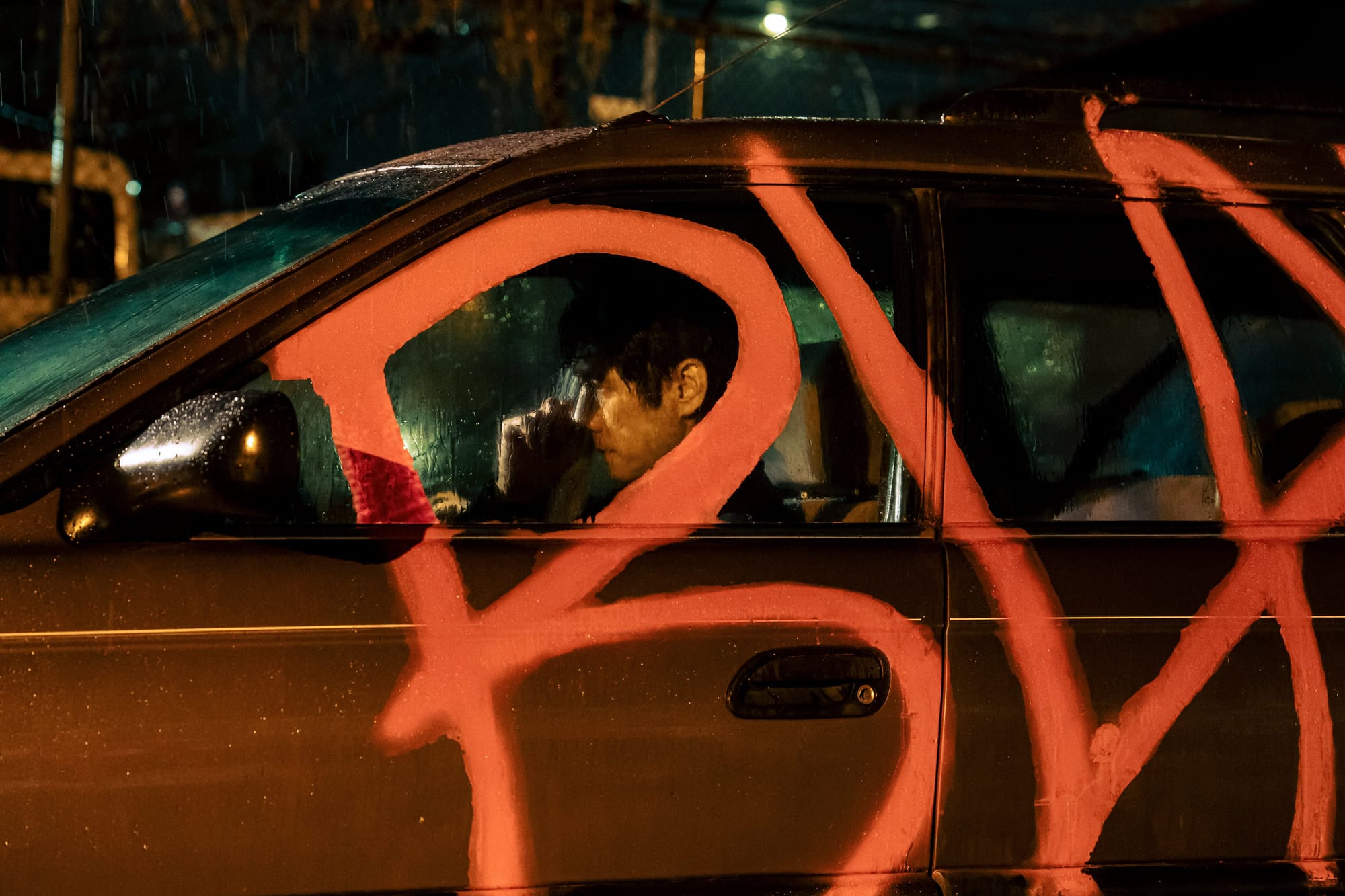
There’s aspects of tension, Kiyoshi Kurosawa-style, in how the ruins seem to speak wordlessly to Nishijima, or how the city’s distance makes them feel alone and astute to the threats that target them. Before the kid goes missing, graffiti attacks to their car feels more acute when explored wordlessly, making them feel under threat and more isolated as immigrants without anyone to reach out to for support. Yet as soon as the child goes missing and we go from tense mood piece to wordy revenge thriller, everything falls apart.

Exploring love through languages, the truth in the ruin of their relationship, the world around them and the words unspoken, requires you to believe in a relationship that never feels real. It’s hard to feel the two ever loved each other, mostly because the difficulty of breaking beyond their non-native English abilities to capture the nuance of their language is missing. Line deliveries are stilted, while acting feels disconnected from their wooden performances.
Once their child goes missing and questions around a past lover of Jane are raised, it feels painfully apparent how the cycle from immigrant isolation to violence to ruin is perpetuated by the systems around them. There’s something to say here. The problem is, with everyone working beyond their native understanding, all feel the need to painfully state the obvious in fear of avoiding this message entirely in the final product, leading this message to fall flat as a result.
Much of this falls to Nishijima’s character as he’s forced to stop running away from his past in Japan and his present in the US, and his inability to express this in English is painful. It’s an issue that likely will be overlooked by Japanese audiences similarly lacking the understanding of English to pick up on these flaws, but it’s also the sort of performance where the reverse in Japanese cinema would be deemed unacceptable. With a growing number of mixed-race and actors born outside of Japan without Japanese as a first language finding roles in Japanese entertainment, you don’t notice the same gap between expression and language found in this film. So why accept it here?
It means that, while the police detective (Christopher Mann, most notably from Creed II) can capture the gravity of the situation, the anger, and the understanding of the situation in his dialogue, the same can not be said in reverse. You feel Dear Stranger being simplified in real time to express its message, ruining its meaning and leaving the whole thing at just shy of 150 minutes feeling like a painful mess.
International audiences are more interested in Japanese cinema than ever before, and stories based on Japanese ideas like this (in spite of its setting) are connecting with audiences in English through shows like Shogun; this feels like an attempt to capitalize on this phenomenon without the correct team necessary to bring it to reality. There’s a fascinating chain of broken promises, miscommunication, to the point that even the characters crumble into ruin as the composure they once held in front of one another and as an external professional appearance falters. There’s potential, but poor acting holds it back.
The result frustrates, bores, and dumbs down its message in a way that won’t please a global audience and doesn't bringing anything new that a Japanese audience can’t find elsewhere. Dear Stranger feels like an experiment at globalization that falls into ruin all-too-easily.